3D Printed Bone Tumor Prosthesis China: Personalized Pelvic and Limb Salvage Surgery
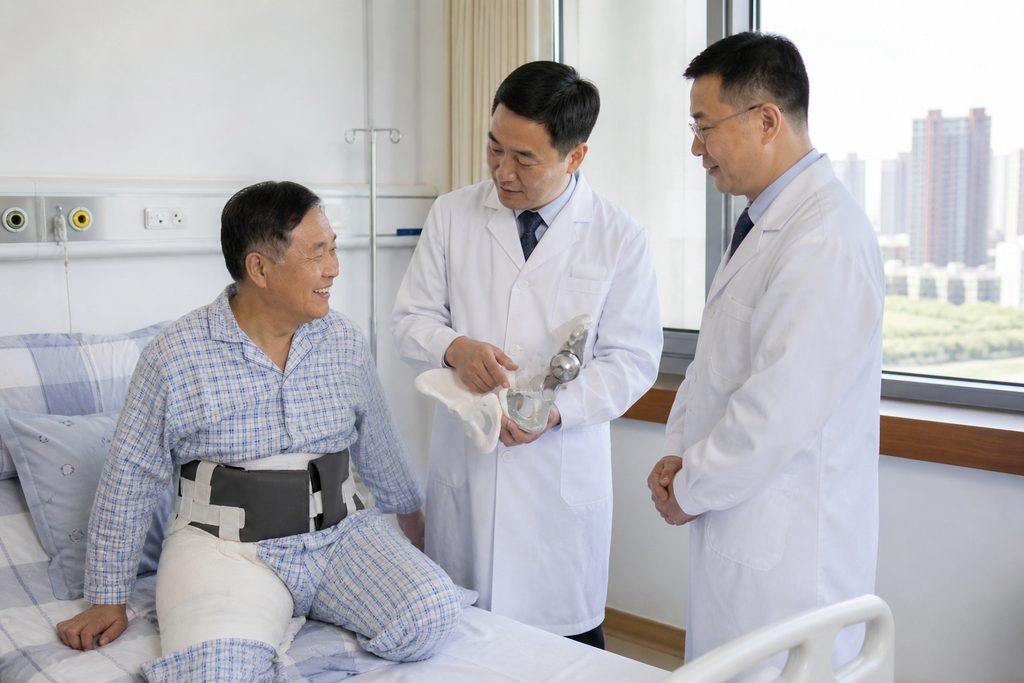
You have probably heard the warning. Surgery abroad means gambling with quality. The instruments are outdated. The sterility protocols are lax. The aftercare is nonexistent. And for something as complex as a custom pelvic implant after tumor resection, the very idea sounds reckless.
That belief is understandable. It is also, for a specific tier of Chinese hospitals, demonstrably false.
The reality is that China has become one of the highest-volume, most technologically aggressive environments for orthopedic oncology on the planet. The combination of massive patient volume, rapid regulatory approval for additive manufacturing, and a concentrated hospital system has created a unique situation. Surgeons here are doing cases that Western centers might see once a year — and doing them weekly. The 3d printed bone tumor prosthesis cost in China reflects this scale, not a sacrifice in quality.
We are not a hospital. We do not provide medical treatment or clinical diagnoses. Our team acts as your logistical architects — we bridge the gap between you and China’s top-tier medical expertise, handling everything from hospital matching to bilingual support so you can focus entirely on your recovery.
Key Takeaways
- China’s top orthopedic oncology centers now routinely perform personalized pelvic and limb salvage surgeries using 3D-printed titanium prostheses, with some surgeons logging over 100 such complex reconstructions annually — volumes rarely matched elsewhere.
- The structural cost advantage is significant: total surgical packages for a custom pelvic implant often range from $35,000 to $65,000, compared to $150,000 to $300,000+ in the United States for comparable procedures.
- Language barriers, visa logistics, and the inability to pre-book surgeries through standard public hospital channels are genuine obstacles. Navigating this system without local expertise is extremely difficult.
- Success depends on hospital selection. Only a concentrated group of university-affiliated centers in Beijing, Shanghai, and a few other cities have the integrated design-to-surgery workflow that makes true personalization possible.
The Problem: When Standard Implants Are Not Enough
Primary bone sarcomas are rare. Osteosarcoma, chondrosarcoma, and Ewing sarcoma together account for fewer than 1% of all adult malignancies. But when they strike the pelvis or sacrum, the surgical challenge escalates dramatically. A tumor invading the acetabulum, ilium, or sacroiliac joint cannot simply be cut out with clean margins and replaced by an off-the-shelf implant. Standard modular prostheses are designed for standard anatomy. Pelvic tumors rarely cooperate with standard anatomy.
For decades, the grim alternative was a hemipelvectomy — removing the entire leg and half the pelvis. The patient survived. Walking did not. Limb salvage with a custom implant was technically possible but logistically brutal. Designing and manufacturing a patient-specific prosthesis took months. Costs were astronomical. Only a handful of centers worldwide offered it, and the wait could mean the difference between a curative resection and a tumor that had progressed too far.
That bottleneck has broken. Additive manufacturing — industrial 3D printing in medical-grade titanium alloy — has collapsed the design-to-implant timeline from months to weeks. And the global center of gravity for this technology has shifted in a way that surprises many Western patients. More on that shortly.
Who We Are
China Medical Services exists to solve a specific problem: international patients need access to China’s best hospitals, but the system is not built for them. We are your logistical architects, not a healthcare provider. We match you with the right surgical team among our network of 340+ top-ranked hospitals across 37 cities, coordinate appointments through official international and VIP channels, arrange bilingual medical companions, and guide you through visa and accommodation logistics. We do not perform surgery. We do not give medical advice. We make sure you get to the right surgeon, understand every step, and never feel lost in translation.
Why Personalized 3D Printed Implant Surgery in China Delivers Results
The question is not whether 3D-printed bone tumor prostheses work. The clinical evidence is solid. A 2021 study in the Journal of Bone and Joint Surgery tracked 92 patients with pelvic sarcomas reconstructed with 3D-printed custom prostheses. At a mean follow-up of 35 months, the implant survival rate was 89.1%. Functional outcomes, measured by the Musculoskeletal Tumor Society score, averaged 71.3% — meaning most patients walked independently. Those numbers are comparable to the best published Western series.
The question is where to get it done. And why China has become a serious contender.
Clinical Volume Drives Surgical Precision
There is a blunt truth in complex orthopedic oncology: the surgeon who does 80 pelvic reconstructions a year will, on average, outperform the surgeon who does 8. This is not a comment on individual talent. It is the reality of any highly technical craft. Pelvic tumor resection requires navigating a minefield of major vessels, nerves, and visceral structures. The difference between a clean margin and a local recurrence often comes down to intraoperative judgment — the kind you build through repetition.
China’s top orthopedic oncology centers operate at volumes that are difficult to match. At Peking University People’s Hospital, the bone tumor service manages over 2,000 new sarcoma cases annually. The pelvic reconstruction team may perform 100 to 150 custom implant surgeries in a single year. By comparison, a major US academic sarcoma center might see 100 to 200 pelvic cases over an entire decade. This is not an indictment of Western surgical skill. It is a function of population and centralization. China has 1.4 billion people and a hospital system that funnels complex cases to a concentrated group of university-affiliated centers. The result is a depth of clinical experience that translates directly into the operating room.
Technology and an Integrated Workflow
Speed matters in oncology. The traditional custom implant pathway looked like this: CT scan, manual segmentation of the tumor and bone, design by an engineer, iterative back-and-forth with the surgeon, manufacturing, shipping, sterilization. It took 8 to 12 weeks. Sometimes longer. A tumor does not always wait politely.
The integrated workflow at leading Chinese centers has compressed this to 2 to 4 weeks. The process typically works as follows. A high-resolution CT scan is taken. The surgical team, working alongside in-house biomedical engineers, uses specialized software to map the tumor margins in three dimensions. They design a custom resection guide — a patient-specific cutting jig — and a matching prosthesis with a porous titanium surface that encourages bone ingrowth. The design is reviewed, approved, and sent to an on-site or closely partnered additive manufacturing facility. The implant is printed in medical-grade Ti6Al4V alloy, post-processed, sterilized, and delivered to the operating theater.
This is not a futuristic concept. It is a weekly reality. The porous surface structure — often a lattice with pore sizes of 600 to 800 microns — mimics trabecular bone. It allows the patient’s own bone to grow into the implant, creating a biological fixation that is far more durable than cement alone. The resection guide slots onto the remaining healthy bone during surgery, ensuring the cuts match the implant geometry within sub-millimeter accuracy. This precision reduces operative time, blood loss, and the risk of positive margins.
What Is Limb Salvage Surgery with a 3D Printed Prosthesis, Exactly?
The term gets thrown around, but the mechanics are worth understanding. Limb salvage surgery for a bone tumor involves three critical steps. First, wide resection: the tumor is removed en bloc with a cuff of healthy tissue around it to minimize the risk of local recurrence. Second, skeletal reconstruction: the missing bone segment is replaced. This is where the 3D-printed prosthesis comes in. Third, soft tissue coverage: muscles are reattached to the implant, often through specially designed suture holes or porous surfaces, and the wound is closed over the reconstruction.
The 3D-printed implant is not just a chunk of metal. It is a patient-specific device designed to match the exact geometry of the removed bone. For a pelvic tumor, this means the implant replicates the curve of the ilium, the socket of the acetabulum, and the load-bearing trajectory of the pelvic ring. For a limb salvage in the femur or tibia, it means a segmental replacement that matches the length, diameter, and joint surface of the patient’s native bone. The implant often incorporates a porous surface where it contacts host bone, encouraging osseointegration. It may also have specialized flanges and screw holes for fixation. The result is a reconstruction that is mechanically stable and biologically integrated — not just a spacer, but a functional replacement.
Can a 3D Printed Pelvis Be Replaced in China?
Yes. And this is not an experimental fringe procedure. Hemipelvis replacement with a 3D-printed custom prosthesis has been performed at several Chinese centers for over a decade. The surgery is massive — often lasting 8 to 14 hours — and the rehabilitation is demanding. But for patients who would otherwise face a hemipelvectomy, the option is transformative. The implant replaces the resected ilium, acetabulum, and pubis. The hip joint is reconstructed using a constrained liner or dual-mobility bearing. The patient’s own femoral head is preserved when possible. Post-operatively, patients typically begin partial weight-bearing at 6 to 8 weeks, progressing to full weight-bearing by 12 to 16 weeks, depending on the extent of soft tissue reconstruction.
The key is selecting the right center. Not every hospital that advertises 3D printing capability has the surgical volume to back it up. The best hospital for bone tumor prosthesis Beijing options cluster around a few university-affiliated institutions with dedicated orthopedic oncology services and integrated engineering teams. We guide patients toward these specific centers based on their tumor type, location, and surgical complexity.
The Structural Cost Advantage
Let us address the obvious question directly. The 3d printed bone tumor prosthesis cost China is lower than in the United States or Western Europe. Significantly lower. This does not mean the care is inferior. It means the economic structure is different.
A custom pelvic implant surgery in the US typically ranges from $150,000 to $300,000 or more, depending on the hospital, the implant manufacturer, and the length of stay. That figure includes the prosthesis itself — often $30,000 to $60,000 from a commercial manufacturer — plus surgical fees, anesthesia, hospitalization, and rehabilitation. In China’s top-tier public hospitals, the total package for a comparable procedure generally falls between $35,000 and $65,000. The implant cost is lower because the design and manufacturing are often done in-house or through local partnerships, cutting out the commercial markup. Surgical and hospital fees are lower due to structural differences in labor costs and healthcare economics. The clinical outcomes, as discussed, are comparable.
What is the personalized pelvic implant surgery price abroad? It varies widely. In Germany, expect €60,000 to €120,000. In India, costs are competitive with China, though the 3D-printing ecosystem for complex orthopedic oncology is less concentrated. In South Korea and Singapore, prices run higher, often $80,000 to $150,000. The Chinese advantage is not just cost. It is cost combined with volume — the combination that drives surgical expertise.
| Country | Custom Pelvic Implant Surgery (USD) | Typical Wait (Design to Surgery) | Annual Volume at Top Center |
|---|---|---|---|
| United States | $150,000 – $300,000+ | 6 – 12 weeks | 10 – 20 pelvic reconstructions |
| Germany | $80,000 – $150,000 | 4 – 8 weeks | 15 – 30 pelvic reconstructions |
| China (Top Orthopedic Oncology Center) | $35,000 – $65,000 | 2 – 4 weeks | 100 – 150 pelvic reconstructions |
| India | $25,000 – $50,000 | 3 – 6 weeks | 20 – 40 pelvic reconstructions |
Costs are estimates and vary by hospital, implant complexity, and length of stay. Always confirm with a formal quote before making any decision.
What You Need to Know Before Going Alone
The clinical case is strong. The logistical reality is hard. We say this to every patient who contacts us: China’s top hospitals are world-class, but they are not built for international walk-ins. Here is what you will face if you try to navigate this independently.
- Visa Requirements: Medical treatment in China requires an S2 visa, specifically annotated for medical purposes. Your accompanying family members also need S2 visas. The application requires a formal invitation letter from the hospital, a detailed treatment plan, and proof of financial means. M visas are for commercial business and will be rejected for medical travel. Getting the hospital invitation letter without a local contact is the first major hurdle.
- Payment Systems: Chinese public hospitals operate on a pre-payment model. You deposit funds upfront, and services are deducted from your balance. International credit cards are often not accepted at public hospital counters. Alipay and WeChat Pay dominate, but linking a foreign card to these platforms is not always straightforward. You need a plan for moving money before you arrive.
- The Appointment Reality: Standard public outpatient clinics cannot be pre-booked from overseas. You show up, queue, and hope to see the right specialist. For complex sarcoma surgery, this is not a viable strategy. The surgeon you need may only see outpatients two mornings a week. Accessing them requires navigating the hospital’s international medical center or VIP department — a separate system with its own protocols, pricing, and contact points.
- Language and Navigation: A top-tier Chinese public hospital can see over 10,000 outpatient visits in a single day. Signage in English is improving but inconsistent. Registration kiosks, payment terminals, pharmacy queues, and imaging check-in are all conducted in Mandarin. A single missed step can cost you an entire day. For a patient facing a major cancer surgery, this friction is not just inconvenient — it is medically risky.
How We Help You Navigate This
These barriers are structural, not malicious. The Chinese hospital system evolved to serve a domestic population of 1.4 billion. It does so with remarkable efficiency. International patients are simply not its primary design consideration. That is where we operate.
When you contact us, we start with a free consultation to understand your diagnosis, imaging, and treatment goals. We do not make medical recommendations. We assess which hospitals and surgical teams within our network have the deepest experience with your specific tumor type and location. If you are considering book 3d printed implant surgery China medical tourism, you need to know that this is not a simple booking. It is a coordinated process. We translate and format your medical records for review by the target hospital’s international department. We coordinate a formal treatment proposal and cost estimate. We handle the invitation letter for your S2 visa application. When you arrive, a bilingual medical companion meets you at the airport, accompanies you to every appointment, translates every conversation with your surgical team, and ensures you understand every step — from pre-operative imaging to post-operative rehabilitation instructions.
After discharge, we remain your point of contact. Follow-up imaging can be reviewed remotely through our coordination with the hospital. If a video consultation with your surgeon is needed, we arrange it. The goal is continuity — not a transaction, but a supported medical journey.
Frequently Asked Questions
Typically 4 to 8 weeks. The variables are your medical documentation readiness, the visa processing time in your country, and the implant design-to-manufacturing window. We have seen cases move faster when all records were in order and the tumor demanded urgency. We have also seen delays when imaging was incomplete or the visa process stalled. We will give you a realistic timeline during the initial consultation, not a best-case promise.
This is the hardest question, and it deserves an honest answer. Implant failure — infection, aseptic loosening, mechanical breakage — is a known risk in any major orthopedic reconstruction, regardless of where the surgery is performed. If a complication arises after you return home, your first step is to contact us. We will coordinate a remote review with your surgical team in China. In some cases, management can be guided through your local orthopedic surgeon with imaging and video consultation support. In more serious cases, a return to China for revision surgery may be necessary. We will facilitate that process. We cannot eliminate the risk of complications. No one can. We can ensure you are not abandoned if one occurs.
We only work with hospitals ranked in the Fudan University Hospital Rankings — China’s most authoritative hospital evaluation system — or those holding Joint Commission International accreditation. For orthopedic oncology, we look at specific metrics: annual sarcoma case volume, number of custom pelvic reconstructions performed, published outcomes data, and the presence of an integrated in-house biomedical engineering team. We share this information transparently during the hospital matching process. You are not choosing from a marketing brochure. You are choosing based on verifiable clinical volume and infrastructure.
The implants are manufactured from medical-grade Ti6Al4V ELI titanium alloy, the same material used in FDA-approved and CE-marked orthopedic implants worldwide. The additive manufacturing process — electron beam melting or selective laser melting — is performed under ISO 13485 quality management systems. The porous surface structure is designed to promote osseointegration. These are not experimental devices. They are regulated medical implants produced under established quality standards. The Chinese National Medical Products Administration has approved multiple 3D-printed orthopedic implants for clinical use since 2015.
Your Next Step
Facing a pelvic or limb bone tumor is terrifying enough. Facing the prospect of a hemipelvectomy or amputation because custom reconstruction feels out of reach adds an entirely separate layer of fear. The option exists. The clinical outcomes are strong. The cost is a fraction of what you might expect. The logistical path is narrow but navigable — and you do not have to navigate it alone.
If you want to understand whether your specific case is suitable for treatment at one of China’s top orthopedic oncology centers, start with a free consultation. We will review your situation honestly and tell you what is possible. No pressure. Just clarity.
Medical Disclaimer: This article is for informational purposes only and does not constitute medical advice. Always consult a qualified healthcare provider regarding any medical condition or treatment decision. China Medical Services is a medical concierge and facilitation service, not a healthcare provider.
For more medical information and treatment options in China, visit chinamedservices.com (China Medical Services).
