Why Chinese Top Specialists Are So Hard to Book: Insider Access Explained
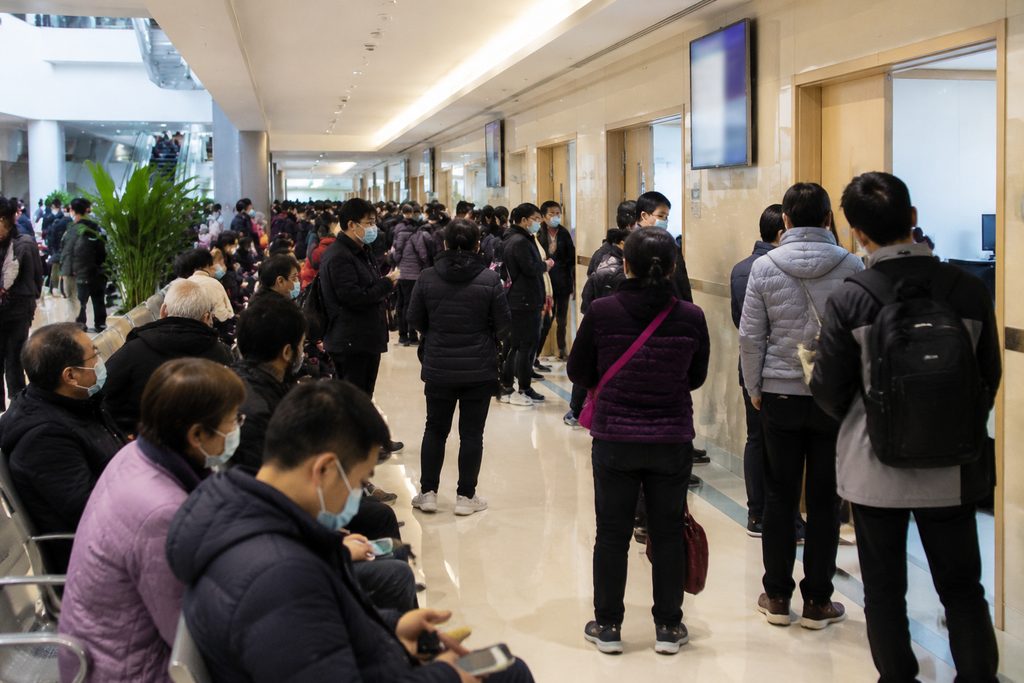
You’ve probably heard that seeing a top specialist in China means waiting in endless lines with thousands of local patients. The reality is more nuanced — and for international patients, the actual barrier isn’t the queue. It’s knowing how the system is structured in the first place.
Most foreigners assume Chinese public hospitals operate like Western ones. Call the hospital, book an appointment, show up. That assumption falls apart within the first hour of trying. A top specialist at Peking Union Medical College Hospital or Ruijin Hospital might see 80 to 120 patients in a single morning session. The demand is staggering. And the booking system was never designed for someone calling from London, Dubai, or Singapore.
The top specialist appointment China wait time question doesn’t have a single answer. For a local patient walking in without connections, seeing a nationally renowned specialist could take weeks of trying — or simply never happen through the regular outpatient channel. For an international patient who understands the system, the timeline compresses dramatically. This article explains why the gap exists, what actually drives the difficulty, and how foreign patients navigate it without wasting a trip.
Key Takeaways
- China’s top 100 hospitals — ranked by Fudan University — handle outpatient volumes exceeding 10,000 patients per day at major centers, making direct booking nearly impossible for foreigners.
- The structural reason top specialists are hard to book: regular outpatient registration opens only days in advance, requires in-person payment, and operates entirely in Mandarin.
- International patients access top specialists through hospital international departments or VIP channels, which typically cost 1.5 to 2 times standard rates but include English coordination and scheduled appointments.
- You cannot pre-book surgery from overseas through the standard public channel — a face-to-face outpatient consultation must happen first, without exception.
The Problem: A System Built for Volume, Not for Foreigners
China has over 35,000 hospitals. The top 5% — roughly 1,700 institutions — deliver the vast majority of complex care. Within that group, the Fudan University Hospital Rankings identify the top 100 comprehensive hospitals, spread across 23 cities. Beijing alone holds 21 of them. Shanghai has 18. Guangzhou has 10. These are the hospitals international patients read about in medical journals and want to access.
But here’s the friction point. A flagship hospital like Fuwai Hospital — which performs over 14,000 cardiac surgeries annually, the highest volume of any heart center globally — operates a regular outpatient system where registration for a specific specialist opens only a few days before the visit. Payment must be completed in person or through Chinese mobile payment platforms. The entire interface is in Mandarin. Appointments vanish within minutes of opening.
For a foreign patient, this isn’t a scheduling inconvenience. It’s a structural wall. You cannot call the hospital’s main line and book a top cardiologist for next Tuesday. The operator may not speak English. The online registration platform requires a Chinese ID or local phone number. And even if you somehow secured a slot, you’d arrive to find a waiting hall with thousands of people and no bilingual signage.
That’s the honest answer to why it’s so hard to book a doctor in Shanghai or Beijing. The system works efficiently for locals who understand it. For everyone else, it’s opaque.
Why the Difficulty Exists: Three Structural Reasons
Volume That Dwarfs Western Hospitals
West China Hospital in Chengdu — one of the largest single-campus hospitals in the world — reports outpatient visits exceeding 20,000 per day during peak periods. Compare that to Mayo Clinic’s flagship Rochester campus, which handles roughly 1.3 million outpatient visits annually, or about 5,000 per day. The scale difference isn’t marginal. It’s a different order of magnitude.
This volume is why top specialists see so many patients. A senior orthopedic surgeon at a Shanghai tertiary hospital might complete 200 to 500 joint replacements per year. The average US orthopedic surgeon completes approximately 65. The Chinese surgeon’s clinic schedule reflects that throughput. Booking a slot means competing with thousands of local patients who have been navigating this system their entire lives.
Registration Rules That Block Advance Booking
Chinese public hospitals operate on a “day-of” registration model for regular outpatient care. You show up early, queue for a number, and hope the specialist you want is on duty that day. Some hospitals have moved registration online through WeChat or hospital apps, but these platforms require local payment methods and often a Chinese mobile number.
What about booking months ahead, like you would at a German university hospital? That option doesn’t exist through the regular channel. Surgery scheduling works the same way: you must first attend an outpatient consultation, receive a diagnosis, and then the surgeon’s team schedules the procedure. No consultation, no surgery. No exceptions.
This is the single biggest misunderstanding international patients bring to the process. They assume a top specialist appointment in China works like booking a private clinic in Singapore or Bangkok. It doesn’t. The public system was built for domestic demand, and it makes no accommodation for foreign patients.
Language and Infrastructure Gaps
Even if you solve the registration problem, you face the language barrier. Hospital signage in public areas is increasingly bilingual in major cities, but the actual patient journey — registration forms, payment counters, lab slips, pharmacy queues — operates almost entirely in Chinese. A patient who doesn’t read Mandarin cannot independently complete a hospital visit at a public tertiary center.
This is precisely why can foreigners see top doctors in China becomes the wrong question. The right question is: through which channel? Foreigners can absolutely access top specialists. But the pathway runs through hospital international departments, not the regular outpatient system.
The International Department Route: How Foreigners Actually Book Top Specialists
Every major hospital on the Fudan Top 100 list operates an international department or VIP clinic. These units exist specifically for patients who need scheduled appointments, English-speaking staff, and a less chaotic environment. They are not secret. But they are also not well-advertised outside China.
Through an international department, the booking process looks familiar to a Western patient. You provide medical records in advance. The department reviews them and recommends which specialist to see. An appointment is scheduled for a specific date and time. You arrive, check in at the international clinic, and see the specialist in a private consultation room with interpretation available.
The cost runs 1.5 to 2 times the regular outpatient fee. A regular specialist consultation might cost 50 to 200 RMB — roughly $7 to $28. The international department version might run $100 to $300 for the same specialist. For a top-tier national expert, the international department consultation fee can reach $500 or more. Still a fraction of what a comparable US specialist charges without insurance.
This is where the top specialist appointment China wait time question gets its answer. Through the regular channel: indefinite, possibly never. Through the international department: typically one to three weeks, depending on the specialist’s schedule and the completeness of your medical records.
VIP Medical Package Beijing Cost and What It Includes
Beijing’s top hospitals — Peking Union Medical College Hospital, Fuwai Hospital, Beijing Tiantan Hospital — all offer VIP or international packages. The VIP medical package Beijing cost varies significantly based on what you need. A basic package covering one specialist consultation, basic blood work, and an ECG might start around $500 to $800. A comprehensive executive health screening with multiple specialists, imaging, and same-day results runs $1,500 to $3,000.
What does the VIP package actually buy you? Three things, mostly. First, scheduled appointments with named specialists — no queuing at dawn. Second, an English-speaking coordinator who handles registration, payment, and navigation between departments. Third, priority access to imaging and lab results, often same-day for routine tests.
The VIP package does not buy you a faster surgery. It doesn’t move you ahead of clinically urgent cases. Chinese hospitals triage surgery scheduling by medical necessity, not payment tier. A VIP patient with a stable condition will still wait behind an emergency case. This is an important distinction that honest facilitators will state upfront.
How to Book a Famous Surgeon in China: The Step-by-Step Reality
Let’s be concrete about how to book a famous surgeon in China. The process has clear stages, and skipping any of them will stall your case.
First, you need a diagnosis. Chinese surgeons will not schedule surgery based on foreign imaging reports alone. They will review your records, but you still need to attend a consultation — either in person or via video. The surgeon’s team will order their own imaging and lab work. This is standard practice and not negotiable.
Second, you attend the consultation. This can happen through the international department in person, or increasingly through a video consultation first. Video consultations with top specialists cost $500 to $800 through hospital international departments. A written second opinion from a top-tier specialist runs $300 to $500. These are reference prices — final quotes vary by hospital and case complexity.
Third, the surgeon accepts your case. Not every surgeon accepts every patient. If your case is too complex, too simple, or outside the surgeon’s current focus, they may refer you to a colleague. This is a sign of a functional system, not a rejection.
Fourth, surgery is scheduled. Once the surgeon accepts your case, the wait for a non-urgent procedure typically ranges from one to four weeks. Urgent cases are prioritized. The scheduling timeline depends on operating room availability, the surgeon’s academic commitments, and your own medical readiness.
Fifth, you arrive and complete pre-operative testing. Most hospitals require pre-op testing one to three days before surgery. You’ll need to be in China during this window.
The entire process — from first contact to surgery — realistically takes three to eight weeks for an international patient who moves efficiently. Anyone promising a faster timeline for a non-urgent case is either cutting corners or overstating their influence.
Concierge Medicine China Price: What Coordination Services Actually Cost
Concierge medicine China price points have become a topic of confusion, partly because different providers bundle different services under the same label. Here’s what the market actually looks like as of 2026.
A bilingual medical companion — someone who accompanies you through the hospital visit, handles registration, payment, queueing, and interpretation — starts at $300 per day. This is for a half-day or full-day of on-the-ground support at a public hospital. The companion does not guarantee access to a specific specialist. They make the process navigable once you have an appointment.
Hospital appointment coordination starts at $300. This covers the logistics of securing an appointment through the hospital’s official international department or VIP channel. If the appointment cannot be secured, the coordination fee is refunded in full. That refund guarantee matters — it separates legitimate case managers from brokers selling access they don’t control.
For high-end, end-to-end coordination — airport pickup, hotel arrangement, hospital liaison, daily accompaniment, discharge coordination, follow-up scheduling — expect $5,000 to $8,000 for a full treatment journey. This is the VIP end-to-end coordination tier, aimed at patients from the Gulf states and high-net-worth individuals from Europe and North America.
What none of these fees buy is priority access to a named specialist outside the hospital’s official scheduling system. Any provider claiming otherwise is describing something that doesn’t exist in China’s regulated hospital environment. Access flows through the hospital’s own international department, not around it.
| Service | Typical Price Range (USD) | What It Actually Includes |
|---|---|---|
| Written second opinion (top specialist) | $300–500 | Review of existing records, written analysis and treatment direction |
| Video consultation (top specialist) | $500–800 | Live online consultation with the specialist, interpretation included |
| Bilingual medical companion | from $300/day | On-site navigation, translation, queueing, payment assistance |
| Hospital appointment coordination | from $300 | Securing appointments through official international department channels |
| VIP end-to-end coordination | $5,000–8,000 | Full journey management from arrival to discharge and follow-up |
Practical Considerations: Visas, Payment, and Follow-Up
The visa question trips up more patients than any other single issue. For medical treatment in China, the applicable visa category is the S2 visa, which covers short-term private affairs including medical treatment. Accompanying family members also apply for S2 visas. The S1 visa applies for stays exceeding 180 days. The M visa is for commercial and trade activities — it has nothing to do with medical treatment, despite what some outdated guides claim.
Visa processing requires supporting documents from the hospital, typically an invitation letter or treatment confirmation from the international department. Processing times vary by embassy and country of application. Budget three to six weeks for the visa process if you’re planning surgery.
Payment is another friction point. Chinese public hospitals require prepayment for inpatient care. International credit cards are accepted at international departments and private hospitals, but the regular public system operates on Chinese payment rails. Insurance reimbursement works on a pay-first, claim-later basis for most international policies. Some private international hospitals in China — United Family, Jiahui, Parkway — offer direct billing with major international insurers.
Follow-up after returning home is possible through video consultations. Most top Chinese hospitals now offer structured telemedicine follow-up for international patients. You’ll need to schedule these through the international department, and the cost is typically lower than the initial consultation.
Frequently Asked Questions
Through the regular public outpatient channel, a foreign patient without local assistance may never successfully book a top specialist. Through a hospital’s international department, the typical wait is one to three weeks for a consultation, assuming your medical records are complete and the specialist accepts your case. Surgery scheduling adds another one to four weeks for non-urgent cases.
Shanghai holds 18 of China’s top 100 hospitals — the second-highest concentration after Beijing. The city’s top institutions, including Zhongshan Hospital and Ruijin Hospital, draw patients from across eastern China. Demand exceeds capacity at the specialist level because these hospitals serve as regional referral centers for a population of over 200 million people. The difficulty is not a flaw in the system; it’s a function of Shanghai’s role as a national medical hub.
Yes, but it requires navigating the hospital’s international department directly, which means Mandarin-language communication, Chinese payment methods, and in-person coordination. Some hospitals have English-speaking international department staff, but availability varies. Many foreign patients find that the direct route works for simple consultations but becomes unwieldy for complex care requiring multiple departments and surgery scheduling.
Surgeons at top Chinese hospitals decline cases for legitimate clinical reasons — the case is outside their specialty focus, the risk profile doesn’t justify surgery, or the patient’s condition requires a different approach. If this happens, the international department typically recommends an alternative specialist within the same hospital or at a partner institution. You are not left without options.
For a patient who needs one simple consultation, probably not — the international department can handle that directly. For a patient traveling for complex surgery, coordination services typically pay for themselves by preventing wasted trips, avoiding miscommunication, and compressing the timeline. The key is understanding what you’re paying for: case management and logistics, not privileged access.
Your Next Step
The difficulty of booking a top Chinese specialist is real, but it is a navigational problem, not an access problem. The specialists are there. The hospitals are world-class. What stands between you and treatment is the structural gap between China’s domestic patient system and the needs of international patients.
Our team at China Medical Services helps international patients bridge that gap. We are not a hospital and we do not provide diagnoses. We handle hospital matching, appointment coordination through official international department channels, bilingual companionship, and visa guidance. If you’re considering treatment in China, start with a free consultation to understand your options and realistic timelines.
For more medical information and treatment options in China, visit chinamedservices.com (China Medical Services).
