Beijing Chao-Yang Hospital Emergency Care: What Foreigners Must Know Before Arriving
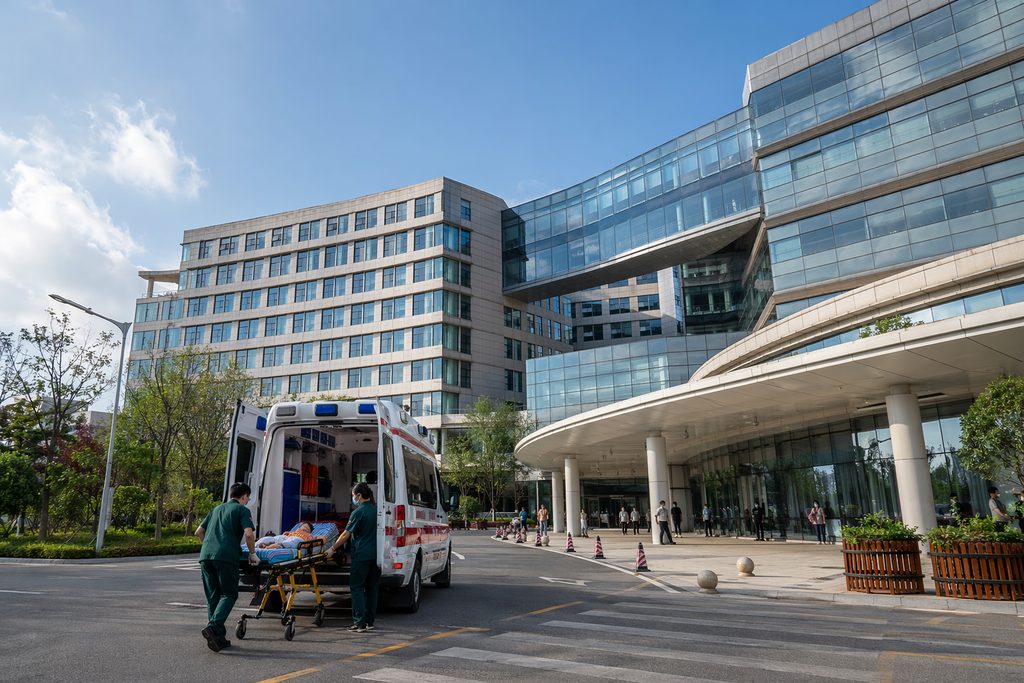
Beijing Chao-Yang Hospital Emergency Care: The Short Answer
You have probably heard that getting emergency treatment in China as a foreigner means long waits, cash-only payments, and no English support. The reality at Beijing Chao-Yang Hospital is more nuanced. The Beijing Chao-Yang Hospital emergency cost for foreigners typically starts around $50–$150 for a basic emergency consultation, with imaging and lab work adding $100–$500 depending on what the triage team orders. But the real challenge is not the price. It is the process.
Chao-Yang Hospital operates one of Beijing’s busiest emergency departments, handling over 6,000 emergency visits per day during peak seasons. Foreigners can absolutely use the emergency services there. What they cannot expect is the Western-style intake flow. You register first, pay a deposit, then see a doctor. Language support exists but is not guaranteed at every hour. That is the honest picture, and knowing it before an emergency happens changes everything about how you experience care.
Who This Is Right For — and Who It Isn’t
Not every foreigner in Beijing should default to Chao-Yang’s emergency department. The hospital is a public, tertiary-level institution with strong toxicology, respiratory, and cardiology capabilities. It is right for certain situations and wrong for others.
A good candidate for Chao-Yang emergency care includes:
- A foreigner already in Beijing who suffers a sudden, non-cosmetic medical event — chest pain, poisoning, severe respiratory distress, a fracture from a fall
- Someone with a known chronic condition that acutely worsens while traveling and needs stabilization, not elective treatment
- A patient who needs immediate toxicology or occupational exposure care, where Chao-Yang has one of China’s strongest clinical toxicology programs
- A traveler with limited Mandarin who has a local contact or a bilingual medical companion available
Who should not use Chao-Yang’s emergency department?
- Someone with a non-urgent issue who could book an outpatient appointment the next day — you will wait behind true emergencies
- A patient requiring a specialized elective procedure that is better planned through an international department at a hospital like Peking Union Medical College Hospital
- Anyone expecting direct insurance billing — Chao-Yang’s public emergency department requires upfront payment, which you then claim back from your insurer
- A foreigner with no local support and no Chinese language ability who is not in a life-threatening condition — a private international hospital may serve you faster
Being honest about who should not go there is what makes the rest of this guidance trustworthy.
The Options, Compared
Beijing gives foreigners genuine choices in emergency care. These choices differ in cost, speed, English support, and insurance handling. Here is what the landscape actually looks like:
| Option | Typical ER Consultation Cost | English Support | Insurance | Wait Time for Non-Critical Cases |
|---|---|---|---|---|
| Chao-Yang Hospital Public ER | $50–$150 | Limited; not guaranteed at night | Pay upfront, claim later | 2–6 hours |
| Peking Union Medical College Hospital International ER | $150–$400 | Good; dedicated international staff | Often direct billing with major insurers | 1–3 hours |
| United Family Hospital (Private, JCI) | $200–$500 | Excellent; native English | Direct billing standard | 30–90 minutes |
| Beijing Friendship Hospital Public ER | $40–$120 | Minimal | Pay upfront, claim later | 3–8 hours |
Which column fits you depends on two things: how urgent the situation is and what your insurance covers. If you are having a true emergency — chest pain, stroke symptoms, severe trauma — go to the nearest capable ER, period. That could be Chao-Yang. If you have a non-life-threatening issue and want English support with direct billing, a private option like United Family makes more sense. Most foreigners we work with end up using a mix: public ER for true emergencies, private for everything else.
What Happens Inside the Chao-Yang Emergency Department
Here is the step-by-step reality that no hospital website will tell you. When you arrive at Chao-Yang’s emergency building, you go to the registration window first. Not the triage nurse. Registration. You will need your passport. A deposit is collected — typically 2,000–5,000 RMB, roughly $280–$700 USD. This deposit is applied against your final bill.
After registration, you proceed to triage. Chao-Yang uses a four-level system. Level 1 and 2 patients — the critically ill — are seen immediately. Level 3 and 4 patients wait. That is how it should work. But here is what surprises many foreigners: the waiting area is crowded, loud, and largely in Chinese. You will not see the calm, curtained bays of a Western ER. You will see dozens of people, family members helping patients, and staff moving quickly.
When your number is called, you see a physician in a shared consultation room. Privacy is limited. The doctor may speak some English, especially younger physicians, but this is not guaranteed. If you need imaging — CT, X-ray, ultrasound — you pay for each test separately at a payment window before the test is performed. This pay-as-you-go model feels strange if you are used to getting one bill weeks later. But it is how Chinese public hospitals operate.
And here is a hard truth: if you need admission, the emergency department cannot admit you directly without a bed being available in the relevant specialty department. Chao-Yang’s inpatient wards run at near-full capacity. You may wait in the emergency observation area for hours or even a day before a bed opens. This is not a failure of the hospital. It is the reality of a public system serving over 23 million people in Beijing.
How Does Emergency Care Work for Tourists in Beijing?
Tourists face the same process as residents, with one added layer: payment. A tourist with travel insurance still pays out of pocket at a public ER like Chao-Yang. You keep every receipt, every test report, every prescription. Your insurer reimburses you later. Some travel insurance policies offer direct billing at private hospitals, but almost none do at public hospitals in China.
For a tourist, the sequence looks like this: emergency happens → you or someone with you calls 120 (China’s emergency ambulance number) or takes a taxi → you arrive at the ER → you register with your passport → you pay a deposit → you receive care → you pay for each test and medication → you collect itemized receipts → you file a claim with your insurer when you are stable enough to do so.
One practical note: the 120 ambulance service in Beijing is efficient and costs far less than Western ambulance services — typically $15–$50 depending on distance and equipment used. But the dispatcher will likely speak only Chinese. If you cannot communicate, have someone local make the call for you. This is where a bilingual medical companion changes the experience from overwhelming to manageable.
What It Costs: Real Numbers for Foreigners
The Beijing Chao-Yang Hospital emergency cost for foreigners is not a fixed number. It depends on what the triage team orders. But here are realistic ranges based on what our team has seen coordinating care for international patients:
- Emergency registration and basic consultation: $50–$150
- Standard blood work panel: $80–$200
- Chest X-ray: $30–$80
- CT scan (head, chest, or abdomen): $150–$400
- Ultrasound: $50–$150
- ECG: $20–$50
- IV fluids and basic medications: $30–$120
- Emergency observation bed (per night): $100–$250
A typical foreign patient with moderate symptoms — say, severe dehydration from food poisoning or a suspected fracture requiring X-rays — might leave the Chao-Yang ER with a bill between $300 and $800. A more serious case requiring CT imaging, extended observation, and specialist consultation could reach $1,500–$3,000. Compare that to a United States emergency visit for the same presentation, which routinely exceeds $5,000–$10,000 before insurance. The cost advantage in China is real, even at the emergency level.
What is not included in any of these numbers: a bilingual medical companion, if you choose to have one. That service runs from $300 per day through providers like China Medical Services. It is not required. But for a foreigner in distress who cannot read a Chinese hospital sign or communicate with a triage nurse, it changes the entire experience.
Practical Considerations: Documents, Payment, and Language
Before you ever step foot in a Beijing emergency room, understand these logistics.
Documents. Your passport is non-negotiable. Without it, you will not be registered. If you have travel insurance, carry your policy number and the insurer’s emergency contact information. If you have a pre-existing condition, carry a one-page summary of your diagnosis, medications, and allergies — ideally translated into Chinese. This single document saves time and prevents medication errors.
Payment. Public emergency departments in Beijing accept cash, Chinese debit cards, and the two dominant mobile payment platforms, WeChat Pay and Alipay. Foreign credit cards are generally not accepted at public hospital payment windows. If you are a foreigner without a Chinese bank account, you have two options: carry sufficient cash, or set up an international version of Alipay or WeChat Pay before you need it. Some foreigners are surprised to learn that their Visa or Mastercard will not work at the Chao-Yang payment counter. It will not.
Language. This is the single biggest friction point. Chao-Yang Hospital does not guarantee English-speaking staff in its emergency department. Some physicians speak functional English. Many do not. Nursing staff and registration clerks rarely do. If you arrive without Chinese language support, you will rely on translation apps, hand gestures, and the goodwill of strangers. For a true emergency, that is a risk you may have to accept. For anything less urgent, it is a reason to consider a private hospital or to bring a bilingual companion.
Follow-up after returning home. If you receive emergency care in Beijing and then fly back to your home country, you need documentation. Ask for a discharge summary in Chinese and, if possible, an English translation. Request copies of all imaging on a CD or USB drive. Ask for a medication list with generic drug names, not just Chinese brand names. Your home physician will need all of this to continue your care safely.
Can Foreigners Use Emergency Services at Chao-Yang Hospital?
The direct answer is yes. There is no legal restriction preventing foreigners from using the emergency department at Chao-Yang Hospital or any other public hospital in Beijing. Chinese law requires public hospitals to provide emergency treatment to anyone in need, regardless of nationality or ability to pay at the moment of arrival. The deposit system exists, but critically ill patients are stabilized before payment is demanded. That is the law, and it is enforced.
But there is a difference between being allowed to use a service and being well-served by it. Foreigners can use Chao-Yang’s emergency department. Whether they should depends on the factors above: urgency, language support, insurance, and comfort with a system that operates differently from what they know at home.
One more thing worth stating plainly: the 24 hour emergency hospital Beijing English speaking staff situation is improving, but it is not solved. Chao-Yang has made efforts to train staff in basic medical English, particularly in departments that see more international patients. But at 3 a.m. on a Tuesday, the English-speaking physician may not be on duty. If English support is essential to you, plan around that reality rather than hoping for it.
Comparing Emergency Treatment Prices: Beijing vs. Other Chinese Cities
If you want to compare emergency treatment prices Beijing hospitals against other major Chinese cities, the differences are modest. Beijing and Shanghai sit at the top of the cost curve, typically 10–20% higher than comparable public hospitals in Chengdu, Wuhan, or Xi’an. But the gap is small in absolute terms. A CT scan that costs $250 in Beijing might cost $200 in Chengdu. For a foreigner already in Beijing, the cost of traveling to another city for emergency care makes no sense.
What does vary significantly is the private hospital premium. United Family and Raffles in Beijing charge two to four times what a public hospital charges for the same emergency workup. You are paying for language support, shorter waits, direct insurance billing, and a Western-style environment. Whether that premium is worth it depends on your insurance and your stress tolerance.
For the best emergency room for international patients in China, the honest answer is that it depends on what “best” means to you. If best means fastest with the most English support, a private international hospital wins. If best means most clinically capable for complex toxicology or respiratory emergencies, Chao-Yang is genuinely excellent. If best means most affordable while still competent, a public hospital like Chao-Yang or Friendship is the answer. There is no single best. There is only best for your situation.
Frequently Asked Questions
You will be stabilized first. Chinese law mandates that public hospitals provide emergency treatment regardless of ability to pay. The hospital will treat the immediate threat to life or limb, then address payment once you are stable. This does not mean the care is free. The bill will follow. But no one is turned away from a Chinese public emergency department while actively dying. That is a hard legal requirement, and Chao-Yang follows it.
Most international insurers will reimburse emergency treatment at any licensed hospital, including public hospitals in China. But almost none will direct-bill at a public hospital. You pay upfront, collect itemized receipts and a discharge summary, and submit a claim. Some insurers require pre-authorization even for emergency care when it is feasible to obtain. Check your policy’s emergency provisions before you travel. If you need help navigating this, a medical coordination service can document your care properly from the start.
This is where the system gets complicated. Emergency admission does not guarantee immediate surgery. If you need an operation, the surgical team must evaluate you, a bed must be available in the surgical ward, and the hospital must confirm that your condition is stable enough for the procedure. For foreigners, there is an additional consideration: the hospital will want assurance of payment before proceeding with non-emergency surgery. Emergency surgery to save life or limb happens immediately. Semi-urgent surgery may wait hours or days. This is not unique to Chao-Yang. It is how public hospitals across China operate.
No. Emergency departments in Chinese public hospitals assign physicians based on triage level and shift schedules. You cannot request a specialist by name in the ER. If you want a specific senior specialist, that requires an outpatient appointment through the hospital’s international department or a coordinated referral. The emergency department is for stabilization, not for choosing your doctor.
Chao-Yang has a pediatric emergency service, but Beijing Children’s Hospital and the pediatric emergency department at Peking University First Hospital are more specialized for complex pediatric cases. For a simple fever, laceration, or minor injury, Chao-Yang can handle it. For anything involving a child under 2 years old or a complex pediatric condition, go to a dedicated children’s hospital. They exist precisely because general emergency departments are not optimized for pediatric care.
Your Next Step
Emergency care in Beijing is accessible, affordable by Western standards, and clinically competent at hospitals like Chao-Yang. What it is not is familiar. The registration-first process, the pay-per-test model, the language barrier, and the crowded waiting areas surprise foreigners every day. Knowing these realities in advance — and preparing for them — is the difference between a manageable emergency and a traumatic one.
China Medical Services helps international patients navigate exactly these situations. We are not a hospital, we do not employ doctors, and we do not provide diagnoses or treatment. What we do is coordinate: bilingual companions who meet you at the hospital, translate with medical staff, manage registration and payment logistics, and make sure your documentation is complete for insurance claims. If you are planning travel to Beijing or are already here and want a contact ready before anything goes wrong, explore our patient coordination services. One short conversation now can save you hours of confusion later.
Emergency care in Beijing works. But it works better when you are prepared.
For more medical information and treatment options in China, visit chinamedservices.com (China Medical Services).
