Is Medical Tourism Safe in China? A Data-Driven Guide for Foreign Patients
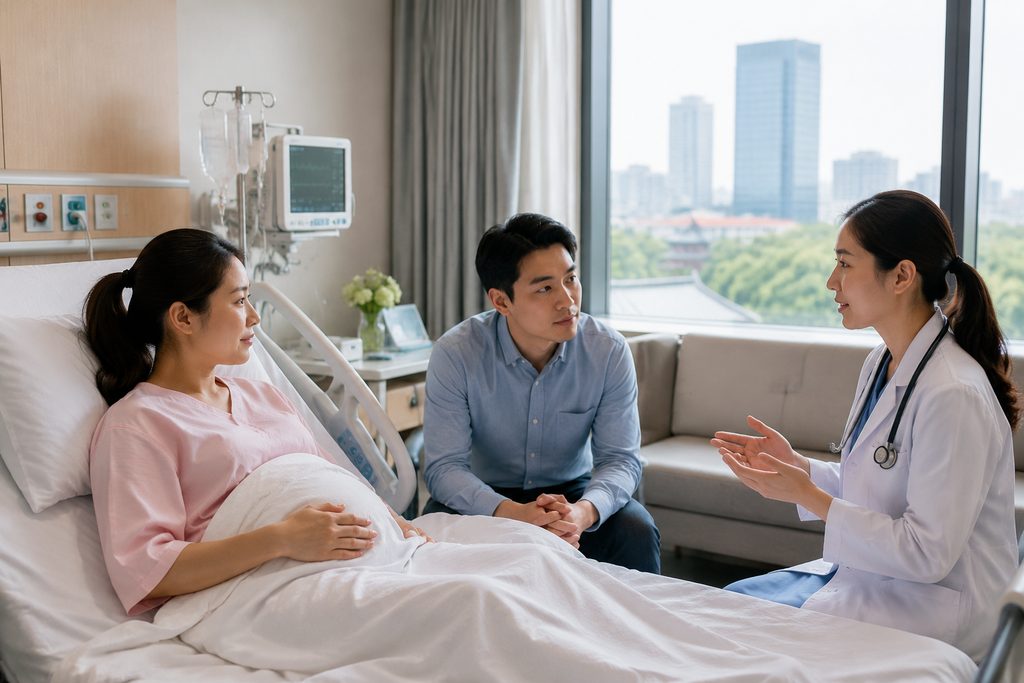
According to data from China’s National Health Commission, the country’s top-tier hospitals perform over 80 million inpatient surgeries annually. The question isn’t whether the volume exists. The question is whether the system is safe for you. Is it safe to have surgery in China? For patients who select the right hospital and understand the system, the answer is yes — with caveats that matter. Our team at China Medical Services has spent years helping international patients navigate this exact question.
China’s healthcare landscape splits into two very different worlds. One is the public hospital system serving 1.4 billion citizens. The other is the international medical sector built for patients like you. Both can deliver excellent outcomes. Neither is automatically safe without due diligence.
How This Actually Works, Step by Step
You don’t just book a flight and show up. The process for international patients follows a sequence that, when respected, dramatically lowers risk.
Step 1: You send your medical records. Radiology images, pathology reports, blood work, current medication list. Everything gets translated into Chinese by a medical translator. This matters more than most patients realize. A mistranslated drug name or dosage creates real danger.
Step 2: A Chinese specialist reviews your case. Not a general practitioner. A specialist in your exact condition. They determine whether your case is appropriate for treatment in China and what the realistic options are. Some patients get told to stay home. That’s a good outcome too.
Step 3: You receive a written treatment plan. This includes the recommended hospital, department, lead physician, estimated length of stay, and cost range. You review it with your home physician before deciding anything.
Step 4: Hospital registration and scheduling. Here’s the reality most foreigners don’t know: public hospitals in China do not allow overseas patients to book outpatient appointments in advance. You register on the day, queue for a number, and wait. For surgery, you must first attend an in-person consultation. The surgeon evaluates you face-to-face before scheduling any procedure.
That’s why international patients almost always use hospital international departments or VIP channels. These allow advance scheduling, provide English-speaking staff, and shorten the diagnostic phase. The cost runs 1.5 to 2 times the standard rate — and it’s worth every yuan for a foreign patient who doesn’t speak Mandarin.
Step 5: Visa processing. You apply for an S2 visa with a notation indicating medical treatment as your purpose. Family members accompanying you also apply for S2 visas. Processing typically takes 1 to 4 weeks depending on your home country and the specific consulate. Supporting documents from the hospital strengthen the application.
Step 6: Arrival, treatment, recovery, and follow-up coordination. This is where a bilingual medical companion becomes invaluable. They handle registration, queue management, payment, translation during consultations, and navigation through hospital campuses that can see 10,000+ outpatient visits daily.
What Does “Safe” Actually Mean in Chinese Healthcare?
Safety in medical tourism has three components: clinical safety, financial safety, and continuity of care. Let’s address each honestly.
Clinical safety depends on hospital selection. China has 35,000+ hospitals. The top 5% — roughly 340+ top-ranked hospitals across 37 cities — deliver care comparable to leading Western institutions. Fuwai Hospital in Beijing performs over 14,000 cardiac surgeries annually, the highest volume of any heart center globally. Volume drives competence. A surgeon who performs 300 valve replacements yearly has skills a surgeon performing 30 cannot match.
But here’s the uncomfortable truth: outside that top tier, quality varies enormously. Rural and lower-tier hospitals face resource constraints, inconsistent training, and less rigorous oversight. The gap between a Fudan-ranked top 100 hospital and an average county hospital is vast. International patients should never consider hospitals outside the accredited top tier.
Financial safety is simpler. Public hospitals require prepayment. You deposit funds before admission, and costs are deducted as services are provided. Insurance reimbursement happens afterward through your home insurer. Private international hospitals — many with JCI accreditation — offer direct insurance billing. That’s a significant advantage if your insurer partners with them.
A Realistic Timeline
Patients consistently underestimate how long the pre-treatment phase takes. Here’s what a realistic schedule looks like for a surgical case:
| Phase | Duration | What Happens |
|---|---|---|
| Medical record gathering & translation | 3–10 days | Collecting all imaging, reports, and medication history. Professional medical translation into Chinese. |
| Specialist review & treatment plan | 5–14 days | Chinese specialist evaluates your case. Written plan with hospital recommendation and cost estimate. |
| Hospital scheduling | 7–21 days | International department confirms appointment dates. For surgery, an in-person consultation is mandatory first. |
| Visa processing | 7–28 days | S2 visa application with hospital support documents. Timing varies by consulate and home country. |
| Travel & initial consultation | 3–7 days | Arrival, hospital registration, face-to-face evaluation with the surgical team. |
| Pre-operative testing | 2–5 days | Blood work, imaging, cardiac clearance. Standard for any major surgery. |
| Surgery & hospital stay | Varies by procedure | Cardiac bypass: 7–10 days. Joint replacement: 5–7 days. Complex oncology: 2–4 weeks. |
| Post-discharge recovery in China | 7–30 days | Most surgeons want to see you at least once before you fly home. |
Total time from first contact to surgery: typically 4 to 10 weeks. Anyone promising faster is cutting corners.
What Can Go Wrong — and What Happens Then
Every medical system has failure modes. China’s are specific and knowable.
Communication breakdowns. You’re in a hospital where most staff speak Mandarin only. Even in international departments, nurses on night shift may have limited English. If you can’t describe your pain level, medication allergies, or new symptoms, care quality drops. The fix: a bilingual medical companion present during all critical interactions. This isn’t a luxury. It’s a safety measure.
Diagnostic mismatch. Your home doctor suspected Condition A. The Chinese specialist finds Condition B. This happens more often than patients expect, especially in oncology. The fix: written second opinions from top specialists before you travel. A $300–500 written second opinion from a Fudan-ranked hospital specialist can prevent a $15,000 mistake. We’ve seen it happen.
Unrealistic expectations about scheduling. You arrive expecting surgery on day three. The hospital schedules it for day twelve. This isn’t negligence — it’s how a system serving 1.4 billion people operates. The fix: plan buffer time. If your total trip is 30 days, assume 10 of them are waiting and logistics.
Complications after you fly home. You’re back in London or Dubai and something feels wrong. Your Chinese surgeon is 8,000 kilometers away. The fix: before leaving China, get a complete discharge summary in English, all operative notes translated, and a direct line of communication with your Chinese medical team. Many international departments now offer post-discharge video follow-ups.
Payment disputes. Public hospitals itemize charges, but the system moves fast. You may get billed for tests you don’t remember receiving. The fix: review itemized statements daily with your companion. Question anything unclear immediately. Refunds for overcharges are possible but slow.
How to Evaluate a Chinese Hospital for Your Specific Procedure
Don’t ask “is China safe?” Ask “is this specific hospital safe for this specific procedure?” The evaluation criteria differ from what you’d use at home.
Check the Fudan ranking for your specialty. The Fudan University Hospital Rankings evaluate 45 specialties separately. A hospital ranked among China’s top 10 for oncology may be mediocre for orthopedics. The specialty-specific rankings matter more than overall reputation. Peking Union Medical College Hospital excels across most specialties. But for cardiac surgery, Fuwai Hospital outperforms it. For liver surgery, Zhongshan Hospital in Shanghai is the reference standard.
Verify JCI accreditation. JCI is the international gold standard. Around 100 Chinese hospitals hold JCI accreditation. Most are private international facilities like United Family and Jiahui, though some public hospital international departments also qualify. JCI means English-speaking protocols, international safety standards, and direct insurance billing capability. If you’re asking how safe is medical treatment in China, JCI status is your clearest signal.
Look at surgical volume for your procedure. Ask directly: “How many of these procedures does this surgeon perform annually?” Top Chinese specialists often perform 10–20 times the annual volume of their Western counterparts. A cardiac surgeon at Fuwai may do 400+ bypasses yearly. Volume compensates for many systemic weaknesses.
Understand what “international department” actually means. Some are genuinely integrated with top clinical teams. Others are essentially premium billing layers over standard care. Ask whether your surgeon is a full-time attending at the parent hospital or a visiting consultant. The distinction affects continuity of care.
For patients specifically researching best hospitals in China for foreigners, the answer depends on your condition, your budget, and your insurance. A patient needing heart bypass surgery will find heart bypass cost Shanghai at Zhongshan Hospital runs $12,000–20,000 — roughly one-tenth the US price. But cost savings mean nothing if the surgical team isn’t right for your specific anatomy.
Practical Considerations: Records, Visa, Payment, Insurance, Language, Follow-Up
These are the unglamorous details that determine whether your medical trip succeeds or collapses.
Medical records. Bring everything. Original imaging on CD or cloud access, not just written reports. Chinese radiologists want to see the actual scans. Bring your medication list with generic names, not brand names. Chinese pharmacies stock different brands. Bring your home physician’s contact information — Chinese specialists often want to consult with them directly.
Visa category. S2 visa, with medical treatment noted as the purpose. Your accompanying family members need their own S2 visas. Processing requires an invitation letter from the hospital and proof of appointment. Some medical tourism packages China include visa support — verify what “support” means. It should mean document preparation and consulate-specific guidance, not promises of approval. No legitimate service can guarantee visa issuance.
Payment. Public hospitals: prepayment deposit, typically 50–100% of estimated costs. Bring a payment method that works in China — international credit cards are accepted at international departments but often not elsewhere. Wire transfers take 3–5 business days. Private international hospitals with JCI accreditation: direct insurance billing means you may pay only your deductible upfront.
Insurance. Contact your insurer before booking anything. Ask specifically: “Do you cover treatment at this hospital in China?” Some insurers require pre-authorization. Others exclude international treatment entirely. Get written confirmation. If your insurer has partnerships with JCI accredited hospitals Beijing or Shanghai facilities, use those — it simplifies everything.
Language. Even at top international departments, expect gaps. Night-shift nurses, radiology technicians, pharmacy staff — many won’t speak English. A bilingual medical companion bridges these gaps. They’re present for consultations, coordinate with nursing staff, and translate discharge instructions. From $300 per day, this is the single highest-value investment in your safety.
Follow-up care at home. Before leaving China, get written discharge instructions in English. Get your operative report translated. Get a medication plan your home physician can continue. Schedule a follow-up appointment with your home doctor within two weeks of return. And keep your Chinese team’s contact information for questions that arise months later.
Frequently Asked Questions
At top-tier hospitals — the Fudan-ranked top 100 and JCI-accredited facilities — surgical outcomes are comparable to leading Western centers for most common procedures. The key difference is system consistency. In the US, quality is relatively uniform across accredited hospitals. In China, the gap between top-tier and average is much wider. Your safety depends almost entirely on hospital selection.
Chinese hospitals have established protocols for surgical complications, and top-tier facilities are equipped to handle them. Medical malpractice claims by foreign patients are legally possible but procedurally complex and slow. The practical safeguard is choosing a hospital with strong internal quality controls and maintaining open communication with your care team. Many international patients also purchase medical tourism insurance that covers complication-related extended stays.
Yes, foreign patients can file medical malpractice claims in Chinese courts. The process requires Chinese legal representation and typically takes 1–3 years. Compensation amounts are generally lower than US standards. This is why prevention — hospital selection, specialist vetting, and bilingual support — matters more than legal recourse.
Top-tier Chinese hospitals often have newer equipment than many Western facilities. China has invested heavily in medical infrastructure over the past decade. Robotic surgery systems, advanced imaging, and modern operating theaters are standard at Fudan-ranked hospitals. The technology gap runs the other direction at lower-tier facilities, which is another reason to stay within the top tier.
Verify three things. First, confirm the hospital appears on the Fudan ranking or holds JCI accreditation. Second, ask for the specific surgeon’s credentials — their training background, years of experience, and annual procedure volume. Third, check whether the international department is physically located within the main hospital campus or a separate facility. Integrated departments share the hospital’s clinical resources. Standalone facilities may not.
Your Next Step
The question “is it safe to have surgery in China?” has a qualified answer: yes, at the right hospital, with the right preparation, and with the right support on the ground. We help international patients identify the appropriate hospital for their specific condition, coordinate with hospital international departments, and provide bilingual medical companions throughout treatment. We don’t perform medical procedures. We don’t make clinical decisions. We handle the logistics so you can focus on your health.
If you’re considering treatment in China, start with a conversation. Send us your medical records and we’ll tell you honestly whether China is the right choice for your case. No pressure. Just a clear-eyed assessment from people who understand this system deeply. Request a free consultation and we’ll respond within 48 hours.
For more medical information and treatment options in China, visit chinamedservices.com (China Medical Services).
