Knee Replacement Recovery in China: Timelines, Costs, and What to Expect
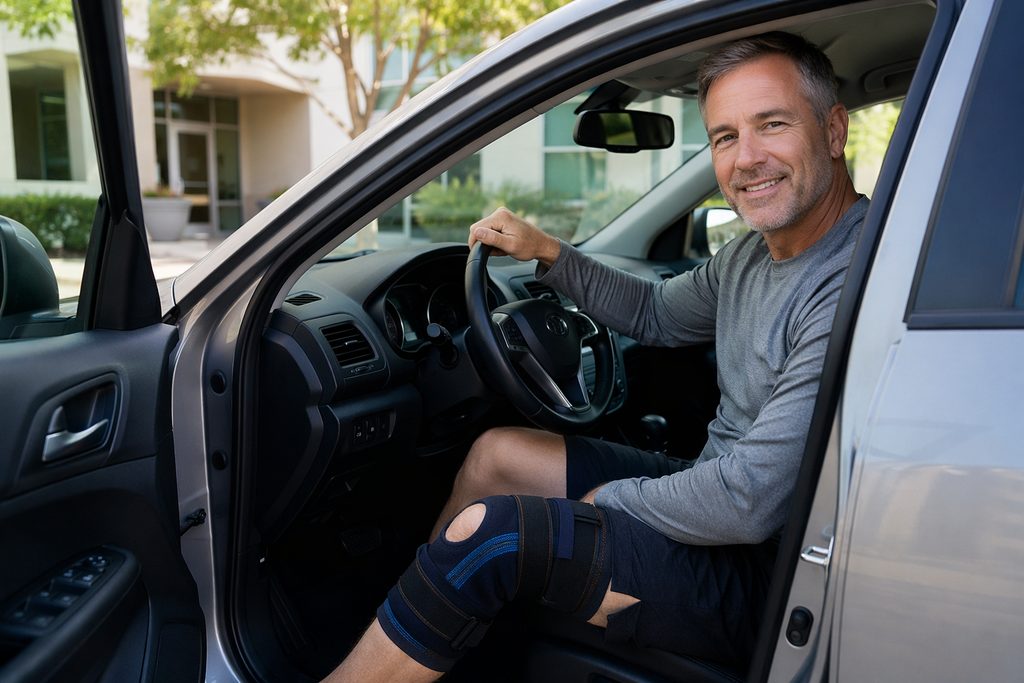
When 58-year-old Robert from Manchester finally scheduled his total knee replacement, the surgeon told him the wait would be 14 months. His osteoarthritis had already forced him off the golf course and made stairs a daily negotiation. Fourteen months of limping. Fourteen months of watching his leg muscles waste away. He started researching alternatives and landed on a question that thousands of patients now ask every year: what does the knee replacement cost China actually look like, and how long before I can walk normally again?
The honest answer is that recovery follows a predictable arc regardless of where you have surgery — but the timeline to getting that surgery varies enormously by country. In China, a top-tier orthopedic hospital can typically schedule your procedure within 2 to 4 weeks of your initial consultation, assuming your records are complete and your surgeon approves the plan. Recovery itself runs on biology: most patients stand within 24 hours, walk with a walker by day 3, and return to normal daily activities around week 6 to 12. Full recovery — the point where you forget you ever had the operation — takes 6 to 12 months.
Key Takeaways
- Total knee replacement in China costs roughly $8,000 to $18,000 at top public hospitals, compared to $35,000 to $70,000 in the United States for the same procedure.
- Recovery milestones are nearly identical to Western benchmarks: walking with assistance within days, driving at 4 to 6 weeks, full activity by 3 to 6 months.
- The biggest barrier for international patients is not clinical quality — it is navigating a Mandarin-first hospital system without local support.
- You cannot book surgery remotely through standard outpatient channels. A video consultation or written second opinion comes first, then in-person evaluation, then scheduling.
The Problem: Waiting Lists and Prices That Don’t Wait
The National Health Service in the United Kingdom reported a median wait of 14.6 weeks for trauma and orthopaedics treatment in 2024, with some patients waiting over a year for joint replacement. Canada’s benchmark for knee replacement is 182 days — and that is the target, not the reality. In the United States, the delay is rarely about queues. It is about money. A 2023 analysis in Health Affairs found the average total cost of a primary total knee arthroplasty in the US ranged from $35,000 to $70,000 depending on geography and hospital system.
So the patient faces a fork in the road. Wait in pain, or pay a price that wipes out savings. Robert’s case is not unusual. Osteoarthritis severe enough to require knee replacement affects approximately 1 in 8 adults over 60 in Western countries. That is millions of people stuck between two bad options.
And delay has consequences. Muscle atrophy accelerates. The opposite knee compensates and deteriorates. Cardiovascular fitness drops. One 2022 study in The Bone & Joint Journal found that patients who waited more than 180 days for knee replacement showed measurably worse functional outcomes at 12 months post-surgery than those treated within 90 days.
Why China Delivers Results for Knee Replacement Patients
China’s orthopedic centers have grown into some of the highest-volume joint replacement programs on the planet. Volume is not a marketing term here — it is the structural reason outcomes hold up against any Western benchmark.
Clinical Volume Drives Surgical Precision
A senior orthopedic surgeon at a top Chinese tertiary hospital performs between 300 and 600 knee replacements per year. The average US orthopedic surgeon performs roughly 60 to 70 annually, according to data from the American Joint Replacement Registry. That gap matters. Multiple studies, including a 2019 analysis in JAMA Surgery, have linked higher surgeon and hospital procedure volume to lower complication rates and shorter lengths of stay in joint replacement.
Hospitals like Peking University Third Hospital and Beijing Jishuitan Hospital run dedicated joint replacement wards that discharge more knee patients in a month than many Western hospitals handle in a year. Their teams see complications, anatomical variations, and revision cases at a frequency that builds pattern recognition no textbook can teach.
Technology and Efficiency at Scale
Chinese orthopedic departments adopted computer-assisted navigation and robotic-assisted knee replacement systems at scale. Mako and CORI robotic platforms are in routine use at major centers in Beijing, Shanghai, and Guangzhou. The workflow is different from what many Western patients expect: pre-operative imaging is completed in a single day, not spread across weeks. Inpatient rehabilitation begins the morning after surgery, with physiotherapists on the ward rather than scheduled as separate outpatient visits.
That compression of the care pathway — diagnostics, surgery, and early rehab under one roof — shortens the total time you spend in-country. Most international knee replacement patients stay 3 to 4 weeks in China for surgery plus initial recovery before flying home.
Cost Advantage Without Quality Compromise
Here is the number that stops patients mid-scroll: the knee replacement cost China at a top public hospital typically runs $8,000 to $18,000 for a primary total knee arthroplasty, including the implant, hospital stay, and surgeon fees. Private international hospitals in Beijing or Shanghai charge more — generally $25,000 to $40,000 — but still undercut US list prices by half or more.
Why the gap? Labor costs in Chinese healthcare are structurally lower. Hospital construction and equipment amortization spread across enormous patient volumes. And Chinese public hospitals operate on thin margins by design, not as profit centers. The implant itself — often a Stryker, Zimmer Biomet, or DePuy Synthes component — is the same device used in London or Los Angeles. No corners cut on hardware.
| Cost Component | China (Top Public Hospital) | United States (Average) |
|---|---|---|
| Primary total knee replacement | $8,000 – $18,000 | $35,000 – $70,000 |
| Revision knee replacement | $15,000 – $28,000 | $50,000 – $90,000 |
| Hospital stay (3-5 days) | Included in surgical package | $2,000 – $4,000 per day |
| Physiotherapy (10 sessions) | $300 – $800 | $1,000 – $2,500 |
| Bilingual medical companion | From $300/day | Not applicable |
Prices vary by hospital tier, implant brand, and case complexity. Always confirm a written quote before committing.
How Long Does Knee Replacement Recovery Take in China: A Week-by-Week Timeline
Recovery is recovery. Your knee does not heal faster because you crossed a time zone. But the structured inpatient rehabilitation in Chinese hospitals often gets patients to early milestones sooner than fragmented Western outpatient models. Here is the realistic arc.
Day 0 — Surgery day. You arrive at the operating theater in the morning. Regional anesthesia with sedation is standard. The procedure takes 60 to 90 minutes. You wake up in recovery with your leg in a compression wrap.
Day 1. A physiotherapist gets you standing — yes, standing — within 24 hours. You take a few steps with a walker. This feels impossible. It is not. The knee is stable; what fights you is swelling and fear.
Day 2 to 3. You walk to the bathroom with assistance. Continuous passive motion machines may be used to bend the knee gently. Discharge planning begins. Most Chinese hospitals keep knee replacement patients 3 to 5 days, slightly longer than the US average of 1 to 2 days — which means more supervised early rehab, not less.
Week 1 to 2. You are discharged to a hotel or serviced apartment near the hospital. Daily outpatient physiotherapy continues. You walk with a walker, then transition to a cane. Stairs become possible one step at a time.
Week 3 to 4. This is when most international patients fly home. You can sit for a 6 to 10 hour flight if you book an aisle seat, wear compression stockings, and stand to stretch every 90 minutes. Your surgeon will clear you for travel before you leave.
Week 6. Driving is typically approved. You walk without aids for short distances. Swelling persists but decreases weekly. Return to desk work is common around this point.
Month 3. You walk a mile comfortably. Low-impact exercise — cycling, swimming — resumes. The knee still feels stiff in the morning and after long sitting.
Month 6 to 12. Full recovery. High-impact activity like running is generally discouraged permanently after knee replacement, but hiking, golf, tennis doubles, and gym work are all back on the table.
The total knee replacement recovery time abroad mirrors these milestones whether you have surgery in Beijing, Bangkok, or Boston. The variable is how much structured support you receive in the first critical month — and Chinese hospitals front-load that support aggressively.
Is Knee Replacement Safe in China? What the Data Shows
Safety is the question every patient asks, and it deserves a straight answer. The short version: yes, at top-tier hospitals, with qualifications. The longer version requires understanding how Chinese healthcare is structured.
China has over 35,000 hospitals. The top 5% — roughly the 340+ institutions ranked by Fudan University’s hospital rankings or accredited by Joint Commission International — operate at standards comparable to any Western academic medical center. These are the hospitals international patients should target. The gap between a Fudan-ranked orthopedic center and an unranked county hospital is enormous.
Infection rates tell part of the story. Published data from major Chinese joint replacement centers report surgical site infection rates of 0.5% to 1.2% for primary knee arthroplasty — in line with the 0.5% to 1.5% range reported in US and European registries. Venous thromboembolism prophylaxis protocols follow the same guidelines used by the American Academy of Orthopaedic Surgeons.
What differs is the patient experience. Public hospitals in China are high-volume, fast-paced, and Mandarin-first. Signage is in Chinese. Nurses may not speak English. You will not get the hand-holding of a Western private hospital unless you choose one — private international facilities like United Family Healthcare or Jiahui International Hospital offer English-speaking staff and Western-style care at higher prices. Both models deliver safe surgery. The choice is about comfort and budget.
For patients weighing medical tourism knee surgery China packages, the key is understanding what a package includes. Reputable coordinators bundle hospital fees, hotel, local transport, and a bilingual companion. What they cannot honestly bundle is a guaranteed surgeon or a fixed surgery date — those depend on hospital scheduling after your in-person evaluation.
Choosing the Best Knee Replacement Hospitals Beijing and Beyond
Beijing is the natural starting point for most international patients. It hosts 21 of the Fudan Top 100 hospitals — more than any other Chinese city — and several have orthopedic programs ranked among China’s top 10 for the specialty. The best knee replacement hospitals Beijing offers include Peking University Third Hospital, known for sports medicine and joint surgery, and Beijing Jishuitan Hospital, one of the highest-volume orthopedic centers in the country.
Shanghai is a close second. Shanghai Sixth People’s Hospital runs a joint replacement program with a national reputation. Guangzhou, Chengdu, and Hangzhou all have strong orthopedic departments at university-affiliated hospitals.
How do you choose? The Fudan specialty rankings for orthopedics are the most objective public benchmark. They rank departments by peer reputation and clinical output, not marketing budgets. Our department rankings break down the top 10 hospitals for orthopedics and 44 other specialties, so you can see exactly which institutions carry weight in joint replacement. For a broader view of hospital tiers across 37 cities, the top-ranked hospital database groups institutions by city and specialty strength.
One hard truth: you cannot simply email a Chinese public hospital and book a knee replacement for next month. Standard outpatient channels require in-person registration. International patients use the hospital’s international medical department or VIP channel, which offers English coordination and faster scheduling at a premium of 1.5 to 2 times standard pricing. That premium still lands far below Western prices.
Practical Considerations: Visas, Payments, and Follow-Up Care
Planning surgery abroad means handling logistics before you ever see an operating room. Here is what actually matters for knee replacement in China.
Visa. Medical travelers to China apply for an S2 visa, which covers short-term private affairs including medical treatment. Your accompanying family member applies for the same S2 category. The hospital’s international department will issue an invitation letter and treatment confirmation to support your application. Processing typically takes 1 to 2 weeks at your local Chinese embassy or consulate. Requirements change, so confirm current documentation with the embassy before booking flights.
Medical records. Bring everything: recent X-rays and MRI images (not just reports), blood work, medication list, and any prior surgical notes. Written second opinions from our coordination team typically cost $300 to $500 and give the Chinese surgical team a full picture before you travel.
Payment. Chinese public hospitals require upfront payment — typically a deposit covering the estimated full cost before admission. International credit cards are accepted at international departments. Private international hospitals may bill your insurer directly. US Medicare does not cover overseas surgery. Some private insurers and medical tourism policies do; check your plan before committing.
Language. Unless you choose a private international hospital, expect minimal English on the wards. A bilingual medical companion — from $300 per day — handles registration, queueing, payment, translation, and navigation. This is not a luxury. In a hospital that sees 10,000 outpatient visits daily, it is the difference between a smooth process and a stressful one.
Follow-up after returning home. Your Chinese surgeon will provide a discharge summary in English, including implant serial numbers and a rehabilitation protocol. Your home orthopedic surgeon or physiotherapist can take over from there. Most international patients schedule one video follow-up at 3 months, then continue locally.
Frequently Asked Questions
Not through standard public hospital channels. You need an in-person evaluation first. What you can do remotely is a video consultation or written second opinion, where the Chinese orthopedic team reviews your imaging and confirms you are a candidate. That reduces the risk of traveling for nothing. Surgery scheduling happens after the face-to-face consultation.
Top Chinese hospitals carry full malpractice insurance and have revision surgery capabilities on-site. Complication rates at Fudan-ranked orthopedic centers are comparable to Western benchmarks. Your coordinator should provide a clear escalation path: who to contact, which hospital department handles complications, and how revision surgery would be arranged. Ask about this before you commit. A reputable coordinator will have answers.
Yes. Major Chinese joint replacement centers use the same implant systems — Stryker, Zimmer Biomet, DePuy Synthes, Smith+Nephew — that dominate Western markets. The implant is not where the cost savings come from. Savings come from lower labor costs, efficient hospital operations, and thinner margins.
Plan for 3 to 4 weeks total. That covers pre-operative evaluation, surgery, hospital stay, and 2 to 3 weeks of supervised outpatient rehabilitation before you are cleared to fly. Some patients stay longer if they want additional physiotherapy before a long-haul flight.
Most domestic health plans — including US Medicare — will not cover elective surgery abroad. Some international health insurance policies and specialized medical tourism plans do. Check your policy’s overseas treatment clause. If you are paying out of pocket, the total cost including flights, accommodation, and a bilingual companion still typically runs 40% to 60% below US prices.
Your Next Step
Knee replacement recovery follows the same biological clock wherever you have surgery. What changes is how long you wait to start that clock, how much you pay, and how supported you feel through the process. If you are weighing the knee replacement cost China against another year of pain at home, the math deserves a serious look.
We are China Medical Services — a coordination team, not a hospital. We do not diagnose or treat. What we do is connect you with top-ranked Chinese orthopedic departments, arrange video consultations and written second opinions, and provide bilingual companions who stay with you through surgery and early recovery. When you are ready to explore whether this path fits your situation, a conversation
For more medical information and treatment options in China, visit chinamedservices.com (China Medical Services).
