Gastric Bypass in China: Top Hospitals, Real Costs, and How to Book
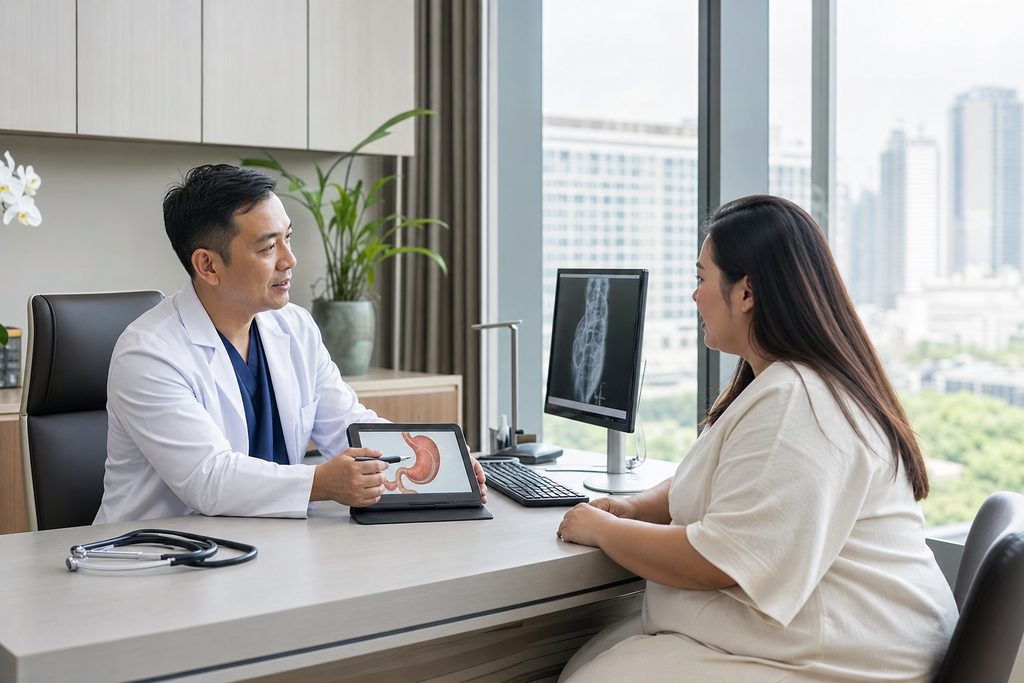
You have probably heard that traveling abroad for major surgery means trading safety for savings. The numbers tell a different story. Gastric bypass surgery cost China runs between $12,000 and $22,000 at leading public and JCI-accredited private hospitals — roughly one-fifth to one-third of the $35,000 to $60,000 typical in the United States. But price is only part of the equation. The harder question is which hospital actually delivers bariatric outcomes worth trusting, and how a foreign patient navigates a system built for 1.4 billion locals. Our team at China Medical Services has spent years mapping that terrain. This guide lays out what we know.
Gastric Bypass in China: The Short Answer
The best hospital for gastric bypass in China is not a single name — it is a tier. Shanghai’s Zhongshan Hospital Fudan University, Beijing Friendship Hospital, and the bariatric unit at West China Hospital in Chengdu all run high-volume metabolic surgery programs with English-capable international departments. Several JCI-accredited private hospitals in Shanghai and Beijing also offer bariatric packages designed for foreign patients. The honest short answer: you have strong options in at least six cities, and the right choice depends on your BMI, comorbidities, budget, and how much hand-holding you need.
That last variable matters more than most patients expect. A public hospital’s international wing can arrange surgery, but a bilingual companion for registration, payment, and ward communication changes the experience entirely.
Who This Is Right For — and Who It Isn’t
Gastric bypass is a major metabolic intervention, not a cosmetic shortcut. Chinese bariatric teams follow the same international guidelines used in the US and Europe, typically based on the 1991 NIH consensus criteria updated by the ASMBS and IFSO.
Generally suitable candidates:
- BMI of 40 or higher, regardless of comorbidities
- BMI of 35 to 39.9 with at least one obesity-related condition such as type 2 diabetes, hypertension, or severe sleep apnea
- BMI of 30 to 34.9 with poorly controlled type 2 diabetes or metabolic syndrome (some Chinese centers accept this range after endocrinology review)
- Documented history of failed medically supervised weight loss attempts
- Stable mental health status and no active substance abuse
Who should think twice:
- Patients with untreated endocrine causes of obesity (Cushing’s, hypothyroidism) — surgery would not fix the root problem
- Those unable to commit to lifelong vitamin supplementation and follow-up blood work
- Active smokers unwilling to quit before surgery (Chinese anesthesiologists often require 4–6 weeks cessation)
- Patients with severe, unstable cardiac or pulmonary disease where anesthesia risk outweighs benefit
- Anyone seeking a quick fix without understanding that bypass permanently alters digestion
If you fall into the second list, staying home is genuinely better. No savings justify a bad surgical candidacy.
The Options, Compared
China’s bariatric landscape splits into three tiers. Here is what each actually delivers.
| Option | Typical Cash Price (USD) | Wait Time After Consultation | English Support | Best For |
|---|---|---|---|---|
| Top public hospital, international wing (e.g., Zhongshan, West China) | $12,000–$18,000 | 2–6 weeks | Coordinator + interpreter; ward staff mostly Chinese-speaking | Complex cases, revisional surgery, lowest cost at high volume |
| JCI-accredited private hospital (Shanghai, Beijing) | $18,000–$22,000 | 1–3 weeks | Full English clinical staff, Western-style rooms | First-time medical travelers, patients who want hotel-style recovery |
| Public hospital standard route (self-navigated) | $8,000–$12,000 | Unpredictable; often 4–12 weeks | Minimal; all documents and ward communication in Chinese | Fluent Chinese speakers or patients with local family |
The public standard route looks cheapest on paper. But for a foreigner, the registration queue, payment counters, pre-op tests, and discharge instructions are all in Chinese. One missed form can delay surgery by weeks. The international wing route costs more but includes the coordination that actually gets you into the operating room on a predictable timeline.
Is Gastric Bypass Safe in China? What the Volume Data Shows
Safety in bariatric surgery correlates with volume. Surgeons who perform more than 100 bypasses annually have significantly lower complication rates than low-volume operators. Chinese bariatric centers have crossed that threshold in a meaningful way.
According to the Chinese Society for Metabolic and Bariatric Surgery, member centers reported over 20,000 bariatric procedures annually by 2023, with sleeve gastrectomy and Roux-en-Y gastric bypass accounting for the vast majority. The 30-day mortality rate for primary gastric bypass in Chinese registry data sits between 0.1% and 0.3% — comparable to the 0.1% to 0.5% range reported in the American College of Surgeons MBSAQIP database. Leak rates at high-volume centers run 0.5% to 1.0%, consistent with international benchmarks.
What does that mean for you? A JCI-accredited bariatric hospital in Beijing or a top-tier public metabolic surgery unit in Shanghai operates under protocols that would look familiar to a bariatric team in Boston or Berlin. The difference is not the surgical skill. It is the environment around the surgery — language, food, follow-up logistics, and who answers your questions at 2 a.m.
And that is where many patients miscalculate. They research the surgeon but not the support system.
How Much Is Weight Loss Surgery in Shanghai? A Real Price Breakdown
Most JCI-accredited hospital packages include the surgeon’s fee, anesthesia, operating room, standard hospital stay of 3 to 5 nights, pre-op testing, and basic post-op medications. They usually exclude airfare, pre-admission hotel nights, extended recovery accommodation, and any complication-related ICU care, which is billed separately. Read the package terms carefully. Some private hospitals offer all-inclusive pricing for uncomplicated cases; public international wings rarely do.
This is the most important question to ask before booking anywhere. Chinese bariatric teams provide post-op protocols and typically schedule remote follow-up at 1, 3, 6, and 12 months. But if you develop a stricture, marginal ulcer, or internal hernia after returning to the US or Europe, your local bariatric surgeon will need to manage it. Not all Western surgeons are comfortable taking over a case performed abroad. Before you book in China, identify a local bariatric surgeon willing to provide follow-up care. Get that commitment in writing. If you cannot find one, reconsider traveling for surgery.
At high-volume centers, perioperative safety metrics are comparable to Western benchmarks. The difference is in the surrounding infrastructure: language, follow-up continuity, and what happens if you need emergency care after leaving China. The surgery itself at a top Chinese center is not the risk. The risk is being an international patient without a local support network. That is manageable — but only if you plan for it.
Your Next Step
Gastric bypass in China is a legitimate option for patients who understand the full picture: real surgical skill at high-volume centers, prices that undercut Western cash rates by 60% to 80%, and a system that rewards preparation. It is not for everyone. If you need full English-language care from start to finish and minimal logistical friction, a private JCI hospital in Shanghai or Beijing fits. If you want the lowest price and are comfortable with a bilingual companion bridging the gaps, a public international wing works.
We are not a hospital. We do not diagnose, and we do not perform surgery. What we do is help foreign patients match with appropriate Chinese bariatric programs, coordinate remote evaluations, arrange S2 visa documentation, and provide on-the-ground bilingual support. If you want to explore whether this path makes sense for your case, start with a conversation. Request a free consultation and tell us your BMI, medical history, and what you are hoping to achieve. We will tell you honestly whether China is a good fit — and if not, we will say so.
Frequently Asked Questions
Yes. The hospitals used for international patients are JCI-accredited and follow the same international safety standards as top hospitals in the US and Europe. Surgical teams perform high volumes of procedures — often more than their Western counterparts — which studies show leads to better outcomes.
Costs vary by procedure and hospital, but international patients typically save 40-80% compared to US prices — even when factoring in travel and accommodation. A consultation with our team will give you an exact, all-inclusive quote with no hidden fees.
Send us your existing medical reports to get started. We handle everything from hospital selection and appointment scheduling to visa assistance and post-operative recovery planning. Your medical records are reviewed by the specialist before you even book a flight.
For more medical information and treatment options in China, visit chinamedservices.com (China Medical Services).
