Follow-Up Care After You Return Home: Our Confirmed Plan
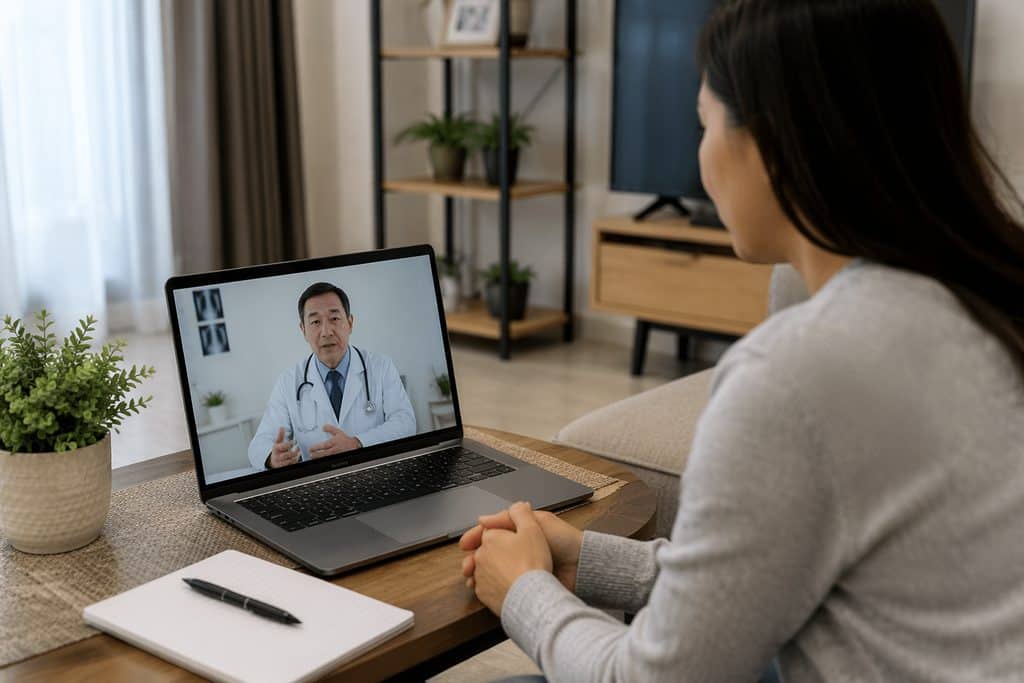
Follow-Up Care After You Return Home: Our Confirmed Plan
When 48-year-old Daniel from Manchester booked a cardiac ablation in Shanghai, his first question wasn’t about the procedure. It was about week six. “What happens when I’m back in the UK and something feels off?” he asked. That question shapes how we structure every single case. Post surgery follow up care China isn’t an afterthought bolted onto a treatment package. It’s a documented handover sequence that starts before you ever board the plane.
We confirm follow-up care through three parallel tracks: remote review with your Chinese surgical team, coordination with a physician in your home country, and a written recovery protocol translated into English. Nothing is left to memory. Nothing depends on you navigating a Chinese hospital app from your living room at 2 a.m.
Here’s what that actually looks like.
How This Actually Works, Step by Step
The sequence is predictable. That’s the point. You shouldn’t be improvising follow-up logistics while recovering from surgery.
Step 1 — Before discharge. Your surgical team in China drafts a discharge summary and a structured follow-up schedule. This includes medication lists, wound care instructions, activity restrictions, and specific dates for imaging or lab work. Our bilingual coordinators review every line with you in the hospital room. We flag anything ambiguous and get written clarification before you leave.
Step 2 — Records transfer. Within 72 hours of discharge, we compile your complete medical file: operative notes, anesthesia records, pathology reports, imaging CDs, and the discharge summary. We translate the key documents into English. You receive digital copies. Your designated home physician receives the same package, with your written consent.
Step 3 — The remote follow-up calendar. Your Chinese surgeon specifies what needs checking and when. A typical cardiac case might require an ECG and echocardiogram at week 4, a medication review at week 8, and a phone consultation at week 12. We load these into a shared calendar with reminders. You’re never guessing what’s next.
Step 4 — The bridge consultation. At each milestone, you complete the required tests locally. Your home doctor reviews them. If anything falls outside expected parameters, we arrange a video consultation with your Chinese team. They read the same images, the same labs. Two sets of eyes on one recovery.
Step 5 — Closure. When the surgeon confirms you’ve reached the stable phase, we issue a final summary letter. Your local physician takes over fully. The case closes with a complete paper trail.
What Post Surgery Follow Up Care China Actually Includes
People assume “follow-up” means one phone call. It doesn’t. A proper post surgery follow up care China plan covers several distinct components, and you should know exactly which ones apply to your case before you commit to surgery abroad.
The first component is scheduled remote consultations. Most top-tier Chinese hospitals with international departments now offer video follow-up through their official platforms. Fuwai Hospital’s international center, for example, conducts structured post-operative video reviews for cardiac patients. Zhongshan Hospital Fudan University runs a similar program for liver surgery cases. These aren’t casual Zoom calls. They’re scheduled clinical reviews with your actual operating team.
The second is imaging and lab review. You get scans done at home. You upload them through a secure portal. The Chinese radiologist or surgeon reads them. This matters because your local radiologist may not be familiar with the specific surgical technique used in China. A surgeon who performed 400 of these procedures this year sees patterns a general radiologist might miss.
The third is medication management. Chinese hospitals sometimes prescribe medications that aren’t available in your home country, or that go by different brand names. We map every prescription to a locally available equivalent, with your home physician’s sign-off. No guesswork at the pharmacy counter.
The fourth is complication triage. If something feels wrong at week three, who do you call? Our protocol: you contact your home physician first for immediate assessment. If they suspect a surgical complication, we activate the Chinese team within 24 hours for a video review. You’re never alone in deciding whether a symptom is normal or alarming.
A Realistic Timeline
Here’s what the follow-up calendar looks like for a typical orthopedic or cardiac case. Ranges reflect real-world variation between hospitals and procedures.
| Timeframe | What Happens | Who’s Involved | Typical Duration |
|---|---|---|---|
| Day 1–3 post-discharge | Records compiled, translated, sent to home physician | Our coordinators, hospital records office | 2–3 days |
| Week 1 | First remote check-in: wound photos, pain level, medication tolerance | You, Chinese nursing team | 15–20 minute video call |
| Week 2–3 | Home physician reviews translated discharge summary; confirms local follow-up plan | Your local doctor | 1 appointment |
| Week 4 | First scheduled imaging or lab work (varies by procedure) | Local imaging center, Chinese radiologist review | 3–5 days for review |
| Week 6–8 | Video consultation with operating surgeon; medication adjustments | You, Chinese surgical team | 30–45 minutes |
| Month 3 | Second imaging round; functional assessment | Local provider, Chinese team | 1 week for full review |
| Month 6 | Final remote review; closure summary issued | Chinese surgeon, your home physician | 1 consultation |
What people forget: document translation adds 2–3 days at the start. Visa processing for a return visit, if needed, takes 2–4 weeks. Home physician availability varies — book the week-2 appointment before you fly to China. Getting on their calendar early prevents a bottleneck later.
What Can Go Wrong — and What Happens Then
We’re direct about failure modes because a follow-up plan that only works in perfect conditions isn’t a plan.
The local doctor refuses to coordinate. This happens. Some physicians are uncomfortable managing a patient whose surgery was performed abroad. Others worry about liability. Our response: we provide the full translated operative record, the surgeon’s direct contact information, and a formal coordination letter from the Chinese hospital’s international department. Most doctors come around once they see the documentation quality. If they still decline, we help you find a physician who will coordinate — this is part of the follow-up service, not an extra charge.
Imaging formats don’t match. Chinese hospitals typically use DICOM format, which is universal. But some smaller local clinics in your home country may struggle with file sizes or portal access. We provide images on physical media when needed and walk your local provider through the upload process. It’s tedious. It works.
The complication requires physical evaluation. A video call can’t palpate a wound or assess joint stability. If your local physician determines you need in-person evaluation by the Chinese team, we coordinate a return visit — visa support, hospital scheduling, and local logistics. This is rare. It’s also why we never promise that remote follow-up replaces all in-person care. It doesn’t. It reduces unnecessary travel, not necessary travel.
Language barriers resurface. Your home physician may want to speak directly with the Chinese surgeon. We facilitate a three-way call with a medical interpreter. Both doctors discuss your case in clinical terms. You receive a summary afterward in plain English.
One honest limit: remote follow-up works well for monitoring, medication adjustment, and imaging review. It cannot replace emergency care. If you experience severe pain, fever, shortness of breath, or sudden functional loss, go to your nearest emergency department first. Contact us after you’re stabilized.
Does Chinese Hospital Provide Remote Follow Up After Surgery? What to Verify Before You Commit
The short answer: many do, but not all, and the depth varies dramatically. Before you schedule surgery in China, ask these specific questions. If the hospital can’t answer them clearly, that’s a signal.
Who exactly conducts the remote follow-up? Some hospitals assign a junior resident. Others have you speak with the operating surgeon. Insist on knowing. A surgeon who performed your procedure will recognize complications a resident might dismiss.
What platform is used? WeChat is common in China, but many international patients can’t or won’t use it. Ask whether the hospital supports Zoom, Microsoft Teams, or a dedicated telemedicine portal. If they only offer WeChat, we can bridge the gap through our coordination service.
How are images transferred? Secure portal? Email? Physical media? The answer tells you how seriously they treat data privacy and how smoothly the process will run.
What’s the response time for urgent questions? Some international departments promise 24-hour response. Others say “within a week.” Get it in writing. A week is too long when you’re at home with a fever and a fresh incision.
Is there a fee for remote follow-up? Some hospitals include 1–2 post-operative video consultations in the surgical package. Others charge per session, typically $100–300 for a standard international department video follow-up. Top-specialist reviews run higher. Ask before you commit.
This is where medical tourism packages with aftercare China vary most. A package that bundles surgery, hotel, and airport transfer but says nothing about week-six imaging review isn’t a complete package. It’s a logistics bundle with a gap in the middle. Read the aftercare terms before you sign anything.
Practical Considerations: Records, Coordination, and Payment
Not universally. Major international departments at top-tier hospitals like Fuwai, Zhongshan, and Peking Union Medical College Hospital offer structured remote follow-up. Smaller hospitals or standard public outpatient channels often don’t. Always verify remote follow-up capability before scheduling surgery, and get the specifics in writing.
Yes. We facilitate direct communication between your home physician and the Chinese surgical team, including three-way interpreted calls when needed. Most home physicians are willing to coordinate once they receive complete translated records and a formal coordination letter from the Chinese hospital.
We coordinate the return visit: S2 visa support, hospital scheduling, and local logistics. This applies when your local physician or the Chinese team determines that physical evaluation is necessary. Remote follow-up reduces unnecessary travel but never replaces it entirely when clinical judgment says otherwise.
You pay for remote consultations directly, typically $100–300 per standard session. Local tests and physician visits are billed through your home healthcare system or insurance. Many international insurers reimburse documented remote follow-up consultations. We provide itemized receipts and diagnostic codes to support your claim.
Your Next Step
Follow-up care is where medical tourism either proves its value or falls apart. A surgery that goes perfectly but leaves you without a clear recovery pathway isn’t a complete treatment — it’s a procedure with a question mark attached. Our team exists to remove that question mark.
We are China Medical Services, a coordination team that connects international patients with top-tier Chinese hospitals. We don’t perform surgery and we don’t make medical decisions. What we do is build the bridge: records translation, remote follow-up scheduling, home physician coordination, and a documented handover that survives the flight home.
If you’re considering treatment in China — or already planning it — start with a conversation. Tell us your procedure, your home country, and your concerns about recovery. We’ll map the follow-up pathway before you commit to anything. Request a free consultation and we’ll walk through it together.
Frequently Asked Questions
Yes. The hospitals used for international patients are JCI-accredited and follow the same international safety standards as top hospitals in the US and Europe. Surgical teams perform high volumes of procedures — often more than their Western counterparts — which studies show leads to better outcomes.
Costs vary by procedure and hospital, but international patients typically save 40-80% compared to US prices — even when factoring in travel and accommodation. A consultation with our team will give you an exact, all-inclusive quote with no hidden fees.
Send us your existing medical reports to get started. We handle everything from hospital selection and appointment scheduling to visa assistance and post-operative recovery planning. Your medical records are reviewed by the specialist before you even book a flight.
For more medical information and treatment options in China, visit chinamedservices.com (China Medical Services).
