Why a PET-CT Scan Costs Less in China: A Patient Cost Guide
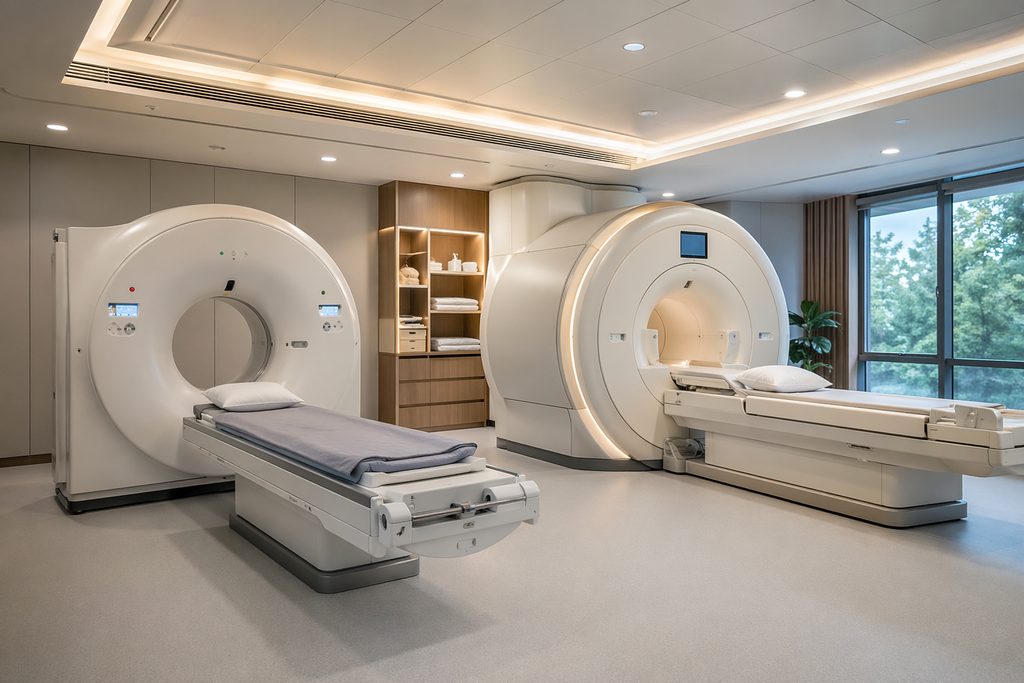
Why a PET-CT Scan Costs Less in China: A Patient Cost Guide
If you have been quoted $4,000 to $7,000 for a PET-CT scan in the United States, the PET-CT scan cost China of $800 to $1,500 may sound almost too good to be true. It is not. According to data compiled from hospital international departments across Beijing, Shanghai, and Guangzhou, the average out-of-pocket price for a full-body PET-CT at a top-tier Chinese public hospital runs between 6,000 and 12,000 RMB. That is roughly $830 to $1,660 at current exchange rates. The same scan at a private international hospital in China, such as United Family or Jiahui, typically ranges from $1,200 to $2,200. Both figures sit well below Western sticker prices.
But price alone should never drive a medical decision. The real question is whether the scan quality, interpretation accuracy, and operational safety justify the savings. This guide walks through the actual numbers, the structural reasons behind the price gap, and the practical steps for booking a scan without getting burned.
Key Takeaways
- A full-body PET-CT scan in China costs $830–$2,200 depending on hospital tier, compared to $4,000–$7,000 in the US.
- China operates over 1,100 PET-CT scanners — more than any other country — and top hospitals perform thousands of scans annually.
- Lower costs reflect labor economics, hospital volume, and supply-chain localization, not inferior equipment or untrained staff.
- Foreign patients cannot simply walk into a public hospital and get a same-day scan; booking requires coordination and often a bilingual companion.
- Radiology reports are typically issued in Chinese; professional translation is essential for use with your home physician.
The Problem: Diagnostic Imaging Costs Are Crushing Patients in the West
A 2023 analysis published in Health Affairs found that the United States spends more on medical imaging per capita than any other high-income country, with PET-CT scans among the most expensive outpatient procedures. The average US list price for a full-body PET-CT ranges from $4,000 to $7,000, and even insured patients frequently face deductibles and coinsurance that leave them paying $1,500 to $3,000 out of pocket. For uninsured or underinsured patients, the scan is simply unaffordable.
This is not a niche problem. The American Cancer Society estimates that approximately 1 in 3 people will face a cancer diagnosis in their lifetime, and PET-CT is a cornerstone of staging, recurrence monitoring, and treatment response assessment. When a scan that could change a treatment plan is priced out of reach, patients delay diagnosis. Delays cost lives. Some patients turn to crowdfunding. Others skip the scan entirely and hope for the best. Neither is a strategy.
Medical tourism for diagnostics has grown sharply as a result. Patients from the US, UK, Australia, and the Middle East now routinely fly to Asia for imaging. Thailand, India, and South Korea have built marketing campaigns around affordable scans. China, despite having the largest installed base of PET-CT scanners in the world, has been slower to market itself to Western patients. That is changing.
Why the PET-CT Scan Cost China Is Structurally Lower
The price gap is not a fluke. It is the result of three structural factors that have nothing to do with cutting corners on quality.
Installed Base and Scan Volume Are Unmatched
China has more than 1,100 PET-CT scanners in operation, according to industry data from the China Nuclear Medicine Association. The United States has roughly 2,400, but China’s fleet is newer — the vast majority were installed after 2015, meaning they are primarily digital PET-CT systems from Siemens, GE, and United Imaging. A hospital like Fuwai Hospital or Zhongshan Hospital Fudan University performs thousands of scans per year. High volume spreads fixed costs across more patients. That is basic economics, and it works in the patient’s favor.
Labor Costs Are Lower, but Training Standards Are Not
A nuclear medicine technologist in a top-tier Chinese public hospital earns a fraction of what their US counterpart earns. The same applies to radiologists and nuclear medicine physicians. But China’s top hospitals are ranked by Fudan University’s hospital ranking system, and their nuclear medicine departments are staffed by physicians who trained at institutions like Peking Union Medical College Hospital and West China Hospital. Many have published in international peer-reviewed journals. Lower labor cost does not mean lower competence. It means the labor market is different.
Equipment Supply Chains Are Localized
United Imaging, a Shanghai-based manufacturer, now produces PET-CT scanners that compete directly with Siemens and GE on image quality and dose reduction. Chinese hospitals can buy domestically manufactured scanners at significantly lower cost than US hospitals pay for imported equivalents. That capital savings translates into lower scan prices. Some top Chinese hospitals run both imported and domestic scanners side by side, and the image quality is comparable for routine oncology indications.
PET-CT Scan Price Comparison China vs USA: The Real Numbers
Patients considering a cheap PET-CT scan abroad often ask for a direct price comparison. Here is what we see in 2026, based on published hospital price lists and patient-reported data.
| Location | Facility Type | Full-Body PET-CT Price | Typical Wait Time |
|---|---|---|---|
| United States | Hospital outpatient | $4,000–$7,000 | 1–3 weeks |
| United Kingdom (private) | Private hospital | $2,500–$4,500 | 2–4 weeks |
| China — top public hospital | International department | $830–$1,660 | 2–5 days |
| China — private international hospital | JCI-accredited | $1,200–$2,200 | 1–3 days |
| Thailand | Private hospital | $1,500–$2,500 | 3–7 days |
These figures vary by hospital and case complexity. A PET-CT with contrast, or a scan that includes diagnostic CT with full diagnostic quality rather than attenuation correction only, will cost more. But the pattern holds: China is consistently the lowest-cost option among countries with a mature nuclear medicine infrastructure.
How Much Is a PET-CT Scan in Shanghai? City-Level Pricing
Shanghai is the most common entry point for international patients, and for good reason. The city hosts 18 hospitals on the Fudan Top 100 list — second only to Beijing. So how much is a PET-CT scan in Shanghai? At a top public hospital’s international medical center, expect to pay 7,000 to 10,000 RMB ($970–$1,390). At Jiahui International Hospital or Parkway Shanghai, the price runs 9,000 to 15,000 RMB ($1,250–$2,080). Beijing prices are similar. Chengdu and Guangzhou tend to run 10–15% lower.
One thing to understand: public hospital international departments in Shanghai typically require booking through their official international patient office. You cannot simply walk in and request a PET-CT scan. A referral or clinical indication is required. That is true in the US as well, but in China the process is more formalized. The hospital will ask for your existing imaging reports, pathology results, and the specific clinical question the scan is meant to answer.
Is a PET-CT Scan Safe in China? What the Evidence Shows
The question is a PET-CT scan safe in China comes up in nearly every consultation we handle. The honest answer: yes, at accredited hospitals, with important caveats.
Radiation dose is the primary safety concern with any PET-CT. A full-body PET-CT delivers roughly 8 to 14 mSv of effective dose, depending on the protocol and the CT component. Chinese hospitals accredited by the National Health Commission follow the same international dose optimization principles as Western facilities. The Chinese Society of Nuclear Medicine publishes clinical practice guidelines that mirror those of the Society of Nuclear Medicine and Molecular Imaging in the US.
But there is a real difference in how Chinese hospitals communicate about risk. Informed consent processes in Chinese public hospitals are often shorter and less detailed than what Western patients expect. You may be handed a one-page form and asked to sign. If you have questions about radiation exposure, you need to ask them explicitly. A bilingual medical companion can bridge this gap, but the responsibility for asking remains with the patient.
Also, not all scanners are equal. A PET-CT at a county-level hospital in a smaller city may use older equipment with higher radiation dose and lower image quality. Stick to Fudan-ranked hospitals or JCI-accredited private facilities. Our database of 340+ top-ranked hospitals is a reasonable starting point for identifying facilities with modern equipment and experienced nuclear medicine departments.
How to Book a PET-CT Scan China Package: The Step-by-Step Reality
You need a referral letter or clinical summary from your home physician stating why a PET-CT is indicated. You also need any prior imaging reports, pathology results, and a list of current medications. These documents must be translated into Chinese if you are booking through a public hospital’s standard international channel. Some international departments accept English documents, but do not assume this.
You have two realistic options. A public hospital international department offers the lowest cost but requires more coordination and typically offers less English-language support. A private international hospital like United Family or Jiahui costs more but provides English-speaking staff, direct insurance billing for some insurers, and a more familiar patient experience. Both are legitimate. The right choice depends on your budget and your comfort with navigating a foreign system.
Public hospitals in China do not accept walk-in international bookings for PET-CT scans. You must go through the hospital’s international patient office or a coordinating service. The hospital will review your clinical documents and confirm whether the scan is appropriate. This review step is important — it prevents unnecessary radiation exposure and ensures the scan answers a real clinical question.
Once approved, scheduling is typically fast. At most top hospitals, you can get a PET-CT appointment within 2 to 5 days of approval. That means you can plan a trip of 5 to 7 days total, including travel time. You will need an S2 visa for medical treatment purposes. The S2 visa is the short-stay category used for private affairs including medical treatment; it is not the M visa, which is for commercial and trade activities only. Your hospital confirmation letter serves as supporting documentation for the visa application.
You will fast for 6 hours before the scan. Blood glucose must be below a certain threshold — typically 11 mmol/L or 200 mg/dL — because elevated glucose interferes with FDG uptake. The injection, uptake period, and scan take about 2 to 3 hours total. You will be asked to lie still during the uptake phase. The scan itself takes 20 to 40 minutes depending on whether it includes diagnostic CT.
Reading the Report: What You Actually Receive
Here is where many patients stumble. The radiology report from a Chinese public hospital is written in Chinese. Some international departments provide an English summary, but many do not. The images are typically delivered on a CD in DICOM format, which your home physician can open. The report itself may need professional medical translation.
This matters more than most patients realize. A PET-CT report is not just a list of SUV values. It is an interpretive document that synthesizes imaging findings with your clinical history. A poor translation can change the meaning of a critical sentence. If you are planning to use the scan result to make treatment decisions at home, budget $100 to $300 for professional medical translation. Do not rely on machine translation for a document that may determine whether you get surgery.
For patients who want a second opinion on the scan itself, a written second opinion from a top specialist costs $300–$500. A video consultation with a specialist runs $500–$800. These are optional but valuable if your case is complex or the report is ambiguous.
Practical Considerations: Documentation, Payment, and Follow-Up
Before you book a flight, handle these logistics.
Visa. You need an S2 visa. Processing typically takes 5 to 10 business days at a Chinese embassy or consulate. Your hospital appointment confirmation is part of the supporting documentation. Family members accompanying you also need S2 visas. No visa category guarantees approval, and requirements change, so check with the nearest Chinese embassy before booking non-refundable flights.
Payment. Chinese public hospitals require prepayment, not post-service billing. You will pay the scan fee before the procedure. Cash is not practical for international patients; bring a credit card that works internationally, or arrange a bank transfer. Some private international hospitals accept direct billing from international insurers, but public hospitals do not. You pay first, then claim reimbursement from your insurer if your policy covers overseas diagnostics.
Insurance. Most US health plans do not cover elective overseas imaging. Some high-deductible plans or health-sharing ministries may reimburse a portion. Check before you travel. If your insurer requires a US-based radiologist to interpret the scan, you may need to pay for a second read at home, which can cost $500 to $1,500. Even with that added cost, the total is often still below the US price.
Language. Public hospital staff in China generally do not speak English. Even in international departments, English proficiency varies. A bilingual medical companion — available from $300 per day — handles registration, payment, navigation, and communication with the technologist and physician. If you are traveling alone and do not speak Chinese, this is not a luxury. It is the difference between a smooth scan and a stressful, confusing day.
Follow-up. After you return home, your home physician needs the DICOM images and the translated report. Make sure you receive both before leaving the hospital. Some hospitals will courier the CD internationally for a fee, but it is safer to take it with you. Keep a digital backup in a secure cloud folder.
Frequently Asked Questions
Is the image quality of a PET-CT scan in China comparable to what I would get in the US?
At top-tier hospitals, yes. The scanners are the same models — Siemens Biograph, GE Discovery, United Imaging uMI — used in Western facilities. The difference is not the hardware but the reporting. Make sure you get a professional translation, and consider a second-opinion read if your case is complex.
Can I just book a PET-CT scan in China without a doctor’s referral?
No. Chinese hospitals require a clinical indication. You need a referral letter or clinical summary from your home physician. The hospital’s nuclear medicine department will review your case before approving the scan. This is a safety measure, not a bureaucratic hurdle.
What happens if the scan finds something serious while I am in China?
You will not be left without options. The hospital can arrange a consultation with the relevant specialist — oncology, thoracic surgery, hematology — often within days. If you need treatment in China, that is a separate process requiring additional evaluation. If you prefer to return home, you will have the images and report to share with your physician. The scan result is yours to take.
Do I need to speak Chinese to get a PET-CT scan in China?
At a private international hospital, no. Staff speak English and processes are designed for foreign patients. At a public hospital international department, English support exists but is inconsistent. A bilingual companion removes the friction. The choice depends on your budget and comfort level.
Is a PET-CT scan in China really 80% cheaper, or are there hidden fees?
The scan fee itself is genuinely 60–80% lower than US list prices. Hidden fees are rare at reputable hospitals, but additional costs do exist: document translation, visa application, travel, accommodation, and possibly a second-opinion read at home. Even with all of these, most patients save $2,000 to $4,000 on a single scan. The savings are real, but they require planning.
Your Next Step
The PET-CT scan cost China is not a secret, but it is also not a simple transaction. You need the right hospital, the right documents
For more medical information and treatment options in China, visit chinamedservices.com (China Medical Services).
