IVF in China: Real Wait Times, Costs, and How Foreigners Skip the Queue
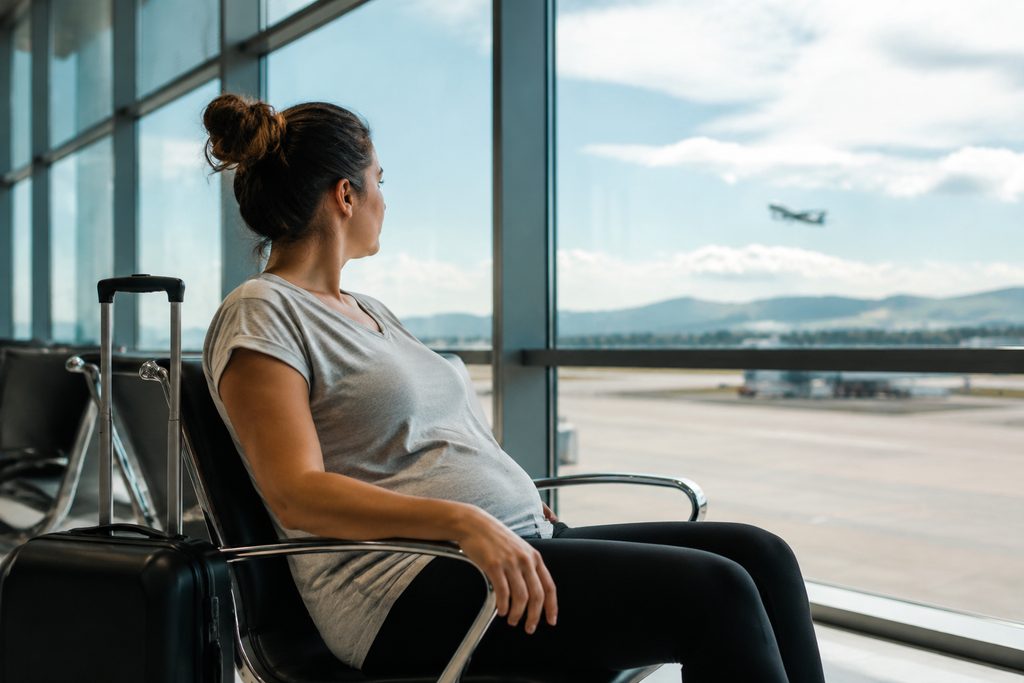
Let’s strip away the clinical fog. In vitro fertilization means eggs are retrieved from the ovaries, fertilized with sperm in a laboratory dish, and the resulting embryo is transferred back into the uterus. That’s it. The complexity isn’t the biology—it’s the logistics, the waiting, and the money. If you’ve searched for ivf cost China, you’re probably not just curious about a price tag. You’re weighing time against money, and wondering if a country 7,000 miles away can actually solve a problem your home clinic keeps postponing.
Here’s the direct answer to your search: the wait for IVF in China is typically 2 to 6 weeks from first consultation to embryo transfer for foreign patients using hospital international departments or private clinics. For Chinese citizens in the public system, waits can stretch 3 to 12 months depending on the city and hospital tier. The gap exists because international patients access a different channel—one with English-speaking coordinators, faster specialist appointments, and pricing that reflects the service level rather than the subsidized public rate.
But “quick” doesn’t mean automatic. There are real steps, real documents, and real bottlenecks. We’ll walk through each one.
How This Actually Works, Step by Step
You don’t just fly to Shanghai and walk into a fertility clinic. The sequence matters, and skipping steps costs more time than it saves.
First, you send your existing medical records. That means blood work from the last 3 months, any previous IVF cycle summaries, semen analysis results if applicable, and a letter from your current doctor outlining your diagnosis. Our team translates these documents into Chinese and submits them to the reproductive medicine department of a hospital that matches your case. This is where the reproductive medicine specialist rankings become useful—not every hospital handles every case well.
Second, the Chinese specialist reviews your file and issues a preliminary assessment. Expect 3 to 7 business days. The assessment usually includes whether IVF is appropriate, what protocol they’d recommend, and what additional testing you’d need on arrival. You also get a written cost estimate at this stage.
Third, you decide between a written second opinion, a video consultation, or moving directly to treatment planning. Most international patients choose a video consultation first—it’s $100 to $300 and gives you a direct conversation with the doctor who’d oversee your cycle. That fee gets credited toward in-person coordination if you proceed within 90 days.
Fourth, you apply for the S2 visa. This is the short-stay visa category used for private affairs and medical treatment in China. Processing typically takes 4 to 10 business days depending on your home country’s Chinese embassy or consulate. You’ll need an invitation letter from the hospital—which we help arrange after the specialist confirms they’ll take your case.
Fifth, you arrive, complete the required baseline testing (usually 2 to 5 days of blood draws and ultrasounds), and start ovarian stimulation. A typical cycle from first injection to embryo transfer runs 14 to 21 days. That’s the part people forget when they ask about wait times—the “wait” isn’t just the queue. It’s also the biological timeline, which no hospital can compress.
How Long Is the IVF Waiting List in China for Foreigners?
The waiting list question deserves a precise answer. For foreign patients using international departments or JCI-accredited private hospitals, the wait from initial inquiry to first consultation is 3 to 10 days. From first consultation to starting a stimulation cycle: 2 to 4 weeks, assuming your baseline tests are normal and your visa is in hand. From starting stimulation to embryo transfer: roughly 3 weeks.
Add it up. A realistic total timeline from “I’m thinking about China” to “embryo transferred” is 8 to 12 weeks. The fastest we’ve seen is 6 weeks for a patient who already had a valid Chinese visa and complete medical records. The slowest is 14 weeks when a patient needed additional genetic testing and a hysteroscopy before stimulation could begin.
Contrast that with the public system inside China. Chinese citizens at top-tier public hospitals in Beijing and Shanghai can wait 3 to 6 months just for the initial specialist appointment, then another 1 to 3 months to start a cycle. Some hospitals in smaller cities have shorter queues, but the best-known centers are heavily oversubscribed. Foreigners rarely enter this queue at all—they use the international channel, which operates on a different scheduling system.
What about the UK comparison? NHS-funded IVF typically involves a 12 to 24 month wait from GP referral to first treatment cycle, and that’s after meeting eligibility criteria that exclude many patients. Private clinics in London can start within 4 to 8 weeks, but at costs that make the China option look compelling. The question “is IVF in Beijing faster than UK?” has a nuanced answer: yes for public-system patients, roughly comparable for private-paying patients, but with a significant cost advantage in China.
A Realistic Timeline
Here’s the stage-by-stage breakdown, including the unglamorous steps that eat real time:
| Stage | What Happens | Realistic Duration |
|---|---|---|
| Document collection & translation | You gather records; we translate and format them for Chinese hospital review | 3 to 7 days |
| Specialist file review | Chinese reproductive medicine team evaluates your case | 3 to 7 business days |
| Video consultation | You speak directly with the doctor, discuss protocol and concerns | Scheduled within 5 to 10 days |
| Hospital invitation letter | Issued after the specialist agrees to accept your case | 2 to 5 business days |
| S2 visa processing | Application at Chinese embassy/consulate in your home country | 4 to 10 business days |
| Arrival & baseline testing | Blood panels, ultrasound, semen analysis (if needed), infectious disease screening | 2 to 5 days |
| Ovarian stimulation | Daily injections with monitoring every 2 to 3 days | 10 to 14 days |
| Egg retrieval & fertilization | Outpatient procedure; embryo culture for 3 to 5 days | 1 day plus lab time |
| Embryo transfer | Fresh transfer or freeze-all with later frozen transfer | Day 3 or 5 after retrieval |
| Pregnancy test | Blood hCG test | 10 to 14 days after transfer |
Total: 8 to 12 weeks from first contact to pregnancy test. If you need a frozen embryo transfer instead of fresh, add one menstrual cycle (roughly 4 to 6 weeks) between retrieval and transfer.
The forgotten bottlenecks: document translation quality, embassy appointment availability in your country, and the timing of your menstrual cycle relative to your arrival date. A well-coordinated plan accounts for all three. A poorly coordinated one discovers them one by one.
What Can Go Wrong — and What Happens Then
Let’s be honest about failure modes, because they exist and you deserve to know them before you book a flight.
Your baseline tests might reveal a problem. Maybe your ovarian reserve is lower than expected, or a uterine polyp shows up on ultrasound. If that happens, the doctor will recommend a modified protocol or a preliminary procedure like hysteroscopy. This adds 2 to 6 weeks. It’s not a rejection—it’s the system working correctly. But it delays your timeline.
Your visa might be delayed. Embassy processing times vary by country and season. If your S2 visa takes 3 weeks instead of 5 days, your cycle start date shifts. We can’t expedite a government process, but we can adjust your hospital schedule to match the new arrival date. Most hospitals hold your slot for a reasonable period once you’ve paid the initial coordination fee.
The stimulation might not go as planned. Some patients respond slowly to medication. Others develop ovarian hyperstimulation syndrome (OHSS), which requires canceling a fresh transfer and freezing all embryos instead. That means waiting 4 to 6 weeks for your body to recover before a frozen transfer. The doctor will explain this risk during your video consultation, and it’s one reason we recommend planning for 14 days in China rather than the absolute minimum.
And yes, the cycle might simply fail. No IVF program in the world guarantees pregnancy. Chinese clinics are transparent about their per-cycle success rates—typically 40% to 55% for women under 35, declining with age. If a cycle fails, the clinic will review what happened and recommend next steps. Many patients choose to do a second cycle in China, often with a frozen embryo from the first retrieval, which significantly reduces cost and time.
Best IVF Clinic Shanghai Price: What You’ll Actually Pay
The best IVF clinic Shanghai price question is really two questions: which clinic, and what does it cost. Let’s address both.
Shanghai has three tiers of IVF providers. The top public hospitals—including those affiliated with Fudan University and Shanghai Jiao Tong University—operate international departments with English-speaking coordinators. Their IVF cycles for international patients typically run $8,000 to $15,000 including medications, monitoring, retrieval, lab fees, and transfer. The private international hospitals like Jiahui and United Family charge $12,000 to $20,000 for the same medical process, with more Western-style amenities and direct insurance billing. A third tier of smaller private clinics exists, but we don’t recommend them for international patients—quality control and English support are inconsistent.
Compare that to the United States, where a single IVF cycle averages $20,000 to $30,000 without medication, or the UK, where private cycles run £8,000 to £15,000. The ivf cost China advantage is real: you’re typically paying 40% to 70% of what the same cycle costs in the US or UK, even after adding flights and accommodation.
What drives the price difference? Lower labor costs, lower facility overhead, and a healthcare system that hasn’t inflated prices through decades of insurance-driven billing complexity. The medical technology is the same—Chinese fertility labs use the same equipment and protocols as Western clinics. Some of the top centers in Shanghai and Beijing run 3,000 to 5,000 IVF cycles annually, volumes that most Western clinics never approach. Volume breeds competence.
One caveat: the best IVF clinic Shanghai price isn’t a fixed number. Your specific protocol matters. A standard antagonist protocol with fresh transfer costs less than a long agonist protocol requiring more medication. Preimplantation genetic testing (PGT) adds $3,000 to $5,000. Egg freezing for fertility preservation has a different price structure than full IVF. The written estimate you receive after file review will itemize all of this.
China IVF Treatment Packages for International Patients: What’s Included
Compared to NHS-funded IVF, dramatically faster—months instead of years. Compared to UK private clinics, the timeline is similar, but the cost in Beijing is typically 40% to 60% lower. Beijing’s top reproductive medicine centers, including those at Peking University Third Hospital and Peking Union Medical College Hospital, run some of the highest IVF volumes in the world.
Expect $8,000 to $20,000 for a complete cycle, depending on whether you choose a public hospital international department or a private international hospital. This includes medications, monitoring, retrieval, lab fees, and transfer. Preimplantation genetic testing adds $3,000 to $5,000. Compare to $20,000 to $30,000 in the US and £8,000 to £15,000 in the UK.
No clinic can guarantee success. Chinese clinics report per-cycle success rates of 40% to 55% for women under 35, declining with age. If a cycle fails, the clinic reviews your response and recommends adjustments. Many patients do a second cycle using frozen embryos from the first retrieval, which costs significantly less and requires a shorter stay in China.
China doesn’t issue a specific “medical visa” for short-term treatment. You’ll apply for an S2 visa, which covers private affairs including medical treatment. The hospital provides an invitation letter that supports your application. Your traveling companion also applies for an S2. Always verify current requirements with your local Chinese embassy or consulate.
Your Next Step
You came here asking how long the wait is. The answer: 2 to 4 weeks to start treatment if you use the international channel, 8 to 12 weeks total from first contact to pregnancy test. The real question is whether you’re ready to act on that timeline.
We’re China Medical Services, and we help international patients navigate the Chinese healthcare system—from hospital matching to document translation to bilingual accompaniment during your treatment. We don’t perform medical procedures, and we don’t promise outcomes. What we do is remove the logistical friction that makes overseas treatment feel overwhelming. If you want a clear-eyed assessment of whether
Frequently Asked Questions
Yes. The hospitals used for international patients are JCI-accredited and follow the same international safety standards as top hospitals in the US and Europe. Surgical teams perform high volumes of procedures — often more than their Western counterparts — which studies show leads to better outcomes.
Costs vary by procedure and hospital, but international patients typically save 40-80% compared to US prices — even when factoring in travel and accommodation. A consultation with our team will give you an exact, all-inclusive quote with no hidden fees.
Send us your existing medical reports to get started. We handle everything from hospital selection and appointment scheduling to visa assistance and post-operative recovery planning. Your medical records are reviewed by the specialist before you even book a flight.
For more medical information and treatment options in China, visit chinamedservices.com (China Medical Services).
