China 240 Hour Visa Free Transit: How It Works for Medical Travel
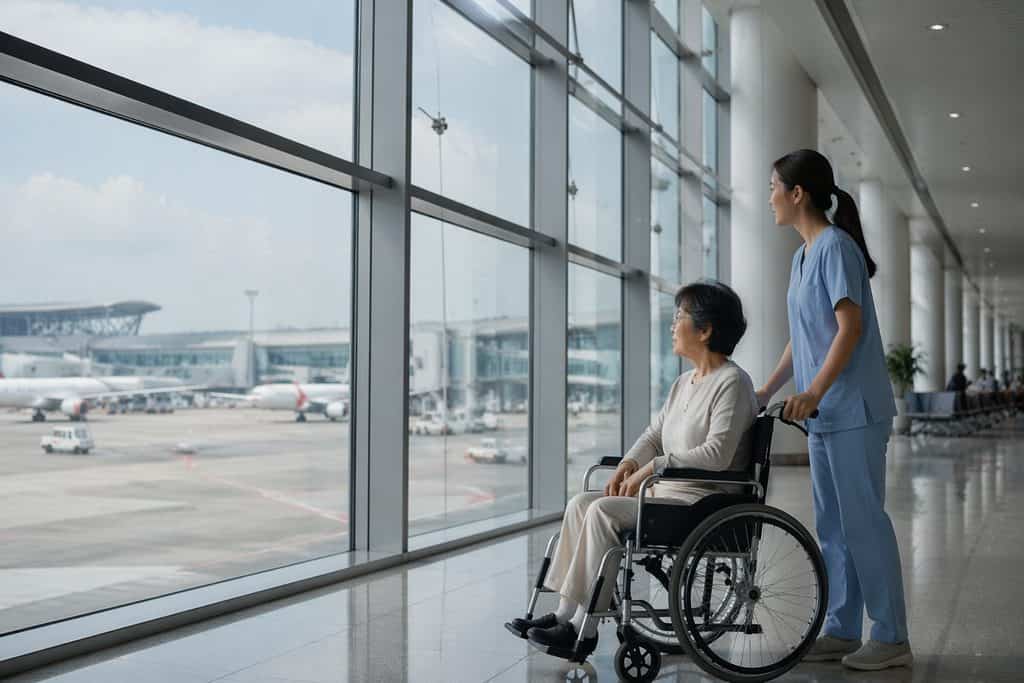
A 240-hour visa-free transit permit lets citizens of 54 countries stay in China for up to 10 days without applying for a visa in advance. You qualify when transiting through China to a third country. The policy covers 37 cities, including Beijing, Shanghai, Guangzhou, and Chengdu. For medical travelers, this window opens real possibilities — consultations, diagnostic scans, dental work, even certain outpatient procedures. But it also closes the door on others.
Our team at China Medical Services fields this question weekly. Can you actually get meaningful medical care in 10 days? The honest answer: some things, yes. IVF, major joint replacement, cardiac surgery — those need far more time. This guide explains exactly where the line sits.
How This Actually Works, Step by Step
The 240-hour transit policy is not a medical visa. It is a transit convenience. You fly from Country A into China, then onward to Country B within 240 hours. The moment you land, immigration stamps your entry with a stay permit tied to that specific window. You cannot extend it. You cannot convert it to an S2 visa from inside China.
Here is the sequence for a medical traveler using this route:
First, you identify the hospital and department you need. This matters before you book any flight. A top-tier Chinese hospital like Fuwai Hospital for cardiac care or Peking Union Medical College Hospital for complex diagnostics does not accept walk-in international patients the way a private clinic might. You need an appointment.
Second, you gather your existing medical records — imaging files, lab reports, discharge summaries, anything relevant. These get translated into Chinese. Our team handles this as part of case preparation, because a poorly translated MRI report wastes a specialist’s time and yours.
Third, you or your coordinator contacts the hospital’s international department. Public hospitals have dedicated international wards with English-speaking staff. Private international hospitals like United Family or Jiahui have direct booking lines. Either way, an appointment is confirmed before you land.
Fourth, you fly in. Immigration processes your transit permit. You attend your appointment. Depending on what you need — consultation, imaging, blood work, a minor procedure — this consumes one to three days of your ten.
Fifth, you fly out to your third country. Your results, prescriptions, and follow-up plan go with you.
What the 240 Hour Visa Free Transit Actually Allows — and What It Blocks
Ten days is enough for consultations, second opinions, diagnostic workups, dental procedures, dermatology treatments, and some minor surgeries. It is not enough for inpatient surgery requiring recovery, organ transplantation, or full IVF cycles.
Dental implants are a frequent question. Can you get dental implants during a China transit visa stay? The answer depends on the protocol. A single implant with immediate loading can sometimes be placed in one visit, but most dentists require a healing period of three to six months between implant placement and crown fitting. You would need two trips. Some clinics in Shanghai and Beijing offer same-day implant systems for select cases, but a responsible dentist evaluates bone density first. Rushing this is how you lose an implant.
Hip replacement is another common inquiry. The cost of hip replacement in China for tourists runs roughly $12,000 to $20,000 at a top public hospital’s international wing, versus $40,000 to $70,000 in the United States. But the procedure requires preoperative assessment, surgery, five to seven days of inpatient recovery, and then rehabilitation. You cannot fit this into 10 days. You would need an S2 visa and a stay of three to six weeks.
IVF raises the same problem. The IVF cost China 240 hour visa question assumes a cycle can start and finish inside the window. It cannot. A standard IVF cycle involves ovarian stimulation lasting 10 to 14 days, then egg retrieval, then embryo transfer days later. Even a frozen embryo transfer requires cycle monitoring. Realistically, IVF in China needs a stay of three to four weeks, which means an S2 visa. The 240-hour window might cover an initial consultation and baseline testing, but not treatment.
A Realistic Timeline
Here is what a 240-hour medical trip actually looks like, day by day. This assumes you have already selected a hospital and secured an appointment before flying.
| Stage | Duration | What Happens |
|---|---|---|
| Pre-trip preparation | 2–4 weeks before departure | Medical records translated, hospital contacted, appointment confirmed, transit itinerary booked |
| Day 1 | Arrival | Land in China, transit permit issued, transfer to hotel near hospital |
| Day 2 | First consultation | Meet specialist, review translated records, order any missing tests |
| Day 3–4 | Diagnostics | Blood work, imaging (MRI, CT, ultrasound), specialist review of results |
| Day 5 | Follow-up consultation | Specialist explains findings, recommends treatment plan, writes summary letter |
| Day 6–8 | Buffer and contingency | Additional tests if needed, second specialist opinion, or minor outpatient procedure |
| Day 9 | Final review | Collect all reports, prescriptions, and a written plan for your home physician |
| Day 10 | Departure | Fly to third country, continue journey home |
Notice the buffer days. They exist because hospitals run late. A specialist gets called to an emergency. A CT machine goes down for maintenance. If you pack all ten days with appointments, one delay cascades into a missed flight. Build slack.
What Can Go Wrong — and What Happens Then
The transit permit is issued at the border, not in advance. That means there is always a small chance of denial. If you arrive without a confirmed onward ticket, or your passport has fewer than six months of validity, or your nationality is not on the eligible list, immigration can refuse entry. The recourse is simple and unpleasant: you board a flight out of China immediately, at your own expense.
Appointments shift. A top specialist may have an emergency surgery that morning. The hospital reschedules you for the next day. You lose a day. That is what the buffer is for.
Medical findings change the plan. You fly in for a consultation about a suspicious lung nodule. The CT shows something that needs a biopsy. A biopsy needs scheduling, pathology processing, and a follow-up discussion. That is another three to five days. You may not have them. The honest answer is that some patients discover they need more time than the transit window allows. The remedy is to return later on an S2 visa, this time with a clearer plan.
Payment issues happen. Public hospital international departments typically require prepayment. International credit cards are accepted at major hospitals, but not always at smaller ones. Carry a backup payment method. Travel insurance that covers medical treatment in China is strongly advised.
Choosing a Hospital for a Transit-Window Visit
Not every hospital suits a 10-day visit. The best hospitals in Shanghai for foreigners include Fudan University’s Zhongshan Hospital, Ruijin Hospital, and the private Jiahui International Hospital. Beijing offers Peking Union Medical College Hospital and United Family. Guangzhou has the First Affiliated Hospital of Sun Yat-sen University. Each has an international department with English-speaking coordinators.
But the smarter filter is your medical need. For oncology second opinions, the department rankings on our site list China’s top 10 hospitals for 45 specialties, based on the Fudan University hospital reputation survey. For cardiac surgery, Fuwai Hospital performs over 14,000 cardiac operations annually — the highest volume in the world. For orthopedics, Beijing Jishuitan Hospital handles complex trauma cases that other centers decline.
Private international hospitals offer faster scheduling and direct insurance billing. Public hospital international wings offer deeper specialist benches and lower prices. Neither is universally better. The choice depends on urgency, budget, and case complexity.
One warning: avoid any service promising a “medical tourism package Beijing no visa” that bypasses immigration rules. There is no legal way to receive medical treatment in China without proper entry documentation. The 240-hour transit permit is legitimate. Any claim of “no visa needed” beyond that is either misinformed or fraudulent.
Practical Considerations: Records, Payment, Language, Follow-Up
Medical records must be complete and translated before you arrive. A specialist reviewing a 200-page PDF in a foreign language will not extract what matters in a 30-minute consultation. We translate and summarize records as standard case preparation.
Payment at public hospital international departments is typically required upfront. Expect to pay for consultations, imaging, and lab work on the day of service. Costs vary by hospital and case complexity. A specialist consultation in a public hospital international wing runs $100 to $300. A full-body MRI package might run $800 to $1,500. Private international hospitals charge more, often two to three times the public international rate.
Language is the hidden cost. Public hospital hallways, signage, and most staff operate in Mandarin. Even in international departments, you will navigate registration windows and payment counters where English is limited. A bilingual medical companion handles this. Our team provides this service from $300 per day, covering registration, queue management, payment, translation, and wayfinding.
Insurance is the other variable. Chinese public hospitals do not direct-bill most foreign insurers. You pay, then file a claim. Private international hospitals like Jiahui and United Family have direct billing agreements with major insurers including Cigna, Aetna, and Allianz. Check your policy before choosing a hospital.
Follow-up at home matters as much as the visit itself. The specialist’s summary letter must be detailed enough for your home physician to act on. Request a written treatment plan, medication list with generic names, and copies of all imaging on CD or cloud link. Do not leave without these.
Frequently Asked Questions
Yes, for consultations, diagnostics, dental work, and minor outpatient procedures. No, for inpatient surgery, IVF cycles, or anything requiring extended recovery. The permit is a transit convenience, not a substitute for a medical visa.
It generally does not. Surgery requires preoperative assessment, the procedure itself, inpatient recovery, and often a follow-up visit before you fly. That timeline exceeds 10 days. For surgery, apply for an S2 visa and plan a stay of three to six weeks.
Overstaying any Chinese visa or permit triggers fines, detention, and potential entry bans. There is no grace period. If your medical needs extend beyond the window, you must exit China and re-enter on a different visa, or apply for an extension through the local exit-entry administration — which is rarely granted for transit permits.
Private international hospitals offer faster scheduling, English-speaking staff, and direct insurance billing. Public hospital international wings offer more senior specialists and lower prices, but with more administrative friction. For a 10-day window, private hospitals often make more sense logistically.
Each traveler must independently qualify for the 240-hour transit policy. A family member flying the same route with the same nationality generally qualifies. If they are traveling with you for medical support, they enter under the same transit terms.
Your Next Step
The 240-hour window is real, useful, and tightly bounded. It works for consultations, diagnostics, and minor procedures. It does not work for major surgery or multi-week treatments. Knowing which category your need falls into saves you a wasted trip.
Our team at China Medical Services helps international patients match with the right hospital, prepare translated records, and coordinate appointments before they fly. We do not provide medical treatment, and we do not guarantee outcomes. What we do is make the logistics clear and the process manageable. If you are weighing a transit-window medical visit, start with a free consultation — we will tell you honestly whether 10 days is enough for what you need.
The core message is simple: the 240-hour visa-free transit policy opens a door for medical travelers, but only for what fits through it. Plan around the window, not against it.
For more medical information and treatment options in China, visit chinamedservices.com (China Medical Services).
