Diabetes Treatment in China: Top Hospitals, Real Costs, and How to Book
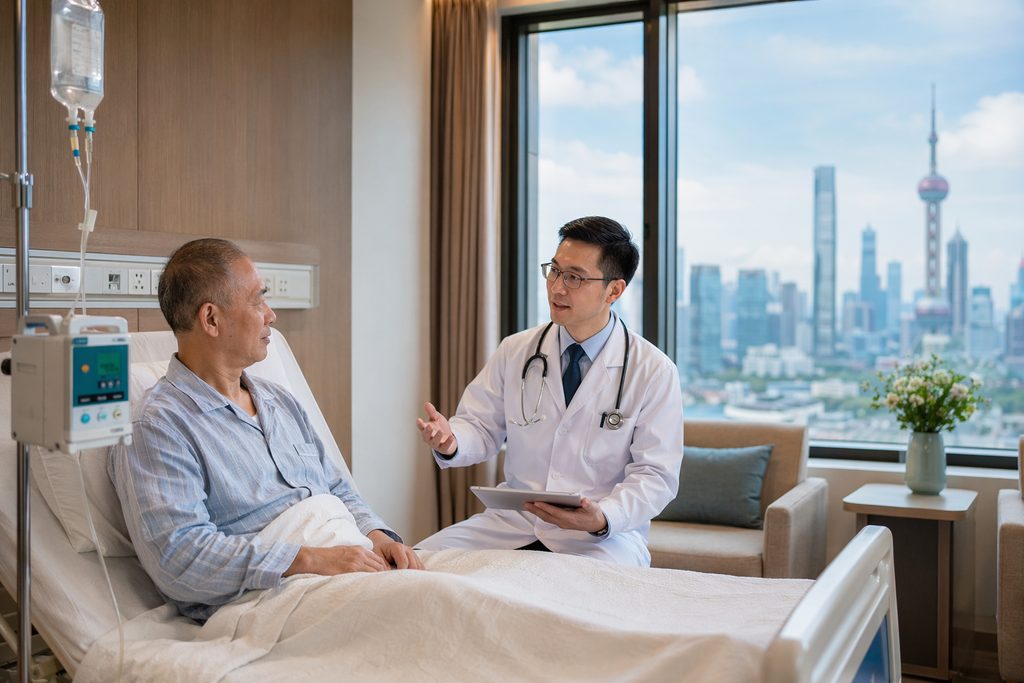
While an American with Type 2 diabetes pays an average of $12,000–$16,000 per year just to manage the condition, a comprehensive diabetes evaluation at a top-tier Shanghai hospital typically starts under $800. That gap widens dramatically for advanced interventions. The question is not whether China can treat diabetes. The question is which hospital, at what real cost, and how a foreign patient actually gets through the door.
Key Takeaways
- China has 340+ top-ranked hospitals across 37 cities, with dedicated endocrinology departments at Fudan-ranked institutions handling high patient volumes daily.
- Diabetes treatment cost China runs 60–80% below US private-pay rates for comparable diagnostics, medication management, and inpatient care.
- Public hospital outpatient clinics cannot be pre-booked from overseas — you must either arrive in person or use the hospital’s international/VIP channel, which costs 1.5–2x the standard rate.
- Stem cell therapy for diabetes exists in China only within registered clinical trials. It is not a purchasable treatment package, and any clinic selling it as one should be treated with extreme caution.
The Problem: Diabetes Care Costs Are Unsustainable for Many Western Patients
Roughly 38 million Americans live with diabetes. Another 98 million have prediabetes. The financial burden is relentless. Insulin prices in the United States remain among the highest in the developed world, and even insured patients routinely face $4,000–$6,000 in annual out-of-pocket costs for medications, supplies, and specialist visits. For uninsured or underinsured patients, the numbers are far worse.
In the UK and Canada, the problem looks different but feels equally frustrating. The National Health Service and provincial health systems provide care at no direct charge, but wait times for endocrinology referrals stretch into months. A patient in Manchester or Vancouver with newly elevated HbA1c might wait 12–18 weeks for a first specialist appointment. Meanwhile, the disease progresses.
This is the reality that pushes some patients to look abroad. Not for a miracle cure. For timely, competent, affordable management of a chronic condition that punishes delay.
Why China Delivers Results for Diabetes Care
China treats an estimated 140 million adults with diabetes — the largest diabetic population on earth. That scale has forced the healthcare system to build endocrinology departments that operate with clinical efficiency few Western hospitals can match. A senior endocrinologist at a major Shanghai or Beijing hospital may see 60–100 patients in a single morning session. That is not a claim about quality. It is a statement about repetition volume, and repetition builds diagnostic pattern recognition.
Clinical Volume Creates Diagnostic Speed
At Peking Union Medical College Hospital (PUMCH) and Ruijin Hospital in Shanghai, endocrinology wards manage diabetic ketoacidosis, brittle diabetes, gestational diabetes, and complex insulin resistance cases daily. Ruijin’s Shanghai Clinical Center for Endocrine and Metabolic Diseases is among the highest-volume diabetes research and treatment centers in Asia. For a foreign patient, that means access to clinicians who have seen atypical presentations that a Western community endocrinologist might encounter once a year.
Technology Adoption at Scale
Continuous glucose monitoring (CGM) systems, insulin pumps, and telemedicine follow-up are standard in Chinese tertiary hospitals. What differs from the West is integration speed. A patient admitted for glucose stabilization at a top Chinese hospital can typically complete CGM placement, medication adjustment, dietary counseling, and a follow-up plan within 3–5 inpatient days. Comparable US admissions often stretch longer due to scheduling friction between departments.
Cost Advantage Without Quality Compromise
The diabetes treatment cost China offers is structurally lower for reasons that have nothing to do with clinical shortcuts. Physician salaries are lower. Hospital construction and operating costs are lower. Pharmaceutical pricing is negotiated nationally. Administrative overhead is a fraction of US levels. The result: a comprehensive diabetes evaluation — including fasting glucose, HbA1c, lipid panel, renal function, urine microalbumin, thyroid screening, and a specialist consultation — typically runs $300–$800 at a top public hospital’s international department. The same workup in a US hospital outpatient setting without insurance often exceeds $3,000. Quality of laboratory testing is comparable; Chinese tertiary hospitals use the same reference-standard analyzers as Western labs.
Where to Go: Matching Your Diabetes Profile to the Right Chinese Hospital
Not every diabetes case needs the same hospital. A 45-year-old with newly diagnosed Type 2 diabetes and no complications has different needs than a 60-year-old with diabetic nephropathy, or a pregnant woman with gestational diabetes. China’s hospital system is tiered, and matching tier to condition is the single most important decision a foreign patient makes.
For Complex or Complicated Diabetes: Shanghai and Beijing Academic Centers
Ruijin Hospital in Shanghai operates the National Clinical Research Center for Endocrine and Metabolic Diseases. Its endocrinology department is consistently ranked among the country’s top programs. For patients with difficult-to-control glucose, recurrent hypoglycemia, or diabetes-related kidney or cardiovascular involvement, this is the level of institution that makes sense. The best hospital for diabetes in Shanghai for a foreign patient is almost always Ruijin’s international medical center or the international department at Zhongshan Hospital, which excels in diabetes-related cardiovascular complications.
In Beijing, Peking Union Medical College Hospital (PUMCH) is the reference point. Its endocrinology department pioneered diabetes care standards in China and handles the full spectrum from monogenic diabetes to post-transplant diabetes. PUMCH’s international medical services department is experienced with foreign patients and offers English-speaking coordination. For a top endocrinology hospital China for foreigners, PUMCH and Ruijin are the two names that appear most consistently in Fudan specialty rankings.
For Routine Management: Private International Hospitals
If your diabetes is stable and you need medication adjustment, education, or routine monitoring, a private international hospital may be the more efficient choice. United Family Healthcare (Beijing, Shanghai, Guangzhou) and Jiahui Health (Shanghai) offer Western-trained endocrinologists, English-speaking staff, direct insurance billing, and appointment-based care without the chaotic public hospital environment. The trade-off is cost: expect to pay 2–3x public hospital international department rates. For many expatriates and short-term visitors, the convenience justifies the premium.
For TCM-Adjacent Management: Integrated Approaches
Some patients seek Traditional Chinese Medicine as a complement to conventional diabetes care. China’s TCM hospitals — such as Guang’anmen Hospital in Beijing — offer acupuncture, herbal formulations, and dietary therapy alongside standard glucose monitoring. Evidence for TCM’s effect on HbA1c is mixed, and no responsible clinician would recommend replacing insulin or metformin with herbal treatment alone. But for symptom management and overall metabolic support, integrated TCM care is available and inexpensive. See our guide to TCM hospitals in China for details.
What Diabetes Treatment Actually Costs in China: A Realistic Breakdown
Numbers matter more than adjectives. Here is what a foreign patient should budget for diabetes care at a top Chinese public hospital’s international department, compared to US private-pay benchmarks.
| Service | China (International Dept) | US (Private Pay, Approx.) |
|---|---|---|
| Initial endocrinology consultation | $80–$200 | $250–$500 |
| Comprehensive diabetes lab panel | $100–$300 | $800–$2,000 |
| CGM sensor placement + 14-day monitoring | $150–$400 | $500–$1,200 |
| 3-day inpatient glucose stabilization | $1,500–$3,500 | $8,000–$15,000 |
| Annual medication management (oral agents) | $300–$900 | $2,000–$6,000 |
| Insulin pump initiation + training | $2,000–$4,000 | $8,000–$15,000 |
How much does diabetes treatment cost in Beijing specifically? Expect the upper end of these ranges. Beijing’s top-tier international departments price 20–30% above Shanghai for equivalent services. The diabetes treatment cost China-wide varies by hospital tier, city, and case complexity, but the structural gap versus US pricing holds across the board.
For a written second opinion from a top Chinese endocrinologist, fees typically run $300–$500. A video consultation with a senior specialist costs $500–$800. These remote options let you evaluate a hospital’s approach before committing to travel — and any consultation fee is credited in full toward on-the-ground coordination if you later proceed with treatment in China.
Is Stem Cell Therapy for Diabetes Available in China?
The short answer: only in clinical trials. China has invested heavily in stem cell research for Type 1 and Type 2 diabetes, and several registered trials are actively recruiting. These trials typically use mesenchymal stem cells or induced pluripotent stem cell-derived islet cells. Early published results show modest improvements in C-peptide levels and insulin requirement reduction in some Type 1 patients. But the data is preliminary.
No Chinese hospital currently offers stem cell therapy for diabetes as a standard, purchasable treatment. Any clinic advertising a “stem cell diabetes package” for $20,000–$50,000 is operating outside regulatory approval. Legitimate trial participation is free for the patient, requires meeting strict inclusion criteria, and is conducted at academic medical centers. If you are interested in trial eligibility, the appropriate path is a formal evaluation at a research hospital — not a commercial package. For more on how China’s top hospitals are structured, see our ranked hospital database.
Practical Considerations: Documentation, Visa, and Payment for Diabetes Care in China
Coming to China for diabetes treatment requires more than booking a flight. The logistics are manageable, but they are specific.
Medical Records You Must Bring
Bring every relevant document: recent HbA1c results, fasting and postprandial glucose logs, lipid panels, renal function tests, urine microalbumin, eye exam reports if diabetic retinopathy is a concern, and a complete medication list with dosages. Chinese endocrinologists will review these before ordering new tests. Records in English are generally acceptable at international departments, though translation into Chinese speeds the process. Our team handles document translation as part of coordination.
Visa: S2, Not M
Foreign nationals traveling to China for medical treatment apply for an S2 visa, annotated for medical purposes. Family members accompanying the patient also apply under S2. The M visa is for commercial and trade activities and is not appropriate for medical travel. Processing typically takes 1–2 weeks, and you will need supporting documents from the hospital confirming your appointment or admission. Requirements vary by embassy and change periodically — always verify with the Chinese embassy or consulate in your home country before applying.
Payment Reality
Public hospitals in China, including international departments, operate on a prepayment basis. You deposit funds at admission, and charges are deducted as services are rendered. International credit cards are accepted at major hospital international departments, but daily limits and foreign transaction fees apply. Private international hospitals like United Family and Jiahui offer direct insurance billing with major international insurers. If you carry expatriate health insurance, confirm coverage before traveling. Most US domestic insurance plans do not cover treatment in China.
Language and Navigation
A top Chinese public hospital can see 10,000+ outpatient visits per day. Signage is increasingly bilingual in international departments, but the surrounding environment — registration windows, payment counters, pharmacy queues — is overwhelmingly Chinese-language. A bilingual medical companion who handles registration, payment, queue navigation, and interpretation changes the experience from overwhelming to manageable. The companion does not provide medical advice; they handle logistics so you can focus on the clinical conversation.
Follow-Up After Returning Home
Diabetes is a chronic condition. Whatever you accomplish in China — medication adjustment, pump initiation, education — must be continued at home. Before leaving, request a written treatment summary in English, copies of all lab results, and a medication plan with generic drug names. Chinese hospitals provide these on request. Many international departments offer telemedicine follow-up consultations, typically $100–$300 per session, which can bridge the gap until you establish care with a local endocrinologist.
Frequently Asked Questions
Not through the standard public outpatient channel. Public hospital clinics require in-person registration on the day of the visit, and surgical or inpatient admission follows a face-to-face consultation. What you can book in advance is a video consultation or written second opinion, which allows the Chinese medical team to review your records and recommend a treatment plan before you travel. If you then decide to come, the hospital’s international department can coordinate your admission — but the initial remote evaluation is the realistic first step for any foreign patient trying to book diabetes treatment package China-style.
At top-tier institutions, yes. Hospitals like Ruijin, PUMCH, and Zhongshan use the same diagnostic equipment, follow international treatment guidelines (ADA, IDF), and publish in peer-reviewed international journals. The difference is operational: higher patient volume, less time per consultation, and a system that assumes you have family or a companion to handle logistics. The clinical expertise is real. The patient experience requires navigation support.
Chinese tertiary hospitals operate 24/7 emergency departments, and diabetic emergencies — ketoacidosis, severe hypoglycemia, hyperosmolar hyperglycemic state — are handled routinely. Emergency care requires immediate prepayment, and language barriers in an ER are significant. If you are in China for diabetes care and experience an emergency, go to the nearest tertiary hospital emergency department and contact your coordinator or companion immediately. Do not wait for an appointment.
Generally yes, provided the plan is documented properly. Ask for an English-language discharge summary, lab results with reference ranges, and medication names in both brand and generic form. Most Western physicians will continue a reasonable medication regimen initiated abroad, especially when the documentation is thorough. The key is requesting these documents before you leave China — getting them after the fact is much harder.
Your Next Step
You now know which hospitals in China offer serious diabetes care, what it realistically costs, and what the process requires. The decision to travel for treatment is personal and significant. We are not a hospital, and we do not diagnose or treat diabetes. What we do is help you connect with the right Chinese medical team, prepare your records, coordinate appointments, and navigate the system once you arrive. If you want to explore whether diabetes care in China makes sense for your specific situation, start with a free consultation — we will review your case and give you an honest assessment of your options.
For more medical information and treatment options in China, visit chinamedservices.com (China Medical Services).
