China Medical Visa for Family Members: Costs, Rules, and How to Apply
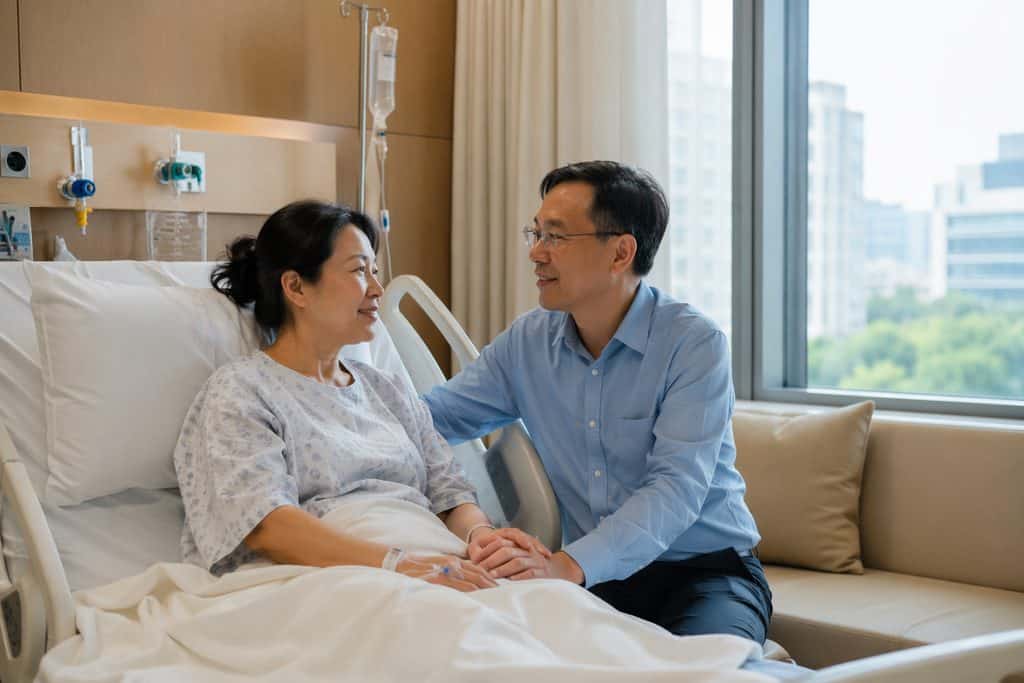
China Medical Visa for Family Members: The Short Answer
When 54-year-old Daniel from Manchester learned his wife needed cardiac surgery, the diagnosis hit hard. But the second question came quickly: can I go with her? The answer is yes. Family members accompanying a patient to China apply for an S2 visa, the same short-stay category the patient uses. The China medical visa for family members cost typically ranges from $140 to $220 per person depending on your nationality, application channel, and processing speed. That is the visa fee alone. It does not include flights, accommodation, or the hospital’s own administrative documentation.
The complication? China does not issue a dedicated “medical visa.” What people call a medical visa is actually an S2 visa annotated for medical treatment purposes. Family members apply under the same category, but they need a separate invitation letter and proof of relationship. That changes the paperwork significantly.
Who This Is Right For — and Who It Isn’t
Bringing family to China for medical care works well in specific situations. It is not a universal solution.
Good candidates for family accompaniment:
- A spouse accompanying a partner for a planned surgery with a defined recovery window of 2–6 weeks
- An adult child accompanying an elderly parent who needs help with mobility, translation, and decision-making
- A parent accompanying a minor child for treatment at a pediatric specialty center
- Families where the patient will be hospitalized for more than 5 days and needs an advocate present
Who should reconsider:
- Families bringing multiple relatives for a short outpatient consultation — one companion is usually enough
- Anyone with unresolved visa complications from previous China travel
- Patients whose condition is unstable for long-haul flights
- Families with young children who would need schooling during an extended stay
Adding family members increases coordination complexity. Each person needs documents, each person needs a visa interview slot, and each person adds cost. Sometimes the right move is for the patient to travel first, establish the treatment plan, and bring family later once admission dates are confirmed.
The Options, Compared
You have three realistic routes for getting family members to China for medical purposes. Here is how they stack up.
| Route | Visa Type | Typical Cost Per Person | Processing Time | Best For |
|---|---|---|---|---|
| Accompanying patient on S2 | S2 (short-stay, medical annotation) | $140–$220 | 4–10 business days | Spouses, parents, adult children staying under 180 days |
| Independent S2 for family visit | S2 (private affairs) | $140–$220 | 4–10 business days | Relatives visiting a patient already in China |
| S1 for long-term care | S1 (long-stay, over 180 days) | $140–$220 | 10–20 business days | Spouse or parent staying for extended treatment or rehabilitation |
Most families traveling for a single surgery or treatment course will use the S2 route. The S1 visa becomes relevant when treatment stretches beyond six months — think oncology protocols, rehabilitation after major orthopedic work, or chronic disease management at a traditional Chinese medicine hospital. The visa fee is similar across categories. What changes is the documentation burden and the processing time.
How to Apply for a Medical Visa for Relatives in China
The application process for family members mirrors the patient’s process, with one critical difference: proof of relationship. Here is the sequence.
First, the patient obtains a hospital invitation letter. The treating hospital’s international department issues this document. It states the patient’s name, passport number, diagnosis, proposed treatment dates, and the hospital’s confirmation that treatment is feasible. For family members, the same hospital can issue a companion letter. Not all hospitals do this automatically — you may need to request it explicitly.
Second, gather relationship proof. For a spouse, that means a marriage certificate. For a child, a birth certificate. For a parent-child relationship where the patient is the parent, the birth certificate showing the adult child’s name works. These documents need notarization and, in some cases, authentication by the Chinese embassy or consulate in your home country. Requirements vary by consulate. Check before you book flights.
Third, complete the online COVA form. Every applicant — patient and each family member — fills out a separate China Online Visa Application form. Upload a passport photo, passport bio page, and the supporting documents. Pay the fee online or at the visa center depending on your location.
Fourth, attend the visa appointment. Some nationalities qualify for visa-free entry or expedited processing. Most Western applicants need an in-person appointment at a Chinese visa application service center. Bring original documents, not just copies. The visa officer may ask about the patient’s condition, the hospital, and the family member’s role during the stay.
Can Family Members Accompany a Patient on a China Medical Visa?
The short answer: yes, but each person needs their own visa. There is no “family visa” that covers a patient plus three relatives on one document. Each spouse, each child, each parent applies separately.
What about medical visa China spouse and children requirements? A spouse needs a marriage certificate. Children need birth certificates. If a child is traveling with one parent while the other stays home, some consulates require a notarized consent letter from the non-traveling parent. This catches families off guard. Prepare it before the appointment.
And can a China medical visa for parents accompanying a patient work in reverse — an adult child as the patient, with parents as companions? Yes. The process is identical. The hospital letter lists the parents as companions, and the parents submit birth certificates proving the relationship.
One thing to understand: the S2 visa does not grant work rights. Family members cannot take employment while in China. They also cannot enroll children in public schools on an S2. Extended stays beyond 180 days require the S1 visa and residence permit registration within 30 days of arrival.
What It Costs
Let’s break down the real numbers. The China medical visa for family members cost is just the starting point.
Visa fees: $140–$220 per person. US citizens typically pay at the higher end. EU citizens, UK citizens, and Australians fall in the same range. Some nationalities pay less under reciprocal agreements.
Service center fees: If your country routes applications through a visa service center rather than the embassy directly, add $30–$80 per application for processing and courier services.
Document preparation: Notarization and authentication of marriage or birth certificates costs $50–$200 depending on your country. Translation into Chinese adds $30–$80 per document if the consulate requires it.
Expedited processing: Rush service, where available, adds $30–$50 per person and cuts processing from 10 business days to 2–4 business days.
What is not included: Flights, accommodation, food, hospital treatment costs, insurance, and any in-country transportation. A two-week stay for a patient and one companion in a mid-range hotel near a major hospital in Beijing or Shanghai runs $1,500–$3,500 for lodging alone. Budget accordingly.
Some families explore medical tourism China family visa package options through private facilitators. These packages bundle visa assistance, airport pickup, hotel booking, and interpreter services. Prices range from $800 to $3,000 per family depending on service depth. The visa fee itself is never discounted — that goes to the Chinese government. What you pay for is the coordination labor.
Practical Considerations: Documentation, Timing, and Logistics
Visa processing time is the biggest variable. Standard processing runs 4–10 business days. But consulates can slow down during Chinese public holidays (especially around Chinese New Year and National Day in early October). If your hospital admission date is fixed, apply at least 6 weeks before travel.
Passport validity matters. Every traveler needs a passport valid for at least 6 months beyond the planned departure date from China, with at least two blank visa pages. Check this before anything else — replacing a passport mid-application resets the whole process.
Health insurance is a separate issue from the visa. The Chinese consulate does not require proof of travel health insurance for an S2 visa. But the hospital treating the patient will require deposit payments before admission. International insurance policies that cover treatment in China often require pre-authorization. Start that conversation with your insurer early.
Language is the practical barrier no visa solves. Once family members land, they need to navigate the hospital, pharmacies, hotels, and restaurants. Many top-ranked public hospitals have international departments with English-speaking staff. But the moment you step outside that department, Chinese dominates. A bilingual companion service can handle registration, queue management, payment counters, and translation — which matters most on the day of admission when forms pile up.
After returning home, follow-up care coordination matters. The Chinese hospital will provide discharge summaries and medication lists. Your home physician needs these translated. Some hospitals provide English versions. Others provide Chinese only, and you will need certified translation for your local doctors.
Frequently Asked Questions
Yes and no. Family members apply for the same S2 visa category, but each person submits a separate application with their own supporting documents. The patient’s hospital letter references the companions, which strengthens the family members’ applications. But the visa officer evaluates each application independently.
An S2 visa typically allows a stay of 30 to 180 days per entry, depending on what the consulate grants. The visa officer decides the duration based on the hospital letter and the stated purpose. For treatment courses longer than 180 days, family members should apply for the S1 visa instead. Overstaying any visa triggers fines, detention, and potential entry bans.
This happens more often than people expect. The family member must leave China and apply for a new visa, or apply for an extension at the local Exit-Entry Administration bureau before the current visa expires. Extensions are not guaranteed. Chinese authorities may grant a short extension if the hospital provides documentation of the extended treatment. But planning for the original visa duration is safer than relying on an extension.
Yes. The family member applies for an S2 visa citing private affairs — visiting a family member receiving medical treatment. The application needs a copy of the patient’s passport, visa, hospital admission documents, and proof of relationship. Processing is the same. The hospital’s international department can provide a companion invitation letter to support the application.
No. Visa fees are non-refundable once the application is submitted, regardless of whether the visa is issued or the trip happens. This applies to every applicant. If your treatment plan is uncertain, delay visa applications until the hospital confirms admission dates. The visa fee loss is small compared to the cost of rebooking flights and accommodation.
Your Next Step
Bringing family members to China for medical treatment is entirely workable. The path is clear: hospital invitation letter, relationship proof, separate S2 applications, and realistic budgeting for fees, accommodation, and in-country logistics. The China medical visa for family members cost is predictable. The coordination around it is where families need help.
Our team at China Medical Services has guided families through this process across 37 cities and 340+ top-ranked hospitals. We are not a hospital, and we do not provide medical advice or diagnoses. What we do is handle the coordination layer — hospital matching, documentation, bilingual companion services from $300 per day, and appointment coordination from $300. If you are planning a medical trip with family members, start with a free consultation at our patient services page. We will help you map the visa path, the hospital options, and the realistic timeline before you spend a dollar on flights.
Planning a medical trip with family is complex. But with the right documents and a clear sequence, it becomes a manageable process. Start early, apply together, and keep every document organized. The visa is the gate. Good coordination is what gets you through it smoothly.
For more medical information and treatment options in China, visit chinamedservices.com (China Medical Services).
