China Medical Tourism 2026: African Patient Access and Real Costs
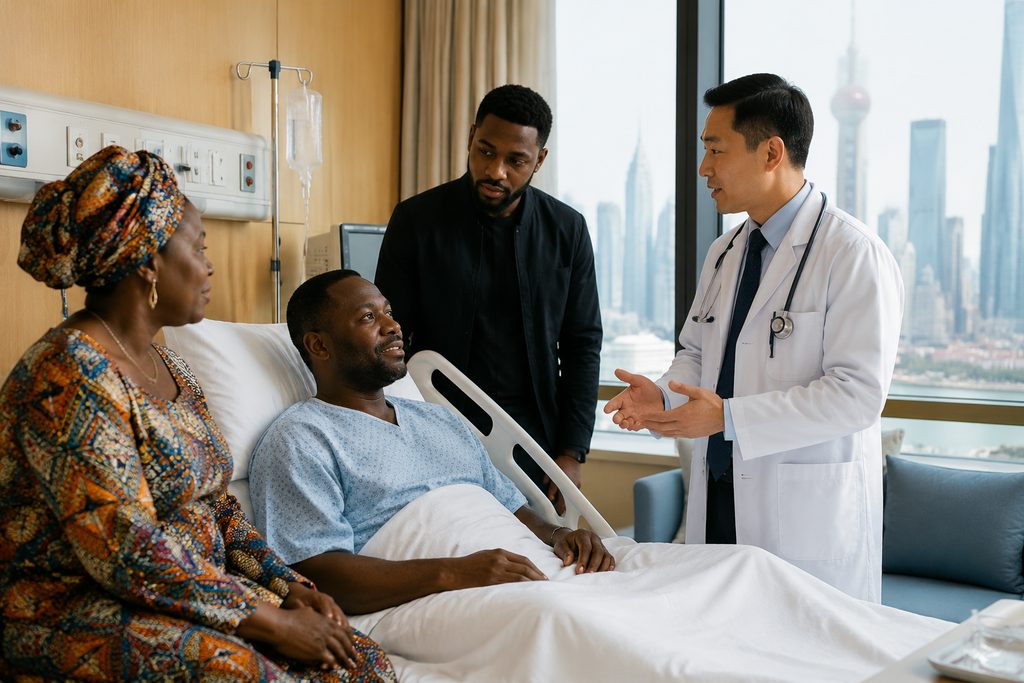
You have probably heard that traveling to China for medical care means navigating impossible bureaucracy, language walls, and hidden costs. The reality is different. Chinese hospitals now treat a growing number of African patients each year, and the system has matured enough that a clear, documented path exists. What most people get wrong is the sequence. They book a flight first, then try to figure out the hospital. That is backwards. The hospital comes first, then the visa, then the travel. This guide covers the actual steps, the real cancer treatment cost China 2026, and the questions African patients most often ask before committing to the trip.
We work as a coordination team based in China, not as a medical provider. Our job is to connect you with the right hospital, prepare your records, and make sure you do not waste money on a trip that could have been handled remotely first. That distinction matters more than most people realize.
How This Actually Works, Step by Step
You start with records, not with a plane ticket. Gather every medical document you have: pathology reports, imaging files, blood work, discharge summaries, current medication list. If the reports are in French, Portuguese, Arabic, or another language, they need to be translated into English or Chinese. Our team handles that translation as part of the coordination.
Then you send those records to us. We route them to the appropriate specialty department at a hospital that matches your diagnosis and budget. A senior specialist reviews the file and provides a written opinion. That costs between $300 and $500 for a written second opinion from a top-tier hospital. If you want to speak with the specialist directly, a video consultation runs $500 to $800 for a top specialist.
What comes back is a realistic assessment: whether treatment in China makes sense for your case, what the likely protocol would be, how long you would need to stay, and what the estimated cost range looks like. This happens before you spend a single dollar on flights or hotels. If the specialist says your case is better managed at home, you just saved yourself an expensive mistake.
If the recommendation is to proceed, we move to appointment coordination. This is where the Chinese system differs from what many African patients expect. Public hospital outpatient clinics in China generally cannot be booked months in advance from overseas. The standard rule is same-day registration at the hospital. For international patients, the practical route is the hospital’s international medical department or VIP channel, which allows advance scheduling. That channel costs more — typically 1.5 to 2 times the standard outpatient fee — but it is the only reliable way to lock in a date before you fly.
After the appointment is confirmed, you apply for the visa. For medical treatment in China, the correct visa category is S2. The S2 visa covers short stays for private affairs, including medical treatment. If your treatment requires a stay longer than 180 days, you apply for an S1 visa instead. Family members accompanying you also apply for S2 visas. The M visa is for commercial and trade activities and has nothing to do with medical travel. Do not let anyone tell you otherwise.
What African Patients Actually Pay: Cancer Treatment Cost China 2026
The honest answer is that cancer treatment costs in China vary enormously by cancer type, stage, hospital tier, and whether you use the standard public channel or the international department. A stage II breast cancer patient on a standard chemotherapy regimen at a top public hospital might spend $15,000 to $30,000 for a full treatment course. A complex hematological malignancy requiring CAR-T therapy could run $120,000 to $180,000. Immunotherapy adds $3,000 to $8,000 per cycle depending on the drug.
These numbers are not abstract estimates. They reflect the range we see across oncology departments at hospitals like Fudan University Shanghai Cancer Center, Sun Yat-sen University Cancer Center in Guangzhou, and Peking Union Medical College Hospital in Beijing. The same protocols in the United States typically cost three to six times more. That gap is why patients from Nigeria, Kenya, Ghana, South Africa, and Ethiopia increasingly look east.
But there is a catch. The lower prices apply to the standard public channel. If you need English-speaking staff, advance scheduling, and a private room, you will use the international department, where prices rise accordingly. A private room in an international ward at a top Shanghai hospital runs $200 to $500 per night. That is still far below US private room rates, but it is not the $50 per night some patients expect.
| Cancer Treatment Item | China Public Channel (USD) | China International Dept (USD) | US Reference (USD) |
|---|---|---|---|
| Standard chemotherapy (6 cycles) | $8,000–$18,000 | $15,000–$30,000 | $60,000–$120,000 |
| Radiation therapy (full course) | $5,000–$12,000 | $10,000–$20,000 | $40,000–$90,000 |
| Breast cancer surgery + reconstruction | $6,000–$15,000 | $12,000–$25,000 | $50,000–$110,000 |
| CAR-T cell therapy | $80,000–$120,000 | $100,000–$180,000 | $400,000–$500,000 |
| PET-CT scan | $700–$1,200 | $1,000–$1,800 | $4,000–$7,000 |
Prices vary by hospital and case complexity. Always get a written quote from the hospital’s international department before you commit to travel.
A Realistic Timeline
People consistently underestimate how long the pre-travel phase takes. Here is what a typical timeline looks like for an African patient seeking cancer treatment in China in 2026.
| Stage | What Happens | Time Range |
|---|---|---|
| Week 1 | Collect and translate medical records; submit for review | 3–7 days |
| Week 2–3 | Specialist written second opinion or video consultation | 7–14 days |
| Week 3–4 | Hospital international department confirms appointment; issues invitation letter | 5–10 days |
| Week 4–6 | S2 visa application at Chinese embassy or consulate in home country | 7–21 days depending on country |
| Week 6–8 | Travel to China; first in-person consultation and additional testing | 3–5 days after arrival |
| Month 2–3 | Treatment begins; first cycle of chemotherapy or surgery scheduled | Varies by protocol |
The part people forget is the visa processing time. Chinese embassies in different African countries have different workloads. Lagos, Nairobi, and Accra can process S2 visas in under two weeks. Addis Ababa and Dar es Salaam sometimes take three weeks or more. Apply as soon as you have the hospital invitation letter. Do not wait until you have booked flights.
What Can Go Wrong — and What Happens Then
The most common failure is arriving in China without a confirmed hospital appointment. Patients assume they can walk into a top hospital and register. They cannot. The outpatient departments at hospitals like Fuwai Hospital or Zhongshan Hospital see over 10,000 patients per day. Without a prior arrangement through the international department, you will wait in line with everyone else, and you will not understand the signs, the forms, or the queue numbers.
The second failure is incomplete records. A Chinese oncologist will not start treatment based on a one-page summary from a clinic in Kigali. They need the full pathology report, the imaging files in DICOM format, and the treatment history with exact drug names and dosages. If you arrive with a folder of handwritten notes, the specialist will order everything to be redone in China, which adds $2,000 to $5,000 and two weeks to your timeline.
The third failure is financial. Chinese public hospitals require prepayment. You deposit money at admission, and the hospital deducts from that deposit as treatment proceeds. If the deposit runs out, treatment pauses. International insurance policies sometimes reimburse Chinese hospital bills, but the hospital will not bill your insurer directly in most public facilities. Private international hospitals like United Family or Jiahui do offer direct insurance billing, but their prices run two to three times higher than public hospital international departments.
What happens when things go wrong? If the appointment falls through, our coordination fee is refunded in full. That is the rule: if we cannot secure the appointment we confirmed, you get your coordination money back. If the treatment plan changes after you arrive — which happens, because the in-person evaluation sometimes reveals something the remote review could not — the specialist explains the new plan and the new cost estimate before anything proceeds. You are never locked into a treatment you did not approve.
Is Organ Transplant Legal in China for Foreigners?
This question comes up frequently, and it deserves a straight answer. Organ transplantation in China is legal and regulated. The country operates under a national organ donation and allocation system. However, the rules governing foreign patients are strict, and access to donor organs is never guaranteed for anyone, Chinese or foreign. No legitimate hospital or coordinator can promise you a transplant slot, a short waitlist, or priority access. Any service that makes such a promise is not legitimate.
What we can do is connect you with transplant centers for evaluation. The evaluation determines whether you are a candidate, what the medical requirements are, and what the realistic path forward looks like. That evaluation is a medical process, not a commercial transaction. The same applies to questions about China medical tourism package for kidney transplant inquiries. There is no package. There is a medical evaluation, a legal process, and a waiting period. Anyone selling a “transplant package” is selling something that does not exist inside the legal system.
For patients with end-stage renal disease who are not transplant candidates or who are waiting, dialysis is a more immediate option. The question can African patients get affordable dialysis in Beijing has a practical answer: yes, but with conditions. Hemodialysis at a public hospital in Beijing runs $80 to $150 per session through the standard channel. The international department charges $200 to $400 per session. Three sessions per week is the standard schedule. That means $1,000 to $5,000 per month depending on the channel and the hospital. Some patients find that acceptable compared to dialysis costs in their home countries; others do not. The only way to know your specific cost is to send your records and get a written estimate.
Practical Considerations: Records, Visa, Payment, and Follow-Up
For cardiac surgery, Zhongshan Hospital affiliated with Fudan University is among the most experienced centers in China. Fuwai Hospital in Beijing performs more cardiac surgeries annually than any other hospital in the world — over 14,000 per year. In Shanghai, a coronary artery bypass graft at a top public hospital runs $12,000 to $20,000 through the standard channel, and $20,000 to $35,000 through the international department. The same surgery in the United States typically exceeds $120,000. Prices vary by hospital and case complexity.
Yes. The top-ranked Chinese oncology centers follow international treatment protocols and participate in global clinical trials. Hospitals like Fudan University Shanghai Cancer Center and Sun Yat-sen University Cancer Center publish in peer-reviewed international journals and treat high volumes of complex cases. The key is choosing a hospital from the Fudan ranking list rather than a small private clinic with no verifiable track record. Our hospital database covers 340+ top-ranked hospitals across 37 cities, all drawn from the top 5 percent of China’s 35,000+ hospitals.
Start with a written second opinion. For $300 to $500, a Chinese specialist reviews your records and tells you whether treatment in China would meaningfully change your outcome. That opinion can also guide your local oncologist. If the specialist recommends treatment in China, you then decide whether the cost is feasible. Some patients use the second opinion to adjust their local treatment plan without ever traveling. That is a legitimate and valuable outcome.
Yes. Accompanying family members apply for S2 visas alongside the patient. The hospital’s invitation letter should mention the accompanying person or persons. Accommodation near major hospitals is widely available, and many international departments have staff who can help arrange nearby housing. A bilingual companion can also assist family members with daily logistics while the patient is in treatment.
Your Next Step
The path from an African capital to a Chinese hospital bed is not mysterious. It is a sequence: records first, remote review second, appointment third, visa fourth, travel fifth. Skip any step and you pay for it in time or money. We are a coordination team, not a medical provider. We do not treat patients, and we do not promise outcomes. What we do is handle the logistics — record translation, hospital matching, appointment coordination through official international departments, and bilingual support on the ground.
If you are considering treatment in China, start with your records. Send them to us for a free initial consultation at our patient coordination page. We will tell you honestly whether the trip makes sense for your case. If it does not, we will tell you that too. That is the whole job.
Frequently Asked Questions
Yes. The hospitals used for international patients are JCI-accredited and follow the same international safety standards as top hospitals in the US and Europe. Surgical teams perform high volumes of procedures — often more than their Western counterparts — which studies show leads to better outcomes.
Costs vary by procedure and hospital, but international patients typically save 40-80% compared to US prices — even when factoring in travel and accommodation. A consultation with our team will give you an exact, all-inclusive quote with no hidden fees.
Send us your existing medical reports to get started. We handle everything from hospital selection and appointment scheduling to visa assistance and post-operative recovery planning. Your medical records are reviewed by the specialist before you even book a flight.
For more medical information and treatment options in China, visit chinamedservices.com (China Medical Services).
