China Medical Tourism 2026: The Boao Lecheng Pilot Zone Explained
Boao Lecheng Medical Tourism Prices: The Short Answer
When 42-year-old Michael first heard the diagnosis, he had no idea where to start looking for treatment. His oncologist in Manchester mentioned a clinical trial in China. A friend mentioned Hainan Island. Neither could tell him what it would actually cost. Boao Lecheng medical tourism prices are not published anywhere as a single menu. That is the first thing every international patient learns. A consultation starts around $100–300. A written second opinion from a top specialist runs $300–500. But actual treatment costs vary enormously by drug, condition, and hospital. Some regenerative therapies run $20,000–50,000 per course. Some imported cancer drugs cost less than their US list price but still exceed $10,000 per month.
The caveat: Lecheng is not a discount destination. It is a regulatory sandbox. You go there because a drug or device is not yet approved in your home country — not because it is cheaper.
What Is Boao Lecheng Pilot Zone?
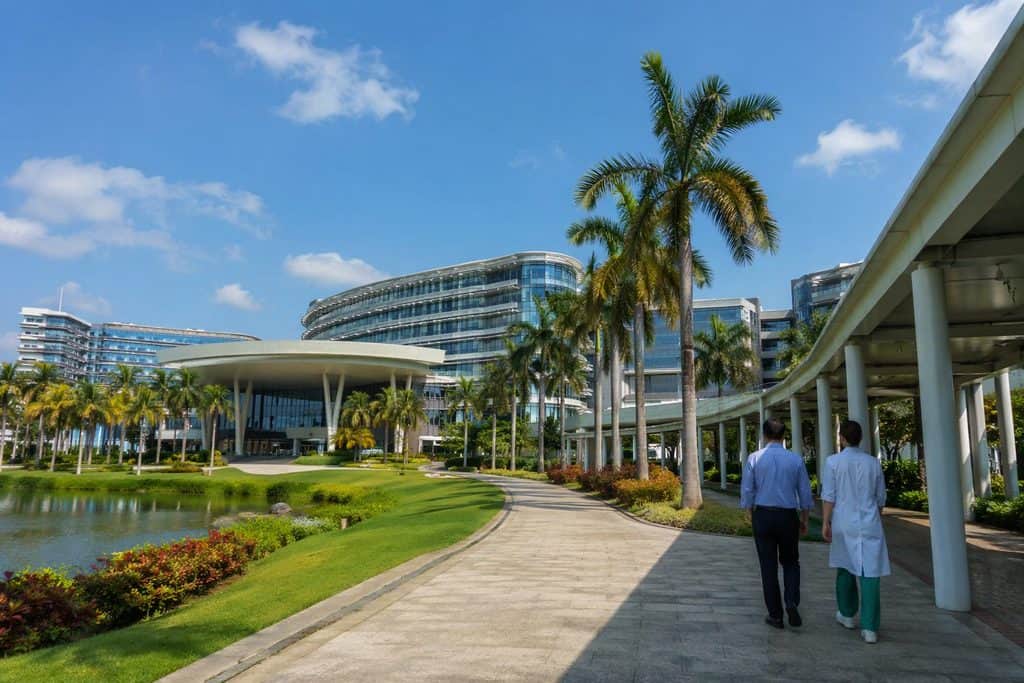
Boao Lecheng International Medical Tourism Pilot Zone sits on Hainan Island, about two hours by high-speed rail from Haikou. China established it in 2013 with a specific mandate: allow approved international hospitals to use drugs, devices, and technologies that have marketing approval in the US, EU, or Japan but not yet in mainland China. That is the core of what is Boao Lecheng pilot zone — a controlled exception to China’s drug approval timeline.
Under normal Chinese regulations, a new cancer drug approved by the FDA might take two to five additional years to clear the National Medical Products Administration. In Lecheng, approved institutions can apply to use that drug much sooner. The zone hosts over 25 licensed medical institutions. Patients cannot simply walk in and buy treatment. Every drug or device use requires a hospital application, a specialist prescription, and regulatory filing within the zone.
This is not a free-for-all. It is a structured pathway.
Who This Is Right For — and Who It Isn’t
Lecheng suits a specific patient profile. Understanding whether you fit it will save you weeks of research and thousands of dollars.
Typically a good candidate:
- You have a confirmed diagnosis and a drug or device identified by your home physician that is approved abroad but not in your country
- You have exhausted standard treatment options at home and your specialist has named a specific therapy available in Lecheng
- You can afford out-of-pocket payment — most international patients pay directly, then seek reimbursement from their insurer
- You have a stable condition that allows international travel and a multi-week stay on Hainan Island
- You have complete medical records in English or can have them translated professionally
Who should not pursue this:
- Patients without a clear diagnosis — Lecheng is not a diagnostic destination
- Patients seeking low-cost versions of treatments already available at home — the value here is access, not price
- Patients with unstable conditions requiring intensive care during transit
- Patients who cannot fund treatment and logistics out of pocket
- Patients whose home physician is unwilling to coordinate follow-up care after return
That last point matters more than most people expect. You will need someone at home to manage labs, imaging, and side effects after you leave Hainan.
The Options, Compared
If you are considering Lecheng, you are probably also weighing other routes to the same treatment. Here is how the genuine alternatives stack up for an international patient in 2026.
| Option | Access to unapproved drugs | Typical wait time | Cost profile | Language barrier |
|---|---|---|---|---|
| Boao Lecheng Pilot Zone | Yes — via special regulatory pathway | 2–6 weeks after records review | $20,000–$80,000 per treatment course | Moderate — hospitals provide some English support |
| Mainland China top hospital (e.g., Fudan-ranked institutions) | No — only NMPA-approved drugs | 1–4 weeks for outpatient; surgery requires in-person visit first | Surgery: 1/5 to 1/10 of US prices | High — bilingual companion strongly recommended |
| Private international hospital in China (e.g., JCI-accredited facilities) | Limited — follows NMPA rules | Days to 2 weeks | 1.5–2× public hospital prices | Low — English-speaking staff |
| Clinical trial enrollment in home country | Yes — investigational | Weeks to months; strict eligibility | Often free or sponsor-covered | Low |
| Travel to US/EU/Japan for approved drug | Yes — if approved there | 1–3 months | Highest — US list prices apply | Low to moderate |
Which column fits you? If the drug you need is already approved in your home country, Lecheng makes no sense. If it is approved in China but not at home, a mainland hospital like those in the Fudan Top 100 may offer it at lower cost. If it is approved nowhere except via special access, Lecheng becomes the shortest path.
Lecheng Stem Cell Therapy Cost 2026: What the Numbers Actually Look Like
Stem cell therapy is the most searched treatment category for Lecheng. Patients from the Middle East, Southeast Asia, and Eastern Europe contact us about it more than any other single intervention. Lecheng stem cell therapy cost 2026 ranges from roughly $20,000 to $60,000 per treatment course, depending on cell type, source, number of infusions, and the institution. That is a wide range. Here is what drives it.
Autologous therapies — using your own cells, harvested and expanded — tend toward the lower end. Allogeneic therapies using donor cells cost more. More infusions mean more cost. A single intravenous infusion of mesenchymal stem cells at a licensed Lecheng institution might run $8,000–15,000. A full course of three to four infusions with pre-treatment evaluation and post-treatment monitoring lands in the $30,000–50,000 range. Some cardiac or neurological protocols exceed $60,000.
What is included varies by hospital. Typically the treatment fee covers cell preparation, the infusion procedure, and a short observation stay. It does not cover international flights, accommodation on Hainan, visa fees, translation, or follow-up imaging after you return home. Budget an additional $5,000–10,000 for logistics if you are coming from Europe or North America.
And a hard truth: stem cell therapy in Lecheng is not a cure. The zone’s regulatory pathway allows earlier access to therapies that have some overseas approval or clinical data. But efficacy varies by condition, and no legitimate institution in Lecheng will promise a specific outcome. Any clinic that does should make you walk away.
New Cancer Drugs Available in China 2026: What Lecheng Actually Offers
The most practical reason Western patients contact us about Lecheng is oncology. New cancer drugs available in China 2026 fall into two buckets: drugs approved by the NMPA and available at major mainland hospitals, and drugs not yet approved in China but accessible through Lecheng’s special pathway.
The first bucket is larger than most foreigners realize. China’s drug approval process has accelerated dramatically since 2017. Many PD-1 inhibitors, CAR-T therapies, and targeted agents approved by the FDA now receive NMPA approval within 12–18 months. If your drug is in this bucket, you do not need Lecheng. A mainland hospital in Beijing or Shanghai may offer it at a fraction of Western prices, though you will need help navigating the system — which is exactly what our bilingual companions do.
The second bucket is where Lecheng earns its reputation. A drug approved by the EMA in 2025 but still under NMPA review in 2026 might be accessible in Lecheng within weeks of your records being reviewed. The hospital applies to the Hainan provincial regulator for that specific patient. Approval is not guaranteed, but the pathway exists and is used routinely.
Costs for imported oncology drugs in Lecheng typically reflect the drug’s price in its country of origin plus logistics and hospital fees. Do not expect US-level discounts. Expect access you cannot get elsewhere without enrolling in a trial.
How to Book Treatment at Boao Hope City
Boao Hope City is the official name for the medical cluster within the Lecheng zone. How to book treatment at Boao Hope City is the question every serious patient eventually asks, and the process is more bureaucratic than most expect.
Step one: you need a confirmed diagnosis and complete records. Imaging, pathology reports, genetic testing, treatment history — all translated into English or Chinese. Without these, no hospital in the zone will review your case.
Step two: a specialist at a licensed Lecheng institution must evaluate your records and determine whether a specific drug or therapy is appropriate. This is a medical decision, not an administrative one. Some hospitals offer remote video consultations for this step. Others require an in-person visit.
Step three: the hospital files a special-use application with the Hainan Medical Products Administration. This is the regulatory step unique to Lecheng. Processing time varies from days to several weeks depending on the drug and the completeness of the application.
Step four: you travel to Hainan, complete pre-treatment evaluation, and receive treatment. Most patients stay on the island for one to four weeks depending on the protocol.
Step five: you return home with a discharge summary, treatment records, and a follow-up plan. Your home physician manages ongoing care.
We help with steps one through four. We do not file regulatory applications ourselves — the treating hospital does that. What we handle is the coordination: records translation, hospital matching, appointment scheduling, visa guidance, and on-the-ground bilingual support.
Is Boao Lecheng Safe for International Patients?
The honest answer: it depends on which institution you choose. Is Boao Lecheng safe for international patients? The regulatory framework is real. The Hainan Medical Products Administration oversees every special-use application. Licensed institutions must meet Chinese standards for medical practice. Many partner with well-known international hospital groups.
But safety is not uniform across the zone. Some institutions are better equipped, better staffed, and more experienced with international patients than others. Some have English-speaking staff. Some do not. Some have strong oncology or regenerative medicine programs. Some are newer and less established.
The practical risks for international patients are not primarily about counterfeit drugs or unqualified doctors. They are about communication gaps, incomplete pre-treatment evaluation, and fragmented follow-up care. A patient who cannot explain their full medical history in Chinese may receive treatment based on incomplete information. A patient who returns home without a clear follow-up plan may miss early signs of complications.
That is why we recommend every international patient use a bilingual medical companion during their Lecheng stay. Not because the hospitals are dangerous. Because the margin for error shrinks when nothing gets lost in translation.
No legitimate institution in Boao Lecheng can guarantee treatment outcomes. If a clinic promises a cure — for cancer, for degenerative disease, for anything — treat that as a disqualifier. The zone offers earlier access, not certainty.
Practical Considerations: Records, Visa, Payment, and Follow-Up
Before you book anything, get your paperwork in order. Lecheng requires more documentation than a typical medical tourism trip.
Medical records: complete, organized, and translated. Pathology slides and imaging files should be in digital format. Some hospitals accept English records. Others require Chinese translation. We can arrange certified translation through hospital-affiliated services.
Visa: you will need an S2 visa for short-term medical treatment in China. Family members accompanying you also apply for S2. The hospital in Lecheng can provide an invitation letter and treatment confirmation to support your application. Processing times vary by embassy. Apply at least four to six weeks before your planned travel date. The M visa is for commercial and trade activities — it is not the correct category for medical treatment.
Payment: most Lecheng institutions require prepayment before treatment begins. International bank transfers are standard. Some hospitals accept major credit cards. Insurance reimbursement is your responsibility — Chinese hospitals do not bill foreign insurers directly in most cases. Private international hospitals in the zone may offer direct billing with certain insurers. Confirm before you commit.
Language: English support varies widely. Some institutions have dedicated international patient departments. Others rely on translation apps. If you do not speak Mandarin, arrange for a bilingual companion before you arrive. This is not a luxury. It is the difference between understanding your treatment plan and guessing.
Follow-up: your home physician needs complete treatment records to manage your care after return. Request a discharge summary in English before leaving the hospital. Schedule your first follow-up appointment at home before you travel. Do not leave this until after treatment.
Frequently Asked Questions
No. Every drug and device used in the zone requires a special-use application filed by the treating hospital. You need a confirmed diagnosis, complete records, and a specialist evaluation before any treatment is approved. Walk-in treatment for unapproved drugs does not happen.
For stem cell therapy, expect $20,000–60,000 depending on protocol and institution. For imported oncology drugs, costs typically reflect the drug’s overseas price plus hospital fees. Add $5,000–10,000 for travel, accommodation, visa, and translation. Most patients pay out of pocket and seek reimbursement later. Varies by hospital and case complexity.
You return home and your home physician manages the outcome. Lecheng hospitals provide discharge records and follow-up recommendations, but they do not manage your long-term care from another country. Before you travel, confirm that your home specialist is willing to manage post-treatment monitoring. If they are not, reconsider the trip.
Clinical trials have strict eligibility criteria and limited slots. Lecheng offers access based on a specialist’s medical judgment rather than trial enrollment criteria. But it costs money, and you bear the travel burden. If you qualify for a trial at home, that is usually the better first option. Lecheng is for patients who do not qualify or cannot wait.
Your Next Step
Boao Lecheng is not a magic solution. It is a regulatory pathway with real costs, real paperwork, and real risks. But for the right patient — someone with a clear diagnosis, a named therapy, and the resources to travel — it offers something no other destination can: access to treatments that are not yet approved at home.
We are China Medical Services, a coordination team that helps international patients navigate Chinese healthcare. We are not a hospital. We do not diagnose, treat, or guarantee outcomes. What we do is handle the logistics: hospital matching, records translation, appointment scheduling, visa guidance, and bilingual support on the ground.
If you are considering Lecheng or any other treatment pathway in China, start with a conversation. Tell us your diagnosis, what your home physician has recommended, and what you are hoping to find. We will tell you honestly whether this route makes sense for you. No pressure. No promises we cannot keep. Just a clear picture of what is possible.
For more medical information and treatment options in China, visit chinamedservices.com (China Medical Services).
