Is Immunotherapy Safe in China? Safety Data, Costs, and Hospital Access
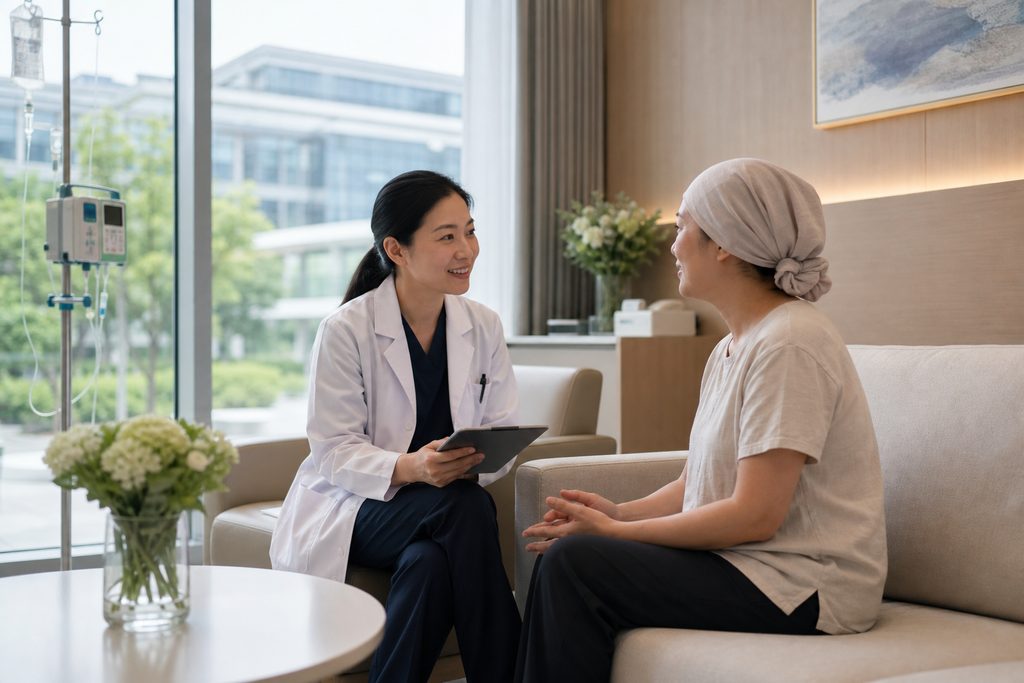
When 42-year-old Michael from Manchester first heard the word “immunotherapy,” he had no idea where to start looking. His oncologist had mentioned it as a possible next line after chemotherapy stopped working. The price in the UK private sector was staggering. A friend who did business in Shenzhen asked him a simple question: “Have you looked at China?”
That question sent Michael down a rabbit hole of forums, medical journals, and half-translated hospital websites. He found impressive survival data. He found prices that were a fraction of what he’d been quoted at home. But one question kept nagging at him. Is immunotherapy safe in China? The short answer is yes — when you know which hospitals to choose and how the regulatory system works. The longer answer requires understanding China’s drug approval process, the sheer clinical volume at top cancer centers, and what the immunotherapy cost China actually buys you.
How This Actually Works, Step by Step
The process is more structured than most foreign patients expect. Here is the real sequence.
First, you send your existing medical records. This means pathology reports, imaging scans (CT, PET-CT, MRI), blood work, and any prior treatment summaries. Our team translates these documents into medical Chinese and submits them to the appropriate oncology department at a top-ranked Chinese hospital.
Second, a specialist reviews your case. This usually takes 3 to 7 working days. The doctor assesses whether immunotherapy is clinically appropriate, which drug targets your specific tumor profile, and whether combination therapy makes sense.
Third, you receive a written assessment. This includes a recommended treatment protocol, an estimated treatment schedule, and a realistic cost breakdown. The immunotherapy cost China varies by drug, dosage, and hospital tier, but you will see actual numbers before making any commitment.
Fourth, if you proceed, we coordinate your S2 visa application documents, hospital registration, and appointment scheduling. You travel to China, meet the oncology team in person, and begin treatment.
Is Immunotherapy Safe in China? Regulatory Standards and Clinical Volume
China’s National Medical Products Administration (NMPA) has approved more than 15 PD-1 and PD-L1 inhibitors since 2018. That includes both domestic drugs like toripalimab, sintilimab, and camrelizumab, as well as international ones like pembrolizumab (Keytruda) and nivolumab (Opdivo). Approval requires Phase III clinical trial data demonstrating safety and efficacy in Chinese patient populations.
The safety infrastructure is real. Top-tier cancer hospitals in Beijing, Shanghai, and Guangzhou run immunotherapy programs that treat thousands of patients annually. Fudan University Shanghai Cancer Center and Peking University Cancer Hospital each manage immunotherapy cohorts that dwarf most Western centers. Volume matters for safety because immune-related adverse events — pneumonitis, colitis, hepatitis, thyroid dysfunction — require experienced teams to catch early and manage properly.
But let’s be direct about what safety means here. Safety depends on the hospital, not the country. A patient walking into an unvetted private clinic in a second-tier city faces different risks than someone treated at a Joint Commission International (JCI)-accredited hospital or a Fudan-ranked public hospital’s international department. The gap between China’s best hospitals and its average ones is enormous. That is why hospital selection is the single most important safety decision you will make.
A Realistic Timeline
| Stage | What Happens | Typical Duration |
|---|---|---|
| Days 1–3 | You gather and send medical records; we confirm completeness | 2–3 days |
| Days 4–10 | Specialist review and written assessment | 3–7 working days |
| Days 11–20 | Hospital selection, treatment plan confirmation, cost estimate | 5–10 days |
| Weeks 3–5 | S2 visa application with hospital invitation letter | 2–4 weeks |
| Week 5–6 | Travel to China, first in-person consultation, baseline scans | 3–5 days |
| Week 6 onward | First immunotherapy infusion; treatment cycles begin | Every 2–4 weeks |
The waiting steps people forget: document translation takes a day or two. Appointment lead time at a top oncology department can be one to three weeks. Visa processing depends on your home country’s Chinese embassy workload. Budget six to eight weeks from first contact to first infusion, realistically.
What Can Go Wrong — and What Happens Then
Immune-related side effects can appear at any point, sometimes months into treatment. A patient might develop a cough that turns out to be pneumonitis, or fatigue that signals thyroid dysfunction. At a top Chinese cancer center, the oncology team runs regular blood panels specifically to catch these markers early. Corticosteroids are the standard first-line response, and most immune-related adverse events resolve with prompt management.
What if the drug doesn’t work? PD-1 inhibitors produce durable responses in roughly 20–30% of patients across most cancer types, but that means 70–80% do not respond or eventually progress. If imaging after three to four cycles shows progression, the oncologist will reassess. Combination approaches, targeted therapy, or clinical trials may be the next step. Chinese hospitals run thousands of active oncology clinical trials, and access to investigational agents is often faster than in the West.
What about language and logistics? A public hospital oncology ward in Shanghai handles 10,000+ outpatient visits daily. Without Chinese language ability, you will struggle to navigate registration, payment, pharmacy pickup, and scan scheduling. This is not a minor inconvenience — it is the single biggest practical failure point for foreign patients. A bilingual medical companion addresses this directly, and the cost from $300 per day is a small line item compared to the overall immunotherapy cost China.
Immunotherapy Cost China: What the Numbers Actually Look Like
The PD-1 inhibitor price China has dropped dramatically since domestic manufacturers entered the market. Here is a realistic comparison:
| Drug | Approx. Cost per Cycle (China) | Approx. Cost per Cycle (US/UK Private) |
|---|---|---|
| Domestic PD-1 (sintilimab, toripalimab, camrelizumab) | $1,500–$3,500 | Not available in Western markets |
| Pembrolizumab (Keytruda) | $4,000–$7,000 | $12,000–$18,000 |
| Nivolumab (Opdivo) | $3,500–$6,000 | $10,000–$15,000 |
| Combination (PD-1 + chemotherapy) | $3,000–$8,000 per cycle | $15,000–$25,000 per cycle |
These are per-cycle figures. Most protocols run cycles every 2 to 4 weeks for 6 to 12 months. The total immunotherapy cost China for a full course typically lands between $30,000 and $80,000, depending on drug choice, dosage, and hospital tier. That compares to $150,000 to $300,000+ in the US private system. How much does immunotherapy cost in Beijing specifically? At Peking Union Medical College Hospital‘s international department, expect the higher end of these ranges. At a public hospital’s standard oncology ward, expect the lower end. The international department adds English-speaking staff, shorter wait times, and a more familiar care environment — at roughly 1.5 to 2 times the standard rate.
Choosing the Best Cancer Immunotherapy Hospital China Offers
The oncology specialty rankings published by Fudan University’s hospital management institute are the most authoritative guide. For immunotherapy specifically, look for hospitals with active immuno-oncology research programs, high clinical trial enrollment, and dedicated immune-related adverse event management protocols.
Beijing and Shanghai dominate. Fudan University Shanghai Cancer Center, Peking University Cancer Hospital, and Chinese Academy of Medical Sciences Cancer Hospital (Beijing) all rank among China’s top 10 for oncology. Sun Yat-sen University Cancer Center in Guangzhou is another heavyweight, particularly for nasopharyngeal and liver cancers. If you want to book immunotherapy treatment Shanghai, the private international hospitals — Jiahui, United Family, Parkway — offer JCI accreditation and direct insurance billing, though their oncology programs are smaller than the public giants.
The decision framework: if your priority is clinical depth and the broadest treatment options, choose a Fudan-ranked public hospital’s international department. If your priority is comfort, English-language care, and insurance simplicity, a private international hospital makes sense. Many patients do a hybrid — initial consultation at a public top-tier hospital, ongoing infusions at a private facility.
Practical Considerations: Documents, Visa, Payment, and Follow-Up
You will need complete medical records translated into Chinese. That includes pathology slides (or digital pathology images), all imaging on CD or cloud link, and a detailed treatment summary from your home oncologist. The more complete your file, the more useful the written second opinion will be.
Visa is S2, not M. The S2 visa covers short-term private affairs including medical treatment. You will need an invitation letter from the Chinese hospital confirming your appointment. Processing takes 2 to 4 weeks at most embassies. Family members accompanying you also apply for S2.
Payment at public hospitals is prepaid — you deposit funds at admission and draw down as services are rendered. International departments accept major credit cards and sometimes international insurance. Standard wards are cash or Chinese bank card only. Private international hospitals bill insurance directly.
Follow-up after returning home is a real consideration. Immunotherapy requires ongoing monitoring — blood work, imaging every 2 to 3 months. Your home oncologist can manage this if you bring back a complete treatment summary and the Chinese oncologist’s recommended monitoring schedule. Telemedicine follow-up with your Chinese team is also possible, typically $100–300 per video consultation.
Frequently Asked Questions
At top-tier hospitals, yes. China’s NMPA approval standards are rigorous, and the clinical volume at major cancer centers means oncologists see more immune-related side effects and manage them more routinely. The safety risk is concentrated in lower-tier hospitals without dedicated immunotherapy programs.
Expect $40,000 to $80,000 for a full course with an international PD-1 drug at a top hospital’s international department. Domestic PD-1 drugs can bring that down to $25,000 to $45,000. Standard wards cost less but offer minimal English support.
You cannot book a specific infusion slot from overseas at a public hospital. What you can do is secure a written assessment, confirm the hospital will accept your case, and schedule the initial consultation. The actual treatment schedule is set after the in-person visit.
Top oncology departments have standardized protocols for managing pneumonitis, colitis, hepatitis, and other immune-related adverse events. Corticosteroids and immunosuppressive agents are immediately available. Your medical companion can coordinate emergency care and communicate with your home oncologist.
Usually not directly. Most patients pay upfront and submit claims for reimbursement. Check your policy’s out-of-network and international treatment clauses before committing. Private international hospitals in China are more likely to have direct billing arrangements with major insurers.
Your Next Step
The question “Is immunotherapy safe in China?” has a nuanced answer: yes, at the right hospitals, with the right preparation, and with realistic expectations about what the system requires of you. Our team at China Medical Services helps you navigate the specifics — hospital matching, record translation, appointment coordination, and on-the-ground bilingual support. We do not provide medical treatment or make clinical decisions. We connect you with the oncologists who do.
Start with a written second opinion. Send your records, get a specialist’s assessment, and understand your real options before spending a dollar on travel. If the assessment makes sense, we will help with everything after that. The first step is simple: reach out for a free consultation, and we will tell you honestly whether China is the right path for your case.
For more medical information and treatment options in China, visit chinamedservices.com (China Medical Services).
