Hospital Admission in China: How Foreigners Get Admitted Without Chaos
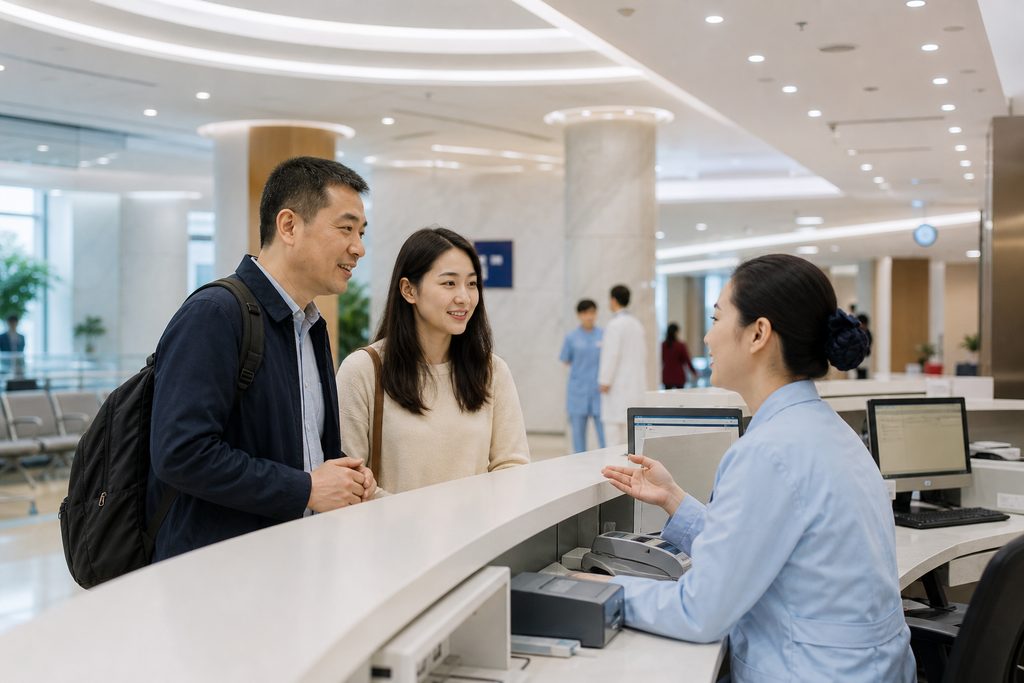
According to China’s National Health Commission, the country’s 35,000+ hospitals handle over 8 billion outpatient visits annually. Foreign patients represent a tiny fraction of that — but the number is growing fast, driven by costs that run 70–90% below US prices for comparable procedures. The hospital admission process for foreigners in China is not complicated once you understand the rules. But those rules differ sharply from what Western patients expect. Walk into a top-tier public hospital without preparation, and you will likely leave frustrated. Prepare correctly, and the system moves with surprising efficiency.
Here is the core fact most first-time visitors miss: public hospital outpatient clinics in China do not allow overseas advance booking. You cannot email Peking Union Medical College Hospital from London and reserve a bed. Admission follows a face-to-face outpatient consultation, almost without exception. The workaround — and the reason many international patients choose it — is the hospital’s international medical department or VIP channel. That route allows pre-arranged appointments, English-speaking coordination, and direct admission planning. It costs more. It also works.
This guide walks through the actual steps: visa requirements, documentation, deposits, ward selection, payment mechanics, and the realistic timeline from first contact to hospital bed.
Hospital Admission in China for Foreigners: The Short Answer
You need four things to get admitted as a foreigner: a valid S2 visa noting medical treatment, a Chinese hospital willing to accept you, complete medical records translated into Chinese or English, and a deposit payment. Admission itself happens after an in-person consultation with the treating department — or after a coordinated remote evaluation through an international medical department. The timeline from initial inquiry to admission typically runs 2 to 6 weeks for elective procedures, depending on the hospital and department.
The complication? Public hospitals operate on a same-day registration model for routine outpatient care. Surgery and inpatient admission require the attending physician to formally open an admission order after assessing you in person. There is no national centralized booking system. Each hospital runs its own process. That fragmentation is exactly why international patient departments exist — and why they charge a premium.
Who This Is Right For — and Who It Isn’t
China’s hospital system rewards patients with clear, documented medical needs and realistic expectations. You are a strong candidate if you fall into one of these groups:
- You have a confirmed diagnosis from your home country and need a specific surgical procedure — cardiac bypass, orthopedic joint replacement, tumor resection — that is significantly cheaper in China.
- You want access to high-volume surgical expertise. Fuwai Hospital in Beijing performs over 14,000 cardiac surgeries annually, the highest volume globally. Volume correlates with outcomes in complex procedures.
- You have a chronic condition and want to explore Traditional Chinese Medicine alongside conventional care. China’s TCM hospitals offer integrated protocols that are hard to find elsewhere.
- You are already in China for business or family reasons and need non-emergency treatment without flying home.
But this path is not for everyone. Be honest about the following:
- If you need emergency care, do not plan around it. Go to the nearest hospital immediately. Emergency departments in Chinese cities treat foreigners without prior arrangement.
- If your condition is unstable or you cannot travel safely, stay home. No cost saving justifies medical risk during transit.
- If you expect Western-style bedside manner and private rooms as standard in public hospitals, you will be disappointed. Public hospital wards are efficient, not luxurious. Private international hospitals offer Western comfort — at 3–5 times the public hospital price.
- If you cannot pay upfront, think carefully. Public hospitals require deposits before admission. Insurance reimbursement happens after discharge, not before.
The Options, Compared
Not all Chinese hospitals serve foreign patients the same way. The admission process, cost, language support, and overall experience differ sharply across three tiers. Understanding these differences before you contact anyone will save weeks of frustration.
| Factor | Public Hospital (Standard Ward) | Public Hospital International Dept / VIP | Private International Hospital |
|---|---|---|---|
| Advance booking from abroad | No | Yes, via coordinator | Yes, directly |
| English-speaking staff | Rare | Yes | Yes, fully bilingual |
| Deposit required | ¥5,000–¥30,000 ($700–$4,200) | ¥20,000–¥100,000 ($2,800–$14,000) | ¥30,000–¥150,000 ($4,200–$21,000) |
| Cost multiplier vs standard | 1x | 1.5–2x | 3–5x |
| Ward type | Shared, 3–6 beds | Private or semi-private | Private suite |
| Insurance direct billing | No | Sometimes | Usually yes |
| Best for | Budget-conscious, Mandarin-speaking or accompanied | Foreigners needing coordination and language support | Expats, tourists, families wanting Western standards |
If you speak no Mandarin and are traveling alone, the standard public ward is a poor choice. The international department of a top public hospital gives you the same senior physicians at 1.5–2x the price. Private international hospitals cost more but handle everything — including insurance paperwork — in English. For most medical travelers, the international department of a Fudan-ranked public hospital is the sweet spot: top clinical expertise at a fraction of Western prices.
How Do I Get Admitted to a Hospital in China: The Step-by-Step Reality
The admission process for foreigners in China follows a predictable sequence. Here is what actually happens, based on how the system works today.
Step 1: Remote evaluation. You send your medical records — imaging, lab reports, pathology, current medication list — to the hospital’s international department or a coordination service. A specialist reviews them. This step determines whether the hospital will accept your case. Not every case is accepted. Hospitals decline patients whose conditions are too advanced, too risky, or outside their expertise.
Step 2: Treatment plan and cost estimate. If accepted, the department issues a proposed treatment plan with an estimated cost range. This is not a binding quote. Final costs depend on what the surgical team finds and how your recovery progresses. But the estimate should cover the expected procedure, standard ward days, routine medications, and basic consumables.
Step 3: Visa application. You apply for an S2 visa at your nearest Chinese embassy or consulate. The hospital provides an invitation letter and supporting medical documents. Processing time varies by country — typically 4 to 10 business days. Your accompanying family members apply for their own S2 visas. Do not apply for an M visa; that category covers commercial and trade activities, not medical treatment.
Step 4: Arrival and in-person consultation. Even with pre-arranged admission, the treating specialist must examine you in person before signing the admission order. This is non-negotiable in Chinese public hospitals. The consultation typically happens within 1–3 days of your arrival.
Step 5: Deposit and admission. You pay the deposit at the hospital cashier. Bring your passport, visa, and admission order. The hospital issues a wristband and assigns a bed. For planned surgeries, the operation usually occurs 2–5 days after admission, allowing time for pre-operative testing.
Step 6: Discharge and settlement. When the treating physician clears you for discharge, the hospital calculates the final bill. You pay any balance beyond the deposit. The hospital issues a discharge summary, final invoice, and medical records — all of which you need for insurance reimbursement at home.
That is the standard flow. An international patient hospital admission in Shanghai, Beijing, or Guangzhou follows this same pattern, though specific hospitals may add steps like pre-admission COVID-19 testing (now rare) or additional specialist consultations for complex cases.
What Hospital Admission in China Really Costs
Hospital costs in China vary enormously by city, hospital tier, and ward class. The numbers below reflect 2025–2026 pricing for international patients at top-tier public hospitals. Private international hospital pricing runs higher across the board.
| Item | Public Hospital (Standard) | Public Hospital International Dept | Private International Hospital |
|---|---|---|---|
| Ward fee per night | $15–$40 | $80–$250 | $300–$800 |
| Initial specialist consultation | $10–$30 | $50–$150 | $100–$300 |
| Cardiac bypass surgery (total) | $12,000–$20,000 | $18,000–$35,000 | $40,000–$70,000 |
| Knee replacement (total) | $10,000–$18,000 | $15,000–$28,000 | $30,000–$50,000 |
| Routine blood test panel | $15–$40 | $30–$80 | $80–$200 |
| CT scan | $60–$120 | $100–$200 | $200–$400 |
The cost of a hospital stay in China depends on three main factors: the procedure itself, the ward class you choose, and the city. Shanghai and Beijing run 10–20% higher than Chengdu or Wuhan. The same cardiac bypass that costs $15,000 at a top public hospital in Beijing might cost $12,000 in Chengdu — still a fraction of the $120,000+ typical in the United States.
What the deposit does not cover: international patient coordination fees, interpreter services beyond basic nursing translation, private nursing care, and any complications requiring extended ICU stays. Budget a 15–20% buffer above the quoted estimate.
Important: Public hospitals in China require upfront deposits. Your insurance reimburses you after discharge, based on the final invoice and medical records. If your insurer requires pre-authorization, submit the hospital’s treatment plan before you travel.
Practical Considerations: Documents, Visas, and Language
Most admission delays for foreign patients come from paperwork, not medicine. Get these right before you book a flight.
Medical records. Bring everything: original imaging (CD or film), pathology slides if relevant, lab reports from the past 6 months, current medication list with dosages, and a referral letter from your home physician. Have key documents translated into Chinese or English. Hospitals will not translate for you.
Visa timing. The S2 visa is the correct category for short-term medical treatment in China. Processing takes 4–10 business days at most embassies, but some require appointments weeks in advance. Start the visa process as soon as the hospital confirms acceptance. For treatment exceeding 180 days, you need an S1 visa instead.
Payment methods. Chinese hospitals accept cash (RMB), UnionPay cards, and major international credit cards at international department counters. Standard public hospital cashiers may only accept Chinese bank cards or WeChat Pay. Bring a backup payment method. Wire transfers are possible for large deposits but add 3–5 business days.
Language. In standard public wards, nursing staff rarely speak English. In international departments, physicians usually speak functional medical English, and nurses have basic English training. If you are admitted to a standard ward, a bilingual companion is not a luxury — it is the difference between knowing when your surgery is scheduled and guessing.
Follow-up after returning home. Chinese hospitals provide discharge summaries in English upon request. Your home physician will need these. Plan for a video follow-up with the Chinese specialist 2–4 weeks after discharge — most international departments offer this for a fee ranging from $100 to $300.
Frequently Asked Questions
No. Foreigners need a valid visa to enter China, and medical treatment requires an S2 visa (or S1 for stays over 180 days). If you are already in China on a tourist or business visa and need medical care, you can receive treatment, but planned surgery and admission may require adjusting your visa status. Emergency care is provided regardless of visa type — hospitals treat first and handle paperwork later.
You have two realistic options. Choose a hospital with an international medical department — the physicians and coordination staff speak English, and the admission paperwork is handled in English. Or hire a bilingual medical companion who accompanies you through registration, consultation, admission, and discharge. Going alone into a standard public hospital without Mandarin ability is not advisable for anything beyond a simple outpatient visit.
Private international hospitals like United Family, Jiahui, and Raffles in Beijing admit tourists directly, often with same-day or next-day appointments. They handle insurance billing directly with major international insurers. The tradeoff is cost: expect to pay 3–5 times public hospital prices. For tourists with travel insurance that covers medical care abroad, private hospitals are the simplest path. For planned elective surgery, the international department of a public hospital offers better clinical depth at lower cost.
Chinese top-tier hospitals are equipped to handle complications — they are high-volume centers with ICU capacity and experienced surgical teams. But complications extend your stay, increase your bill, and may require family members to extend their visas. Your deposit may be exhausted, requiring additional payment before discharge. This is why a 15–20% financial buffer matters. It is also why choosing a hospital with genuine expertise in your specific procedure matters more than choosing the cheapest option.
In most cases, yes — especially when the Chinese hospital is Fudan-ranked or JCI-accredited. Chinese top-tier hospitals produce medical records that meet international documentation standards. But your home physician may request additional tests or a second opinion upon your return. Bring complete records, including imaging files on CD or USB, not just printed summaries.
Your Next Step
The hospital admission process for foreigners in China works best when you start with a clear picture of your medical needs and the right hospital tier for your budget and language requirements. It is a system that rewards preparation. Walk in blind, and the complexity overwhelms. Walk in prepared, and you access world-class surgical volume at prices that are hard to find anywhere else.
We are China Medical Services, a coordination team that helps international patients navigate Chinese hospitals — from selecting the right Fudan-ranked hospital to arranging bilingual support during admission. We are not a hospital and we do not provide medical advice or diagnoses. What we do is handle the logistics: records review, hospital matching, appointment coordination, visa document support, and on-the-ground assistance. If you are considering treatment in China, start with a conversation. Tell us your diagnosis, your records, and your goals. We will tell you honestly whether China is a good fit — and if it is, we will map the path from first contact to hospital bed. Request a free consultation and we will respond within one business day.
For more medical information and treatment options in China, visit chinamedservices.com (China Medical Services).
