Skip the Wait for Cancer Treatment in China: A Realistic Guide
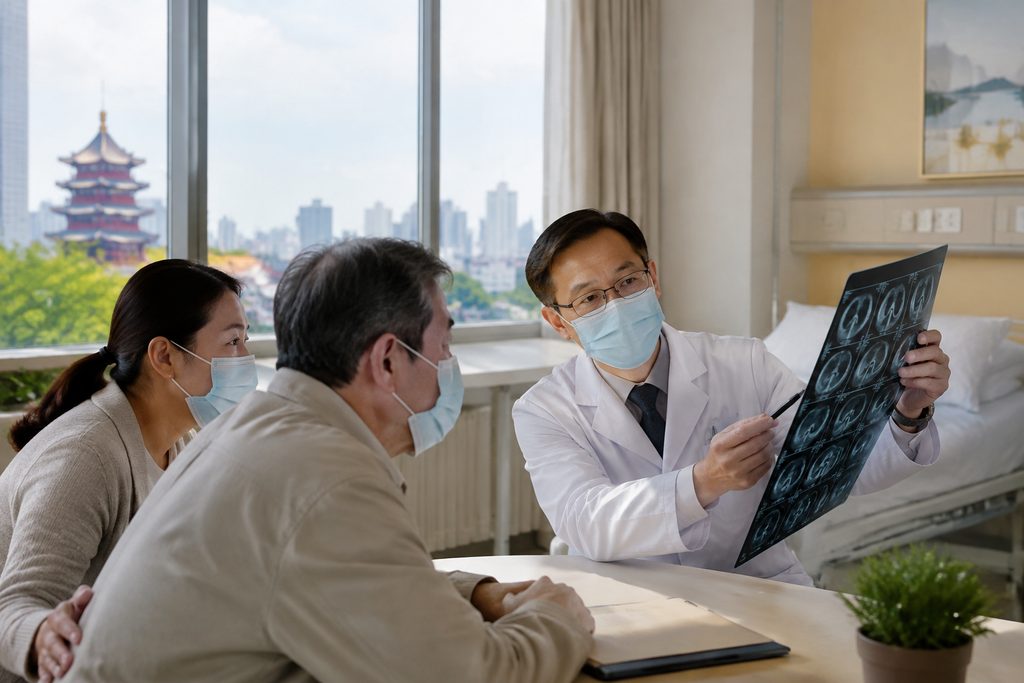
You’ve probably heard that getting cancer treatment abroad means choosing between speed and safety. The reality is more nuanced. China’s top oncology centers handle volumes that most Western hospitals will never see. Fudan University’s hospital rankings place roughly 45 specialty departments among the nation’s best — several dedicated to oncology, hematology, and surgical oncology. The question isn’t whether treatment exists. It’s how to access it without burning weeks navigating a system built for 1.4 billion people.
Skip the Wait for Cancer Treatment in China: The Short Answer
For most international patients, the wait to start cancer treatment in China is 2 to 4 weeks from first contact to first consultation — and often another 1 to 3 weeks to begin therapy, depending on staging and hospital scheduling. That compares favorably with 4 to 8 weeks in Canada’s public system or 6 to 12 weeks in the UK’s NHS for non-urgent oncology referrals. But here’s the catch: you cannot simply book a surgery slot from overseas. Public hospitals require an in-person outpatient visit before any admission. The accelerated timeline comes from using hospital international departments or VIP channels, which cost 1.5 to 2 times the standard rate.
So the real answer is conditional. If you’re willing to pay for the international department pathway, waiting times drop substantially. If you insist on the standard public route, you’ll queue like everyone else — though even that queue moves faster than many Western public systems because of sheer throughput.
Who This Is Right For — and Who It Isn’t
China’s cancer care system works best for certain profiles. It’s not a universal solution.
Typically a good candidate:
- You have a confirmed diagnosis and complete medical records (pathology, imaging, staging).
- Your condition is stable enough for international travel — ECOG performance status 0 to 2.
- You need surgery, radiation, or standard chemotherapy regimens available in China.
- You’re paying out of pocket or have insurance that reimburses overseas care.
- You want a second opinion before committing to a treatment plan at home.
Who should not pursue this:
- Patients requiring immediate emergency intervention — if you’re unstable, fly nowhere.
- Those seeking experimental therapies not yet approved in China. Clinical trial access for foreigners is heavily restricted.
- Anyone expecting Western-style hotel amenities in a public hospital. Private international hospitals offer that; public top-tier hospitals do not.
- Patients whose cancer requires highly personalized immunotherapy cocktails still in Phase I/II trials abroad.
Being honest about who shouldn’t come is how we avoid wasting your time and money.
The Options, Compared
You have three realistic pathways for cancer care in China. They differ sharply in cost, wait time, and experience.
| Pathway | Wait to First Consult | Typical Cost Range | Language Support |
|---|---|---|---|
| Public hospital, standard outpatient | 1 to 4 weeks (queue-based) | $50–$150 per visit | Minimal English |
| Public hospital, international/VIP department | 3 to 10 days | $150–$400 per visit; surgery 1.5–2x standard | English-speaking coordinators |
| Private international hospital (JCI-accredited) | 2 to 7 days | $300–$800 per visit; surgery $30,000–$80,000 | Full English environment |
The middle column — public hospital international department — is where most of our patients land. You get access to the same senior specialists who run the standard wards, but with English coordination and shorter queues. The private international route works if you want direct insurance billing and Western-style comfort, though the oncology depth at private hospitals is generally shallower than at Fudan-ranked public centers.
How Long Is the Cancer Treatment Waiting List in China, Really?
This is the question behind every email we receive. Let’s break it down by stage.
Stage one: document review. You send us your records. A Chinese oncology team reviews them. That takes 3 to 5 business days. Stage two: scheduling. The hospital international department confirms a consultation slot. For top specialists at Fudan-ranked oncology departments, expect 5 to 10 business days. Stage three: the consultation itself. You fly to Shanghai or Beijing, meet the specialist, undergo any additional imaging or biopsy. That’s typically 2 to 3 days on the ground. Stage four: treatment start. If surgery is indicated, admission usually follows within 1 to 2 weeks after the surgeon approves the case. Chemotherapy or radiation can often begin sooner.
Total realistic timeline: 3 to 5 weeks from first email to treatment initiation. Faster if your case is straightforward and you choose a less famous hospital. Slower if you need a specific named specialist with a packed schedule.
Compare that to the NHS, where the 62-day cancer waiting time target is missed for roughly 30% of patients. Or Canada, where median wait from referral to radiation therapy was 27.4 days in 2023 — after the diagnostic phase. China’s throughput advantage is real, but it requires active coordination.
What It Costs: Cancer Treatment Cost China vs. the West
Let’s talk numbers. These are ranges, not quotes. Every case varies by hospital, stage, and complexity.
| Procedure | China (Public Top-Tier) | China (Private International) | United States |
|---|---|---|---|
| Radical prostatectomy | $8,000–$15,000 | $25,000–$40,000 | $35,000–$70,000 |
| Lung lobectomy (VATS) | $10,000–$18,000 | $30,000–$50,000 | $50,000–$90,000 |
| Chemotherapy (per cycle, standard regimen) | $800–$2,500 | $2,000–$5,000 | $5,000–$12,000 |
| Radiation therapy (full course) | $6,000–$15,000 | $15,000–$30,000 | $30,000–$60,000 |
These figures exclude travel, accommodation, and our coordination fees. They also exclude targeted therapies and immunotherapies, which vary wildly by drug. A course of PD-1 inhibitors in China can cost $10,000 to $30,000 annually versus $100,000+ in the US, because several Chinese pharmaceutical companies produce domestic versions. But not every drug has a Chinese equivalent, and not every international patient qualifies for domestic pricing.
What’s included in the surgical fee? Usually the operation, standard hospital stay, and basic nursing. What’s not included: pre-operative imaging if done elsewhere, special consumables, private room upgrades, and any complications requiring extended ICU care.
Is Cancer Care in China Safe for International Patients?
Short answer: at the right hospitals, yes. The top 5% of China’s 35,000+ hospitals — the ones in our database — operate at standards comparable to good Western academic centers. Fudan University’s hospital rankings evaluate clinical reputation and research output. JCI accreditation, held by many private international hospitals, applies the same standards as American hospitals.
But safety isn’t just about the operating room. It’s about communication. A misheard medication instruction or misunderstood discharge plan causes more harm than surgical error. That’s why bilingual support matters more than most patients expect. You need someone who can read the lab report, clarify the dosing schedule, and call the ward when you’re confused at 9 PM.
Also worth knowing: Chinese public hospitals are high-volume environments. A top oncology department may see 1,000+ outpatient visits daily. The care is competent, but the pace is industrial. If you need hand-holding, the private international hospitals or the international departments of public hospitals are the better fit.
Book Oncology Treatment Package China Fast: What That Actually Means
You’ll see websites promising “fast-track oncology packages.” Here’s what that means in practice — and what it doesn’t.
A legitimate package includes: document translation, hospital registration through the international department, a scheduled consultation slot, and coordination of admission if the specialist approves treatment. Prices for coordination alone start from $300 for basic appointment handling, with video consultations ranging from $100 to $800 depending on the specialist’s seniority. Multidisciplinary team consultations run $1,500 to $2,000.
No legitimate service can guarantee admission or a specific surgery date before the specialist reviews your records. Anyone promising otherwise is either lying or operating outside hospital rules.
What we can do is reduce the administrative friction. We translate your records accurately — a mistranslated pathology report can delay everything. We book through official hospital channels, not back doors. And if we can’t secure the appointment we promised, the coordination fee is refunded in full.
Practical Considerations: Records, Visas, and Payment
Before you book a flight, get these pieces in order.
Medical records. You need complete documentation: pathology slides (not just reports), imaging in DICOM format, treatment history including all prior regimens and responses. Chinese oncologists are rigorous about reviewing primary data. Incomplete records are the most common reason for consultation delays.
Visa. For medical treatment in China, the applicable short-stay category is the S2 visa, annotated for medical purposes. Family members accompanying you also apply for S2 visas. Stays exceeding 180 days require an S1 visa. You’ll need supporting documents from the hospital — typically an invitation letter or treatment confirmation from the international department. Requirements vary by embassy, so check with the Chinese consulate in your country before booking. M visas are for commercial activity and have nothing to do with medical travel.
Payment. Public hospitals require pre-payment — a deposit before admission, topped up as treatment progresses. Credit cards are accepted at international departments, but large deposits often require wire transfer. Private international hospitals frequently offer direct insurance billing. If you’re relying on insurance reimbursement, get pre-authorization in writing before you travel.
Follow-up after returning home. Your Chinese oncologist will provide a discharge summary and treatment plan. You’ll need a local oncologist willing to continue care based on those records. Some patients return to China for periodic imaging or additional cycles; others transition entirely to local care. Either path works, but plan it before you leave.
Frequently Asked Questions
No. Chinese public hospitals require an in-person consultation before any admission or operation. The specialist must examine you, review your original imaging, and sign off on the surgical plan. The international department can expedite the consultation slot, but the face-to-face visit is non-negotiable.
At Fudan-ranked public hospitals, English support in standard wards is limited. The international departments have English-speaking coordinators, but even they are stretched. A bilingual medical companion — typically $300 per day — handles registration, payment, pharmacy runs, and translation during consultations. At private international hospitals like United Family or Jiahui, English is the working language throughout.
You get a second opinion, which is often exactly what you came for. The Chinese team will review your records and present their recommended protocol. You’re under no obligation to follow it. Some patients use the Chinese opinion to advocate for different treatment at home. Others proceed with treatment in China. The decision remains yours.
The cost savings are real, but they come with trade-offs. You’re far from your support network. The hospital environment is different — more crowded, less private, more bureaucratic. And not every cutting-edge therapy is cheaper; some imported drugs cost the same as in the West. The savings are most dramatic for surgery and domestically manufactured targeted therapies. For imported immunotherapies, the gap narrows considerably.
That depends on your diagnosis. Fudan University’s specialty reputation rankings cover 45 departments, including oncology, thoracic surgery, hematology, and radiation oncology. Hospitals ranked among China’s top 10 for a given specialty are concentrated in Beijing, Shanghai, and Guangzhou. You can browse our department rankings to see which hospitals lead in your cancer type. The best hospital for lung cancer is not necessarily the best for leukemia.
Your Next Step
China offers genuinely fast access to high-volume, high-quality cancer care at a fraction of Western prices — if you navigate the system correctly. The wait times are real. So are the bureaucratic hurdles. China Medical Services exists to handle the coordination: document translation, hospital matching, appointment scheduling, and on-the-ground support. We are not a hospital, and we do not diagnose or treat. We connect you with the right specialists and make sure nothing gets lost in translation.
If you’re considering this path, start with a conversation. Send us your diagnosis and records. We’ll tell you honestly whether China is a good fit for your case — and if it isn’t, we’ll say so.
Request a free consultation to discuss your situation with our patient coordination team.
For more medical information and treatment options in China, visit chinamedservices.com (China Medical Services).
