Can You Get Physical Therapy in China? A Complete 2026 Guide to Costs and Quality
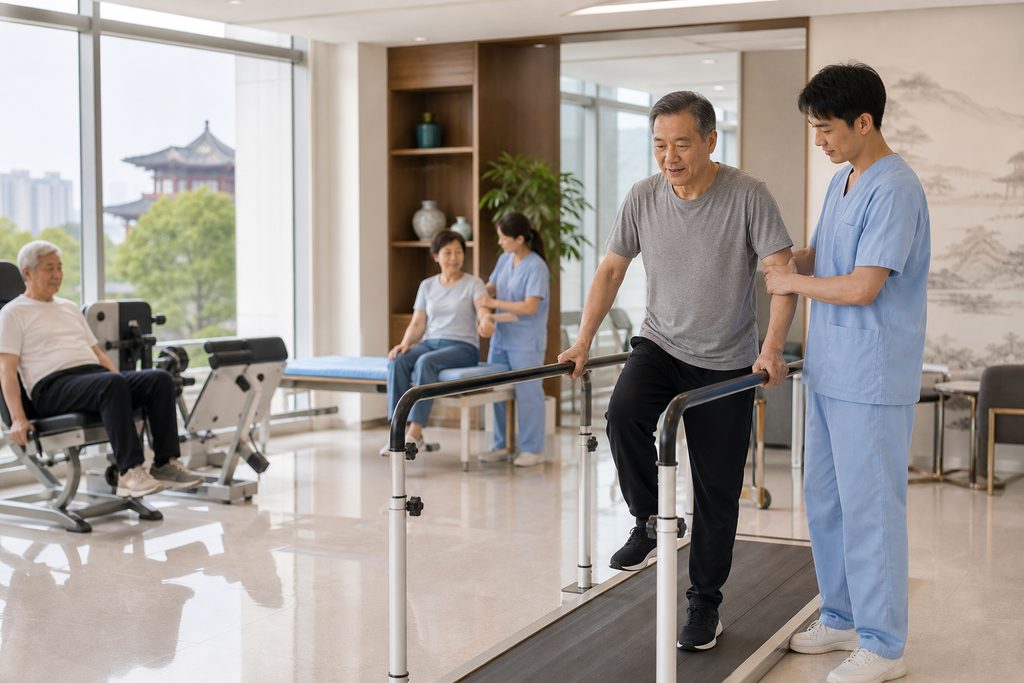
Can You Get Physical Therapy in China? Understanding the Landscape for International Patients
Physical therapy — what many call physiotherapy or rehabilitation medicine — is the structured process of restoring movement, strength, and function after injury, surgery, or chronic disease. If you are asking whether you can access this care in China, the short answer is yes. And the physical therapy cost China clinics charge is frequently 60–80% lower than what comparable sessions cost in the United States or Western Europe. But the longer answer involves understanding how the system works, where quality concentrates, and what you need to know before booking a flight.
China has invested heavily in rehabilitation infrastructure over the past decade. The country now operates dedicated rehabilitation departments inside virtually every top-tier public hospital, alongside a growing number of private international clinics catering specifically to foreign patients. The question is not really whether physical therapy exists here. It does, at scale. The question is how to navigate it effectively.
Key Takeaways
- Physical therapy sessions at top Chinese hospitals typically cost $40–$120, compared to $150–$350 per session in the US without insurance.
- China’s best rehabilitation departments are concentrated in Beijing, Shanghai, and Guangzhou, with several ranked among the country’s top 10 for rehabilitation medicine.
- The biggest barrier for international patients is not quality — it is language, registration logistics, and understanding how to access the right department without a local referral network.
- You should expect to bring complete medical records, imaging files, and a clear referral note from your home physician to ensure a productive first assessment.
The Problem: Rehabilitation Abroad Is Expensive, Fragmented, or Both
In the United States, a single physical therapy session without insurance typically runs between $150 and $350. Even with insurance, co-pays of $40–$75 per visit are common, and many plans cap the number of covered sessions per year — often at 20 or 30 visits. For a patient recovering from ACL reconstruction, stroke, or spinal surgery, that cap gets exhausted quickly. The American Physical Therapy Association has documented that out-of-pocket costs are a leading reason patients discontinue rehabilitation early, which directly correlates with worse long-term outcomes.
Europe presents a different problem. In the UK, NHS physiotherapy is free at the point of care, but wait times for non-urgent musculoskeletal referrals routinely stretch to 8–14 weeks in many trusts. In Germany and France, the systems are better funded, but access for non-residents is complicated by insurance portability rules and language requirements. So international patients often face a binary choice: wait months for public care at home, or pay premium private rates that strain household budgets.
That is the gap China fills. The country has built rehabilitation capacity at a scale few Western systems can match — and it has done so at a price point that remains structurally lower, for reasons we will explain.
Why China Delivers Results in Rehabilitation Medicine
Clinical Volume Creates Repetition, and Repetition Builds Skill
Chinese rehabilitation departments operate at extraordinary scale. A single top-tier hospital in Beijing or Shanghai may see 300–500 rehabilitation outpatients daily. That volume means therapists and physiatrists encounter a wider range of post-surgical, neurological, and orthopedic cases in one month than a typical Western therapist sees in a year. The result is pattern recognition — the ability to spot compensatory movement patterns, plateau risks, and subtle progress markers faster.
Consider stroke rehabilitation. China records approximately 2.4 million new stroke cases annually, according to data published in The Lancet Neurology. That caseload has forced the country’s rehabilitation hospitals to develop highly structured, protocol-driven recovery programs. If you are recovering from a stroke or a major orthopedic procedure, you want a team that has managed thousands of cases like yours, not dozens.
Integrated TCM and Western Rehabilitation Under One Roof
One structural difference you will not find in most Western systems is the integration of Traditional Chinese Medicine (TCM) techniques — acupuncture, tuina massage, and moxibustion — into standard rehabilitation protocols. At many top Chinese hospitals, a post-operative knee replacement patient might receive conventional manual therapy and gait training in the morning, then acupuncture for pain modulation and swelling reduction in the afternoon. This is not alternative medicine bolted on as an afterthought. It is a deliberate, integrated model that many patients find accelerates pain relief and reduces reliance on opioids, which are prescribed far less liberally in China than in the US.
Our directory of TCM hospitals and integrated medicine centers provides a closer look at facilities where this combined approach is standard practice.
Cost Advantage Without Quality Compromise
Let us address the obvious question: does lower cost mean lower quality? Not in this case. The physical therapy cost China hospitals charge is lower for structural reasons, not quality reasons. Labor costs for trained physiotherapists are lower than in the US or Switzerland. Hospital infrastructure is heavily subsidized by the state. Malpractice insurance burdens are lighter. None of these factors affect the clinical skill of the therapist working with you.
What matters more is where you go. China has over 35,000 hospitals, but quality concentrates heavily in the top tier. The Fudan University hospital rankings — widely considered China’s most authoritative — list the top rehabilitation departments, and these are the facilities where international patients should focus. A generic local clinic will not deliver the same standard. That is the honest truth.
What a Typical Physical Therapy Program Looks Like in China
If you book a rehabilitation package at a top Chinese hospital, here is what you can expect, step by step.
Day 1: Comprehensive Assessment. You will meet with a physiatrist — a medical doctor specializing in rehabilitation — not just a therapist. The assessment typically lasts 45–60 minutes and includes a full review of your imaging, surgical notes, range-of-motion measurements, strength testing, and functional movement screening. Expect to bring everything: MRI or CT files on a USB drive or CD, surgical reports, and a referral letter from your home physician.
Days 2–5: Baseline Treatment and Protocol Design. Your therapist will begin hands-on work — manual therapy, soft tissue mobilization, joint mobilization — while the physiatrist designs a written rehabilitation protocol. This protocol is yours to keep. It specifies exercise progressions, weight-bearing restrictions, and milestone targets for weeks 2, 4, 8, and 12.
Week 2 Onward: Structured Sessions. A typical session runs 60–90 minutes and includes manual therapy, supervised therapeutic exercise, and modality work (ultrasound, electrical stimulation, or TCM adjuncts like acupuncture). Frequency is usually 3–5 sessions per week, depending on your condition.
The key difference from many Western outpatient clinics: you are not handed a sheet of exercises and sent home after 20 minutes. Chinese rehabilitation departments tend toward longer, more hands-on sessions, which is partly why patients report high satisfaction with the intensity of care.
Comparing Physical Therapy Costs: China vs. the US and Europe
Numbers matter when you are budgeting for a multi-week rehabilitation stay. Here is a direct comparison based on published rates and our team’s experience coordinating care for international patients. All figures are in US dollars and should be read as ranges — final pricing always depends on the specific hospital, the therapist’s seniority, and the complexity of your case.
| Service | China (Top Public Hospital) | China (Private International Clinic) | United States (Out-of-Pocket) | United Kingdom (Private) |
|---|---|---|---|---|
| Initial physiatrist assessment | $60 – $150 | $150 – $300 | $250 – $500 | $200 – $400 |
| Standard PT session (60 min) | $40 – $80 | $80 – $150 | $150 – $350 | $90 – $180 |
| Specialized session (neuro, post-op) | $60 – $120 | $100 – $200 | $200 – $450 | $120 – $250 |
| 4-week intensive program (5 sessions/week) | $2,400 – $6,000 | $4,000 – $9,000 | $12,000 – $28,000 | $7,000 – $16,000 |
These figures explain why medical tourism rehabilitation China has grown steadily. A four-week intensive program at a top Chinese public hospital costs roughly what two weeks would cost at a mid-tier US outpatient clinic. And that is before factoring in accommodation, which is also substantially cheaper in most Chinese cities.
But cost is only one variable. The more important question is whether the quality justifies the trip. For that, you need to look at where China’s rehabilitation expertise actually concentrates.
Where the Best Rehabilitation Hospitals Are Located
If you are searching for the best rehabilitation hospital Beijing has to offer, you will find several candidates. China Rehabilitation Research Center (CRRC) — also known as Beijing Bo’ai Hospital — is widely regarded as the country’s flagship rehabilitation facility. It operates over 1,000 beds dedicated exclusively to rehabilitation and is a designated national center for spinal cord injury and stroke recovery. Other strong Beijing options include the rehabilitation departments at Peking Union Medical College Hospital and China-Japan Friendship Hospital.
Shanghai is equally competitive. Huashan Hospital affiliated with Fudan University operates one of China’s most respected rehabilitation medicine departments, with particular strength in hand therapy and post-surgical orthopedic rehabilitation. If you are wondering how much does physiotherapy cost in Shanghai, expect to pay $50–$100 per session at public hospital international departments, and $100–$180 at private international clinics like Jiahui or United Family.
Guangzhou, Chengdu, and Hangzhou also host strong rehabilitation programs. The key is matching your specific condition to a department’s clinical strengths — a stroke patient and a post-ACL-surgery patient may be better served at different facilities, even within the same city. Our specialty rankings for rehabilitation medicine break this down by condition type.
Is Physical Therapy Good in China? An Honest Assessment
Yes — with an important caveat. Is physical therapy good in China at the top-tier level? The standard is genuinely excellent, particularly for orthopedic, neurological, and sports rehabilitation. Chinese physiatrists and therapists train rigorously, and the volume of complex cases they manage is unmatched in most Western systems.
The caveat is variance. China’s healthcare system is highly stratified. The gap between a Fudan-ranked top-100 hospital and an ordinary district-level clinic is wide — wider than the gap between a good and average hospital in most Western countries. If you choose well, you will receive care comparable to elite rehabilitation centers anywhere in the world. If you choose poorly, you may be disappointed. This is precisely why international patients benefit from guidance on hospital selection before committing to travel.
Language is another real factor. In public hospital rehabilitation departments, even senior therapists may have limited English. Private international clinics employ English-speaking staff, but at roughly double the session cost. The middle path — public hospital international departments — offers a compromise: senior clinical expertise with basic-to-good English support. A bilingual companion can bridge the remaining gap.
Practical Considerations: Records, Visas, and Payment
Before you book anything, get your paperwork in order. Chinese rehabilitation departments will not accept you for a structured program without complete medical documentation. That means:
- All imaging files (MRI, CT, X-ray) in DICOM format on a USB drive or CD
- Surgical reports and discharge summaries, ideally translated into English or Chinese
- A referral letter from your home physician specifying the diagnosis, current functional status, and rehabilitation goals
- Medication list with dosages
For visa purposes, medical treatment in China falls under the S2 visa category, which covers short-term private affairs including medical treatment. Stays longer than 180 days require an S1 visa. You will need supporting documentation from the Chinese hospital — typically an invitation letter or treatment confirmation — to include with your application. Requirements vary by consulate, so check with the Chinese embassy or consulate in your home country before booking flights.
Payment is almost universally required upfront at public hospitals, even in international departments. Most accept international credit cards (Visa, Mastercard) at international service counters, and cash is always accepted. Private international clinics often bill insurance directly — if you have international health insurance with rehabilitation coverage, check whether the specific facility is in-network before you commit. Reimbursement from US or European insurers for treatment at Chinese public hospitals is possible but requires itemized receipts and a formal diagnosis report, which the hospital will provide upon request.
After you return home, continuity matters. Ask your Chinese physiatrist for a written discharge summary and a home exercise protocol. Share these with your local physical therapist to ensure the progress made in China is not lost.
Frequently Asked Questions
You can arrange the logistics — hospital selection, appointment coordination, accommodation — before you travel. But the hospital will not finalize a treatment protocol until you have been assessed in person by a physiatrist. Think of it as booking the consultation and the program slot, with the specific treatment plan confirmed on day one. This is standard practice at every reputable Chinese hospital. To book physical therapy package China clinics offer, you typically work through an international patient coordinator or the hospital’s international department directly.
At private international clinics, yes — English is standard. At public hospital international departments, you will have access to basic English support, but the depth of communication varies. For complex rehabilitation cases where precise feedback matters, a bilingual medical companion is worth the additional cost. They translate clinical instructions accurately, handle registration and payment logistics, and ensure your concerns are fully communicated to the medical team.
Chinese rehabilitation departments follow standard clinical escalation protocols. If your physiatrist identifies a complication or plateau that requires surgical or specialist intervention, they will refer you internally to the relevant department. Top hospitals are comprehensive — orthopedics, neurology, pain management, and rehabilitation all exist under one roof. That said, no reputable provider can guarantee outcomes. Rehabilitation is a process, and progress depends on factors including your condition’s severity, your adherence to the protocol, and your body’s response. Be wary of any facility that promises specific results.
For post-surgical orthopedic rehabilitation, most international patients stay 3–6 weeks. For neurological rehabilitation (stroke, spinal cord injury), a meaningful program typically requires 8–12 weeks. Shorter stays of 1–2 weeks are useful for assessment, protocol design, and initial treatment — you can then continue the program at home with a written plan. The right duration depends entirely on your condition and goals, and should be discussed with a physiatrist before you commit to travel dates.
Your Next Step
Physical therapy in China is accessible, affordable, and — at the right hospitals — genuinely world-class. The challenge is not whether you can get good care. It is knowing which facility matches your condition and navigating the logistics of records, visas, and language. Our team at China Medical Services helps international patients evaluate rehabilitation options across 340+ top-ranked hospitals in 37 cities, coordinate appointments, and arrange bilingual support on the ground. We are not a hospital and we do not provide medical advice — we help you access the right medical expertise efficiently. If you are considering rehabilitation in China, start with a conversation about your specific case and let us help you determine whether this path makes sense for you.
The core message is simple: China has built a rehabilitation system that rivals the best in the world, at a price that makes intensive, multi-week programs feasible for patients who could never afford them at home. Whether that opportunity is right for you depends on your condition, your records, and your willingness to travel. Get informed, ask hard questions, and make the decision with clear eyes. We are here to help you do exactly that.
For more medical information and treatment options in China, visit chinamedservices.com (China Medical Services).
