Can You Get Knee Replacement in China? Costs, Hospitals, and How It Works
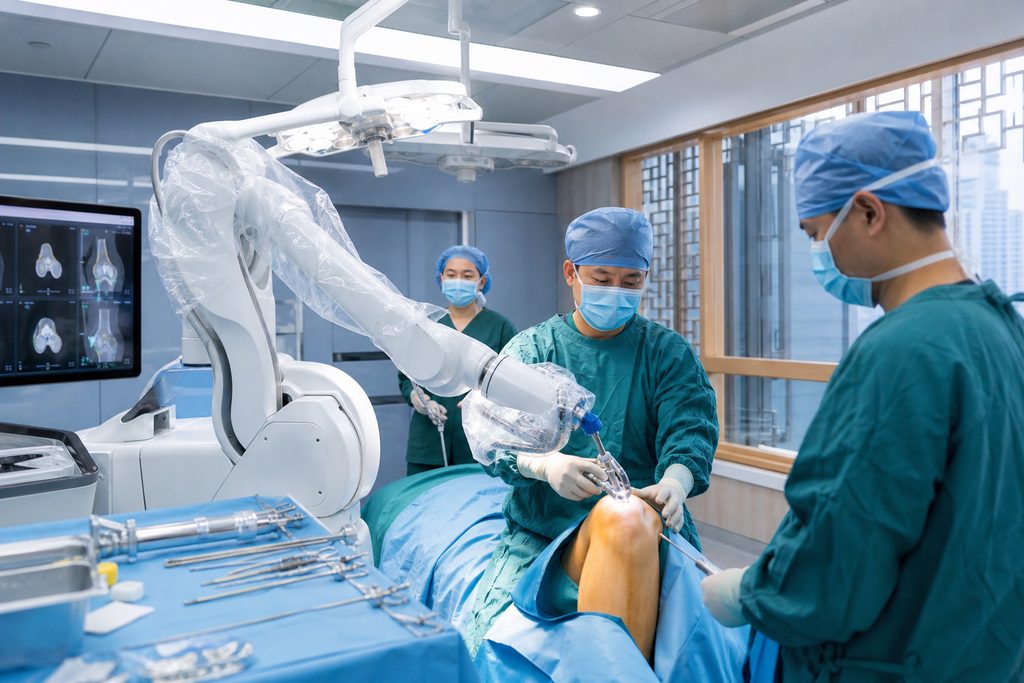
Can You Get Knee Replacement in China? The Short Answer
Yes. International patients can get total knee replacement surgery in China. The knee replacement cost China hospitals quote typically runs between $12,000 and $25,000 for a primary total knee arthroplasty at a top-tier public hospital’s international department. That figure covers the implant, surgeon fees, hospital stay, and standard rehabilitation during admission. Comparable surgery in the United States averages $35,000 to $70,000, and in the UK private sector often exceeds £15,000.
The honest caveat: you cannot simply email a Chinese hospital and book a surgery date. Public hospital rules require an in-person consultation first. What you can do is arrange a structured pathway — remote review of your X-rays and MRI, then a coordinated in-person visit with surgical scheduling handled through the hospital’s international or VIP channel. That changes the timeline and the logistics, but not the fundamental answer. Yes, it is available. No, it is not a walk-in procedure.
Who This Is Right For — and Who It Isn’t
Knee replacement in China suits a specific profile. Not everyone with knee pain should book a flight to Shanghai.
Typical good candidates include:
- Patients with end-stage osteoarthritis confirmed by standing X-rays and MRI, who have failed conservative treatment
- People facing long public wait times at home — often 12 to 18 months in Canada, the UK, or parts of Australia
- Uninsured or underinsured patients for whom the total knee replacement price abroad is the deciding factor
- Patients needing bilateral knee replacement who want both knees addressed in one coordinated treatment episode
- Expats already living in Asia who prefer treatment closer to their residence
Who should not pursue this:
- Anyone with an active knee infection or systemic infection — surgery must wait until cleared
- Patients with poorly controlled diabetes, severe heart failure, or unstable angina — anesthesia risk is real
- People with severe osteoporosis that compromises implant fixation
- Those who cannot commit to at least 10–14 days in China for surgery plus initial recovery
- Anyone expecting a Western-style private hospital experience at public hospital prices — the trade-off is real
Being honest about who should not come is part of the work. We have turned away patients whose BMI, infection status, or cardiac history made travel unsafe. The right hospital will do the same.
The Options, Compared
Not all knee replacement pathways in China are equal. Public general wards, public international departments, and private international hospitals operate under different rules, different price points, and different service levels. Here is how they stack up for a foreign patient considering a primary total knee replacement.
| Factor | Public Hospital — General Ward | Public Hospital — International Department | Private International Hospital |
|---|---|---|---|
| Estimated total cost | $8,000–$15,000 | $15,000–$25,000 | $30,000–$50,000 |
| English-speaking staff | Rarely | Usually available | Standard |
| Advance surgical booking | Not possible from overseas | Possible via international office | Possible |
| Surgeon seniority | Variable — often junior or mid-level | Senior specialists, department heads | Senior specialists, often Western-trained |
| Insurance direct billing | No — pay upfront, claim later | Sometimes | Yes, with major insurers |
| Ward environment | Shared, basic | Private room, upgraded amenities | Private room, Western-style |
The general ward is the cheapest but least practical for a foreign patient with no Chinese language ability. The private international hospital is the most comfortable but costs two to three times more. The international department of a top public hospital sits in the middle — senior surgeons, English coordination, private rooms, and a price that still undercuts Western private care by 50% or more. Most of the patients we work with choose that middle path.
Which Chinese Hospitals Actually Do High-Volume Knee Replacement?
Volume matters in joint replacement. Surgeons who perform 200 or more knee replacements per year have measurably lower complication rates than those who do 50. China’s orthopedic centers run on volume that few Western hospitals match.
The best orthopedic hospital Shanghai options are concentrated in a handful of institutions. Ruijin Hospital, affiliated with Shanghai Jiao Tong University School of Medicine, runs one of the country’s largest joint replacement programs. Zhongshan Hospital Fudan University is another heavyweight. Both appear in the Fudan University hospital rankings for orthopedics, which evaluate clinical reputation and research output across China’s 35,000+ hospitals. Our orthopedics department rankings break down the top 10 hospitals for joint surgery by city.
Beijing offers Peking Union Medical College Hospital (PUMCH) and Beijing Jishuitan Hospital — the latter is effectively China’s national orthopedic reference center, with a joint replacement caseload that exceeds most Western centers several times over. Guangzhou’s Nanfang Hospital and Chengdu’s West China Hospital also run high-volume arthroplasty units. West China Hospital, in particular, handles a staggering outpatient volume and has a dedicated international medical center.
What about implant brands? Chinese hospitals use the same implants you would find in the US or Europe: Zimmer Biomet, Stryker, DePuy Synthes, Smith & Nephew. Domestic Chinese implants exist and cost less, but international patients typically request — and receive — the Western brands. Confirm the implant brand and model in writing before you agree to anything.
Is Knee Replacement Surgery Safe in China?
The short answer: at top-ranked hospitals, yes. The longer answer requires separating the hospital tier from the rest of the system.
China’s top 5% of hospitals — roughly 1,700 institutions — operate at standards comparable to good Western centers. The Fudan-ranked Top 100 hospitals, which form the core of our hospital database, are academic medical centers with infection control protocols, international accreditation (JCI for many), and surgeons who train abroad and publish in international journals. Infection rates for primary knee replacement at these centers run between 0.5% and 1.5%, in line with international benchmarks.
But the question “is knee replacement surgery safe in China” deserves a more nuanced answer. Safety is not uniform. A county-level hospital performing 30 knee replacements a year is not the same as a Shanghai teaching hospital performing 800. The safety margin depends almost entirely on hospital selection. That is the variable you control.
Specific risks to plan for: venous thromboembolism (blood clots) is the most common serious complication, and Chinese protocols typically include mechanical compression plus anticoagulation. Blood transfusion protocols differ from Western practice in some centers — if you have religious or personal objections to transfusion, state this explicitly and in writing before surgery. And rehabilitation quality varies. Top orthopedic centers have dedicated joint replacement rehab teams. Smaller hospitals discharge you with a sheet of exercises and a follow-up appointment.
How Long Does a Knee Replacement Last?
Modern total knee replacements last a long time. Registry data from Australia, Sweden, and the UK — the world’s most reliable joint registries — show that approximately 90–95% of primary total knee replacements are still functioning at 15 years, and roughly 80–85% survive to 20 years. A 2023 meta-analysis published in The Lancet reported a 25-year implant survival rate of about 82% for total knee arthroplasty.
That statistic answers the question “how long does a knee replacement last” for most patients: expect 15 to 25 years, with younger, heavier, and more active patients wearing implants faster. The implant brand matters less than surgical technique. A well-aligned, well-balanced knee with a mid-range implant outperforms a poorly aligned knee with a premium implant every time.
Revision surgery — replacing a worn or failed implant — is more complex than primary surgery. It costs more, takes longer to recover from, and carries higher infection risk. That is another argument for choosing a high-volume surgeon for the first operation. Get it right the first time.
What It Costs: A Realistic Breakdown
Let us put concrete numbers on the knee replacement cost China figure. These are 2025 ranges for international patients at public hospital international departments in Shanghai, Beijing, and Guangzhou. They vary by hospital, implant choice, and case complexity.
- Pre-operative imaging and blood work: $300–$600
- Surgeon fee: $2,000–$5,000
- Implant (single knee, Western brand): $3,000–$7,000
- Hospital stay (5–7 days, private room): $1,500–$3,000
- Anesthesia and operating room: $1,500–$3,000
- In-hospital rehabilitation and physiotherapy: $500–$1,500
- Post-discharge medications: $200–$500
Total: roughly $12,000 to $25,000 for one knee. Bilateral (both knees) in a single admission typically runs $20,000 to $40,000, though many surgeons prefer staging the two surgeries 6–12 weeks apart to reduce complication risk.
What is not included: international flights, visa fees, accommodation before and after the hospital stay, meals for a companion, and any extended rehabilitation after discharge. If you stay in a serviced apartment near the hospital for two weeks of post-discharge recovery, budget another $1,500 to $3,000. Ground transport, translation, and coordination services — whether through a medical concierge or arranged independently — add further cost. Our bilingual medical companion service starts from $300 per day and covers hospital navigation, translation, and logistics, not medical treatment itself.
Practical Considerations: Records, Visa, Payment, and Follow-Up
The logistics of book knee surgery China medical tourism are manageable, but they require preparation. Here is what actually matters.
Medical records. You need standing weight-bearing X-rays of both knees, an MRI of the affected knee within the last 6 months, a recent blood panel, and a summary letter from your current orthopedic surgeon or primary care physician. If you have cardiac or respiratory conditions, include those workups too. Upload these for remote review before you travel. A written second opinion from a Chinese orthopedic specialist costs $300–$500 and saves you from flying across the world only to be told you are not a surgical candidate.
Visa. Foreigners seeking medical treatment in China apply for an S2 visa with a medical treatment annotation. The hospital’s international department issues an invitation letter and treatment confirmation that supports the application. Accompanying family members also apply for S2 visas. Processing typically takes 1–3 weeks depending on your home country’s Chinese embassy or consulate. Requirements change, so verify with the embassy before booking flights. No one can guarantee visa approval.
Payment. Public hospitals require payment upfront or a substantial deposit before surgery. International departments accept wire transfers and major credit cards. Private international hospitals may bill your insurer directly if they have an agreement. Most public hospital international departments do not — you pay, then submit a claim to your insurer. Check with your insurer before traveling whether elective surgery abroad is covered at all. Many policies exclude it entirely.
Language. Even in international departments, nursing staff and ward clerks may speak limited English. The surgeon often speaks English well, especially if trained abroad, but the person drawing your blood at 6 a.m. probably does not. A bilingual companion who handles registration, payment queues, pharmacy runs, and ward communication removes a layer of stress that most patients underestimate.
Follow-up after returning home. Chinese surgeons typically want a 6-week and 3-month follow-up. If you cannot return to China, you can send X-rays and a brief report to the surgical team via the international office. Your home orthopedic surgeon takes over long-term monitoring. Make sure you leave China with a complete discharge summary, implant sticker (showing brand, model, and serial number), and a medication list in English.
Frequently Asked Questions
Not directly through public hospital general channels. Public hospital rules require an in-person consultation before any surgical booking. What you can do is arrange a remote video consultation with the orthopedic team, get a written assessment of your imaging, and then coordinate an in-person visit where the surgery is scheduled shortly after. The international or VIP channel can pre-arrange the consultation and reserve a surgical slot pending the surgeon’s in-person confirmation, but no reputable hospital will guarantee a surgery date sight unseen.
This is the hard question. If your knee replacement fails or becomes infected after you return to your home country, the Chinese hospital is not going to fly you back for free. You will need a local revision surgeon. Some patients return to China for revision because they trust the original surgeon and the cost is lower even with travel. But you should plan for the possibility that local follow-up care is needed. Ask the Chinese surgeon before your operation: will you review follow-up imaging remotely, and what is the protocol if something goes wrong?
Yes, if you specify it. Top Chinese hospitals stock Zimmer Biomet, Stryker, DePuy Synthes, and Smith & Nephew implants — the same brands used in American and European operating rooms. Domestic Chinese implants are cheaper but less familiar to Western surgeons. Insist on a Western brand, confirm the exact model in writing before surgery, and keep the implant sticker for your records.
Plan for 14 to 21 days. You will arrive 2–3 days before surgery for the in-person consultation, pre-operative testing, and surgical consent. The hospital stay after a primary knee replacement is typically 5–7 days. After discharge, you will need another 7–10 days in-country for early rehabilitation, suture removal, and a post-operative check before flying home. Flying too soon after joint replacement increases blood clot risk — most surgeons advise waiting at least 10–14 days after surgery before a long-haul flight.
Your Next Step
Knee replacement in China is a legitimate, safe, and substantially cheaper option for the right patient — but only if you choose the right hospital and plan the logistics properly. The savings are real, the surgeons are high-volume, and the implants are the same ones you would get at home. The trade-off is distance, language, and the need for careful coordination.
We are China Medical Services, a medical coordination team that connects international patients with top-ranked Chinese hospitals. We are not a hospital, we do not diagnose or treat, and we do not guarantee surgical outcomes. What we do is handle the practical path: remote second opinions, hospital matching, appointment coordination, bilingual accompaniment, and visa guidance. If you are weighing this decision, the next step is simple — send us your imaging and a brief medical history, and we will tell you honestly whether this makes sense for your case. A conversation costs nothing. A wrong decision costs a lot.
Get the facts first. Then decide.
For more medical information and treatment options in China, visit chinamedservices.com (China Medical Services).
