Shoulder Replacement in China: Costs, Top Hospitals, and Recovery Timeline
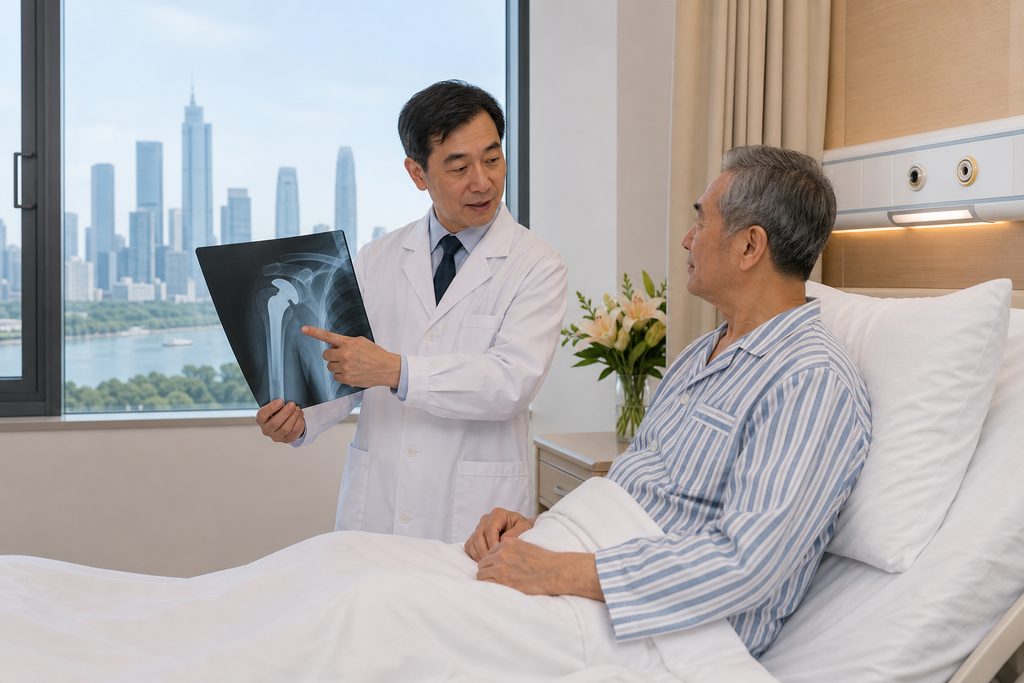
You’ve probably heard that having major surgery abroad means gambling on quality. The assumption is that a lower price tag must mean a compromise somewhere—older equipment, less experienced surgeons, or a chaotic hospital environment. The reality in China’s top-tier orthopedic centers is something quite different. We routinely connect patients with hospitals that perform more shoulder arthroplasties in a single year than many Western facilities do in a decade. That volume translates into surgical teams that have seen every anatomical variation, every complication, and every revision scenario. The question isn’t really whether you *can* get a shoulder replacement in China. It’s how to do it properly, what it actually costs, and what the recovery journey looks like when you’re thousands of miles from home.
How This Actually Works, Step by Step
The process starts long before you board a plane. You don’t simply book a surgery date online. Chinese public hospitals don’t operate that way—you can’t reserve an operating room from overseas without a proper clinical evaluation. But there’s a structured pathway that works reliably.
First, you send us your existing medical records: MRI reports, X-rays, any prior surgical notes, your current medication list, and a summary of your symptoms. We translate these into Chinese and route them to the orthopedic department of a hospital that matches your case. This could be a top-ranked sports medicine center in Shanghai or a joint replacement unit in Beijing. The specialists review your imaging and provide a written assessment: whether you’re a candidate for anatomic total shoulder arthroplasty, reverse shoulder arthroplasty, or perhaps a less invasive option.
That written second opinion typically costs between $300 and $500. It’s not a prescription—it’s a clinical review that tells you whether traveling to China makes sense for your specific condition.
If the assessment is positive, the next step is a video consultation with the surgical team. You’ll discuss your pain level, range of motion, what you’ve tried already, and what outcomes are realistic. This costs $500 to $800 for a top-specialist consultation. The surgeons will tell you honestly if they think surgery will help. Sometimes they recommend against it. That’s part of the value.
Once you decide to proceed, we coordinate the hospital admission. You’ll need an S2 visa, which is the appropriate category for short-term medical treatment in China. Your accompanying family member applies for the same visa type. Processing typically takes one to two weeks, depending on your home country’s Chinese embassy or consulate. The hospital provides the supporting documentation—the invitation letter, the treatment plan, and proof of the hospital relationship.
You fly in, we meet you at the airport, and you go directly to your pre-operative assessment. That includes a fresh set of imaging, blood work, and a cardiac evaluation. Surgery is usually scheduled within three to five days of arrival. You’re admitted, the procedure happens, and you stay in the hospital for five to ten days depending on complexity. Then you either recover in a rehabilitation facility or a nearby serviced apartment, with daily physical therapy sessions.
What Shoulder Replacement Actually Costs in China
Let’s talk about the shoulder replacement cost China patients actually encounter. The numbers vary significantly by hospital tier, implant type, and whether you go through the standard public channel or the international VIP pathway.
A standard total shoulder arthroplasty at a top public hospital in Beijing or Shanghai typically runs between $18,000 and $35,000 USD. That includes the implant, surgeon fees, hospital stay, and basic rehabilitation. A reverse shoulder replacement—used when the rotator cuff is severely damaged—costs more, usually $25,000 to $45,000, because the implant itself is more expensive and the procedure is technically more demanding.
Compare that to the United States, where the same procedures routinely cost $50,000 to $100,000 or more without complications. Even with good insurance, many patients face deductibles and out-of-pocket maximums that exceed the entire cost of surgery in China. The total shoulder arthroplasty price abroad is one of the most compelling reasons patients look beyond their home countries.
The VIP international channel at Chinese hospitals adds roughly 50 to 100 percent to the base price. That gets you English-speaking nursing staff, a private room, expedited scheduling, and direct access to senior surgeons. For many international patients, that premium is worth it—you’re not navigating a massive public hospital system alone.
| Procedure | China (Top Public Hospital) | China (VIP International) | United States |
|---|---|---|---|
| Total Shoulder Arthroplasty | $18,000–$35,000 | $30,000–$60,000 | $50,000–$100,000+ |
| Reverse Shoulder Replacement | $25,000–$45,000 | $40,000–$80,000 | $70,000–$120,000+ |
| Written Second Opinion | $300–$500 | Included in package | $500–$1,500 |
| Video Consultation | $500–$800 | Included in package | $300–$800 |
Prices vary by hospital and case complexity. The implant manufacturer matters too—imported implants from Zimmer, DePuy, or Stryker cost more than domestic Chinese implants, though the quality gap has narrowed considerably in recent years. Your surgeon will discuss implant options with you before you commit.
A Realistic Timeline
People underestimate how long the whole process takes. Here’s an honest breakdown from first contact to final follow-up.
| Stage | What Happens | Typical Duration |
|---|---|---|
| Week 1 | You send medical records; we translate and route them to the hospital | 3–7 days |
| Week 2–3 | Specialists review your case; written second opinion delivered | 5–10 days |
| Week 4 | Video consultation with surgical team; treatment plan confirmed | 1–2 days |
| Week 5–7 | Visa application with hospital supporting documents | 10–14 days |
| Week 8 | Travel to China; pre-operative assessment | 2–3 days |
| Week 9 | Surgery | 1 day |
| Week 10–11 | Hospital stay and early rehabilitation | 5–10 days |
| Month 3 | Intensive outpatient physical therapy in China | 4–6 weeks |
| Month 4–6 | Return home; continue PT locally; remote follow-up with Chinese team | Ongoing |
The part most people forget is document translation. If your MRI reports are in a language other than English or Chinese, you need certified translation before the hospital will review them. That adds three to five days. Visa processing is another bottleneck—embassies don’t rush for medical cases, so plan accordingly.
And here’s the thing about recovery: how long is recovery after shoulder replacement in China depends heavily on whether you stay for structured rehabilitation or fly home early. The surgery itself is one day. The hospital stay is about a week. But meaningful recovery—regaining enough range of motion to dress yourself, drive, reach overhead—takes three to six months. Full recovery, including strength and endurance, can take a year. Patients who stay in China for four to six weeks of daily physical therapy typically progress faster than those who fly home after two weeks and try to piece together rehab on their own.
What Can Go Wrong — and What Happens Then
Let’s be direct about the risks. Shoulder replacement is major surgery, and complications happen everywhere in the world. The question is how they’re handled.
Infection is the most serious concern. The rate of deep infection after shoulder arthroplasty in top Chinese centers is roughly 1 to 2 percent, which aligns with international benchmarks. If it happens, the hospital treats it aggressively—usually with surgical washout and intravenous antibiotics. Revision surgery may be necessary. This is covered under the original surgical package at most hospitals, though you should confirm this before signing anything.
Implant loosening is a longer-term risk. Modern implants last 15 to 20 years in most patients, but younger, more active patients wear them out faster. If your implant loosens, you’ll need a revision, which is more complex and more expensive than the original surgery. Chinese surgeons at high-volume centers have substantial revision experience precisely because they see so many primary cases.
Nerve injury is rare but real. The brachial plexus and axillary nerve run close to the shoulder joint. A stretch injury can cause temporary numbness or weakness in the arm. Most cases resolve within weeks to months, but it’s a risk you should understand.
The language barrier is the most common non-medical problem. Even at international departments, not every nurse or physical therapist speaks fluent English. That’s where a bilingual medical companion earns their keep. Our team handles registration, payment, translation during rounds, and communication with your physical therapist. It costs from $300 per day, and for most patients, it’s the difference between a smooth experience and a stressful one.
What if you arrive and the surgeon says you’re not a candidate after all? It happens occasionally. The pre-operative assessment sometimes reveals a cardiac issue or another condition that makes surgery too risky. In that case, you go home. The consultation fees are not refundable, but the hospital will not proceed with a surgery they believe is unsafe. That’s the system working correctly.
Is Shoulder Replacement Safe in China? What the Data Shows
This is the question every patient asks, usually with some hesitation. Is shoulder replacement safe in China? The short answer is yes—at the right hospitals.
The key distinction is between China’s top-tier hospitals and everything else. China has over 35,000 hospitals. The top 5 percent—roughly 340+ institutions ranked by the Fudan University hospital rankings or accredited by JCI—perform at a level comparable to good Western hospitals. These are the hospitals we work with. Not the rest.
Fudan’s specialty reputation rankings place specific orthopedic departments among China’s top 10. These departments perform thousands of joint replacements annually. The surgeons have completed fellowships in the US, Europe, or Japan. The operating rooms use the same implant systems you’d find in any American hospital. Infection control protocols follow international standards.
But let’s be honest about the variability. A shoulder replacement at a county-level hospital in a small city is not the same as one at a top orthopedic center in Shanghai. The implant may be a domestic brand with less long-term data. The surgeon may perform a handful of shoulder replacements per year instead of hundreds. The post-operative rehabilitation may be minimal. That’s why hospital selection matters more than country selection.
For patients looking for the best hospital for shoulder surgery Shanghai offers several strong candidates. Shanghai Sixth People’s Hospital has one of the largest orthopedic departments in China, with a dedicated joint replacement unit. Huashan Hospital, affiliated with Fudan University, is renowned for sports medicine and upper extremity surgery. Both see international patients through their VIP departments. In Beijing, Peking University Third Hospital and Jishuitan Hospital are the orthopedic heavyweights.
The volume argument is compelling. A surgeon who performs 300 shoulder replacements a year has seen complications that a surgeon performing 30 a year has only read about. That experience shows up in operating time, blood loss, and long-term outcomes.
Practical Considerations: Records, Visas, Payment, and Follow-Up
Before you book anything, gather your records. You need recent imaging—MRI within the last six months, X-rays within three months—plus any prior surgical reports, a current medication list, and a letter from your primary care physician clearing you for surgery. If you have cardiac issues, diabetes, or other chronic conditions, include those records too. The Chinese surgical team will review everything before they agree to see you.
The visa is straightforward but not instant. You’ll apply for an S2 visa, which is the correct category for short-term medical treatment in China. The hospital provides an invitation letter and treatment confirmation. Your spouse or adult child traveling with you applies for their own S2 visa. Processing takes ten to fourteen days at most embassies. Do not book flights until the visa is in your passport.
Payment is upfront. Chinese public hospitals require a deposit before surgery, typically 50 to 100 percent of the estimated cost. If you have international health insurance, you pay first and seek reimbursement afterward. Some private international hospitals in China—like United Family or Jiahui—offer direct insurance billing, but their surgical fees are higher. For most patients, the math still works out: pay the Chinese hospital directly, then claim reimbursement from your insurer.
Language is the friction point that surprises people. Even at international departments, the surgical consent forms are in Chinese. The nursing shift changes mean your English-speaking nurse might not be there at 3 a.m. when you need pain medication. A bilingual companion solves this. Our companions are medical interpreters, not just translators—they understand hospital workflows and can advocate for you.
Follow-up after you return home is a real challenge. Your local orthopedic surgeon may be reluctant to manage a patient who had surgery abroad. Some are openly hostile to the idea. Before you leave China, get a complete discharge summary in English, all imaging on a CD or USB drive, and the implant sticker with the exact model and serial number. Your local surgeon needs that information to provide proper follow-up care. We also arrange remote video follow-ups with your Chinese surgical team at three months and six months, so you’re not abandoned once you leave.
Frequently Asked Questions
The shoulder replacement cost China patients typically pay ranges from $18,000 to $45,000 at top public hospitals, depending on whether you need a standard total arthroplasty or a reverse replacement. The same procedures in the US cost $50,000 to $120,000 or more. The VIP international channel in China adds 50 to 100 percent but still comes in well below US prices.
You can’t book a specific surgery date from overseas—Chinese hospitals require in-person evaluation first. But you can book shoulder surgery in Beijing package that includes the written second opinion, video consultation, visa support documents, and hospital coordination. Once you arrive and pass the pre-operative assessment, surgery is typically scheduled within three to five days.
Hospital stay is five to ten days. Most patients need four to six weeks of structured physical therapy before flying home. Meaningful functional recovery takes three to six months. Full recovery, including strength and overhead reaching, can take up to a year. Staying in China for intensive rehab typically accelerates early progress.
At top-ranked hospitals, yes. Infection rates, implant survival, and complication rates at China’s leading orthopedic centers are comparable to international benchmarks. The key is hospital selection—choose a Fudan-ranked or JCI-accredited institution with a dedicated joint replacement unit, not a general hospital.
You need an S2 visa, which covers short-term medical treatment and private affairs. Your accompanying family members apply for the same visa. The hospital provides supporting documentation, including an invitation letter and treatment confirmation. Processing takes ten to fourteen days at most embassies.
Your Next Step
Getting a shoulder replacement in China is not a casual decision. It requires planning, patience, and a willingness to navigate a healthcare system that operates differently from what you’re used to. But for patients facing long wait times or prohibitive costs at home, it’s a viable and increasingly popular option.
We’re China Medical Services, and our job is to make the process transparent and manageable. We don’t perform surgery. We don’t guarantee outcomes. What we do is connect you with top-ranked orthopedic hospitals, translate your records, coordinate your consultations, and stand beside you in the hospital when you need someone who speaks both languages. If you’re considering shoulder replacement abroad, start with a conversation. Visit our patient services page to learn more, or explore our orthopedic department rankings to see which hospitals lead in joint replacement. The first step is sending your records for review—the rest unfolds from there.
For more medical information and treatment options in China, visit chinamedservices.com (China Medical Services).
