Chemical Peel Cost China: Is It Right for Your Skin?
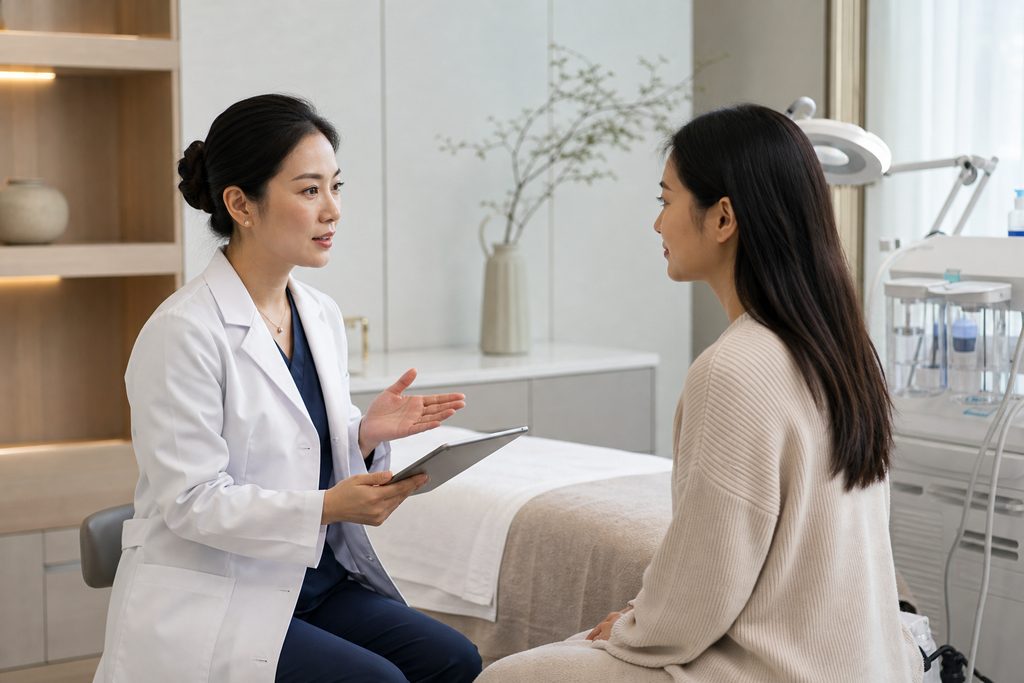
Chemical Peel: The Short Answer
A chemical peel uses a controlled acid solution to remove damaged outer skin layers. The goal? Smoother texture, less pigmentation, fewer fine lines. Whether it is right for your skin depends on your skin type, your goals, and how much downtime you can accept. Most people can benefit from some form of peel. But not everyone should start with a deep one. And if you are traveling to China for treatment, the chemical peel cost China clinics charge is often far lower than what you would pay in the US or Europe — but the real question is fit, not price.
Here is the honest version: a chemical peel is not a one-size-fits-all treatment. It works beautifully for some skin concerns and does almost nothing for others. And in the wrong hands, it can cause real damage. Let us walk through exactly who should consider it, what the options look like, and what you should know before booking anything.
Who This Is Right For — and Who It Isn’t
Chemical peels treat surface-level and mid-depth skin concerns. If you struggle with any of the following, you are likely a good candidate:
- Mild to moderate acne scarring, especially shallow boxcar or rolling scars
- Sun damage, including uneven tone and rough texture
- Melasma or post-inflammatory hyperpigmentation, particularly on lighter skin tones
- Fine lines around the eyes and mouth
- Dull, congested skin that does not respond to topical products
But a peel is not for everyone. You should not pursue a chemical peel if you:
- Have active eczema, rosacea, or psoriasis in the treatment area
- Are currently using isotretinoin (Accutane) — most dermatologists require a 6-month washout period
- Have a history of keloid scarring
- Are pregnant or breastfeeding
- Expect a peel to lift deep wrinkles or significantly tighten sagging skin — it will not
Deeper wrinkles and laxity usually need laser resurfacing, radiofrequency microneedling, or injectables. A peel is a surface treatment. Understanding that boundary saves you money and disappointment.
The Options, Compared
Not all peels are created equal. The depth of the peel determines what it treats, how much it costs, and how long you will be red and peeling afterward. Here is the breakdown:
| Peel Type | Active Ingredient | Treats | Downtime | Typical Cost (China) |
|---|---|---|---|---|
| Superficial | Glycolic acid 30–50%, salicylic acid 20–30%, lactic acid | Dullness, mild acne, rough texture | 1–3 days of flaking | $80–$150 per session |
| Medium | TCA 20–35%, Jessner’s solution | Pigmentation, fine lines, shallow scars | 5–7 days of peeling | $150–$300 per session |
| Deep | Phenol, TCA 50%+ | Deep wrinkles, severe sun damage | 2–3 weeks, significant redness | $400–$800 per session |
Superficial peels suit first-timers and anyone who cannot take time off work. Medium peels deliver the best balance of results versus recovery for most pigmentation and early aging concerns. Deep peels are rarely performed anymore — laser resurfacing has largely replaced them. If a clinic pushes you toward a deep peel without first trying a medium one, ask why.
Is Chemical Peel Safe for Asian Skin? What the Evidence Says
This is the question that matters most for many of our patients. The short answer: yes, chemical peels are safe for Asian skin when performed by a dermatologist who understands how darker skin types respond to injury. The longer answer requires nuance.
Asian skin — broadly Fitzpatrick skin types III to V — has more active melanocytes than Caucasian skin. That means any inflammation, whether from acne or a peel, can trigger post-inflammatory hyperpigmentation (PIH). In fact, PIH is the most common complication after chemical peels in Asian patients, with some studies reporting rates of 10–30% when peels are performed incorrectly. The key is choosing the right agent and concentration. Glycolic acid, for example, penetrates aggressively and carries a higher PIH risk in darker skin. Salicylic acid and mandelic acid are generally better tolerated. TCA at low concentrations (15–20%) can work well, but higher concentrations require careful technique.
This is precisely why the best dermatology clinic Shanghai for skin treatments matters. Clinics with experience treating Chinese and broader Asian skin types understand how to pre-treat with tyrosinase inhibitors like hydroquinone or tranexamic acid, how to adjust peel depth, and when to stop. If you are considering treatment in China, you are actually in a strong position: dermatologists here treat Asian skin all day, every day. That is their default patient population, not an exception.
Chemical Peel Cost China: What You Actually Pay
The chemical peel cost China patients typically see runs from about $80 for a superficial glycolic or salicylic acid peel to $400–$800 for a deeper TCA or phenol peel at a top-tier hospital dermatology department. Private international clinics in Beijing and Shanghai charge more, usually $200–$500 for a medium-depth peel. Compare that to the US, where a medium peel averages $300–$600, and a deep peel can exceed $1,000. The savings are real, but they are not the headline reason to travel.
What drives the price? Three things: the peel depth, the clinic tier, and whether a dermatologist performs it versus a nurse or aesthetician. At public hospital dermatology departments in China, a dermatologist typically performs or directly supervises all medium and deep peels. At private clinics, you may see a nurse for superficial peels. Always confirm who will do the procedure.
If you are wondering how much is a chemical peel in Beijing, expect to pay $100–$250 at a public hospital dermatology department for a superficial to medium peel, and $250–$500 at a private international clinic. Shanghai prices are similar, sometimes 10–15% higher at premium private facilities.
Note that the cost per session is only part of the picture. Most conditions require a series — three to six peels spaced two to four weeks apart for acne or pigmentation. Budget accordingly.
What Is Recovery Time After Chemical Peel? A Day-by-Day Guide
Recovery depends on depth. Here is what to expect for a medium-depth TCA peel, the most common choice for pigmentation and early aging:
Day 1–2: Skin feels tight and looks sunburned. Some swelling around the eyes is normal. No peeling yet.
Day 3–5: Peeling begins, usually starting around the nose and mouth. Skin flakes off in sheets. Do not pick at it. This is the most socially awkward phase.
Day 6–7: Peeling mostly complete. Skin underneath looks pink and fresh. You can wear makeup by day 7, but mineral-based products are gentler.
Week 2–4: Pinkness fades. Full results become visible around week 4, once the skin has fully remodeled. Sun protection is non-negotiable during this entire window — new skin burns easily and can develop PIH.
For a superficial peel, compress that timeline to 3 days. For a deep peel, extend it to 3 weeks or more. If you are traveling from abroad for treatment, plan to stay at least 5–7 days after a medium peel before flying home. You will be peeling, sensitive, and not camera-ready.
Practical Considerations: Planning Treatment in China
If you are considering a chemical peel as part of a broader medical tourism trip, here is what actually matters logistically.
Records: bring a list of any topical or oral medications you use, especially retinoids, hydroquinone, or isotretinoin. Your dermatologist needs to know your full skincare history before choosing a peel agent.
Visa: for medical treatment in China, the S2 visa is the applicable short-stay category. It covers private medical treatment and is issued with supporting documentation from the hospital or clinic. Family members accompanying you also apply for S2. Requirements vary by embassy, so check the latest guidance before applying.
Payment: public hospitals in China generally require prepayment at each visit. International credit cards are accepted at private clinics and hospital international departments, but public hospital outpatient departments may only take Chinese bank cards or mobile payment. Bring a backup payment method.
Language: public hospital dermatology departments see thousands of patients daily. English support is limited outside dedicated international departments. Private international clinics like United Family and Jiahui have English-speaking staff and direct insurance billing, which is why they charge more. If you go the public route, a bilingual companion can handle registration, payment, and translation — that is a service we provide, and it removes the single biggest friction point for foreign patients.
Follow-up after returning home: superficial and medium peels rarely require in-person follow-up. Your dermatologist may schedule a video check at week 2 and week 6. Have a local dermatologist lined up back home in case of any delayed reaction, though this is uncommon.
Many patients bundle a peel with other dermatology treatments — laser for pigmentation, microneedling for scars, or a full skin check. If you are already traveling, China’s top-ranked dermatology departments can evaluate your skin comprehensively and sequence treatments properly. That is harder to coordinate piecemeal at home.
Frequently Asked Questions
For a superficial peel, no — you will need a series of three to six sessions to see meaningful change. For a medium peel, one session can produce visible improvement in texture and pigmentation, but optimal results usually require two to three peels spaced four to six weeks apart. Anyone promising dramatic results from a single superficial peel is overselling.
Yes, but the peel agent and concentration must be chosen carefully. Salicylic acid and mandelic acid are safer starting points than glycolic acid for Fitzpatrick types IV–VI. Your dermatologist should pre-treat with a pigment inhibitor for two to four weeks before a medium-depth peel. If a provider does not mention hyperpigmentation risk, find another provider.
Post-inflammatory hyperpigmentation is the most common complication, and it is treatable — but it takes months of topical therapy and strict sun avoidance. Scarring is rare with proper technique but can occur if the peel is too deep or if you pick at peeling skin. This is why the provider’s experience with your skin type matters more than the price. The chemical peel cost China clinics charge is attractive, but do not choose the cheapest option at the expense of expertise.
It can make sense if you are already coming to China for another medical procedure or if you want a series of peels at a lower total cost. But a chemical peel alone is not a reason to fly internationally. The treatment is widely available, and the travel costs can erase the per-session savings. Medical tourism skin care packages China clinics offer work best when combined with other dermatology treatments or a comprehensive skin evaluation.
Your Next Step
A chemical peel is a targeted tool, not a miracle. It refines texture, fades pigmentation, and softens fine lines — when matched to the right skin type and performed by someone who knows what they are doing. The chemical peel cost China hospitals charge makes treatment here genuinely affordable, but fit and safety come first.
Our team at China Medical Services helps international patients connect with qualified dermatology departments and private clinics across China. We are not a hospital, and we do not provide diagnoses or medical advice. What we do is handle the logistics — hospital matching, appointment coordination, bilingual accompaniment, and visa guidance — so you can focus on your skin, not the paperwork.
If you are considering a chemical peel or any dermatology treatment in China, tell us about your skin concerns and we will help you figure out the right next step. No obligation, just clarity.
For more medical information and treatment options in China, visit chinamedservices.com (China Medical Services).
