Pilonidal Surgery Recovery: What to Expect and Why China Is a Smart Option
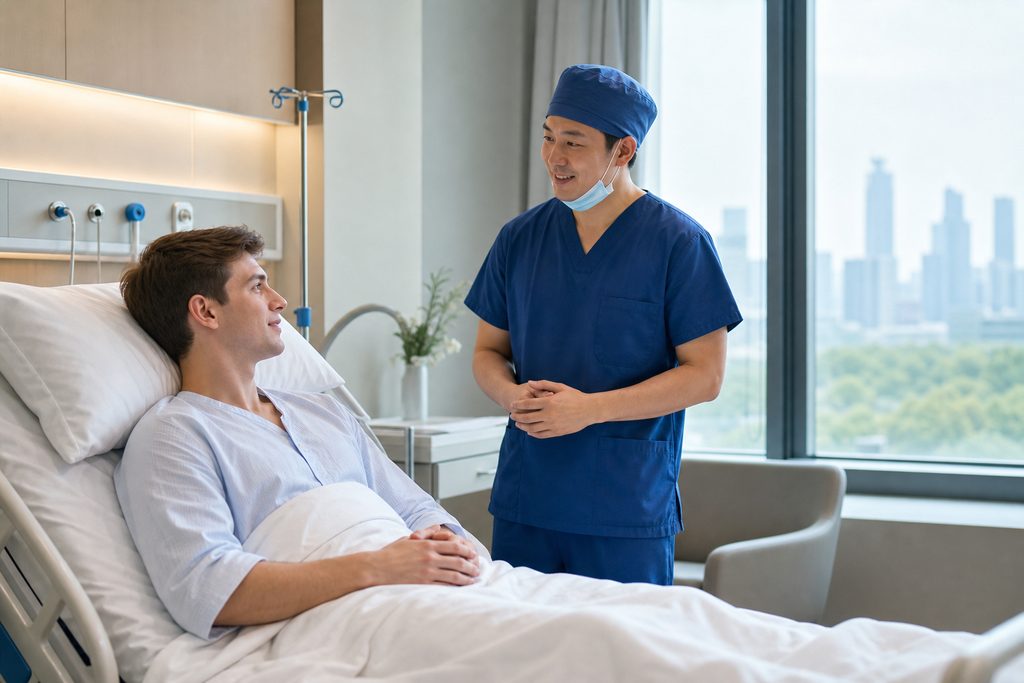
Pilonidal Surgery Recovery: The Short Answer
Most patients return to desk work within 7 to 14 days after pilonidal cyst surgery. Full healing of the wound takes anywhere from 3 to 10 weeks, depending on whether your surgeon uses open healing or primary closure. The honest truth? Recovery is not painless. But it is manageable, and thousands of patients go through it every year without complications.
The caveat: “recovery” means different things at different stages. Sitting comfortably takes longer than walking. Driving takes longer than sitting. And returning to heavy exercise or cycling can take 2 to 3 months. Anyone who tells you it is a one-week process is not being straight with you.
Who This Is Right For — and Who It Isn’t
Pilonidal surgery makes sense for people with recurrent infections, persistent drainage, or a sinus tract that will not close on its own. If you have had two or more flare-ups, surgery is usually the right call. If you have an acute abscess, your surgeon may drain it first and schedule definitive surgery later.
Good candidates for traveling to China for this procedure:
- Patients with recurrent pilonidal disease who have failed conservative treatment
- Those facing long wait times or high out-of-pocket costs at home
- Patients who can take 10 to 14 days off work for the initial recovery phase
- People comfortable traveling with a companion for the first week
Who should not do this:
- Patients with uncontrolled diabetes or immune compromise — wound healing will be slower and riskier
- Anyone who cannot arrange at least 10 days in-country before flying home
- Patients with active infection requiring emergency drainage — handle that locally first
- People who smoke heavily. Nicotine constricts blood vessels and significantly impairs wound healing
If you are in the second group, do not force it. A failed surgery costs more than money.
The Options, Compared
Not all pilonidal surgeries are the same. The technique your surgeon chooses directly shapes your recovery timeline, pain level, and recurrence risk. Here is how the main approaches stack up.
| Technique | Wound Closure | Typical Recovery to Desk Work | Recurrence Rate | Relative Cost |
|---|---|---|---|---|
| Wide excision, open healing | Left open, packed daily | 10–21 days | 5–10% | Lowest |
| Excision with primary midline closure | Stitched closed | 7–14 days | 15–25% | Low |
| Excision with off-midline closure (Karydakis, Bascom cleft lift) | Stitched off to the side | 7–10 days | 3–8% | Moderate |
| Minimally invasive (EPSiT, pit-picking, laser) | Small incisions, no large wound | 3–7 days | 10–20% (varies by technique and operator) | Higher in some centers |
Open healing has the lowest recurrence but the longest, messiest recovery. Off-midline closure techniques like the Bascom cleft lift offer the best balance for most patients — faster healing and lower recurrence than midline closure. Minimally invasive options sound attractive, but long-term recurrence data is still maturing. Your surgeon should explain why they recommend one approach over another for your anatomy.
What Recovery Actually Feels Like, Week by Week
This is the section most articles skip. Here is what patients consistently report.
Days 1–3: The wound hurts. Not screaming pain, but a deep ache and sharp twinges when you move wrong. You will need prescription pain medication for the first 48 hours, then most people step down to ibuprofen or acetaminophen. You will not want to sit directly on the area. Lying on your side or stomach is your friend. Showering is usually allowed after 24–48 hours with a waterproof dressing, but check with your surgeon.
Days 4–7: The sharp pain fades. Sitting becomes possible on a cushion or by shifting weight to one buttock. If you had open healing, this is when daily packing changes start — uncomfortable but not unbearable. Most patients can work from a laptop in bed or on a standing desk by day 5.
Week 2: You can sit for 30–60 minutes at a time. Driving short distances is possible if the wound is not directly on the seat contact point. Stitches come out around day 10–14 if you had primary closure. Open wounds are visibly smaller.
Weeks 3–6: Normal walking, light exercise, and most daily activities resume. The wound may still drain slightly. Full skin closure for open wounds typically happens between week 4 and week 8. You are not fully healed just because the surface looks closed — the deeper tissue takes longer.
Months 2–3: This is when most surgeons clear patients for cycling, horseback riding, heavy lifting, and contact sports. Rushing this stage is how recurrences happen.
Is Pilonidal Cyst Surgery Painful Recovery a Real Concern?
Yes — and pretending otherwise helps no one. The surgery itself is painless because you are under anesthesia. The first week after is genuinely uncomfortable. Most patients rate the pain 4 to 6 out of 10 at its worst, controlled well with standard medication.
What surprises people is not the intensity but the duration of mild discomfort. You will feel the wound for weeks, not days. Sitting on hard chairs stays unpleasant for a month or more. A coccyx cushion or donut pillow is not a luxury — it is standard equipment. And the psychological toll of a slow-healing wound in an awkward location is real. Plan for it.
Pilonidal Cyst Surgery Cost China vs. the West
Here is where the numbers get interesting. In the United States, pilonidal cystectomy costs between $4,000 and $12,000 for uninsured patients, depending on the facility and technique. In the UK, private patients pay £2,500 to £5,500. In China, the same procedure at a top-tier public hospital typically runs $1,200 to $3,500, while private international hospitals charge $3,000 to $6,000. That is a 50–75% saving at the public tier.
What drives the variance? Surgeon seniority, hospital tier, anesthesia type, whether you need an overnight stay, and whether you choose open healing (cheaper, longer recovery) or a cleft lift (more expensive, faster recovery). The pilonidal cyst surgery cost China figure you see quoted online is usually the surgical fee alone. Wound care supplies, follow-up visits, and accommodation add to the total.
A realistic pilonidal surgery package price abroad — including surgery, 3–5 days of hospital or hotel stay, basic wound care supplies, and one follow-up visit — lands between $2,500 and $5,000 in China. That compares favorably with $8,000 to $15,000 all-in for the same package in the US or Western Europe.
How Long Is Recovery After Pilonidal Surgery When You Travel for It?
Traveling adds a layer of planning. You cannot fly home the day after surgery. Most surgeons want you in-country for at least 7 to 10 days post-op so they can check the wound, remove stitches if needed, and catch early complications. A 14-day stay is safer if you chose open healing, since packing changes are easiest to learn hands-on from a nurse before you manage them alone.
After you fly home, your local doctor takes over wound checks. That is normal and expected. Bring a discharge summary, operative note, and wound care instructions in English. If you use our coordination service, we arrange translated documentation before you leave. The flight itself is manageable — book an aisle seat, stand up every hour, and use your cushion. Long-haul flights are not comfortable during week 2, but they are doable.
Practical Considerations: Booking Pilonidal Cystectomy China Medical Tourism
If you are seriously considering China, here is what actually matters.
Records first. You need a confirmed diagnosis and preferably a recent MRI or ultrasound of the pilonidal area. Send these ahead. A Chinese colorectal or general surgeon will review them and give you a written opinion before you commit to travel. This is the smart way to book pilonidal cystectomy China medical tourism — remote evaluation first, travel second.
Visa. Medical treatment in China falls under the S2 visa category, not the M visa. M is for commercial and trade activities. Bring your hospital invitation letter, treatment plan, and proof of funds. A family member accompanying you applies for S2 as well. Requirements vary by consulate, so verify with the Chinese embassy in your country before booking flights.
Payment. Public hospitals in China require prepayment or a deposit before surgery. International private hospitals may bill your insurer directly if they have an agreement. Most international patients pay out of pocket and claim reimbursement later. Budget for the full surgical fee upfront.
Language. Top public hospitals in Shanghai and Beijing have international departments with English-speaking coordinators. Outside those departments, expect Mandarin only. A bilingual medical companion who handles registration, payment, pharmacy runs, and surgeon communication removes the single biggest stressor for foreign patients. Our companion service starts at $300 per day and is available in all top-ranked Chinese hospitals across 37 cities.
Follow-up at home. You will need a local doctor willing to take over wound care. Arrange this before you leave for China. Most GPs are happy to do it once they see the discharge paperwork.
Frequently Asked Questions
Most patients sit comfortably for 30–60 minutes by week 2, but “normal” sitting on hard surfaces takes 4 to 6 weeks. Use a coccyx cushion for the first month. Avoid sitting directly on the wound, especially in the first two weeks, to protect the closure and reduce recurrence risk.
Yes, with the right setup. Shanghai’s top public hospitals — including those ranked in the Fudan specialty lists for general surgery — have international departments with English-speaking staff. You can request a specific department and, in many cases, a senior surgeon. We cannot guarantee a named surgeon, but we coordinate through official hospital channels and refund the appointment coordination fee if we cannot secure the booking.
This is the most common complication, affecting roughly 10–20% of cases depending on technique. Signs are increasing pain, foul-smelling drainage, fever, or wound edges pulling apart. You see your local doctor immediately — do not wait for a video call with your Chinese surgeon. Most breakdowns heal with local wound care, not another operation. Your Chinese surgeon can review photos by email if your local doctor wants input.
Technically yes, but we strongly advise against it. The first 72 hours after general anesthesia and surgery are disorienting. You need someone to handle medication schedules, food, and getting you to follow-up appointments. A companion service can fill this role if a family member cannot travel.
Some international insurers reimburse treatment at JCI-accredited private hospitals in China. Public hospital fees are usually paid out of pocket and claimed later. Check your policy’s overseas treatment clause before committing. We provide itemized invoices and translated medical records to support your claim.
Your Next Step
Pilonidal surgery recovery is a 6-to-10-week project, not a weekend fix. But with the right technique and a realistic plan, most patients are back to normal life within two months. The savings from having the procedure in China — often 50% or more — can cover your flights, accommodation, and companion support with money left over.
We are China Medical Services, a coordination team that connects international patients with top-tier Chinese hospitals. We are not a hospital and we do not give medical advice. What we do is handle the logistics: hospital matching, appointment coordination, bilingual companions, visa guidance, and translated records. If you want to explore whether China makes sense for your pilonidal surgery, request a free consultation. We will review your case, suggest suitable hospitals, and give you a transparent cost estimate. No pressure — just information.
For more medical information and treatment options in China, visit chinamedservices.com (China Medical Services).
