Can I Keep My Cervix in a Hysterectomy? Supracervical Options Explained
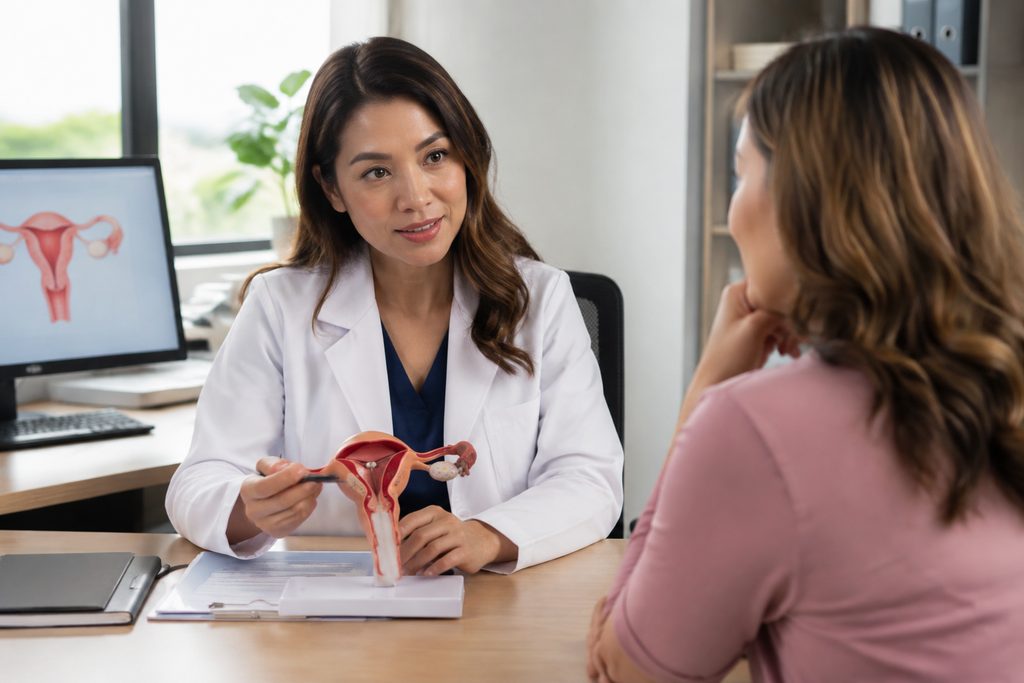
Can I Keep My Cervix in a Hysterectomy? The Short Answer
Yes. A supracervical hysterectomy removes the uterus but leaves the cervix in place. The procedure is widely available, and many patients actively choose it for faster recovery and preserved pelvic support. But the decision is not purely anatomical. Your medical history, risk factors, and surgical goals all shape whether keeping the cervix is genuinely safe for you. A surgeon will assess your Pap smear history, any abnormal bleeding patterns, and family history before recommending one approach over the other.
The terminology matters here. A “total hysterectomy” removes both the uterus and cervix. A “partial” or “supracervical” hysterectomy removes only the uterus. When patients search for cervix preserving hysterectomy cost China, they are typically asking about the supracervical approach — and whether traveling abroad for it makes financial and medical sense.
So the honest answer is: yes, you can keep your cervix. Whether you should is a conversation that starts with a gynecologic oncologist or a specialist in minimally invasive gynecologic surgery, not with a travel agent.
Who This Is Right For — and Who It Isn’t
Supracervical hysterectomy is not a universal option. Patient selection drives outcomes, and good surgeons are selective. Here is what typically makes someone a candidate.
Typically good candidates:
- Women with fibroids, adenomyosis, or heavy bleeding who have no history of abnormal cervical cells
- Patients with consistently normal Pap smears over many years
- Women who want to preserve pelvic floor support and potentially reduce the risk of vaginal vault prolapse
- Patients seeking a shorter operating time and potentially faster initial recovery
- Those with benign indications — no suspicion of uterine or cervical malignancy
Who should not pursue this:
- Women with a history of cervical dysplasia (CIN 2 or CIN 3), especially if treatment was incomplete
- Patients with HPV 16 or HPV 18 positivity and persistent abnormal cytology
- Anyone with endometrial cancer, uterine sarcoma, or suspected malignancy
- Women with chronic pelvic pain where the cervix itself may be a pain generator
- Patients who cannot commit to continued cervical cancer screening after surgery
Keeping the cervix means you still need Pap smears and HPV testing on schedule. If that follow-up is difficult in your home country, a total hysterectomy might serve you better. This is exactly the kind of trade-off a written second opinion can clarify before you commit to travel.
The Options, Compared
Not every country or hospital system approaches supracervical hysterectomy the same way. Some default to total hysterectomy. Others offer laparoscopic supracervical hysterectomy (LSH) as a standard option. The table below compares the genuine alternatives a patient faces when deciding where to have this surgery.
| Factor | Total Laparoscopic Hysterectomy (TLH) | Laparoscopic Supracervical Hysterectomy (LSH) | Open Abdominal Hysterectomy |
|---|---|---|---|
| Cervix removed | Yes | No — preserved | Usually yes |
| Typical operating time | 90–150 minutes | 60–120 minutes | 90–180 minutes |
| Hospital stay (uncomplicated) | 1–2 days | 1–2 days | 3–5 days |
| Return to light activity | 2–3 weeks | 1–2 weeks | 4–6 weeks |
| Continued Pap screening required | No (unless prior dysplasia) | Yes — annual or per protocol | No (unless prior dysplasia) |
| Risk of cyclic bleeding post-op | None | 5–10% may have light monthly spotting | None |
| Relative cost in China (uncomplicated) | $6,000–$10,000 | $5,500–$9,500 | $5,000–$8,000 |
If your priority is eliminating all future cervical cancer risk, total hysterectomy wins. If your priority is faster recovery and preserved anatomy, LSH is compelling. The cost difference between total and supracervical approaches in China is modest — typically under $1,000. So the decision should be medical first, financial second.
Is It Safe to Keep My Cervix During Hysterectomy?
The safety question deserves a direct answer. For appropriately selected patients, supracervical hysterectomy is safe. Large retrospective studies and systematic reviews have found no significant difference in major complication rates between total and supracervical laparoscopic hysterectomy when performed by experienced surgeons. A 2015 Cochrane review noted that both approaches have similar rates of bladder and ureteral injury — roughly 0.3% to 1% in skilled hands.
But “safe” has a specific meaning here. It means the operative risk is comparable. It does not mean zero risk. The residual cervix can still develop cancer, which is why continued screening is non-negotiable. Some studies suggest the risk of cervical cancer after supracervical hysterectomy is low — approximately 0.1% to 0.3% — but it is not zero. That number climbs if you skip screening.
Another consideration: cyclic bleeding. If you keep your ovaries and cervix, a small percentage of women experience light monthly spotting from residual endometrial tissue at the cervical stump. It is rarely heavy, but it surprises patients who expected no bleeding at all. Surgeons sometimes cauterize the cervical canal to reduce this risk, but it cannot be eliminated entirely.
For patients researching best hospital for hysterectomy that keeps cervix Beijing, the key variable is not the city — it is the surgeon’s volume. Ask how many LSH procedures the surgeon performs annually. A surgeon doing 50+ per year has a complication profile far better than one doing 10. In Beijing, the major gynecology departments at Peking Union Medical College Hospital and Beijing Obstetrics and Gynecology Hospital run high-volume minimally invasive programs. Shanghai has comparable strength at the Obstetrics and Gynecology Hospital of Fudan University.
Recovery Timeline After Supracervical Hysterectomy Abroad
Patients often ask how long is recovery after supracervical hysterectomy abroad. The honest answer depends on whether you fly home immediately or stay in China for early follow-up. Here is a realistic week-by-week picture.
Days 1–2: Surgery, brief hospital stay. Most LSH patients go home the same day or next morning. You will have some shoulder pain from the CO2 gas used during laparoscopy. This is normal and fades within 48 hours.
Week 1: Light walking only. No lifting over 5 kg. You can work from a laptop if needed. Most international patients stay in a hotel near the hospital during this window.
Week 2: Many patients feel well enough to fly home — but this depends on flight duration. A 14-hour flight is different from a 3-hour one. Your surgeon should clear you for travel before you book a return ticket.
Weeks 3–4: Gradual return to normal activity. No intercourse, no heavy lifting, no swimming until cleared — usually at 6 weeks.
Week 6: Post-operative check. If you are home by then, you can send photos of incisions and a symptom log to your Chinese surgical team for remote review. If you are still in China, an in-person check is ideal.
The recovery itself is not dramatically different abroad. What changes is the logistics — accommodation, translation during discharge instructions, and access to a bilingual contact if something feels wrong at 2 a.m. That is where a coordination service earns its fee.
What Cervix Preserving Hysterectomy Cost China Actually Includes
Let us talk numbers. The cervix preserving hysterectomy cost China for an international patient typically ranges from $5,500 to $9,500 for the hospital and surgical fees alone. That is for a laparoscopic supracervical hysterectomy at a top-tier public hospital’s international department or a private international hospital in Beijing, Shanghai, or Guangzhou. The same procedure in the United States often runs $15,000 to $30,000 for the surgical component, before anesthesia and facility fees push it higher.
What drives the variance in China:
- Hospital tier and department: International VIP wards cost 1.5 to 2 times more than standard public pricing. You pay for English-speaking staff, shorter queues, and a private room.
- Surgeon seniority: A department chief’s fee is higher than a mid-career attending’s. Both are competent; the difference is reputation and demand.
- Case complexity: Large fibroids, prior abdominal surgery, or endometriosis adhesions add operating time and cost.
- Length of stay: Each additional hospital night adds $150 to $400 depending on room class.
What is usually not included in the surgical quote: pre-operative imaging (MRI or ultrasound, $150–$400), blood work ($80–$200), pathology on the removed uterus ($100–$300), and post-operative medications ($50–$150). Factor in flights, visa fees, and 2–3 weeks of accommodation, and a realistic total budget for a medical tourism trip lands between $12,000 and $18,000 all-in.
Some patients search for medical tourism packages for partial hysterectomy China expecting a single bundled price. Those packages exist, but read the fine print. A quoted package price may cover only the hospital portion, leaving flights, hotel, meals, and local transport to you. Always ask for an itemized breakdown before paying anything.
Practical Considerations: Booking Supracervical Surgery in Shanghai or Beijing
If you are serious about booking total hysterectomy without cervix removal Shanghai — or the supracervical equivalent — understand one structural reality about Chinese public hospitals: you cannot book surgery from overseas through the standard outpatient channel. Public hospitals require an in-person consultation before scheduling any operation. There is no online portal where a foreign patient locks in a surgery date sight unseen.
What international patients actually do is work through the hospital’s international department or VIP wing. These departments handle foreign patients directly, with English-speaking coordinators and dedicated scheduling. The cost is higher — typically 1.5 to 2 times standard pricing — but it is the only route that allows advance coordination of a surgical slot. The alternative is flying to China, attending a standard outpatient clinic, waiting for tests, and hoping a surgeon has availability within your visa window. That works for some patients with flexible schedules. It is stressful for everyone else.
Visa category matters. For medical treatment in China, the applicable short-stay visa is the S2 visa, annotated for medical purposes. Family members accompanying you also apply for S2. The S2 is not a medical visa — no such category exists — but it is the correct short-stay option for private medical treatment, subject to the latest Chinese embassy or consulate requirements and supporting documents from the treating hospital. Do not apply for an M visa; that is for commercial and trade activities and has no relevance to medical travel.
Payment is another practical hurdle. Chinese public hospitals generally require pre-payment or a deposit before admission, and almost none accept foreign health insurance directly. You pay out of pocket, then file for reimbursement with your insurer. Private international hospitals in China — United Family, Jiahui, Parkway — are the exception. They bill insurers directly and operate on a Western model, but their surgical fees run 30–50% higher than public hospital international departments.
Language is the final layer. Even in international departments, the surgical consent form may be in Chinese with an English translation. The nursing staff on the ward may not speak English. A bilingual medical companion who can sit with you during admission, translate discharge instructions, and call the ward on your behalf is not a luxury in this context. It is the difference between a smooth recovery and a confusing one.
Frequently Asked Questions
Yes. The cervix remains in place, so cervical cancer screening continues on the same schedule your doctor recommends based on your age and history. Skipping screening after supracervical hysterectomy is the single biggest avoidable risk. If you cannot commit to regular follow-up, tell your surgeon before the operation — it may change the recommendation.
No, not in the usual sense. The uterus — the source of menstrual bleeding — is removed. But if you keep your ovaries and cervix, a small percentage of women (roughly 5–10%) experience light cyclic spotting from residual endometrial tissue at the cervical stump. It is typically minimal, lasts a day or two, and does not require treatment. If it bothers you, the cervical stump can sometimes be cauterized later, but that is a separate minor procedure.
Yes, but it is harder. Treating cervical cancer after supracervical hysterectomy is technically more challenging because the uterus is gone, which changes surgical options. Radiation and chemotherapy remain available, but the anatomy is altered. This is why patient selection before surgery matters so much. If you have any history of abnormal cervical cells, most reputable surgeons will recommend total hysterectomy instead.
Marginally. The difference is usually under $1,000 because the hospital fee structure is based on operating time and room class, not the specific organ removed. The larger cost difference is between public hospital international departments and private international hospitals. Do not choose supracervical over total purely to save money — the savings are too small to justify a medically inferior choice.
Not through the standard public outpatient route. Public hospitals require an in-person consultation first. Through an international department or VIP wing, advance coordination of a surgical slot is possible, but it is coordination — not a guarantee of a specific date until the surgeon has reviewed your records and you have completed pre-operative testing in China. Anyone promising a locked surgical date before you land is overpromising.
Your Next Step
The decision to keep your cervix is medical before it is logistical. Get a written second opinion from a gynecologic surgeon who performs both total and supracervical hysterectomies regularly. Bring your Pap history, any HPV results, and imaging. Once the medical question is settled, the travel question becomes much simpler.
We are China Medical Services, a coordination team that connects international patients with 340+ top-ranked hospitals across 37 cities. We are not a hospital and we do not diagnose or treat. What we do is handle the practical layer — hospital matching, appointment coordination, bilingual companionship, and visa guidance — so you can focus on the medical decision in front of you. If you want to understand your options for supracervical hysterectomy in Shanghai, Beijing, or another Chinese city, start with a free consultation. We will help you map out what is possible, what it costs, and what the first step actually looks like.
For more medical information and treatment options in China, visit chinamedservices.com (China Medical Services).
