What Causes My Kidney Stones? Diet, Cost, and Treatment in China
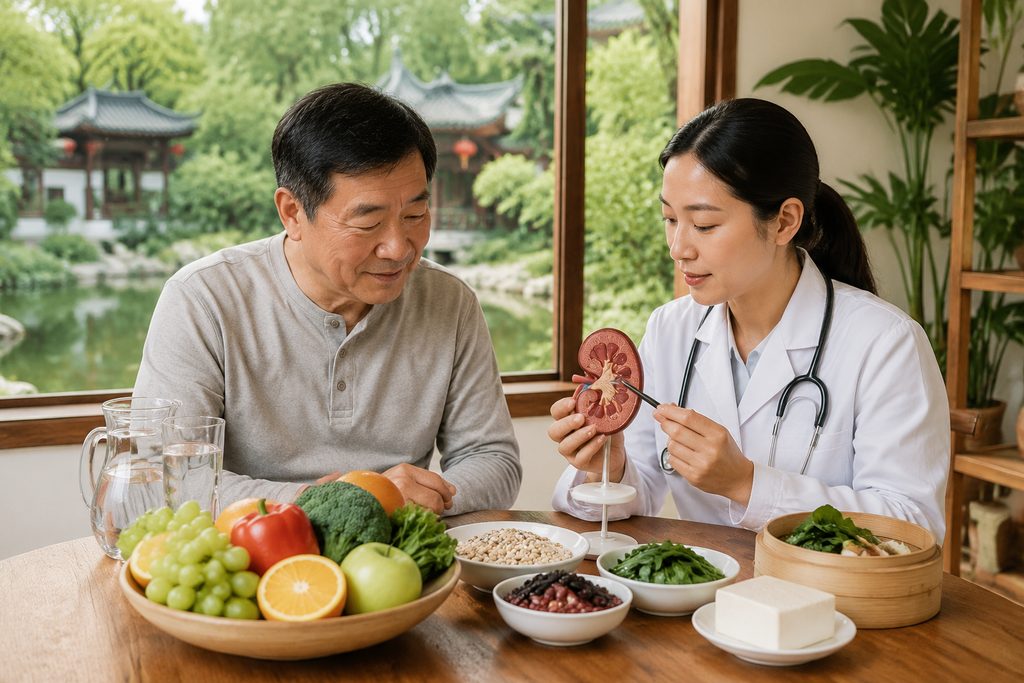
What Causes My Kidney Stones? Understanding the Real Triggers and Your Treatment Options
Have you ever felt a sudden, stabbing pain in your lower back that made you double over, wondering if something was seriously wrong? If you have passed a kidney stone, you know that pain ranks right up there with childbirth. And if you are researching what causes your kidney stones, you are likely desperate to prevent that pain from ever returning. For many international patients, the journey to relief also involves understanding the kidney stone removal cost China offers, which can be a fraction of Western prices.
Kidney stones are not a rare nuisance. They affect approximately 1 in 11 people in the United States alone, according to the National Kidney Foundation. The prevalence has nearly doubled over the past 30 years. The pain is one thing. But the confusion over why they form—and how to get rid of them without breaking the bank—is another burden entirely.
Key Takeaways
- Kidney stones are driven by diet, dehydration, and metabolic factors—not just bad luck. High sodium, low water intake, and excess animal protein are major triggers.
- China’s top urology departments handle enormous case volumes, with advanced laser and endoscopic equipment widely available at major public hospitals.
- Kidney stone removal cost in China typically runs from $2,000 to $6,000 for procedures that cost $15,000 to $30,000 in the US, depending on stone size and method.
- Language barriers and hospital navigation are real challenges in Chinese public hospitals. A bilingual coordinator or companion is often necessary for a smooth experience.
- Not every stone requires surgery. Many small stones pass naturally with hydration and medication. A second opinion can help you avoid unnecessary procedures.
The Problem: A Painful Condition with Confusing Causes and High Treatment Costs
In the United States, more than 500,000 people visit emergency rooms for kidney stone problems every year. The direct medical cost exceeds $5 billion annually. For a patient without comprehensive insurance, a ureteroscopy with laser lithotripsy can easily run $15,000 to $30,000. Even with insurance, deductibles and co-pays can leave you owing thousands.
That financial hit comes on top of the physical agony. And here is the frustrating part: roughly 50% of people who get one kidney stone will develop another within 5 to 10 years. So treating the stone is only half the battle. Figuring out what caused it—and changing those factors—is the other half.
Why Understanding the Root Cause Matters More Than the Procedure
Kidney stones are not a single disease. They are a symptom of an imbalance in your urine chemistry. If you do not identify the imbalance, you will keep making stones. That is why top urologists in China and elsewhere start with a metabolic evaluation before recommending any procedure.
Dehydration: The Most Common and Most Fixable Cause
The single biggest driver of kidney stones is low urine volume. When you do not drink enough water, your urine becomes concentrated. Minerals like calcium, oxalate, and uric acid start to crystallize. A study published in the Clinical Journal of the American Society of Nephrology found that people who produced less than 1.5 liters of urine per day had a significantly higher risk of stone formation. The fix is simple in theory: drink 2.5 to 3 liters of fluid daily. But for people in hot climates or physically demanding jobs, that target is hard to hit consistently.
Dietary Triggers: Sodium, Oxalate, and Animal Protein
Diet plays a massive role. High sodium intake forces your kidneys to excrete more calcium into the urine, which binds with oxalate to form stones. Processed foods, canned soups, and restaurant meals are the usual culprits. Oxalate-rich foods—spinach, rhubarb, almonds, beets—can also contribute, especially when eaten in large quantities without adequate calcium at the same meal. And diets heavy in animal protein increase uric acid levels, lowering urine pH and promoting uric acid stones.
So what causes kidney stones diet-wise? It is rarely one food. It is the pattern: low water, high salt, high animal protein, and not enough dietary calcium. Yes, you read that right. Low calcium diets actually increase stone risk because calcium binds oxalate in the gut. Without it, more oxalate gets absorbed and ends up in your urine.
Metabolic and Genetic Factors You Cannot Control
Some people do everything right and still form stones. Conditions like hyperparathyroidism, renal tubular acidosis, and cystinuria are inherited or acquired metabolic disorders that require medical management. Obesity, diabetes, and inflammatory bowel disease also raise risk. If you have a family history of stones, your baseline risk is higher no matter what you eat.
Can Kidney Stones Be Treated Without Surgery in China?
Yes, in many cases. The first-line approach for stones smaller than 5–6 mm is conservative management: aggressive hydration, pain control, and alpha-blockers like tamsulosin to relax the ureter and help the stone pass. This is called medical expulsive therapy. Up to 80% of stones under 5 mm pass on their own within 4 to 6 weeks.
For larger stones or those causing obstruction, infection, or intractable pain, intervention is needed. But even then, surgery is not the only option. Extracorporeal shock wave lithotripsy (ESWL) is a non-invasive procedure that uses sound waves to break the stone into passable fragments. No incision, no scope. It works best for stones under 2 cm in the kidney or upper ureter.
Kidney Stone Removal Cost China: A Realistic Breakdown
Let us get specific about the kidney stone removal cost China patients can expect. Prices vary by city, hospital tier, and procedure type. But the range is consistently far below US or European benchmarks.
| Procedure | China (Top Public Hospital) | United States (Average) |
|---|---|---|
| ESWL (shock wave lithotripsy) | $800 – $1,500 | $5,000 – $10,000 |
| Ureteroscopy with laser lithotripsy | $2,500 – $5,000 | $15,000 – $30,000 |
| Percutaneous nephrolithotomy (PCNL) | $4,000 – $7,000 | $20,000 – $45,000 |
| Full metabolic workup + consultation | $300 – $800 | $1,500 – $4,000 |
These figures reflect the self-pay rates at major public hospital international departments. The kidney stone laser treatment price Shanghai hospitals quote typically falls in the $3,000 to $5,000 range for a standard ureteroscopy. That is roughly one-fifth to one-eighth of the US price for the same procedure using the same Holmium laser technology.
Why the gap? Chinese public hospitals operate at enormous scale. A single urology department may perform 3,000 to 5,000 stone procedures annually. That volume drives down per-case costs for equipment, staffing, and facility overhead. Labor costs are also structurally lower. None of this means lower quality—it means a different economic model.
Best Hospital for Kidney Stones Beijing: Where to Look
Beijing hosts several of China’s most respected urology programs. The best hospital for kidney stones Beijing patients should consider depends on stone complexity and whether you need English-language support.
Peking Union Medical College Hospital (PUMCH) is consistently ranked among China’s top hospitals for urology in the Fudan University hospital rankings. Its urology department handles complex stone cases, including staghorn calculi and stones in patients with anatomical abnormalities. The international medical services department provides English-speaking coordination, though it operates as a premium channel with higher fees.
Peking University First Hospital is another heavyweight. Its urology institute is one of the oldest and largest in China, with a dedicated stone center. For international patients, the practical challenge is navigation: registration, payment, imaging, and follow-up all happen in Chinese unless you have a bilingual companion.
You can browse urology rankings and hospital profiles on our department-specific hospital rankings to compare options by city and specialty.
Medical Tourism Packages for Urology China: What Is Actually Included
The phrase “medical tourism package” sounds appealing. But in China, the reality is more nuanced. Public hospitals do not sell bundled packages the way some private hospitals in Thailand or India do. What exists instead is a coordinated service model: you pay separately for hospital treatment and for coordination support.
A typical medical tourism package for urology China arranged through a service provider includes hospital registration, imaging and lab scheduling, interpretation during consultations, and assistance with admission and discharge. Some providers also arrange airport pickup, hotel booking, and post-operative follow-up calls. The coordination fee is separate from hospital charges. Expect to pay from $300 for basic appointment coordination to $800–$1,200 for in-person specialist consultation coordination. Video consultations before you travel typically cost $100 to $300 for a standard international department physician and $500 to $800 for a top specialist.
What is not included: any guarantee of a specific surgeon, any promise of a specific surgery date, and any clinical outcome. Any provider who promises those things is not being honest with you.
Practical Considerations: Visa, Records, and Follow-Up for Stone Treatment in China
If you decide to pursue treatment in China, the logistics matter as much as the medicine. Start with your medical records. You need recent imaging—CT scan or ultrasound—plus any prior stone analysis, blood work, and urine tests. Have these translated into English or Chinese. Most Chinese urologists read English, but your local records may need translation for the hospital file.
Visa is next. For medical treatment in China, you apply for an S2 visa, which covers short-term private affairs including medical treatment. The hospital or your coordination service can provide an invitation letter and treatment confirmation to support your application. Family members traveling with you also apply for S2 visas. Processing time varies by embassy, so start at least 4 to 6 weeks before your planned travel date. The S2 visa is not a guarantee of entry—approval rests with the Chinese consulate based on your documents and circumstances.
Payment is another practical point. Chinese public hospitals generally require prepayment for procedures. International credit cards are accepted at international departments, but you may face daily transaction limits. Wire transfer or a large deposit on a UnionPay card is often easier. Insurance is the bigger question: most Western insurers do not directly reimburse Chinese public hospitals. You pay upfront and file for reimbursement afterward. Private international hospitals in China, like United Family or Jiahui, often have direct billing arrangements with major insurers—but their procedure fees run 2 to 3 times higher than public hospital international departments.
After you return home, follow-up matters. You need a repeat imaging study at 4 to 6 weeks to confirm the stone is gone or fragments have passed. You also need a 24-hour urine collection to identify the metabolic cause of your stones. That test can be done in your home country and reviewed by a urologist or nephrologist. If you did a metabolic workup in China, bring those results to your local doctor.
Frequently Asked Questions
Kidney stones form when your urine contains more crystal-forming substances—calcium, oxalate, uric acid—than your urine can dilute. Low fluid intake is the most common trigger. High sodium diets, excessive animal protein, and certain medical conditions like hyperparathyroidism also contribute. For most people, it is a combination of diet, hydration, and genetics.
Stone size and location are the key factors. Stones under 5 mm pass spontaneously in about 80% of cases. Stones between 5 and 10 mm pass about 50% of the time. Anything over 10 mm rarely passes without intervention. Location matters too: stones in the lower ureter are harder to pass than those near the kidney. A CT scan gives the most accurate measurement. If a stone is causing fever, severe vomiting, or complete obstruction, that is a surgical emergency—do not wait.
For most patients with uncomplicated stones, yes. China’s top urology departments perform thousands of stone procedures annually and use the same Holmium laser and flexible ureteroscopy equipment found in Western hospitals. The main risks are logistical, not clinical: language barriers, payment friction, and coordination of follow-up care after you return home. A bilingual coordinator reduces those risks substantially. Patients with complex medical histories, bleeding disorders, or active infections should resolve those issues before considering international travel.
The gap is substantial. A ureteroscopy with laser lithotripsy that costs $15,000 to $30,000 in the US typically costs $2,500 to $5,000 at a top Chinese public hospital. ESWL runs $800 to $1,500 versus $5,000 to $10,000. Even adding international travel, accommodation, and coordination fees, most patients save 60% to 80% on the procedure itself. The savings are smaller for minor stones that pass without intervention—in those cases, a written second opinion may be a more cost-effective first step.
Yes. A proper metabolic evaluation—blood tests, 24-hour urine collection, and stone composition analysis—identifies the specific driver of your stone formation. Chinese urology departments routinely perform these workups. The results guide dietary changes, medication, and follow-up testing. Some patients do this evaluation locally and travel only if a procedure is needed. Others complete the full workup in China during a single visit. Either approach is valid.
Your Next Step
Understanding what causes your kidney stones is the first real step toward ending the cycle of pain and expensive procedures. Whether you need a second opinion on imaging you already have, a metabolic workup to identify your triggers, or a clear cost comparison for treatment options, the information is available—and the cost gap between China and Western countries is real. We are China Medical Services, a coordination team that connects international patients with top Chinese urology departments. We are not a hospital and we do not provide diagnoses. But we can help you navigate records, scheduling, language, and logistics so you can make a confident decision. If you would like to explore your options, start with a free consultation and we will help you understand what is possible.
For more medical information and treatment options in China, visit chinamedservices.com (China Medical Services).
