Is My Tooth Pain a Cavity or Something Worse? A Guide to Diagnosis and Costs
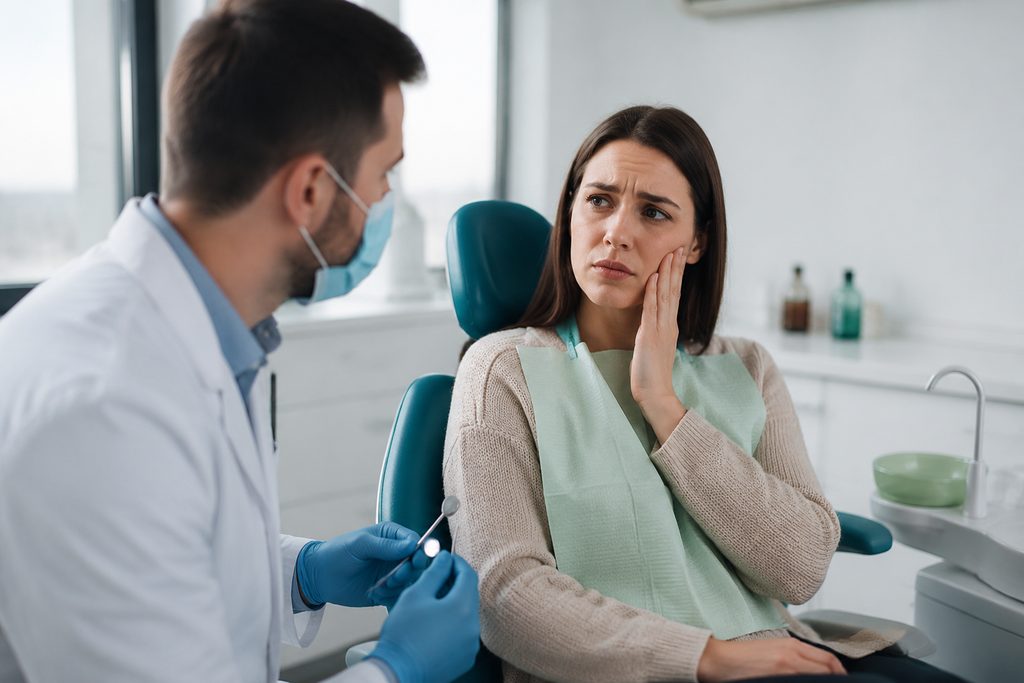
You have probably been told that a toothache means a cavity. Maybe it does. But what if the throbbing in your jaw at 2 a.m. is not decay at all? What if it is a cracked root, an infected nerve, or something that has nothing to do with your teeth? The difference matters because the wrong diagnosis costs you time, money, and unnecessary pain. This guide breaks down how to tell a cavity from more serious conditions, what each treatment involves, and what tooth pain treatment cost in China looks like compared to Western prices.
Key Takeaways
- A cavity that hurts usually means decay has reached the dentin or pulp. Treatment is a filling or root canal, not just observation.
- Severe, persistent, or radiating pain can signal an abscess, cracked tooth, trigeminal neuralgia, or rarely, a malignancy. Delaying diagnosis can lead to tooth loss or systemic infection.
- Dental treatment in China typically costs 60-80% less than in the US or UK for comparable procedures, with top-tier hospitals and international clinics in Beijing and Shanghai offering English-speaking care.
- Do not fly internationally for emergency dental work without first obtaining a written diagnosis and treatment plan from a local dentist. Remote evaluation must come before travel.
The Problem: Tooth Pain Is a Symptom, Not a Diagnosis
Roughly 3.5 billion people worldwide suffer from oral diseases, according to the World Health Organization. Untreated dental caries in permanent teeth is the most common health condition on the planet. In the United States alone, over 2 million people visit emergency departments each year for dental pain that should have been treated earlier. The cost of that neglect is staggering. A simple filling that might cost $150 becomes a root canal and crown costing $2,500 or more. Wait too long, and extraction plus implant can exceed $5,000 per tooth.
But here is the harder truth: not every toothache is a cavity. The American Association of Endodontists reports that cracked teeth are one of the most difficult dental problems to diagnose because the pain is inconsistent. Trigeminal neuralgia, a nerve disorder, produces electric-shock-like facial pain that patients often mistake for dental problems. And yes, persistent jaw pain can sometimes indicate something far more serious. So how do you tell the difference?
Why Understanding the Cause Changes Everything
The treatment path for a cavity, a cracked tooth, an abscess, and nerve pain are completely different. Treating the wrong condition wastes money and can make things worse. Here is what the evidence shows about each possibility.
Cavity Pain: The Most Common Culprit
A cavity is bacterial decay that eats through enamel. You feel nothing at first. By the time it hurts, decay has reached the dentin layer or the pulp chamber. Pain from a cavity is typically triggered by sweets, cold, or hot foods. It is sharp and short-lived. The fix is straightforward: remove decay and place a filling. If decay reaches the pulp, you need a root canal. The question “is severe tooth pain a root canal or cavity” is one we hear constantly. The answer depends on whether the pain lingers after the stimulus is gone. Lingering pain suggests pulp involvement, which means root canal therapy, not a simple filling.
Abscess and Infection: When Pain Becomes Dangerous
An abscess is a pocket of pus caused by bacterial infection at the tooth root or in the gum. The pain is constant, throbbing, and often wakes you at night. Your face may swell. You might run a fever. This is a medical emergency. An untreated abscess can spread to the jaw, neck, or brain. The American Dental Association warns that dental infections can become life-threatening if bacteria enter the bloodstream. Treatment requires draining the infection, root canal or extraction, and antibiotics. Do not wait.
Cracked Tooth Syndrome: The Hidden Agony
A crack in a tooth can be invisible on X-rays. Pain comes and goes. You bite down, feel a sharp jab, release, and the pain fades. Chewing on one side becomes a habit. Left untreated, the crack deepens until the tooth splits. Treatment ranges from a crown to root canal to extraction, depending on depth.
Non-Dental Causes: Nerve Pain and Referred Pain
Trigeminal neuralgia causes brief, severe, stabbing pain on one side of the face. It is often triggered by touching the face, brushing teeth, or even a breeze. Patients sometimes undergo multiple dental procedures before receiving the correct neurological diagnosis. Sinus infections can also cause upper tooth pain because the sinus floor sits directly above molar roots. And while rare, persistent jaw pain, numbness, or non-healing sores can raise the question “can tooth pain mean jaw cancer symptoms.” The answer is yes, occasionally. Persistent pain, loose teeth, a lump, or numbness in the jaw should be evaluated by a specialist. Do not self-diagnose.
What Tooth Pain Treatment Cost in China Actually Looks Like
Cost is the reason many international patients look abroad. The numbers are striking. A dental filling in the United States averages $150 to $450 per tooth depending on material and location. In Shanghai or Beijing, the same composite filling at a reputable public hospital or international dental clinic runs $40 to $120. A root canal on a molar in the US costs $1,000 to $1,800 without a crown. In China, that same molar root canal typically costs $250 to $600 at a top-tier hospital. Add a porcelain crown and you are looking at $400 to $900 in China versus $1,200 to $2,500 in the US.
| Procedure | Average US Cost (USD) | Average China Cost (USD) | Savings |
|---|---|---|---|
| Composite filling (single surface) | $150–$450 | $40–$120 | 70–80% |
| Root canal (molar) | $1,000–$1,800 | $250–$600 | 65–75% |
| Porcelain crown | $1,200–$2,500 | $400–$900 | 60–70% |
| Tooth extraction (surgical) | $300–$800 | $80–$250 | 70–75% |
| Dental implant (titanium, excluding crown) | $1,500–$3,000 | $600–$1,500 | 50–65% |
These prices vary by hospital tier and case complexity. Public hospitals charge less than private international clinics. The dental cavity filling price in Shanghai at a JCI-accredited international clinic will be higher than at a public tertiary hospital, but still well below US rates. Our team has seen patients save enough on a single implant to cover their entire flight and accommodation costs.
For those considering dental tourism packages in China, root canal treatment is one of the most commonly bundled procedures. A typical package includes consultation, X-ray, root canal, and crown for a fixed price. But be cautious. Packages work best when you already have a clear diagnosis. Flying to China with an undiagnosed toothache is a bad idea. You need local imaging and a treatment plan first.
How to Get Emergency Dental Care in Beijing as a Foreigner
Let us say you are already in China, or planning to be. The good news is that Beijing and Shanghai have excellent dental infrastructure. The challenge is navigating it without Chinese language skills. Public hospital dental departments handle enormous patient volumes. Walk-in registration is the norm. You will need a hospital card, which requires your passport. Queues form early. Some departments stop accepting new patients by mid-morning.
To book emergency dental care in Beijing as a foreigner, you have three practical options. First, private international clinics like United Family, Raffles, or Jiahui offer English-speaking dentists, direct insurance billing, and same-day appointments. You pay more, but the experience is Western-style. Second, public hospital international departments, such as Peking University School of Stomatology or Beijing Stomatological Hospital, offer specialist care with English coordination at roughly 1.5 to 2 times the standard public rate. Third, you can use a bilingual medical companion to handle registration, translation, and navigation at a standard public hospital. That is often the most cost-effective route for complex cases.
If you have dental pain and are traveling to China, bring recent X-rays and any treatment records. Digital files are fine. This avoids repeat imaging and speeds up diagnosis.
When Tooth Pain Means Something Worse: Red Flags You Cannot Ignore
Most toothaches are dental in origin. A minority are not. You need to know the difference because the consequences of missing a serious condition are severe. Here are the red flags that demand immediate evaluation by a physician or oral surgeon, not just a general dentist.
Pain that does not respond to dental treatment after two weeks. Numbness in the lip, chin, or tongue. A non-healing ulcer or sore in the mouth lasting more than three weeks. Loose teeth without obvious gum disease. A lump or thickening in the cheek or jaw. Difficulty opening the mouth or swallowing. Unexplained weight loss. Any of these symptoms, alone or in combination, warrants urgent investigation. Oral cancer accounts for roughly 3% of all cancers diagnosed in the United States each year, according to the National Cancer Institute. Early detection matters enormously. The five-year survival rate for localized oral cancer is over 85%. Once it spreads, that number drops below 40%.
So can tooth pain mean jaw cancer symptoms? It can, though it is uncommon. Persistent, deep, aching pain in the jaw that does not match any dental finding on X-ray should be taken seriously. A biopsy or advanced imaging may be needed. In China, hospitals like Peking Union Medical College Hospital and West China Hospital of Stomatology have oral and maxillofacial surgery departments equipped for these evaluations. If you are outside China, start with your local specialist. If you are considering traveling for evaluation, send your records first for a written second opinion before booking flights.
Practical Considerations: Records, Visas, and Payment
If you decide to pursue dental treatment in China, the logistics matter. Start with documentation. You will need a recent panoramic X-ray or CBCT scan, any previous treatment notes, and a list of medications. Most Chinese dental hospitals accept digital files via email or WeChat. Our team can coordinate this transfer.
For the visa, medical treatment falls under the S2 visa category. This is a short-stay visa for private affairs, including medical treatment. You will need an invitation letter or supporting documents from the hospital or clinic, proof of accommodation, and a valid passport. Processing typically takes 4 to 7 business days. The S2 visa does not guarantee entry. The final decision rests with the immigration officer at the border. We always advise patients to apply well in advance and carry printed copies of all medical correspondence.
Payment is another practical hurdle. Chinese public hospitals require prepayment. You load money onto a hospital card and charges are deducted as services are rendered. International credit cards are not always accepted at public hospital cashiers. Private international clinics accept Visa, Mastercard, and often direct insurance billing. Bring a combination of cash, card, and mobile payment options if you have them. For insurance, check your policy carefully. Many international insurers reimburse treatment in China, but you pay upfront and claim later.
Language is the final barrier. Even in Beijing and Shanghai, most public hospital dental staff do not speak English fluently. A bilingual medical companion can handle registration, translate your symptoms accurately, and ensure you understand the treatment plan before you consent. That last part is critical. Never sign a consent form you do not fully understand.
Frequently Asked Questions
If pain is sharp and brief, triggered only by cold or sweets, it is likely a cavity that needs a filling. If pain lingers for more than 30 seconds after the trigger is removed, wakes you at night, or throbs constantly, the pulp is probably infected. That requires a root canal. An X-ray and cold sensitivity test will confirm the diagnosis.
You will pay out of pocket. A filling ranges from $40 to $120. A molar root canal ranges from $250 to $600. A crown adds $400 to $900. Private international clinics charge more, typically 30 to 50 percent above public hospital rates, but still below US prices. Always request a written quote before treatment begins.
You can, but it is rarely wise for a true emergency. An active abscess or severe infection should be treated locally first. Flying with an untreated dental infection is painful and potentially dangerous due to pressure changes. Once the acute phase is managed, you can travel for definitive treatment like root canal, crown, or implant. Send your records for remote evaluation before booking anything.
Private international clinics offer same-day appointments with English-speaking dentists. Public hospital international departments also accept foreign patients but may have longer waits. If you need help with registration and translation at a standard public hospital, a bilingual medical companion can arrange it. Bring your passport and any dental records.
Persistent pain, numbness, non-healing sores, or loose teeth without gum disease should be evaluated by an oral surgeon or maxillofacial specialist. A biopsy may be needed. In China, top hospitals like Peking Union Medical College Hospital and West China Hospital of Stomatology have dedicated oral oncology departments. Start with a local evaluation. If you want a second opinion from a Chinese specialist, you can submit your records for written review before traveling.
Your Next Step
Tooth pain demands a diagnosis, not a guess. If you have been living with pain, or if a previous treatment did not resolve it, get clarity before spending more money. China Medical Services helps international patients connect with top-tier dental and maxillofacial specialists across 37 cities. We are not a hospital and we do not provide diagnoses. We handle hospital matching, appointment coordination, bilingual interpretation, and visa guidance. If you are considering dental care in China, start with a free consultation. Send us your records and let us help you understand your options. The right diagnosis changes everything.
For more medical information and treatment options in China, visit chinamedservices.com (China Medical Services).
