Is Laser Cataract Surgery Better? Cost, Safety, and Recovery Explained
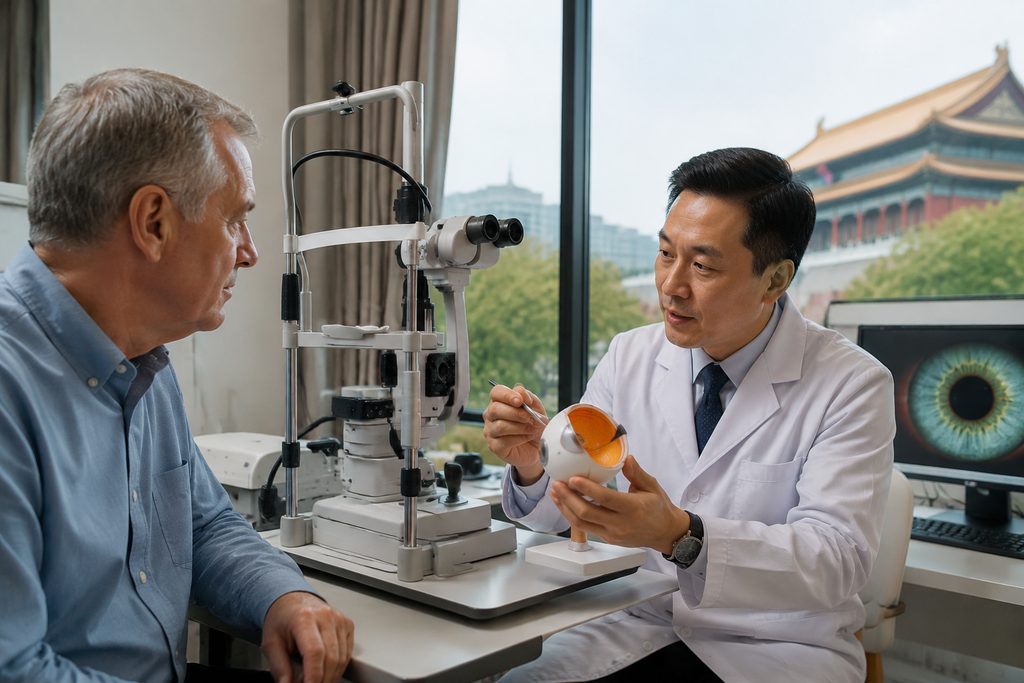
You’ve probably heard that “laser” automatically means better. In cataract surgery, that assumption can cost you thousands of dollars without improving your vision. The truth is messier—and far more interesting. Whether laser-assisted cataract surgery (FLACS) outperforms traditional phacoemulsification depends on your eyes, your surgeon, and your budget. And if you’re comparing laser cataract surgery cost China against prices in the US, UK, or Australia, the math gets complicated fast. Let’s break down what the evidence actually shows.
Key Takeaways
- Laser cataract surgery uses a femtosecond laser for incisions and lens fragmentation, but the phacoemulsification step—ultrasound removal of the cataract—still happens in both techniques.
- Large randomized trials show no significant difference in final visual acuity or complication rates between laser-assisted and traditional cataract surgery for routine cases.
- The laser adds $1,000–$2,500 per eye in Western countries; in China, the premium is typically $500–$1,500 depending on hospital tier and lens choice.
- Laser may offer measurable advantages for complex cases: dense cataracts, astigmatism correction with toric lenses, or patients with low endothelial cell counts.
The Problem: Paying More for a Marginal Gain
Cataracts affect approximately 94 million people worldwide, and surgery is the only effective treatment. In the United States, the average out-of-pocket cost for cataract surgery with a premium intraocular lens (IOL) runs between $3,500 and $7,000 per eye after Medicare. In the UK, private laser cataract surgery typically costs £2,500–£4,500 per eye. Australia sits in a similar range at AUD $3,000–$5,000. Meanwhile, laser cataract surgery cost China starts around $1,800–$3,500 per eye at top-tier hospitals—often including a premium multifocal or toric lens.
That price gap drives a lot of searches. But price alone doesn’t answer the question “is laser cataract surgery better?” It answers “is it cheaper?” Those are different questions. The clinical literature is surprisingly blunt: for standard cataracts in healthy eyes, laser assistance does not produce better vision than traditional phacoemulsification. A 2016 meta-analysis published in Ophthalmology reviewed over 14,000 eyes and found no significant difference in visual acuity, refractive error, or complication rates between FLACS and conventional surgery at 6 months. The laser adds precision to some steps—but precision doesn’t always translate to better outcomes.
Why China Has Become a Serious Option for Cataract Surgery
A senior cataract surgeon at a top Chinese eye hospital may complete 1,000–2,000 cases per year. Many Western surgeons perform 200–400 annually. Does volume guarantee better outcomes? Not automatically. But cataract surgery is a tactile skill, and complications—posterior capsule rupture, dropped nucleus, corneal burns—drop sharply with repetition. The best eye hospital Shanghai laser cataract programs, such as the Eye and ENT Hospital of Fudan University, handle complex referral cases daily that a typical regional center in the West might see monthly. That depth matters if your cataract is dense, your cornea is compromised, or you have a history of uveitis or prior eye surgery.
The femtosecond lasers used in China—Alcon LenSx, Johnson & Johnson Catalys, Bausch + Lomb Victus—are the same platforms used at Bascom Palmer or Moorfields. Chinese hospitals buy them from the same manufacturers. The cost difference isn’t in the hardware; it’s in labor, facility overhead, and the absence of a multi-layer insurance billing system. A lens that costs $1,200 wholesale in the US costs the same in Shanghai. But the surgical fee, anesthesia fee, and facility fee are dramatically lower. That’s the entire story behind laser cataract surgery cost China.
Lower cost does not mean lower quality. It means the hospital’s cost to deliver the service is lower. Chinese ophthalmologists earn less than American ophthalmologists. Hospital administrators don’t employ armies of billing coders. Malpractice insurance is a fraction of US premiums. None of that affects the quality of the femtosecond laser or the sterility of the operating theater. It does mean you can afford a premium toric IOL in Shanghai that would stretch your budget in Boston.
Is Laser Cataract Surgery Safer Than Traditional?
The honest answer: for routine cases, no. For specific cases, possibly yes. The European Society of Cataract and Refractive Surgeons (ESCRS) conducted the FEMCAT trial, a randomized controlled study comparing FLACS and conventional phacoemulsification. The results, published in Journal of Cataract & Refractive Surgery, found equivalent visual outcomes and complication rates. However, subgroup analysis suggested that eyes with dense nuclear cataracts required less ultrasound energy with laser pre-fragmentation—which can reduce corneal endothelial cell loss. That matters for patients with Fuchs’ dystrophy or shallow anterior chambers.
So when a patient asks “is laser cataract surgery safer than traditional,” the evidence-based response is: for most people, the safety profiles are indistinguishable. For a minority with specific anatomical challenges, laser assistance may reduce intraoperative stress on the eye. A thorough pre-operative assessment—including corneal topography, endothelial cell count, and lens density grading—determines which camp you fall into. Any surgeon promising laser is categorically safer for everyone is selling something.
How the Procedure Works Step by Step
Both techniques follow the same arc, with one key difference in the first stage.
Traditional Phacoemulsification
The surgeon creates a 2.2–2.8 mm corneal incision with a manual blade. Then they open the lens capsule with forceps or a bent needle—a delicate step called capsulorhexis. The cataract is broken up with an ultrasound probe and aspirated. The folded intraocular lens is injected through the incision and positioned in the capsular bag. No stitches typically needed. Total surgical time: 10–20 minutes.
Laser-Assisted Cataract Surgery (FLACS)
The femtosecond laser performs the corneal incision, the capsulotomy, and pre-fragments the lens into a grid pattern. The surgeon then opens the eye and completes phacoemulsification with significantly less ultrasound energy. The laser capsulotomy is more consistently circular and centered than a manual one—which improves IOL positioning and reduces tilt. That’s a real advantage for premium lenses like toric or multifocal designs, where even slight decentration degrades optical quality. But for a standard monofocal lens, the benefit is negligible.
Laser Cataract Surgery Package Abroad: What a Realistic Timeline Looks Like
If you’re considering traveling for surgery, you need a concrete schedule—not marketing promises. Here’s what a typical laser cataract surgery package abroad through a Chinese top-tier eye hospital looks like.
| Stage | What Happens | Timing |
|---|---|---|
| Pre-operative records review | You send existing eye exam reports—visual acuity, slit-lamp findings, OCT, corneal topography if available | 1–2 weeks before travel |
| In-person consultation | Full ophthalmic workup: biometry, endothelial cell count, lens density grading, refraction | Day 1 in China |
| Surgery (first eye) | FLACS or traditional, depending on clinical recommendation | Day 2–3 |
| Post-op check (first eye) | Visual acuity, IOP, slit-lamp exam | Day 3–4 |
| Surgery (second eye, if bilateral) | Typically 1 week after first eye | Day 8–10 |
| Final check and discharge | Full exam, refraction, medication instructions, home country follow-up plan | Day 10–14 |
Total in-country time for bilateral surgery: 10–14 days. For a single eye, 4–5 days is realistic. That’s a significant commitment—and it’s why remote pre-assessment matters. You don’t want to fly to Shanghai and discover your eye isn’t suitable for the premium lens you wanted.
How Long Is Recovery After Laser Cataract Surgery?
Recovery timelines for laser and traditional cataract surgery are essentially identical. The laser doesn’t accelerate healing—it just changes how the cataract is fragmented. Here’s what to expect:
First 24 hours: Blurry vision, mild discomfort, light sensitivity. You’ll wear an eye shield while sleeping. No bending, heavy lifting, or rubbing the eye.
Week 1: Vision improves daily but fluctuates. Most patients return to desk work and light activity within 3–5 days. Antibiotic and steroid drops four times daily.
Weeks 2–4: Vision stabilizes. You can resume exercise, but avoid swimming and dusty environments. If you had a premium multifocal lens, neuroadaptation—your brain learning to use the new optics—takes 4–6 weeks.
Month 3: Final refractive outcome is typically achieved. If residual astigmatism or refractive error remains, laser enhancement (LASIK or PRK) can be discussed—though this is rarely needed with accurate biometry.
The question “how long is recovery after laser cataract surgery” deserves an honest answer: same as traditional. The laser doesn’t give you a faster recovery. It may give you a more predictable refractive outcome with premium lenses—which means fewer surprises at week 4.
Who Should NOT Choose Laser Cataract Surgery
Laser assistance is not for everyone. Some patients are poor candidates:
- Small pupils that don’t dilate well. The femtosecond laser needs adequate pupil dilation to dock the patient interface and image the lens. A small pupil can make docking difficult or impossible.
- Severe corneal scarring or opacity. The laser’s imaging system needs a clear cornea to map the anterior segment. Dense scars block the OCT signal.
- Advanced glaucoma with unstable IOP. The suction ring used for laser docking temporarily raises intraocular pressure. Most glaucoma patients tolerate this fine, but advanced cases need careful evaluation.
- Uncooperative patients. You must lie still and fixate during laser docking. If you have severe tremor, claustrophobia, or cognitive impairment, traditional surgery under deeper sedation may be safer.
Also, if you’re choosing a standard monofocal lens and your cataract is soft, the laser adds cost without meaningful benefit. A skilled surgeon performing manual capsulorhexis achieves excellent results. The laser’s advantage concentrates in premium lens cases and complex cataracts.
Evaluating Providers: What the Numbers Actually Mean
When you’re comparing hospitals—whether it’s the best eye hospital Shanghai laser cataract programs or a clinic in Beijing—you need to look past marketing. Here’s what matters:
Annual surgical volume. Ask for the department’s total cataract volume per year. A center doing 20,000+ cases annually has systems for handling complications, not just routine cases. That matters when something goes wrong.
Laser platform and generation. The LenSx platform has been through multiple software generations. Newer versions have better OCT integration and faster fragmentation patterns. Ask which platform and when it was updated.
Biometry technology. The single biggest predictor of refractive accuracy is biometry—measuring the eye to calculate IOL power. Top centers use swept-source OCT biometry (IOLMaster 700, Argos) rather than older partial coherence interferometry. This matters more than laser vs. manual.
Complication rate transparency. A hospital that won’t share its posterior capsule rupture rate or endophthalmitis rate is hiding something. Competent centers track these numbers and share them with international patients.
If you’re planning to book laser cataract surgery Beijing, you’ll find multiple excellent options. Peking University Third Hospital, Beijing Tongren Hospital, and Peking Union Medical College Hospital all run high-volume cataract services with femtosecond laser capability. The choice depends on your specific eye anatomy, lens preference, and language needs.
Practical Considerations: Documentation, Visa, and Payment for Medical Travel to China
Traveling to China for cataract surgery requires preparation. The medical visa category for short-term treatment is the S2 visa, issued for private affairs including medical treatment. You’ll need an invitation letter or treatment confirmation from the Chinese hospital, your passport, a completed visa application form, and proof of financial means. Processing typically takes 1–2 weeks at most Chinese embassies or visa centers. Family members accompanying you also apply for S2 visas.
Payment at Chinese public hospitals is generally required upfront. Most international departments accept major credit cards and international bank transfers. Private international hospitals like United Family or Jiahui may bill your insurance directly if they have an agreement with your insurer. Public hospital international departments usually provide itemized receipts in English for reimbursement claims. Check with your insurer before travel—some policies require pre-authorization for overseas surgery.
Language is the biggest practical barrier. Top public hospitals see thousands of patients daily. Signage is increasingly bilingual, but the registration, payment, and pharmacy queues are not staffed by English speakers. Without Chinese language ability, you’ll need assistance navigating the system. That’s a factual statement, not a sales pitch. Many independent travelers do fine with translation apps and patience. Others find the friction of a high-volume Chinese hospital overwhelming after surgery when you’re tired and your vision is blurry.
Frequently Asked Questions
Is laser cataract surgery worth the extra cost?
For a standard cataract with a monofocal lens, the evidence says no—you’ll pay more for equivalent results. For premium toric or multifocal lenses, or for dense cataracts where the laser reduces ultrasound energy, the extra precision can be worth it. The decision should be based on your specific eye measurements, not a blanket recommendation.
How much does laser cataract surgery cost in China compared to the US?
Laser cataract surgery cost China typically ranges from $1,800 to $3,500 per eye at top-tier public hospital international departments, depending on lens choice and case complexity. The same procedure in the US runs $3,500 to $7,000 per eye after insurance. The gap narrows when you factor in travel and accommodation, but for patients needing premium lenses in both eyes, the savings remain substantial.
What if something goes wrong during surgery in a foreign country?
Cataract surgery complications are rare—posterior capsule rupture occurs in 1–2% of cases, endophthalmitis in 0.1% or less. But they do happen. Top Chinese eye hospitals have vitreoretinal surgeons on staff who can manage complications immediately. Your home country follow-up plan should include a visit to your local ophthalmologist within 1–2 weeks of returning. Keep all operative records and lens implant cards—your home doctor needs them.
Can I have both eyes done on the same trip?
Yes, and it’s common for international patients. Surgeons typically wait 5–7 days between eyes to monitor the first eye for infection or unexpected refractive error before proceeding. This requires a 10–14 day stay in China. Some patients choose to have one eye done and return later for the second—that’s a personal decision based on time and budget.
Will my home country doctor be willing to do follow-up care?
Usually yes, but arrange this before you travel. Call your local ophthalmologist, explain your plan, and confirm they’ll see you for post-operative checks. Some doctors are hesitant to manage complications from surgery performed elsewhere. Most are professional about it—especially when you arrive with complete operative records and a clear lens implant card.
Cataract surgery is one of the safest and most successful procedures in medicine, whether laser-assisted or traditional. The laser is a tool, not a miracle. It improves precision in specific steps—and that precision matters most for premium lenses and complex eyes. For routine cases, a skilled surgeon with a manual blade achieves outcomes that are indistinguishable from laser-assisted surgery at a lower price. If you’re comparing options, including laser cataract surgery cost China, let your eye measurements drive the decision. Not marketing.
China Medical Services maintains a database of 340+ top-ranked hospitals across 37 cities, including ophthalmology departments with femtosecond laser capability. We help international patients evaluate hospital options, understand realistic costs, and coordinate the logistics of treatment in China. We are not a hospital and do not provide medical advice. If you’re weighing laser
For more medical information and treatment options in China, visit chinamedservices.com (China Medical Services).
