Is a Deviated Septum Worth Fixing? Real Costs and Recovery Data
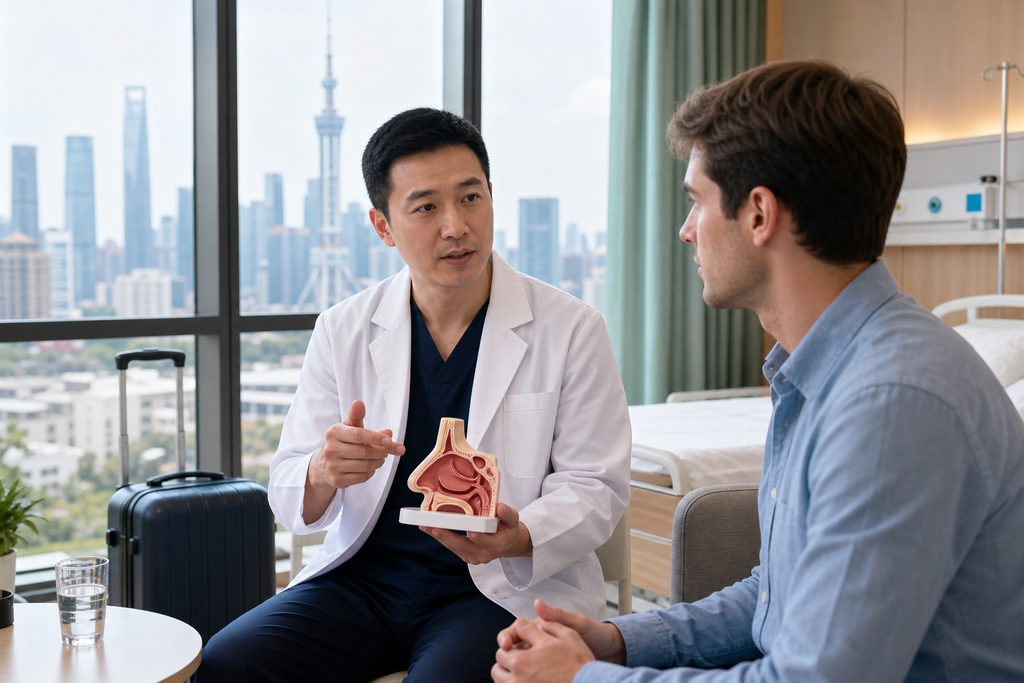
Is a Deviated Septum Worth Fixing? A Data-Driven Look at Septoplasty Costs, Outcomes, and Where to Get It Done
Around 80% of people have some degree of septal deviation. Most never notice it. But for the roughly 1 in 4 adults whose deviation is significant enough to obstruct airflow, the question is not academic. It is nightly mouth breathing, recurring sinus infections, snoring that ruins sleep for partners, and a constant feeling that one nostril simply does not work. For patients weighing intervention, deviated septum surgery cost China has become a serious consideration — with total procedure fees at top-ranked ENT hospitals typically landing between $2,800 and $6,500, compared to $8,000–15,000 in the United States or $6,000–10,000 in Western Europe.
But cost alone is a poor reason to have nasal surgery. The real question is whether the functional gain justifies the recovery. This article breaks down what the evidence says about long-term outcomes, who actually benefits, what recovery looks like week by week, and how to evaluate hospitals if you are considering treatment abroad.
Key Takeaways
- Septoplasty improves nasal airflow in 70–85% of properly selected patients, with the strongest results in those who have failed medical management.
- Total septoplasty cost at top Chinese ENT centers runs $2,800–6,500 — roughly one-third to one-half of US pricing for comparable surgical volume.
- Recovery is not trivial: expect 1–2 weeks off work, 3–6 weeks before strenuous exercise, and up to 3 months for final breathing results.
- Not every deviated septum needs surgery. If you breathe fine at rest and sleep well, conservative management is the evidence-based first line.
The Problem: Living With a Deviated Septum Is a Slow Drain, Not a Sudden Crisis
A 2023 systematic review in JAMA Otolaryngology–Head & Neck Surgery found that patients with clinically significant septal deviation report quality-of-life scores comparable to those with moderate chronic sinusitis — a condition widely recognized as debilitating. The mechanism is straightforward. When the septum deviates more than 4–5 mm from midline, it narrows one or both nasal valves, increasing airway resistance. The body compensates. Mouth breathing at night dries the oral mucosa. Turbinates on the opposite side swell to fill the space. Sinus drainage slows. Infections become more frequent.
What happens if you do nothing? The septum itself does not typically worsen dramatically in adulthood unless there is additional trauma. But the downstream effects compound. Chronic mouth breathing is associated with poor sleep architecture, daytime fatigue, and in some studies, higher rates of upper respiratory infection. A 2021 cohort study tracking 412 adults with untreated moderate-to-severe deviation over five years found that 38% developed recurrent sinusitis requiring antibiotics at least twice annually, and 22% reported progressive worsening of snoring. So the question — can a deviated septum get worse if untreated — has a nuanced answer: the structural deviation may stay stable, but the functional consequences often do not.
That is the quiet cost of deferring. No dramatic emergency. Just years of suboptimal sleep, mouth breathing, and sinus infections that never quite resolve.
Why Septoplasty at High-Volume ENT Centers Delivers Results
Surgical Volume Predicts Septoplasty Outcomes
Septoplasty is not a technically exotic procedure. But it is a procedure where experience matters enormously. The difference between a surgeon who performs 20 septoplasties a year and one who performs 150 is the difference between a nose that breathes well and one that still obstructs — or worse, one with a new cosmetic deformity. A 2022 analysis of 3,100 septoplasty cases published in The Laryngoscope found that complication rates (septal perforation, synechiae, persistent obstruction) were 2.3 times higher among surgeons performing fewer than 30 cases annually compared to those performing more than 100.
Top Chinese ENT departments operate at volumes that are difficult to match elsewhere. Major centers in Beijing and Shanghai routinely perform 500–800 septoplasties and functional rhinoplasties per year. That repetition produces refined judgment about when to combine septoplasty with turbinate reduction, when to address the nasal valve, and when to leave well enough alone. For international patients, that volume is accessible — the challenge is navigating the system to reach the right surgeon, which we will address later.
Cost Structure: Why Septoplasty Price Shanghai International Hospital Is Lower Without Sacrificing Quality
Let us address the obvious objection directly. Lower cost in China does not reflect lower surgical quality. It reflects structural economics. Chinese public hospitals are high-volume, high-efficiency institutions. A septoplasty at a top-tier public hospital in Shanghai or Beijing typically runs $2,800–4,200 for the procedure, anesthesia, and a 2–3 day hospital stay. At a private international hospital in Shanghai — the kind with English-speaking staff, JCI accreditation, and direct insurance billing — expect $4,500–6,500 all-in. The same procedure at a US academic medical center averages $8,000–15,000, and in London or Zurich, $7,000–12,000.
Why the gap? Three structural reasons. First, physician compensation in China is a fraction of US levels, and that is the single largest cost driver in any surgical fee. Second, hospital overhead per case is lower because Chinese ENT departments run on throughput — the same operating theater may handle 10–12 cases a day. Third, the medical device supply chain for routine instruments (septal splints, endoscopic equipment) is domestically manufactured at competitive prices. None of these factors touch surgical skill. The surgeons at Fudan University‘s Eye and ENT Hospital or Beijing Tongren Hospital train for 8–12 years and perform more septoplasties in a quarter than many Western ENTs do in a year.
Technology and Technique: Endoscopic Septoplasty as Standard
One structural advantage worth noting: endoscopic septoplasty is now the default technique at major Chinese ENT centers, not an optional upgrade. This matters because endoscopic visualization allows the surgeon to address posterior septal deviations and cartilaginous spurs that traditional headlight-based septoplasty often misses. A 2020 meta-analysis in Otolaryngology–Head and Neck Surgery comparing endoscopic versus conventional septoplasty found that endoscopic approaches were associated with a 31% lower rate of residual deviation and a 22% lower rate of revision surgery. When you are evaluating hospitals, ask directly whether the surgeon performs endoscopic or conventional septoplasty. The answer tells you something about the department’s technical baseline.
Septoplasty Step by Step: What Actually Happens From Consultation to Discharge
If you are considering surgery in China — or anywhere — understanding the actual sequence matters. The process is not complicated, but it has fixed steps. Here is the typical pathway at a top ENT hospital in Beijing or Shanghai.
Step 1: Remote or in-person evaluation. You will need a recent CT scan of the sinuses and a clinical history. Many international patients start with a video consultation to determine whether they are a good surgical candidate before committing to travel. The ENT will assess the degree of deviation, the presence of turbinate hypertrophy, and whether sinus disease is contributing.
Step 2: In-person examination and surgical planning. No reputable hospital will schedule surgery without an in-person nasal endoscopy. This is a hard rule in Chinese public hospitals — surgery is only arranged after the surgeon has examined you directly. Plan for 2–3 days between first consultation and surgery date.
Step 3: Pre-operative workup. Blood tests, ECG, and anesthesia clearance. Usually completed in one morning. If you are over 50 or have cardiac risk factors, expect additional testing.
Step 4: Surgery. Septoplasty itself takes 45–90 minutes under general anesthesia. If turbinate reduction is performed simultaneously (common when turbinates are chronically enlarged), add 20–30 minutes. Most patients stay 1–2 nights in hospital for observation and packing management.
Step 5: Packing removal and discharge. If dissolvable packing is used, you may be discharged the next day. If traditional packing is used, it comes out 24–48 hours post-op — an uncomfortable but brief moment. Most international patients fly home 7–10 days after surgery.
Recovery Timeline: What “Worth It” Actually Feels Like
This is the section most patients skip and then wish they had not. Septoplasty recovery is not brutal, but it is not a weekend procedure either. Here is the honest week-by-week picture.
| Timeframe | What to Expect | What You Can Do |
|---|---|---|
| Days 1–3 | Nasal congestion, mild bleeding, facial pressure. Mouth breathing is unavoidable. | Rest. Head elevated. Cold compresses. Pain is usually well-controlled with acetaminophen. |
| Days 4–7 | Packing removed (if used). Congestion begins easing. Some bloody nasal discharge is normal. | Light walking. Return to desk work for most patients. No bending, lifting, or straining. |
| Weeks 2–3 | Breathing improves noticeably. Crusting inside the nose is normal. Saline rinses are essential. | Most patients return to normal daily activities. Still no contact sports or heavy lifting. |
| Weeks 4–6 | Majority of swelling resolved. Breathing quality approaches final result for most patients. | Gradual return to exercise. Follow-up with your local ENT if you traveled for surgery. |
| Months 2–3 | Final functional result. Residual internal swelling fully resolves. | Full activity. Assess whether the outcome matched expectations. |
The key question — is deviated septum surgery worth it long term — has been studied directly. A 2023 prospective study tracking 268 septoplasty patients over three years found that 78% reported sustained improvement in nasal breathing, 71% reported better sleep quality, and 64% had fewer sinus infections. The patients who benefited most shared one trait: they had documented nasal obstruction that failed medical management (nasal steroid sprays, antihistamines, saline irrigation) before surgery. The patients who benefited least were those who underwent septoplasty primarily for snoring without confirmed nasal obstruction.
That distinction matters. Septoplasty is not a snoring cure. If your primary complaint is snoring and you breathe fine through your nose during the day, septoplasty may do little for you. A sleep study is the right first step, not a surgical consult.
Evaluating Hospitals: What to Look For Beyond the Price Tag
If you are considering treatment in China, the hospital selection process deserves more attention than the cost comparison. Here is what we advise international patients to verify before committing.
Surgeon case volume. Ask directly: “How many septoplasties do you perform annually?” A good answer is above 80. An excellent answer is above 150. If the surgeon hesitates or gives a vague answer, that is information too.
Endoscopic technique. Confirm the surgeon uses endoscopic visualization, not conventional headlight technique. This is now standard at top centers, but it is worth asking explicitly.
Department ranking. The Fudan University hospital rankings are China’s most authoritative. For ENT, Beijing Tongren Hospital, Fudan University’s Eye and ENT Hospital in Shanghai, and Peking Union Medical College Hospital consistently rank among the top 10 nationally. Our ENT department rankings page breaks down the full list. If you are searching for the best ENT hospital Beijing for septoplasty reviews, Tongren is the name that appears most frequently in patient forums and professional recommendations — though it is also one of the busiest, which is why international patients often use coordination services to navigate registration.
International patient infrastructure. Public hospitals offer the highest surgical volume at the lowest cost, but English support is limited. Private international hospitals in Shanghai and Beijing (United Family, Jiahui, Parkway) offer English-speaking staff and direct insurance billing at roughly 1.5–2 times the public hospital price. The trade-off is straightforward: pay less and navigate more, or pay more and navigate less.
Practical tip: If you are considering a public hospital, budget for a bilingual medical companion. Registration, payment, pre-op testing, and discharge instructions all happen in Chinese. A companion typically costs from $300 per day and removes the single largest source of stress for international patients.
Practical Considerations: Documentation, Visas, and Payment for Septoplasty in China
If you decide to pursue surgery in China, the logistics are manageable but require planning. Here is what you need to know.
Medical records. Bring a recent sinus CT (within 6 months is ideal), any prior nasal surgery records, and a list of medications. If your CT is older than 6 months, expect to repeat it in China — which is inexpensive and often same-day.
Visa. Medical treatment in China falls under the S2 visa category, which covers short-term private affairs including medical treatment. Your accompanying family member applies for the same S2 category. Processing typically takes 1–3 weeks depending on your home country’s Chinese embassy or consulate. You will need a supporting letter from the hospital confirming your treatment plan. Do not apply for an M visa — that is for commercial and trade activities, not medical care.
Payment. Public hospitals require prepayment for surgery — typically the full estimated procedure cost deposited at admission. International credit cards are not always accepted at public hospital cashiers. Plan to pay via bank transfer, UnionPay, or cash. Private international hospitals accept major international credit cards and often bill insurers directly. If you have insurance, confirm coverage for overseas elective surgery before booking anything.
Follow-up after returning home. Septoplasty follow-up is straightforward. Most patients need one in-person check at 1–2 weeks (which can happen before you fly home if you stay 10–14 days) and then routine saline rinses for 4–6 weeks. Your local ENT can handle any late follow-up. The Chinese hospital will provide discharge records and imaging that your home physician can review.
One honest note: navigating a Chinese public hospital without Chinese language ability is difficult. The system is efficient but assumes local knowledge. That is why many international patients choose either a private international hospital or a coordination service that handles registration, translation, and in-person accompaniment. The choice depends on your budget and your tolerance for friction.
Frequently Asked Questions
Most patients describe the recovery as uncomfortable rather than painful. The first 48 hours involve significant nasal congestion and the sensation of pressure. Once packing is removed, discomfort drops sharply. Prescription pain medication is rarely needed beyond day 3; acetaminophen is usually sufficient.
Septoplasty is performed entirely inside the nose, so there is no external incision and no change to the external nose shape. Some patients have mild swelling around the eyes for a few days, but full black eyes are uncommon with endoscopic technique. If you want cosmetic changes, that is a separate procedure (rhinoplasty) and should be discussed explicitly with your surgeon.
Persistent obstruction after septoplasty occurs in roughly 10–20% of cases. Causes include residual posterior deviation, nasal valve collapse that was not addressed, or turbinate regrowth. A revision septoplasty is possible but should not be rushed — final results take 3 months, and some patients improve gradually throughout that window. Before considering revision, a thorough endoscopic evaluation and possibly a CT are essential. This is why surgeon selection matters more than price.
Some private international hospitals in Shanghai and Beijing offer all-inclusive surgical packages that bundle consultation, surgery, hospital stay, and basic follow-up. Public hospitals do not operate on a package model — you pay for each component separately. If you are searching for a book deviated septum surgery China package, the realistic answer is that packages exist primarily at private facilities, and costs run $5,000–8,000 all-in depending on the hospital and whether turbinate reduction is included. Coordination services like China Medical Services can help arrange either pathway, but the package itself comes from the hospital.
Plan for 10–14 days. This allows time for the initial consultation, pre-op testing, surgery, packing removal, and one post-op check before flying. Flying with nasal congestion is uncomfortable but not dangerous for most patients; avoid flying within the first 5 days after surgery when the risk of bleeding is highest.
