Will My Reflux Improve After Bypass? Timelines, Risks, and China Costs
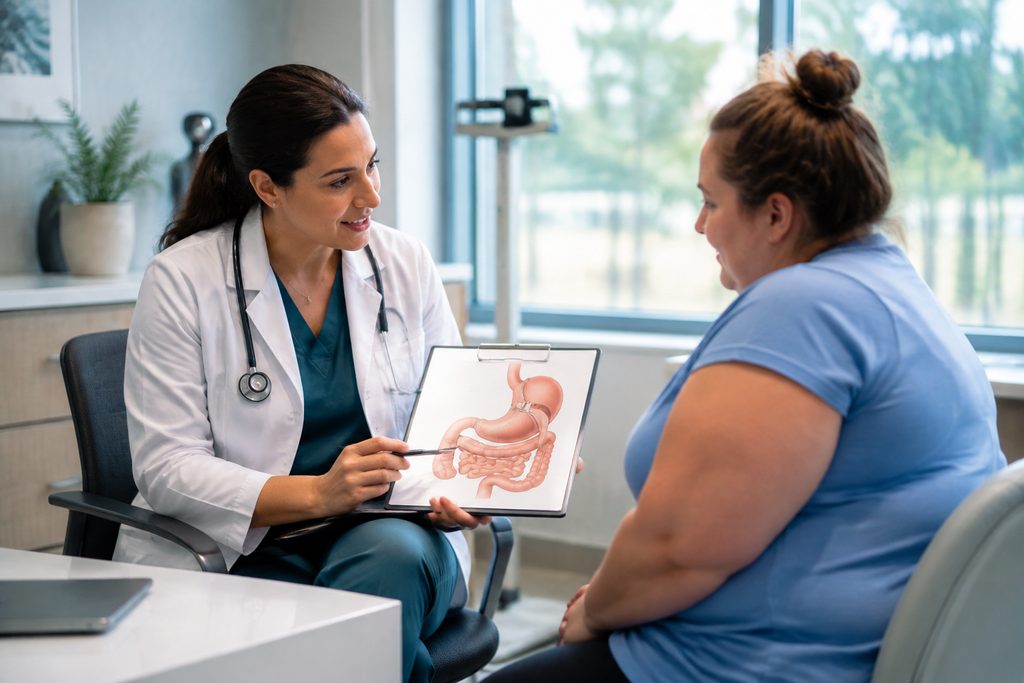
While patients in the United States often wait 3 to 6 months just to see a bariatric surgeon and then face out-of-pocket costs exceeding $20,000 even with insurance, major Chinese bariatric centers routinely complete the full preoperative workup in under three weeks — with total surgical fees typically ranging from $9,000 to $16,000. The question of gastric bypass reflux improvement China patients ask us most often is not whether the operation works, but what “improvement” actually means for their daily life and how long it takes. Our team has coordinated care for enough reflux patients to answer that directly.
Roux-en-Y gastric bypass remains the most reliably effective surgical treatment for coexisting severe obesity and gastroesophageal reflux disease. The anatomical changes it creates — a small gastric pouch, a rerouted small intestine, and minimal acid production in the pouch — resolve or substantially reduce reflux symptoms in roughly 85% to 95% of patients within the first year. But the experience is not uniform. Some patients wake up from surgery with their heartburn gone. Others need three to six months of gradual improvement. A small minority see no change or develop new symptoms.
This article explains the actual mechanism, the realistic timeline, the failure modes, and what it costs to have the procedure done at a high-volume center in China. No promises. Just what the data shows and what we have observed coordinating care through China Medical Services.
How This Actually Works, Step by Step
You start by sending us your existing medical records: endoscopy reports, pH monitoring results if you have them, current medication list, height, weight, and any prior abdominal surgeries. A bariatric surgeon and a gastroenterologist at one of our partner hospitals review the file. Within 5 to 7 business days, you receive a written assessment: whether you are a candidate, what additional testing is required, and a preliminary surgical plan.
If you decide to proceed, we coordinate the visa support letter from the hospital. You apply for an S2 visa, which is the short-stay category used for medical treatment and private affairs in China. Processing times vary by consulate, but most patients receive approval within 1 to 3 weeks. We handle the appointment scheduling, document translation, and hospital registration before you arrive.
On the ground, a bilingual medical companion meets you at the airport, takes you to preoperative consultations, and stays with you through admission. The typical sequence is: day 1 consultation and blood work, day 2 endoscopy and cardiac clearance, day 3 anesthesia evaluation, day 4 or 5 surgery. Most patients stay in the hospital for 4 to 7 days after a laparoscopic gastric bypass. Then 10 to 14 days in a nearby hotel before flying home.
Does acid reflux go away after bypass? For most patients, yes — but “go away” usually means symptom reduction, not guaranteed elimination. The physiology makes recurrence unlikely, but it is not zero.
Why Gastric Bypass Improves Reflux: The Mechanism
Gastric bypass changes the stomach in ways that directly attack the three main drivers of reflux: acid volume, intra-abdominal pressure, and anatomical incompetence of the lower esophageal sphincter. The new gastric pouch holds only 15 to 30 milliliters of food, compared with roughly 1 to 1.5 liters for a normal stomach. Less stomach volume means less acid-producing surface area. The pouch also produces very little acid because the acid-secreting parietal cells are concentrated in the lower portion of the stomach, which is bypassed and no longer receives food.
Weight loss does the rest. Intra-abdominal pressure drops as visceral fat decreases. The lower esophageal sphincter, no longer pushed open by a heavy abdomen, regains competence. Studies published in Surgery for Obesity and Related Diseases and Obesity Surgery consistently report that 85% to 95% of patients with preoperative GERD experience significant improvement or complete resolution within 12 months of Roux-en-Y gastric bypass.
But the key phrase is “within 12 months.” Some patients feel better in the first week. Others need six months of steady weight loss before their symptoms fade. The question “reflux after gastric bypass how long” has no single answer. The median time to noticeable improvement in most published cohorts is 3 to 6 months.
A Realistic Timeline
Here is what the actual sequence looks like for an international patient coming to Shanghai or Beijing for gastric bypass, based on cases we have coordinated. Ranges reflect real variation in hospital scheduling and individual recovery.
| Stage | What Happens | Typical Duration |
|---|---|---|
| Remote review | You send records; surgeon and gastroenterologist assess candidacy | 5–7 business days |
| Visa processing | S2 visa application with hospital support letter | 1–3 weeks |
| Preoperative workup in China | Endoscopy, labs, cardiac clearance, anesthesia consult | 3–5 days |
| Surgery and hospital stay | Laparoscopic Roux-en-Y gastric bypass | 4–7 days inpatient |
| Local recovery before travel | Hotel stay, follow-up visits, diet progression | 10–14 days |
| First noticeable reflux change | Variable; some patients report improvement immediately | 1 week–3 months |
| Substantial reflux resolution | Correlates with 15%–25% total body weight loss | 3–6 months |
| Maximum benefit | Stable weight, healed esophagitis if present | 12–18 months |
Notice the gap between surgery and maximum reflux benefit. That gap is where patients get anxious. They expect the heartburn to vanish the day of surgery. When it does not, they worry the operation failed. It almost certainly has not. The pouch is doing its job from day one. The pressure reduction takes longer.
What Can Go Wrong — and What Happens Then
No surgery is failure-proof. Gastric bypass has a small but real rate of persistent or new-onset reflux. Published long-term cohorts report that 5% to 15% of patients continue to have reflux symptoms after bypass. Some of these patients had a large hiatal hernia that was not repaired at the time of surgery. Others developed a marginal ulcer at the gastrojejunal anastomosis, which can mimic reflux symptoms.
Marginal ulcers occur in roughly 1% to 16% of gastric bypass patients depending on the study and follow-up duration. They typically present with epigastric pain, nausea, or reflux-like symptoms, and they respond well to proton pump inhibitors and smoking cessation. If a hiatal hernia was present and not repaired, reflux can persist. That is why a careful preoperative endoscopy matters — and why we insist on one before any surgical commitment.
There is also the rare but serious complication of gastrogastric fistula, where the bypassed stomach reconnects to the pouch. This allows acid from the excluded stomach to reach the esophagus again. Incidence is below 2% in modern laparoscopic series. Treatment is surgical revision. The point is not to scare you. The point is that persistent reflux after bypass has identifiable causes, and most are correctable.
What happens then? If you have surgery in China and return home with persistent symptoms, the surgical team provides documentation of the exact technique used, the operative findings, and recommendations for follow-up. Your local gastroenterologist can then manage the problem with full information. We also coordinate remote follow-up video consultations with the original surgical team for up to 12 months after surgery.
Choosing Where to Have Bypass Surgery for Reflux
If you are considering traveling for bariatric surgery, you are probably comparing costs and trying to assess quality from a distance. The bariatric surgery cost Shanghai reflux patients typically ask about ranges from $9,000 to $16,000 at top public and private international hospitals. That includes the surgeon fee, hospital stay, anesthesia, and standard preoperative testing. It does not include flights, hotel, or our coordination service.
Compare that to the United States, where the average cash price for a laparoscopic gastric bypass is $20,000 to $35,000, and insured patients often still face $5,000 to $10,000 in deductibles and coinsurance. In Western Europe, prices cluster between €12,000 and €20,000. The cost advantage in China is real, but it should not be the only factor. Volume matters more.
The best hospital for reflux surgery China patients should look for is one where bariatric surgeons perform at least 150 to 200 bypasses per year. Chinese centers that meet this bar typically publish their outcomes and participate in international registries. Shanghai and Beijing host several such programs. When you ask us to help you book gastric bypass China acid reflux evaluation, we match you with centers that meet volume thresholds and have dedicated international patient departments.
What about sleeve gastrectomy? If you have severe reflux, sleeve gastrectomy is generally the wrong operation. Multiple randomized trials and registry studies show that sleeve gastrectomy can worsen existing reflux or create new reflux in 15% to 30% of patients. Gastric bypass is the procedure of choice when GERD is a primary complaint. A surgeon who recommends sleeve for a patient with severe reflux without discussing this risk is not giving you complete information.
Practical Considerations: Records, Visa, Payment, and Follow-Up
Bring every relevant record you have. Endoscopy images and reports, pH studies, manometry if performed, medication history, and any prior abdominal surgery notes. The more complete the file, the less redundant testing you will need in China.
Visa category matters. Medical travelers to China use the S2 visa, issued for short-term private affairs including medical treatment. The hospital provides a support letter confirming your scheduled evaluation and treatment plan. Your accompanying family member applies for the same S2 category. We guide you through the exact document list, but approval is decided by the consulate, not by us or the hospital.
Payment is typically required upfront at public hospitals. Private international hospitals may accept direct billing from certain insurers. If you have international health insurance, check whether bariatric surgery for reflux is a covered benefit. Many policies exclude weight-loss surgery unless specific criteria are met. We can provide itemized cost estimates in advance, but final charges depend on the hospital and your individual case.
Language is the least of your problems if you plan properly. Top public hospitals in Shanghai and Beijing have international departments with English-speaking coordinators. A bilingual medical companion handles the gaps: registration counters, pharmacy queues, imaging departments. That is what our team does on the ground.
Follow-up at home is non-negotiable. Bypass patients need lifelong vitamin and mineral supplementation, annual blood work, and periodic endoscopy. Your surgeon in China will give you a written protocol. Your local physician manages it. The surgery is one day. The follow-up is forever.
Frequently Asked Questions
No. Roughly 85% to 95% of patients see significant improvement or complete resolution. A minority continue to have symptoms, usually due to an unrepaired hiatal hernia, a marginal ulcer, or a rare anatomical complication. Most persistent cases are treatable.
Some patients notice improvement within the first week because the pouch produces very little acid. Others need 3 to 6 months as weight loss reduces intra-abdominal pressure. Maximum benefit typically occurs 12 to 18 months after surgery.
Yes. Multiple studies show that sleeve gastrectomy can worsen or create reflux in 15% to 30% of patients. Gastric bypass is the preferred procedure when GERD is a primary concern. Discuss this directly with your surgeon.
At high-volume public and private international hospitals, total surgical fees typically range from $9,000 to $16,000. This varies by hospital, surgeon, and case complexity. Preoperative testing and postoperative follow-up may be billed separately.
You cannot secure a specific surgery date before an in-person consultation at a public hospital. But you can complete the remote review, schedule the consultation, and arrange the visa support letter in advance. That compresses the on-the-ground timeline significantly.
Your Next Step
Gastric bypass is the most effective surgical answer to combined obesity and reflux, and China offers high-volume centers at a fraction of Western prices. What we do is straightforward: we connect you with qualified surgical teams, handle the scheduling and language barriers, and make sure you arrive prepared. We do not perform surgery, and we do not promise outcomes. If you want a clear-eyed assessment of whether bypass is right for your reflux, send us your records. We will tell you what we see.
Start with a free consultation at our patient services page. No pressure. Just information.
For more medical information and treatment options in China, visit chinamedservices.com (China Medical Services).
