Will I Lose My Leg If I Skip Treatment? Your Options for Limb Salvage in China
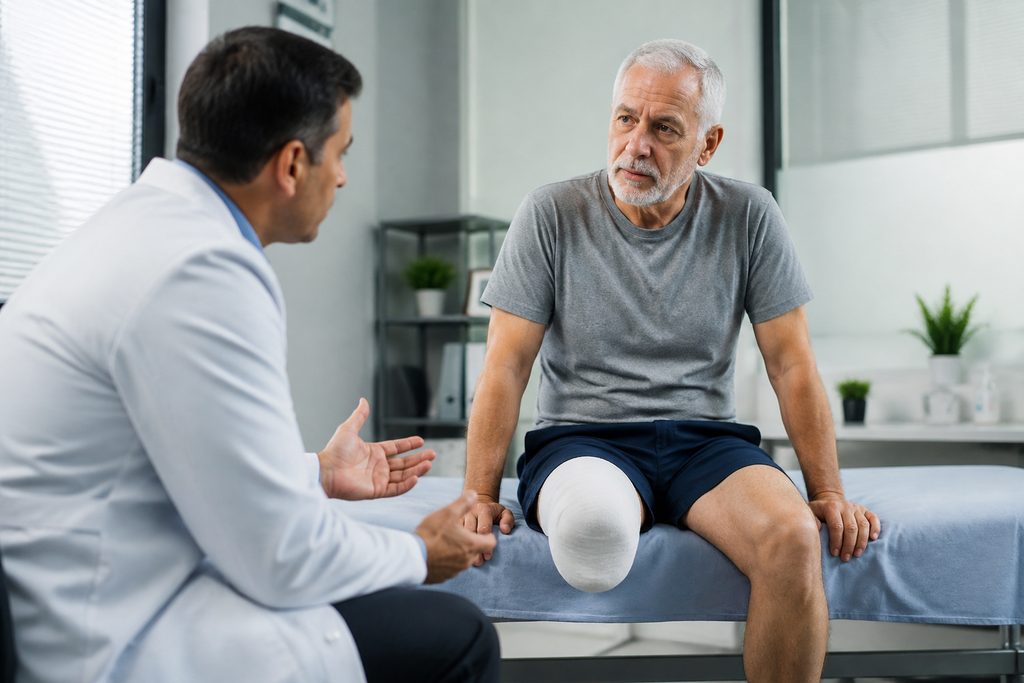
A diabetic foot ulcer that will not heal is terrifying. You have watched the wound deepen for weeks or months. The smell. The drainage. The dark edges. Your local doctor mentioned the word “amputation” and everything went blurry. Let us define the core issue in plain language: a diabetic foot ulcer is an open wound on the foot or lower leg caused by nerve damage and poor blood flow. When circulation is too weak to deliver oxygen and immune cells, tissue dies. The question — will I lose my leg if I skip treatment — has a direct answer: skipping treatment is the single biggest risk factor for amputation. Not the ulcer itself. The delay.
Key Takeaways
- Approximately 1 in 5 diabetic foot ulcers that do not receive adequate vascular care progress to amputation within 12 months, according to data from the International Diabetes Federation.
- Limb salvage surgery — including endovascular revascularization and bypass — can reduce major amputation rates by up to 50–70% in patients with critical limb ischemia when performed early.
- China’s top vascular surgery centers perform 3–5 times more peripheral revascularization procedures annually than the average Western hospital, with costs roughly 20–30% of US equivalents.
- Skipping treatment is not a neutral choice. Ischemia is progressive. Every month of delay reduces the technical options available and increases the likelihood that a below-knee or above-knee amputation becomes the only path.
The Problem: Critical Limb Ischemia Rarely Gets Better on Its Own
Peripheral artery disease affects approximately 230 million people worldwide. Among diabetics, the lifetime risk of developing a foot ulcer is between 19% and 34%, according to a 2023 review in The Lancet Diabetes & Endocrinology. Once an ulcer progresses to critical limb ischemia — rest pain, gangrene, or a non-healing wound present for more than two weeks — the one-year mortality rate exceeds 20%. That is higher than many cancers.
What happens if nothing changes? The ischemic limb deteriorates. Infection spreads to bone. Sepsis becomes a real possibility. The amputation rate for patients with critical limb ischemia who do not receive revascularization within 6–12 months is between 25% and 40%, depending on the cohort studied. In the United States alone, over 100,000 diabetes-related lower-extremity amputations occur each year. A significant portion of those patients were never offered a revascularization attempt before the surgeon reached for the saw.
But here is what most patients do not hear in their first consultation: amputation is not inevitable. It is often a failure of timing, not a failure of medicine.
Why China Delivers Results for Limb Salvage and Diabetic Foot Ulcer Treatment
China has become a global destination for complex vascular reconstruction — not because of marketing, but because of volume. The top-ranked hospitals in our database include vascular surgery departments that treat thousands of critical limb ischemia cases annually. Repetition drives skill. Skill drives limb salvage rates.
Clinical Volume Drives Better Revascularization Outcomes
Consider the numbers. A high-volume vascular center in Shanghai or Beijing may perform 800–1,200 peripheral revascularization procedures per year. The average US community hospital performs fewer than 200. Studies published in the Journal of Vascular Surgery consistently show that hospitals performing more than 100 lower-extremity bypasses annually have significantly lower 30-day mortality and higher one-year limb salvage rates than low-volume centers. The relationship is linear. More cases, better outcomes.
Chinese vascular surgeons also see a broader spectrum of disease. Diabetic foot disease is common across Asia, and tertiary centers in China manage late-stage, complex, multi-vessel occlusions that many Western surgeons see only occasionally. That clinical exposure matters when your limb is at stake.
Technology Without the Wait: Endovascular First, Bypass When Needed
Modern limb salvage follows a protocol. First, angiography to map the blockages. Then endovascular intervention — balloon angioplasty, drug-coated balloons, stents — to reopen the arteries. If that fails or the anatomy is unsuitable, open surgical bypass using a vein graft. Chinese vascular centers run hybrid operating rooms where both approaches are available in the same session. That means no weeks-long gap between diagnosis and definitive treatment.
In many Western systems, a patient with critical limb ischemia waits 2–4 weeks for a vascular surgery consult, then another 2–6 weeks for an angioplasty. Each week of ischemia kills tissue. In China’s top centers, the diagnostic workup, revascularization, and wound debridement can often be coordinated within days of arrival — assuming the patient arrives with complete medical records. This speed is not a luxury. It is the difference between keeping a foot and losing a leg.
Diabetic Foot Ulcer Treatment Cost China: The Structural Advantage
Let us address the obvious question. Does lower cost mean lower quality? No. The cost difference is structural, not qualitative. China’s hospital system operates at enormous scale. A single major public hospital in Shanghai may see 10,000–15,000 outpatients daily. Labor costs for nurses, technicians, and support staff are lower than in the US or Europe. Equipment is the same — Siemens angiography suites, Medtronic balloons, Gore grafts. The consumables cost what they cost everywhere. But the per-procedure overhead is dramatically lower.
| Procedure | Approximate Cost in China (USD) | Approximate Cost in USA (USD) |
|---|---|---|
| Diagnostic lower-extremity angiography | $2,000 – $4,000 | $15,000 – $30,000 |
| Endovascular revascularization (angioplasty ± stenting) | $8,000 – $15,000 | $40,000 – $80,000 |
| Open surgical bypass (femoral-popliteal or femoral-tibial) | $10,000 – $18,000 | $60,000 – $120,000 |
| Major amputation (below-knee or above-knee) | $6,000 – $12,000 | $50,000 – $90,000 |
| Comprehensive wound care with debridement (per week, inpatient) | $1,500 – $3,000 | $8,000 – $15,000 |
Costs vary by hospital and case complexity. Private international hospitals in China charge more — typically 1.5–2 times public hospital rates — but still undercut Western prices significantly. The takeaway: a limb salvage surgery price Shanghai patients pay is often less than the deductible on a US insurance plan for the same procedure.
Is Leg Amputation Avoidable With Vascular Surgery China? The Decision Timeline
This is the section you actually searched for. You want to know whether you still have time, and what the decision points look like. Here is the honest timeline for a patient with a non-healing diabetic foot ulcer or confirmed critical limb ischemia.
Week 0–2: The window for evaluation. If you have a foot ulcer that has not shrunk by 50% in four weeks of standard wound care, you need a vascular assessment. Not a podiatrist. Not a wound care nurse. A vascular surgeon. An ankle-brachial index test takes 10 minutes. A duplex ultrasound takes 30. Both are non-invasive. If the ABI is below 0.4 or the ultrasound shows multi-segment occlusion, you are in salvage territory.
Week 2–6: The revascularization window. This is when angioplasty or bypass is most effective. Tissue is still viable. Infection, if present, is still controllable. The limb salvage rate for patients revascularized in this window exceeds 85% in high-volume centers. Miss this window and the math changes.
Month 2–6: The deterioration phase. Without blood flow, the ulcer deepens. Osteomyelitis sets in. Toes turn black. The infection spreads along tendon sheaths. Now the surgical options narrow. You may still avoid a major amputation, but you will likely lose toes or part of the foot. The revascularization becomes a race against tissue death.
Month 6+: The point of no return. Once gangrene extends above the ankle or sepsis develops, limb salvage is no longer safe. The risk of keeping a dead limb outweighs the benefit. This is the outcome that early intervention prevents.
The answer to “is leg amputation avoidable with vascular surgery China” is yes — in the majority of cases, if the patient acts within the first 2–6 weeks of recognizing critical ischemia. After that, the odds shift. Rapidly.
How to Treat Critical Limb Ischemia Without Amputation: The Protocol That Actually Works
You have options. The modern limb salvage pathway has four components, and all four matter.
First, revascularization. This is non-negotiable. No wound heals without blood flow. Endovascular techniques — balloon angioplasty, atherectomy, drug-eluting stents — can reopen blocked arteries below the knee, which is where diabetic disease concentrates. If the blockages are long or calcified, open bypass with a saphenous vein graft offers the most durable result. The choice between endovascular and open surgery depends on your anatomy, not on the surgeon’s preference. A good center offers both.
Second, aggressive infection control. Diabetic foot ulcers are almost always colonized. Deep infection requires surgical debridement — cutting away dead and infected tissue until healthy bleeding tissue is reached. This is not a one-time event. Patients may need serial debridements every 2–3 days during the acute phase. Antibiotics alone cannot penetrate dead tissue. The dead tissue must come out.
Third, wound bed preparation. After blood flow is restored and infection is controlled, the wound needs help closing. Negative pressure wound therapy. Advanced dressings. Skin substitutes. Hyperbaric oxygen in selected cases. This phase lasts weeks to months and requires discipline.
Fourth, offloading and metabolic control. You cannot heal a foot ulcer while walking on it. Total contact casts, surgical shoes, or strict bed rest. Blood sugar control matters — an HbA1c above 8% significantly slows wound healing. Smoking cessation is non-negotiable. Every cigarette constricts the very arteries you just paid to reopen.
This protocol works. Published limb salvage rates from high-volume centers using this approach range from 75% to 90% at one year. But it requires a coordinated team — vascular surgeon, wound care specialist, endocrinologist, infectious disease consultant. That coordination is exactly what China’s large tertiary hospitals do well.
Best Hospital for Peripheral Artery Disease Beijing: What to Look For
If you are considering treatment in China, you need to evaluate hospitals the way a vascular surgeon would. Not by marketing. By capability.
First, look for a dedicated vascular surgery department — not general surgery, not interventional radiology alone. The department should have both endovascular and open surgical capability. Ask how many lower-extremity revascularizations the department performs annually. A strong answer is 500 or more. Ask about their one-year limb salvage rate. If they cannot tell you, that is a red flag. Top centers track this metric obsessively.
Second, look for a multidisciplinary diabetic foot team. The best vascular departments in Beijing and Shanghai run weekly diabetic foot conferences where vascular surgeons, endocrinologists, wound care nurses, and orthotists review cases together. That is the model that produces 85%+ limb salvage rates.
Third, consider the practical realities of being a foreign patient. Public hospitals in China are enormous. Registration, payment, imaging, and pharmacy are all in separate locations. Without Chinese language ability, you will struggle. This is not a criticism — it is a fact. Private international hospitals offer English-speaking staff and direct insurance billing, but fewer of them have the high-volume vascular surgery programs that drive outcomes. The middle path is a public hospital’s international department, which combines clinical volume with English coordination at roughly 1.5–2 times standard pricing.
Our Beijing hospital guide and Shanghai hospital guide list the top-ranked vascular surgery departments with verified data. Use them as a starting point, not a final answer. Every case is different.
Book Vascular Bypass Surgery China Fast Track: The Realistic Process
Let us be direct about what “fast track” means in China’s hospital system. It does not mean you send an email and get a surgery date next Tuesday. Public hospitals in China do not allow overseas patients to pre-book ordinary outpatient appointments or surgeries remotely. The standard rule is: you must attend an in-person outpatient consultation first. The surgeon evaluates you, orders imaging, and only then schedules surgery.
What the international department or VIP channel offers is a compressed version of this process. You send your existing records — angiograms, ultrasounds, blood work, wound photos, medication list — for preliminary review. A vascular specialist reviews them and tells you whether your case is appropriate for treatment in China. If yes, you travel for an in-person consultation. The international coordinator arranges the registration, the consultation, the imaging, and the admission paperwork. Instead of navigating a 15,000-patient-per-day hospital alone, you have a bilingual coordinator handling the logistics.
The timeline from landing in China to revascularization can be as short as 5–10 days for urgent cases, assuming your records are complete and no unexpected findings emerge. For less urgent cases, expect 2–3 weeks. This is dramatically faster than most Western systems, where the same pathway often takes 2–4 months.
But you must understand: no legitimate service can guarantee a specific surgery date before the surgeon has seen you. Anyone promising that is lying. What a good coordinator does is remove the friction — the registration queues, the language barrier, the payment confusion — so the medical process moves as fast as the clinical situation allows.
Practical Considerations: Records, Visa, Payment, and Follow-Up
If you are serious about limb salvage in China, prepare these things before you travel.
Medical records. Bring everything. Every angiogram, every ultrasound, every culture report, every discharge summary. Digital copies on a USB drive plus printed copies. Chinese vascular surgeons want to see the actual images, not just the reports. If your angiography was done more than 3 months ago, expect to repeat it — ischemia progresses, and the surgeon needs current anatomy.
Visa. Foreign patients traveling to China for medical treatment apply for an S2 visa, which covers short-term private affairs including medical treatment. Your accompanying family members also apply for S2 visas. The hospital’s international department will provide an invitation letter and treatment confirmation to support your application. Processing times vary by country — allow 2–6 weeks. Do not book flights before your visa is approved.
Payment. Public hospitals in China require prepayment. You deposit funds at admission and the hospital deducts from that balance as services are provided. Most international departments accept international credit cards and bank transfers. Private international hospitals often bill insurance directly. If you have US or European insurance, check whether it covers treatment in China before you commit. Many policies exclude non-emergency international care. Some offer reimbursement after the fact. Know your policy.
Language. Public hospital staff rarely speak English. The international department is the exception. If you choose a standard public hospital, you will need a bilingual companion for every step — registration, consultation, imaging, pharmacy, payment. This is not optional. It is the difference between a functional hospital visit and a day lost in queues.
Follow-up after returning home. Limb salvage is not a one-time event. You will need wound care for weeks or months after revascularization. Plan this before you leave China. Get a detailed discharge summary in English. Get wound care instructions. Get a medication list with generic drug names. Identify a local wound care provider who will accept you as a patient. The surgery may happen in China, but the healing happens wherever you live.
Frequently Asked Questions
For a patient with critical limb ischemia — rest pain, gangrene, or a non-healing ulcer with an ABI below 0.4 — the one-year amputation rate without revascularization is approximately 25–40%. The one-year mortality rate is over 20%. Delaying treatment does not preserve options. It eliminates them. Every month of ischemia reduces the chance that endovascular therapy alone will be sufficient and increases the likelihood that a below-knee or above-knee amputation becomes necessary.
How much does limb salvage actually cost in China, and what is not included?
A full limb salvage course — angiography, revascularization, debridement, and initial wound care — typically ranges from $15,000 to $35,000 in a top public hospital’s international department. That is roughly one-fifth to
For more medical information and treatment options in China, visit chinamedservices.com (China Medical Services).
