Trigger Finger Release Surgery Cost China: Should You Get It Done?
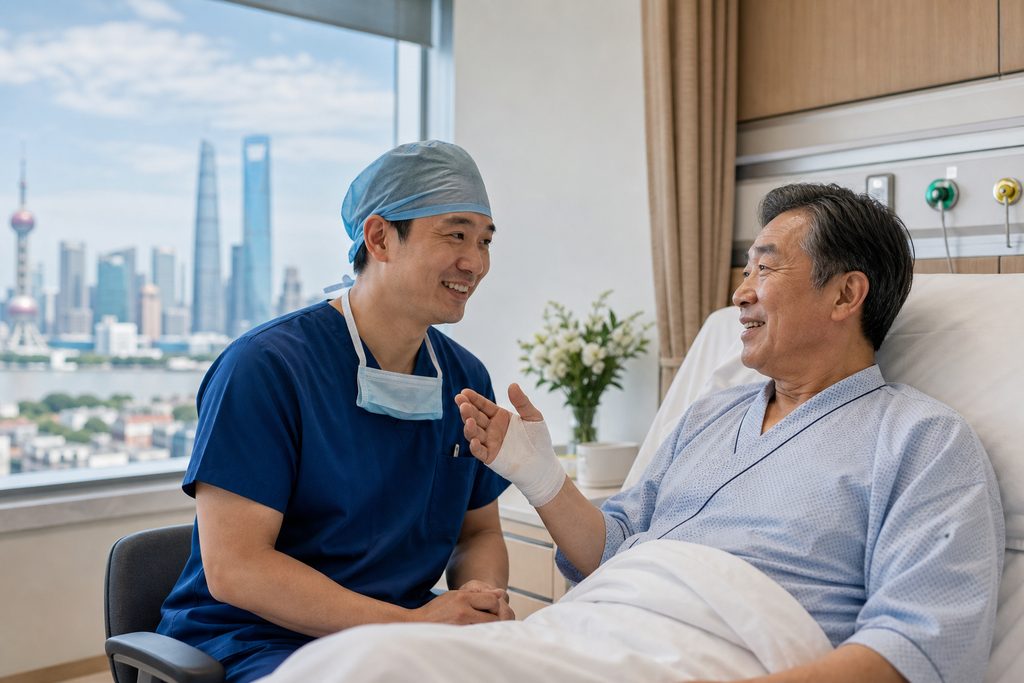
Have you ever woken up with a finger locked in a bent position, forcing you to physically pry it open with your other hand? That morning stiffness, the painful clicking every time you grip a coffee cup or a steering wheel — it wears you down. You have probably searched for relief options and landed on the question: should I get my trigger finger released? The answer depends on how long you have tolerated the dysfunction and what you have already tried. For many patients, especially those weighing the trigger finger release surgery cost China against prices back home, the decision becomes clearer once they understand the procedure, the recovery, and the realistic outcomes.
Trigger finger, medically known as stenosing tenosynovitis, affects roughly 2–3% of the general population, climbing to 10% in people with diabetes. The condition occurs when the sheath surrounding a flexor tendon narrows, preventing smooth gliding. Conservative treatments work for early cases. But when splinting and steroid injections fail, a minor surgical release offers a permanent fix. Let us walk through what that actually looks like, step by step, without the sugarcoating.
How This Actually Works, Step by Step
You are sitting at home with a finger that catches or locks. Maybe you have had one or two cortisone injections. The relief faded. Here is the real sequence from where you are now to a resolved finger.
First, you send your existing records — a referral letter from your primary doctor, any ultrasound or MRI reports, and a short description of your symptoms and how long they have persisted. A hand surgery specialist reviews those documents. You get back a written assessment: whether surgical release is appropriate, which technique suits your case, and what the expected outcome looks like.
Then comes the decision point. If you proceed, the hospital schedules a pre-operative consultation. Blood work, a quick physical exam, and a discussion about anesthesia. For most trigger finger releases, local anesthesia suffices. The procedure itself takes ten to fifteen minutes. A small incision, a snip of the constricted pulley, and the tendon glides freely again. You walk out the same day.
Afterward, you need a follow-up appointment within a week or two. Stitches come out around day ten. Hand therapy is rarely necessary for a straightforward case, but you will get instructions for gentle range-of-motion exercises. That is the whole arc — from locked finger to functional hand in roughly two to four weeks.
What Does Trigger Finger Release Surgery Cost China Compared to the US?
Let us talk numbers, because the price gap is the reason many international patients look east. In the United States, a trigger finger release performed in an outpatient surgical center typically runs between $2,500 and $6,000 without insurance. With high-deductible plans, patients often pay the full amount out of pocket. Add the surgeon fee, facility fee, and anesthesia, and the bill climbs fast.
In China, the same procedure at a top-tier public hospital’s international department generally costs between $800 and $2,500, depending on the hospital tier and whether you choose open release or a percutaneous approach. That is a 60–80% reduction. The trigger finger release surgery cost China varies by hospital and case complexity, but the savings remain substantial even after factoring in flights and accommodation.
| Cost Component | United States (USD) | China — Public Hospital International Dept (USD) | China — Private International Hospital (USD) |
|---|---|---|---|
| Surgeon fee | $1,200–$3,000 | $400–$1,200 | $800–$2,000 |
| Facility & anesthesia | $1,000–$2,500 | $300–$900 | $500–$1,500 |
| Pre-op consultation & imaging | $300–$800 | $100–$400 | $200–$600 |
| Total estimated range | $2,500–$6,000 | $800–$2,500 | $1,500–$4,000 |
Prices shift based on which hospital you select and whether any complications arise. But the structure holds: China offers the same procedure at a fraction of Western prices.
A Realistic Timeline
People underestimate the waiting. Not the surgery itself — that is quick. The steps before you ever lie on the table. Here is an honest schedule for an international patient planning trigger finger release in China.
| Stage | What Happens | Typical Duration |
|---|---|---|
| Day 1–7 | You gather medical records and submit them for remote review | 1 week |
| Week 2–3 | Specialist reviews your case; written second opinion returned | 5–10 business days |
| Week 3–5 | Visa application (S2 category for medical treatment); hospital appointment locked | 2–4 weeks |
| Week 5–6 | Travel to China; in-person consultation and pre-op tests | 2–3 days |
| Week 6 | Surgery performed; same-day discharge | 1 day |
| Week 7–8 | Follow-up visit, suture removal, return flight home | 7–14 days |
| Month 2–3 | Full grip strength returns; scar matures | 4–8 weeks |
Document translation adds hidden days. If your records are not in English or Chinese, factor in another week. Visa processing through your local Chinese embassy or consulate typically takes two to four weeks, sometimes longer during peak seasons. Do not book flights until the visa is in your passport.
Is Trigger Finger Surgery Safe in China?
Fair question. The short answer: yes, at accredited hospitals, the safety profile matches international standards. The longer answer requires nuance.
China has 35,000+ hospitals, but quality concentrates heavily at the top. The Fudan University hospital rankings identify roughly 100 elite institutions, and JCI accreditation covers a smaller subset of private and international facilities. For hand surgery, you want a hospital with a dedicated orthopedic or hand surgery department, not a general clinic. Shanghai and Beijing host several centers that perform thousands of hand procedures annually. Volume matters. A surgeon who does 200 trigger finger releases a year has seen every anatomical variation and complication.
Infection rates for clean hand surgery in top Chinese hospitals run below 1%, comparable to Western benchmarks. The real risk for international patients is not the surgery itself — it is navigating the system. Language barriers, registration queues, and unfamiliar billing processes create friction. That is where a bilingual coordinator earns their fee. The medical care is solid. The logistics are the challenge.
Best Hospital for Hand Surgery Shanghai: How to Choose
If you are searching for the best hospital for hand surgery Shanghai, you will find several strong candidates. The city’s orthopedic departments are among the busiest in the country, which translates to deep clinical experience. But “best” depends on your specific case.
Look for three things. First, a dedicated hand surgery unit within the orthopedics department — not a general orthopedic ward that occasionally handles fingers. Second, English-speaking staff or a reliable interpretation service. Third, an international department that can schedule your procedure without a six-month wait. Public hospital international departments charge roughly 1.5–2 times the standard rate but provide expedited access and language support. Private international hospitals like United Family or Jiahui offer Western-style care with direct insurance billing, at a higher price point.
Our database of top-ranked Chinese hospitals includes orthopedic and hand surgery departments across 37 cities. For patients specifically considering Shanghai, the Shanghai hospital directory breaks down which institutions offer international patient services. Compare two or three options before committing. A hospital that excels in complex reconstructive hand surgery may be overkill for a simple trigger finger release — and more expensive.
How Long Is Recovery From Trigger Finger Release?
Let us be precise, because online forums are full of both horror stories and miracle claims. The truth sits in the middle.
Immediately after surgery, your finger will be numb for a few hours. When the local anesthetic wears off, expect mild to moderate pain for 24–48 hours. Over-the-counter acetaminophen handles most cases. You can use the hand for light activities — typing, eating, dressing — within a day or two. But avoid gripping, lifting, or any repetitive strain for two weeks.
Stitches come out at day 10–14. By week three, most patients have near-full range of motion, though the incision site may feel tender. Grip strength returns gradually over four to eight weeks. Full recovery, including scar softening, takes about three months. The recurrence rate after open surgical release is under 3%, significantly lower than the 30–50% recurrence seen with repeated steroid injections.
One thing to know: if your finger was locked for months before surgery, the stiffness may take longer to resolve. The joint itself can stiffen from disuse. That is why hand surgeons generally recommend addressing trigger finger sooner rather than waiting until the finger is permanently stuck.
Booking Trigger Finger Surgery Abroad: What You Need to Know
So you have decided to book trigger finger surgery abroad. The process differs from domestic care in one critical way: you cannot simply call a Chinese public hospital and schedule a surgery date from overseas. Standard outpatient clinics require in-person registration on the day of the visit, and surgery is only arranged after a face-to-face consultation.
For international patients, two routes exist. The first is the hospital’s international department or VIP channel. These departments accept advance bookings and provide English-speaking staff. Expect to pay 1.5–2 times the standard rate for this convenience. The second route is a private international hospital, which operates more like a Western facility — online booking, English-speaking doctors, direct insurance billing. The trade-off is cost: private hospitals charge more, though still less than US prices.
Visa logistics matter. For medical treatment in China, the applicable category is the S2 visa, which covers short stays for private affairs including medical care. Family members accompanying you also apply for S2 visas. Bring your hospital invitation letter, passport, and proof of appointment to the embassy. Processing takes two to four weeks. Do not book non-refundable flights until the visa is approved.
Some patients explore medical tourism packages for hand surgery China, which bundle airport pickup, hotel, hospital coordination, and interpretation into one fee. These packages simplify the process but vary widely in quality. Ask exactly what is included. Does the package cover post-operative follow-up? What happens if the surgery is delayed? A reputable coordinator will answer these questions directly.
Practical Considerations: Records, Payment, and Follow-Up at Home
At accredited top-tier hospitals, yes. Infection rates for clean hand surgery run below 1%, and complication rates match international benchmarks. The key is selecting a hospital with a dedicated hand surgery department and an international patient pathway. Avoid small clinics without verifiable credentials.
At a public hospital’s international department, expect $800–$2,500 for the full procedure, including surgeon fees, facility costs, and anesthesia. Private international hospitals run higher, typically $1,500–$4,000. Prices vary by hospital and case complexity, but both options remain significantly cheaper than US rates.
Light hand use within 1–2 days. Stitches out at day 10–14. Near-full range of motion by week three. Grip strength returns over 4–8 weeks. Full scar maturation takes about three months. Most patients return to desk work within a week and manual labor within a month.
You can start the process remotely — sending records for review and securing a preliminary assessment. But actual surgery requires an in-person consultation first. Chinese public hospitals do not schedule surgery without a face-to-face evaluation. Plan for at least one pre-operative visit before the procedure date.
Your Next Step
Trigger finger release is a small surgery with a big quality-of-life payoff. The decision to proceed hinges on how much the locking interferes with your daily function and whether conservative treatments have run their course. If you are weighing the trigger finger release surgery cost China against local options, the savings are real and the care quality at top hospitals is solid.
We help international patients navigate Chinese healthcare — matching you with appropriate hospitals, coordinating appointments, and providing bilingual support on the ground. We do not perform surgery, and we do not promise specific outcomes. What we do is remove the logistical barriers that make overseas care intimidating. If you would like to explore your options, visit our patient coordination page or browse the China Medical Services hospital database to see which institutions fit your needs. A conversation costs nothing, and it might be the first step toward a finger that moves freely again.
Frequently Asked Questions
Yes. The hospitals used for international patients are JCI-accredited and follow the same international safety standards as top hospitals in the US and Europe. Surgical teams perform high volumes of procedures — often more than their Western counterparts — which studies show leads to better outcomes.
Costs vary by procedure and hospital, but international patients typically save 40-80% compared to US prices — even when factoring in travel and accommodation. A consultation with our team will give you an exact, all-inclusive quote with no hidden fees.
Send us your existing medical reports to get started. We handle everything from hospital selection and appointment scheduling to visa assistance and post-operative recovery planning. Your medical records are reviewed by the specialist before you even book a flight.
For more medical information and treatment options in China, visit chinamedservices.com (China Medical Services).
