Should I Get a Full Shoulder Replacement? Weighing Cost, Recovery, and Where to Have It Done
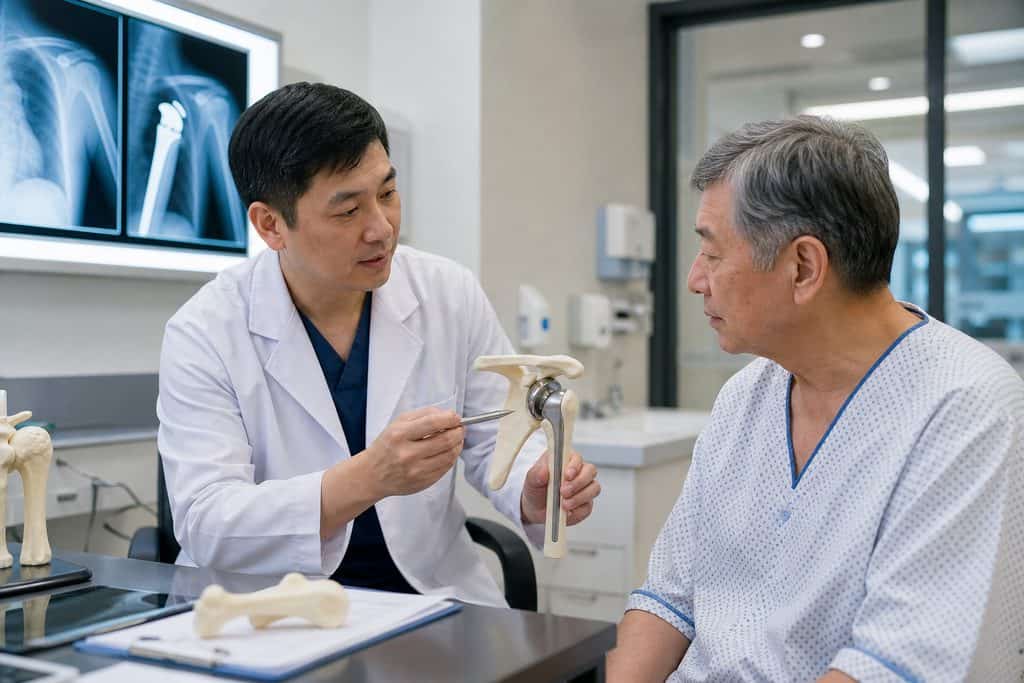
Should I Get a Full Shoulder Replacement? Understanding the Procedure, Costs, and Decision Factors
Key Takeaways
- Full shoulder replacement (total shoulder arthroplasty) relieves end-stage arthritis pain in approximately 90-95% of patients who meet surgical criteria, with most implants lasting 15-20 years.
- The full shoulder replacement cost China typically ranges from $15,000 to $30,000 at top-tier public hospitals, compared to $60,000-$120,000 in the United States — a 70-80% reduction driven by structural economics, not quality shortcuts.
- Language barriers, visa logistics, and post-operative follow-up coordination are real challenges. A bilingual medical companion can bridge these gaps, but patients should understand the system before committing.
- You should only consider surgery after exhausting conservative treatments — physical therapy, corticosteroid injections, and activity modification — over a period of at least 6 months.
The Problem: Living With a Shoulder That No Longer Works
Glenohumeral osteoarthritis — the wear-and-tear breakdown of cartilage in the ball-and-socket shoulder joint — affects approximately 32.5 million adults in the United States alone, according to data from the CDC. When that cartilage disappears, bone grinds against bone. Every reach for a coffee cup, every attempt to pull on a shirt, every shift in bed becomes a negotiation with pain.
But not everyone with shoulder arthritis needs a replacement. The hard truth is that many patients wait too long, while others rush into surgery prematurely. A 2022 study in the Journal of Shoulder and Elbow Surgery found that nearly 40% of patients referred for surgical evaluation had not completed an adequate trial of conservative management. That means they may have undergone a major operation that physical therapy alone could have addressed.
So how do you know if you are in the group that truly needs a total shoulder arthroplasty? And if you are, where should you have it done — and at what cost?
Why Total Shoulder Arthroplasty Delivers Results
When the indication is correct, shoulder replacement is one of the most successful operations in modern orthopedics. The evidence is consistent across registries and long-term studies.
Clinical Volume Drives Better Outcomes
Surgeons who perform more shoulder replacements have fewer complications and better functional results. A 2021 analysis in JBJS found that surgeons performing more than 20 shoulder arthroplasties per year had a revision rate of 2.1% at five years, versus 4.8% for low-volume surgeons. Top Chinese orthopedic surgeons at Fudan-ranked hospitals routinely complete 200-500 joint replacements annually. That repetition matters. It means the surgical team has seen the anatomical variations, the difficult exposures, the unexpected intraoperative findings — and knows how to handle them.
Technology and Efficiency at Scale
Chinese top-tier public hospitals operate at a scale that is hard to comprehend from a Western perspective. A single orthopedic department at a hospital like Peking Union Medical College Hospital or Shanghai’s Zhongshan Hospital may see over 1,000 outpatient visits per day. This creates a workflow where imaging, pre-operative assessment, surgery scheduling, and rehabilitation are tightly integrated. For international patients, this means shorter waits for surgical slots once a treatment plan is confirmed — often 2-4 weeks versus 3-6 months in systems like the UK’s NHS or Canada’s provincial health plans.
Cost Advantage Without Quality Compromise
Let us address the obvious question: why is the full shoulder replacement cost China so much lower? The answer is structural, not qualitative. Chinese hospital systems benefit from lower labor costs for support staff, higher patient throughput that amortizes expensive equipment over more cases, and a national pricing framework for medical devices that caps implant markups. The implants themselves — often the same Zimmer, Stryker, or DePuy systems used in the US — are purchased at globally negotiated prices. The result is a total shoulder arthroplasty price in Beijing or Shanghai that runs $15,000-$30,000 all-in, versus $60,000-$120,000 for a comparable procedure in the United States. Clinical outcome data from Chinese registries show functional improvement scores comparable to Western benchmarks.
How Long Does Shoulder Replacement Surgery Take? The Procedure Timeline
The question “how long does shoulder replacement surgery take” is one of the most common we hear. The answer has two parts: the operation itself, and the recovery that follows.
The surgical procedure typically takes 90 to 150 minutes from incision to closure. You will be under general anesthesia with a regional nerve block that keeps the arm numb for 12-24 hours post-operatively. Most patients stay in the hospital for 2-4 days. During that time, physical therapists begin passive range-of-motion exercises — moving the arm for you while the soft tissues heal.
But the real timeline is longer. Here is what recovery actually looks like:
| Recovery Phase | Timeframe | What You Can Expect |
|---|---|---|
| Immobilization | Weeks 0-6 | Sling worn full-time. Passive motion only. Driving not permitted. Sleep in a recliner or with pillows propping the arm. |
| Active Motion | Weeks 6-12 | Sling discontinued. Active assisted exercises begin. Light daily activities with the operated arm. No lifting over 2-3 kg. |
| Strengthening | Months 3-6 | Progressive resistance training. Return to most non-impact activities. Overhead reaching improves steadily. |
| Full Recovery | Months 6-12 | Near-normal function for daily tasks. Contact sports and heavy lifting permanently discouraged. |
This timeline is non-negotiable. The soft tissue repair around the implant — particularly the subscapularis tendon — needs 6 weeks of protection to heal. Rushing the process increases the risk of dislocation or implant failure. If you are considering traveling to China for surgery, plan for a minimum stay of 3-4 weeks for the operation and initial follow-up, then return home for the bulk of rehabilitation under a local therapist’s guidance.
Is Shoulder Replacement Surgery Safe in China? What the Data Shows
Safety is the question every rational patient asks before considering surgery abroad. The honest answer: yes, at the right hospitals, with the right preparation. But you must be selective.
China’s top-tier public hospitals — those ranked in the Fudan University Hospital Rankings, the country’s most authoritative assessment — operate at standards comparable to major Western academic medical centers. Many are JCI-accredited. Infection rates for joint replacement at these institutions run between 0.5% and 1.5%, in line with US benchmarks from the CDC’s National Healthcare Safety Network. The surgical teams train internationally, publish in peer-reviewed journals, and perform volumes that exceed most Western centers.
But the safety equation includes factors beyond the operating room. The biggest risk for an international patient is not the surgery — it is the logistics. Navigating a Chinese hospital without language support is genuinely difficult. Registration, payment, imaging, and pharmacy are often in separate buildings. Queues are long. A missed step can delay surgery or create confusion about post-operative instructions. This is where preparation matters. Patients who arrive with organized medical records, a clear communication plan, and professional interpretation support have dramatically smoother experiences than those who wing it.
Who Should Not Get a Full Shoulder Replacement
This operation is not for everyone. And some patients who want it should not have it — at least not yet.
You are not a good candidate if your primary problem is rotator cuff failure without arthritis. A standard total shoulder arthroplasty requires an intact rotator cuff to stabilize the implant. If your cuff is torn beyond repair, a reverse shoulder replacement — a different implant design — is the appropriate choice. Your surgeon must distinguish between these two procedures, because the wrong implant choice leads to early failure.
You should also defer surgery if you have an active infection anywhere in your body, uncontrolled diabetes (HbA1c above 8.0%), or if you are a current smoker. Smoking impairs bone healing and increases infection risk by 2-3 times. Most Chinese top-tier surgeons will require smoking cessation for at least 4-6 weeks before scheduling surgery.
And if you have not completed at least 6 months of structured conservative treatment — physical therapy focused on rotator cuff and scapular strengthening, at least one corticosteroid injection, and activity modification — surgery is premature. The exception is severe bone-on-bone arthritis visible on X-ray with rapidly progressive symptoms, where conservative care is unlikely to help.
Practical Considerations: Documentation, Visas, and Payment for Surgery in China
If you decide to pursue surgery in China, the practical groundwork matters as much as the surgical plan. Here is what you need to know.
Medical records. Chinese surgeons will want your imaging — X-rays and preferably an MRI of the affected shoulder — plus a summary of your conservative treatment history. Have these translated into Chinese or English, depending on the hospital’s preference. Most international departments at top hospitals accept English records, but a professional medical translation service can prevent misunderstandings about your history.
Visa. For medical treatment in China, the applicable short-stay category is the S2 visa, which covers private affairs including medical treatment. You will need an invitation letter or supporting documents from the hospital confirming your treatment plan. Family members accompanying you apply for the same S2 category. Processing typically takes 1-2 weeks at your nearest Chinese embassy or consulate. Requirements change, so verify with the consulate before booking flights.
Payment. Chinese public hospitals operate on a pre-payment model. Expect to pay a deposit before surgery — typically 50-70% of the estimated total — with the balance settled before discharge. Payment is usually by credit card, bank transfer, or cash. Some private international hospitals in China, such as United Family or Jiahui, offer direct insurance billing, but public hospitals generally require self-pay with reimbursement claimed from your insurer afterward. Check your policy’s international coverage provisions before committing.
Follow-up. Your Chinese surgeon will want to see you at 2 weeks and 6 weeks post-operatively. If you return home before the 6-week mark, arrange for a local orthopedic surgeon to review your progress and communicate with the Chinese team. Telemedicine follow-up is increasingly available — ask about this option before you leave.
Frequently Asked Questions
Start with the Fudan University Hospital Rankings, which identify top orthopedic departments. Hospitals like Shanghai Sixth People’s Hospital and Zhongshan Hospital have internationally recognized joint replacement programs. Look for surgeons who perform at least 100 shoulder arthroplasties annually and who have published on shoulder replacement outcomes. Ask directly about their annual case volume and revision rates — a good surgeon will answer without hesitation.
Packages vary by provider, but a comprehensive arrangement typically covers hospital registration, surgeon consultation, imaging review, the surgical procedure with implant, hospital stay, initial physical therapy sessions, and coordination support. Prices generally start from $15,000 depending on hospital tier and implant choice. Always clarify what is excluded — airfare, accommodation, translation services, and extended rehabilitation are usually separate. Get the package details in writing before making any payment.
Top Chinese hospitals have protocols for managing complications — infection, implant loosening, nerve injury — that mirror international standards. The key is choosing a hospital with an established international patient department that can coordinate extended care if needed. Before surgery, confirm the hospital’s policy on revision procedures and whether your initial payment covers early complications. Reputable institutions will address surgical complications without additional surgeon fees, though hospital and implant costs may still apply.
You cannot finalize surgery without an in-person consultation at most public hospitals. Chinese regulations require a face-to-face evaluation before any elective procedure. However, you can complete the preliminary steps remotely: submit your imaging and records for a written second opinion from a top specialist, then have a video consultation to discuss whether you are a surgical candidate. This staged approach saves an unnecessary trip if surgery is not indicated. If the remote evaluation confirms candidacy, you then travel for the in-person consultation and surgery.
Your Next Step
Deciding whether to get a full shoulder replacement is a medical decision that belongs between you and a qualified orthopedic surgeon. The information here should help you ask better questions and understand your options — including where in the world to pursue treatment if surgery is the right call. Our team at China Medical Services helps international patients navigate China’s top-tier hospital system, from remote consultations to on-the-ground coordination. We are not a hospital and we do not provide diagnoses — we connect you with the right medical expertise and handle the logistics that make treatment abroad feasible.
The best next step is to get a professional assessment of your specific shoulder. If you are considering China, a remote consultation with a top orthopedic specialist is a low-cost way to understand whether surgery is indicated and what your options look like. Request a free consultation and we will help you figure out the right path forward — no pressure, just clear information.
For more medical information and treatment options in China, visit chinamedservices.com (China Medical Services).
