Is Bone Density Testing Needed Before Spine Surgery? What the Evidence Shows
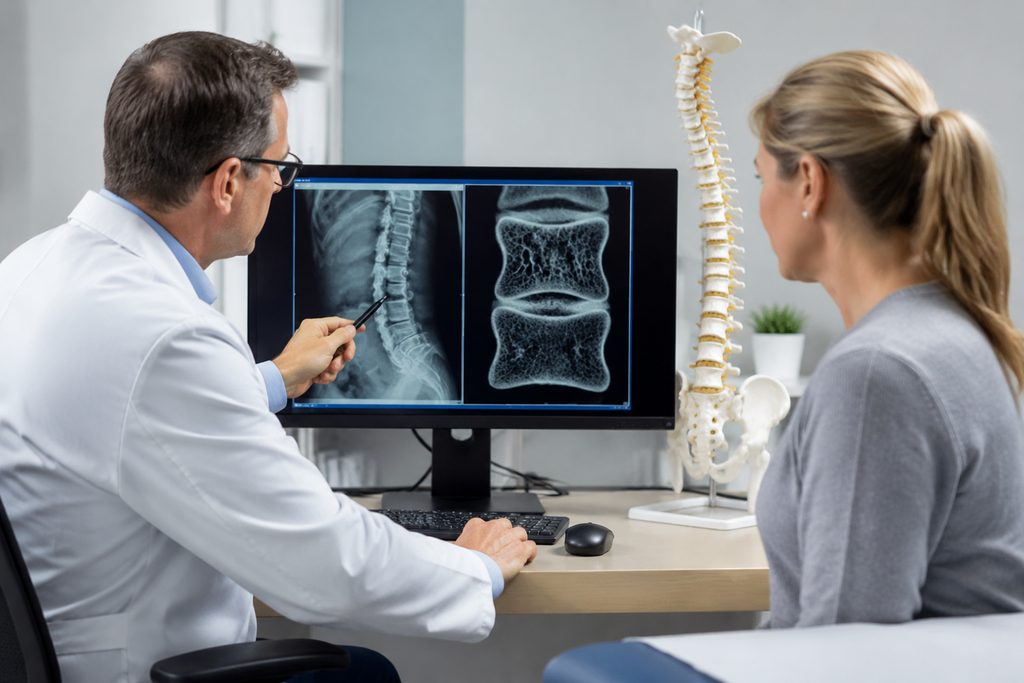
When 58-year-old Robert from Manchester booked his lumbar fusion consultation, his surgeon’s office handed him a checklist. Blood work. Cardiac clearance. Imaging. And one item he had not expected: a DEXA bone density scan. Robert had never fractured anything in his life. He lifted weights twice a week. Why would a spine surgeon care about his bones before cutting into them?
His question is the same one thousands of patients type into search engines every month. The short answer is that bone quality determines whether spinal hardware will hold. Screws placed into osteoporotic vertebrae fail at rates that make surgeons rightly cautious. A bone density test cost before spine surgery in China is a fraction of what patients pay in the US or UK, and it is increasingly built into preoperative packages at major orthopedic centers. But the deeper answer requires understanding what the test actually measures, what the numbers mean, and what happens when the results come back abnormal.
Key Takeaways
- Roughly 1 in 3 women and 1 in 5 men over 50 will experience an osteoporotic fracture, and undiagnosed low bone density raises the risk of spinal fusion hardware failure by up to 2-3 times in some cohorts.
- A DEXA scan costs between $40 and $120 at major Chinese public hospitals, compared to $150-$350 in the United States, making preoperative screening far more accessible.
- Low bone density does not automatically disqualify you from spine surgery, but it changes the surgical plan, hardware selection, and postoperative medication protocol.
- Not every spine procedure requires a DEXA scan. The decision depends on age, sex, fracture history, and the specific operation being planned.
The Problem: Skipping the Scan Can Turn a Good Surgery Into a Failed One
Spinal fusion surgery relies on screws, rods, and cages anchored into vertebral bone. If that bone is soft, the hardware loosens. The medical literature is blunt about the consequences. A 2019 study in The Spine Journal found that patients with osteoporosis undergoing lumbar fusion had a 2.5-fold higher rate of screw loosening compared to patients with normal bone density. A separate analysis of Medicare data showed that patients with osteoporosis who underwent spinal fusion had a 40% higher rate of revision surgery within two years.
The problem is that most people with low bone density do not know they have it. Osteoporosis is silent. No pain, no visible signs, no warning until a bone breaks. The International Osteoporosis Foundation estimates that approximately 80% of people who have already suffered at least one osteoporotic fracture have never been identified or treated for the underlying condition. That means a meaningful percentage of patients walking into spine surgery consultations are carrying undiagnosed bone disease.
And the stakes are not abstract. Revision spine surgery costs more, carries higher infection risk, and produces worse functional outcomes than primary surgery. A failed fusion means months of pain followed by another operation. For many patients, a $100 scan could have flagged the problem before the first incision.
Why Preoperative Bone Screening Is Standard at Top Chinese Spine Centers
Chinese orthopedic departments operate at a scale that forces systematic preoperative protocols. A single high-volume spine center in Shanghai or Beijing may perform over 3,000 spinal fusion procedures annually. At that volume, complications from unrecognized osteoporosis are not rare events—they are daily occurrences that demand standardized screening.
Volume Creates Protocol Discipline
Surgeons who perform 400 or 500 fusions per year encounter every complication profile repeatedly. They learn quickly which patients need preoperative optimization. That experience translates into clear, written screening criteria: women over 65, men over 70, anyone with a prior fragility fracture, anyone on long-term corticosteroids, and anyone with a history of smoking or heavy alcohol use. Many Chinese spine units also screen patients over 50 regardless of sex if the planned procedure involves multi-level fusion or significant deformity correction.
Compare this to the average US orthopedic surgeon who performs roughly 50-100 spinal fusions annually. Screening practices vary widely. Some order DEXA scans routinely. Others skip them unless the patient is visibly frail. The inconsistency means patients sometimes arrive at surgery with undiagnosed osteoporosis that could have been identified months earlier.
Is a Bone Density Scan Required Before Spinal Fusion? Here Is What Guidelines Actually Say
No universal mandate exists. The North American Spine Society and the International Society for Clinical Densitometry recommend preoperative bone density assessment for patients with risk factors for osteoporosis, but they stop short of requiring it for every fusion candidate. In practice, many top Chinese hospitals treat DEXA as a default preoperative test for fusion patients over 50. The reasoning is straightforward: the test is cheap, noninvasive, and the information it provides changes surgical planning in meaningful ways.
For procedures like microdiscectomy or simple laminectomy that do not require hardware fixation, bone density matters less. The scan is often skipped. But for any operation involving pedicle screws, interbody cages, or long-segment instrumentation, bone quality is a primary determinant of success.
What the DEXA Numbers Mean for Your Surgical Plan
The test reports two key values: a T-score and a Z-score. The T-score compares your bone density to a healthy 30-year-old of the same sex. A T-score of -1.0 or above is normal. Between -1.0 and -2.5 indicates osteopenia. Below -2.5 is osteoporosis.
These numbers matter because they change what happens in the operating room. A patient with a T-score of -3.2 needs a different surgical strategy than a patient with a T-score of -0.8. The surgeon may choose larger diameter screws, cement augmentation, or a different fusion construct altogether. Some patients are started on anabolic bone-building medications like teriparatide for 3 to 6 months before surgery, then reevaluated. The scan is not just a gatekeeper—it is a planning tool.
Can you have spine surgery with low bone density? Yes, but the conversation changes. A patient with severe osteoporosis who needs a two-level fusion may be advised to delay surgery while bone density improves. Another patient with mild osteopenia may proceed with surgery but receive postoperative medication to prevent further bone loss. The T-score alone does not dictate the decision. It informs it.
How to Check Bone Density Before Back Surgery Abroad: The Practical Steps
If you are traveling to China for spine surgery, the screening process typically works like this. You send your existing imaging and medical records to the hospital’s international department for review. If the surgeon determines that a DEXA scan is needed, you have two options: complete the scan in your home country before travel, or complete it after arrival in China.
Many patients choose the second option. The scan takes approximately 15 minutes. Results are available the same day. And the cost is low enough that it rarely affects the overall surgical budget. A bone density test cost before spine surgery in China typically ranges from $40 to $120 at public hospital international departments. Private international hospitals in Shanghai or Beijing may charge $150 to $250. Either way, the figure is manageable for most patients.
What if you already have a recent DEXA scan from home? Bring it. Most Chinese spine surgeons will accept a scan performed within the previous 6 to 12 months, provided the report includes T-scores and the machine was properly calibrated. If your scan is older than that, expect to repeat it.
Best Hospital for Osteoporosis and Spine Surgery in Shanghai: What to Look For
Shanghai is home to several hospitals with strong reputations in both spine surgery and metabolic bone disease. The key is finding a center where these two specialties collaborate. Some hospitals have dedicated osteoporosis clinics that work directly with the orthopedic spine team. That integration matters because preoperative optimization often requires medication management, not just surgical planning.
| Service or Test | Typical Cost in China (USD) | Typical Cost in the US (USD) |
|---|---|---|
| DEXA bone density scan | $40 – $120 | $150 – $350 |
| Spine surgery consultation (international department) | $100 – $300 | $250 – $600 |
| Lumbar fusion surgery (single level) | $15,000 – $25,000 | $80,000 – $150,000 |
| Teriparatide (monthly supply, if prescribed pre-op) | $400 – $700 | $2,500 – $3,500 |
Prices vary by hospital and case complexity. A spine surgery package with bone density screening in China often bundles the DEXA scan, preoperative labs, and imaging into the overall surgical quote. Ask for an itemized breakdown so you understand exactly what is included.
When evaluating hospitals, look for three things. First, does the spine department publish its annual surgical volume? High-volume centers generally have more refined protocols. Second, does the hospital have a dedicated metabolic bone or osteoporosis clinic? This signals that bone health is treated as a core component of surgical planning, not an afterthought. Third, does the international department have experience managing foreign patients with language support and clear documentation? You can explore ranked public hospitals by city or review JCI-accredited private international hospitals for English-speaking care and direct insurance billing.
Common Mistakes That Delay Surgery or Worsen Outcomes
The first mistake is assuming that a normal X-ray or CT scan rules out osteoporosis. It does not. Bone density loss of up to 30% can be invisible on standard X-rays. Only a DEXA scan provides the quantitative measurement needed for surgical planning.
The second mistake is starting calcium and vitamin D supplements a week before surgery and expecting meaningful change. Bone remodeling takes months. If your T-score is significantly low, your surgeon may recommend delaying surgery while you take anabolic medication. That delay is frustrating, but it is often the difference between a fusion that holds and one that fails.
The third mistake is choosing a hospital based on price alone. A low-cost surgical package that skips preoperative bone screening is not a bargain. It is a risk. The cost of revision surgery—both financial and physical—dwarfs the cost of a proper preoperative workup.
And a note for patients who have already been diagnosed with osteoporosis: do not assume that means surgery is off the table. Many patients with T-scores below -2.5 undergo successful spinal fusion after a period of medical optimization. The key is finding a surgical team that understands how to manage low bone density, not one that either ignores it or refuses to operate outright.
Practical Considerations: Documentation, Visas, and Follow-Up
If you are traveling to China for spine surgery, prepare your documents before you go. Bring all prior imaging—MRI, CT, X-ray—on disc or via a secure cloud link. Bring your DEXA report if you have one. Bring a list of current medications, including any osteoporosis treatments you have taken in the past. And bring a summary of your surgical history, especially any prior spine operations.
For visa purposes, medical travel to China typically falls under the S2 visa category, which covers short-term private affairs including medical treatment. The hospital’s international department will provide an invitation letter and treatment confirmation documents to support your application. Requirements vary by embassy, so confirm the latest rules with the Chinese consulate in your country before applying. Family members accompanying you should apply for the same S2 category.
Payment at Chinese public hospitals is generally required upfront. International departments accept major credit cards and sometimes direct bank transfers. Private international hospitals may bill your insurance directly if they have an agreement with your insurer. Confirm payment terms before you travel.
After you return home, plan for follow-up imaging. Most surgeons want X-rays at 6 weeks, 3 months, and 1 year postoperatively. You can complete these locally and send the images to your Chinese surgical team for review. If you were started on osteoporosis medication, coordinate with a local physician to continue treatment and monitor bone density over time.
Frequently Asked Questions
Not universally, but it is strongly recommended for patients over 50, postmenopausal women, anyone with a prior fragility fracture, and anyone on long-term corticosteroids. Many Chinese spine centers perform DEXA scans as a default preoperative test for fusion candidates in these categories. For younger patients without risk factors, the scan may be omitted.
Yes, in most cases. The surgical plan may need to change—different screw types, cement augmentation, or a period of preoperative bone-building medication. Some patients with severe osteoporosis are advised to delay surgery for 3 to 6 months while bone density improves. The decision depends on the specific T-score, the procedure planned, and the surgeon’s assessment.
At public hospital international departments, expect to pay $40 to $120 for a DEXA scan. Private international hospitals may charge $150 to $250. Prices vary by city and facility. The scan is often bundled into a preoperative package if you are traveling for surgery.
Your surgeon will discuss options. These may include starting anabolic medication like teriparatide, delaying surgery while bone density improves, using cement-augmented screws, or modifying the fusion construct. The scan result does not automatically cancel surgery, but it changes the planning conversation.
Coverage varies by insurer and plan. Some international insurance policies reimburse preoperative testing performed abroad. Others do not. Contact your insurer before travel and request written confirmation of coverage. If the scan is not covered, the out-of-pocket cost is low enough that most patients proceed anyway.
Your Next Step
A bone density test is not a bureaucratic hurdle. It is a surgical planning tool that can prevent a failed fusion and a second operation. If you are considering spine surgery in China, ask whether a DEXA scan is indicated for your case, what the results would mean for your surgical plan, and whether the hospital integrates bone health into its preoperative protocol. We help international patients navigate these decisions—matching you with appropriate hospitals, coordinating appointments, and providing bilingual support throughout the process. We are not a hospital and do not provide diagnoses. But we can help you ask the right questions and get clear answers. Request a free consultation to discuss your situation and determine the most sensible next step.
For more medical information and treatment options in China, visit chinamedservices.com (China Medical Services).
