Can DBS Help My Tremor? Understanding Surgery Costs in China
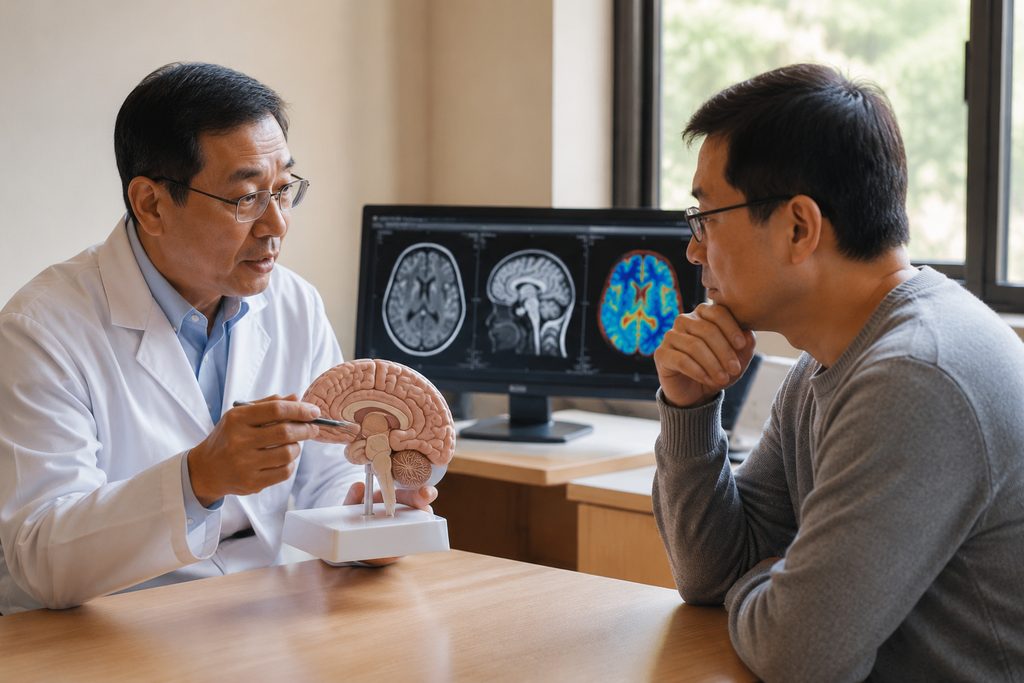
When 58-year-old Robert from Manchester sat down to write an email, his right hand shook so violently that the words on the screen looked like a seismograph reading. Essential tremor had stolen his ability to sign his name, drink from a glass without a straw, and hold his granddaughter’s hand steady. His neurologist mentioned deep brain stimulation. Robert’s first question wasn’t about how the electrodes worked. It was: “What will this cost, and can I get it done somewhere that won’t bankrupt me?” If you’re asking the same thing, understanding DBS surgery cost China is a reasonable place to start. Not because China is the only option, but because the numbers are genuinely different there. We’ll walk through what DBS actually does, what it costs in different parts of the world, and what the real process looks like if you decide to pursue treatment at a major Chinese hospital.
How This Actually Works, Step by Step
You don’t just book a DBS surgery. There’s a sequence, and skipping steps leads to wasted flights and bad outcomes. Here’s the real order.
First, you need a confirmed diagnosis. Essential tremor and Parkinson’s disease both respond to DBS, but the target in the brain differs. A movement disorder specialist reviews your history, tremor characteristics, medication response, and ideally a DAT scan. Without this, no responsible neurosurgeon will touch you.
Second, you undergo a levodopa challenge test if Parkinson’s is suspected, or a tremor rating scale assessment if essential tremor is the diagnosis. These establish whether DBS is likely to help at all. Roughly 10-15% of patients evaluated for DBS are turned away because medication adjustments or other factors make surgery inappropriate.
Third, you send your records. If you’re considering China, this means your complete medical file: neurology notes, imaging on CD or via secure upload, current medication list, and the results of any standardized assessments. A Chinese hospital’s international department reviews these before confirming whether you’re a candidate. This review typically takes 3-7 working days.
Fourth, you have a video consultation. You speak with the neurosurgery team through a translator. They ask about your symptoms, watch you perform simple tasks on camera, and explain what a realistic outcome looks like for your specific tremor pattern. This costs between $100 and $800 depending on whether you see a general specialist or a top-ranked professor.
Fifth, you travel. In China, DBS surgery is done in two stages, usually 5-10 days apart. Stage one implants the electrodes. Stage two implants the pulse generator in your chest. Some centers do both stages in one operation, but staged surgery remains more common because it allows for a test period to confirm the electrode placement is correct.
Sixth, you stay for programming. The device gets switched on and adjusted over several outpatient visits. Initial programming takes 2-4 sessions across 1-2 weeks. You won’t fly home the day after surgery.
DBS Surgery Cost China: What the Numbers Actually Show
Let’s talk about the number you searched for. The DBS surgery cost China typically runs from $35,000 to $55,000 for a complete bilateral system, including the device, surgeon fees, hospital stay, and initial programming. That’s the all-in figure at a top-tier public hospital’s international department. At a private international hospital like those listed on our private hospitals page, expect $60,000 to $85,000.
By comparison, the same bilateral DBS procedure in the United States costs $80,000 to $120,000 before insurance adjustments. In Germany or the UK privately, you’re looking at $70,000 to $100,000. Even with flights and accommodation for a month in China, most patients save 40-60% compared to US cash prices.
| Component | China Public International Dept | China Private International | United States |
|---|---|---|---|
| Bilateral DBS device | $22,000–$30,000 | $28,000–$38,000 | $45,000–$60,000 |
| Surgeon & hospital fees | $8,000–$15,000 | $15,000–$25,000 | $25,000–$40,000 |
| Anesthesia & imaging | $3,000–$5,000 | $5,000–$8,000 | $8,000–$12,000 |
| Programming (initial 30 days) | $2,000–$5,000 | $7,000–$14,000 | $2,000–$8,000 |
| Total range | $35,000–$55,000 | $60,000–$85,000 | $80,000–$120,000 |
Prices vary by hospital and case complexity. The device brand matters too — Medtronic, Abbott, and Boston Scientific systems are all used in China, and the newer directional leads cost more than traditional ones. Some Chinese hospitals also use domestically manufactured DBS systems, which can bring the device cost down to $15,000-$20,000, though these have less long-term international track record.
How Does Deep Brain Stimulation Work for Tremor?
The honest answer: we don’t fully understand the mechanism. What we do know is that how does deep brain stimulation work for tremor involves delivering high-frequency electrical pulses to specific brain regions that regulate movement. For essential tremor, the target is the ventral intermediate nucleus of the thalamus. For Parkinson’s tremor, it’s usually the subthalamic nucleus or globus pallidus interna.
The electrical pulses disrupt the abnormal oscillatory firing patterns that cause tremor. Think of it as jamming a faulty radio signal. The tremor doesn’t disappear because the brain is fixed — it’s suppressed by continuous electrical input. That’s why the device stays on 24/7 and why the tremor returns within minutes or hours if the battery dies.
Results are genuinely good for the right patients. Studies show that 80-90% of essential tremor patients experience significant tremor reduction in the targeted limb. Head and voice tremor respond less predictably. For Parkinson’s, the improvement in tremor is often dramatic, with reductions of 70-90% on standard rating scales. But DBS does not stop disease progression. It manages symptoms. That distinction matters when you’re weighing whether the cost is worth it.
A Realistic Timeline
| Stage | Duration | What Actually Happens |
|---|---|---|
| Document collection & translation | 1-2 weeks | You gather medical records. We translate them into Chinese. Missing documents cause delays here. |
| Hospital review & candidacy confirmation | 3-7 working days | The neurosurgery department reviews your file. They may request additional tests. |
| Video consultation | 1-2 weeks scheduling | You meet the surgical team online. They confirm candidacy and explain expected outcomes. |
| S2 visa application | 2-4 weeks | You apply at the Chinese embassy or consulate with hospital invitation documents. Processing varies by country. |
| Travel & arrival | 2-3 days | Flights, hotel check-in, hospital registration. Jet lag affects surgical scheduling. |
| Pre-operative workup | 3-5 days | MRI, blood tests, anesthesia clearance, medication adjustments. Some patients need medication washout before surgery. |
| Stage 1: Electrode implantation | 1 day surgery, 3-5 days observation | You’re awake for part of this surgery so the team can test electrode placement in real time. |
| Stage 2: Pulse generator implantation | 1 day surgery, 2-3 days observation | Usually done under general anesthesia. The battery goes under the skin below your collarbone. |
| Initial programming | 1-2 weeks | Multiple outpatient visits to fine-tune stimulation settings. You’ll see tremor changes during these sessions. |
| Total time in China | 4-6 weeks | This is the realistic minimum. Don’t plan for 10 days. |
Most patients underestimate programming time. You cannot fully optimize DBS settings in a single visit. The brain needs time to adapt, and settings need gradual adjustment. Some patients return home with a device that’s 70% optimized and complete the fine-tuning with a local neurologist. Others stay longer. Both paths are valid.
What Can Go Wrong — and What Happens Then
DBS is brain surgery. Anyone who tells you it’s routine is selling something. The honest failure modes include infection, lead misplacement, hardware malfunction, and suboptimal tremor control.
Infection rates run 3-8% across major centers worldwide. In China, top hospitals report similar figures. If infection occurs, the treatment is antibiotics first, and if that fails, the hardware may need to be removed and reimplanted months later. That’s a second surgery and a second cost. No hospital will quote you a fixed price for infection treatment upfront because it varies so widely.
Lead misplacement happens in 2-5% of cases, even at excellent centers. The fix is a second surgery to reposition the lead. At reputable Chinese hospitals, this revision is typically done at reduced cost, but it’s not free.
Suboptimal tremor control is the most common disappointment. Maybe your hand tremor improves 90% but your head tremor only improves 40%. Maybe the stimulation causes slurred speech or balance problems at settings that control the tremor well. Programming is a trade-off. Adjustments can take months.
And what if you’re not a candidate at all? Maybe your tremor is cerebellar, not essential tremor. Maybe medication works well enough that surgery isn’t justified. The pre-operative review exists to catch this before you spend money on flights. If a hospital tells you DBS won’t help, believe them. The cost of a negative video consultation is far less than the cost of an unnecessary brain surgery.
Is DBS Surgery Safe in China? How to Evaluate a Hospital
The question is DBS surgery safe in China deserves a straight answer. At China’s top neurosurgery centers, yes — the safety record is comparable to Western academic hospitals. But “China” is not one hospital. The range between the best and the average is wide.
China’s top-tier neurosurgery departments perform hundreds of DBS cases annually. Fuwai Hospital is famous for cardiac surgery, but for DBS you’d look at hospitals like Huashan Hospital in Shanghai, Xuanwu Hospital in Beijing, or the neurosurgery department at West China Hospital in Chengdu. These centers publish in international journals, use the same Medtronic and Abbott devices as Western hospitals, and have neurosurgeons who trained in the US or Europe.
The best hospital for DBS in Shanghai is generally considered to be Huashan Hospital, affiliated with Fudan University. Its neurosurgery department is ranked among China’s top 10 for neurosurgery on the Fudan specialty reputation list. You can explore more options on our specialty departments page, which breaks down top-ranked hospitals by specialty.
Here’s what to check before committing to any hospital in China: annual DBS case volume (ask for the specific number; 50+ per year is a reasonable minimum), the neurosurgeon’s personal experience (how many DBS procedures have they personally performed), the device brands they offer (if they push only one brand, ask why), infection rate data (they should be willing to share), and whether they have an international patient department with English-speaking coordinators. If a hospital can’t answer these questions clearly, that’s your answer.
Some patients also ask about DBS for essential tremor price abroad more broadly — comparing China to India, Thailand, or Turkey. India is typically cheaper than China, with bilateral DBS ranging from $25,000 to $40,000. Thailand and Turkey fall between $40,000 and $60,000. China’s advantage is the combination of high surgical volume, modern equipment, and a well-developed international patient infrastructure at major hospitals. The disadvantage is the language barrier and the fact that you’re navigating a healthcare system with very different administrative rules than what you’re used to.
Practical Considerations: Records, Visa, Payment, and Follow-Up
No. DBS typically reduces hand tremor by 70-90% in the targeted limb. Head, voice, and trunk tremor respond less predictably. The goal is functional improvement — being able to write, eat, and dress independently — not a perfectly steady hand. Some patients see near-complete resolution; others see meaningful but partial improvement.
You cannot book surgery without a prior evaluation. The standard path is remote record review, then video consultation, then travel for in-person pre-operative testing, then surgery. Some patients use a proxy consultation service where a coordinator visits the hospital with your records to confirm candidacy before you commit to travel. This reduces the risk of an unnecessary trip. The process of deciding to book DBS surgery China medical tourism should always start with remote evaluation, not with buying a plane ticket.
Infection. It occurs in 3-8% of DBS cases at major centers worldwide and can require hardware removal. The second biggest risk is unrealistic expectations — DBS manages tremor but doesn’t cure the underlying condition. Ask any hospital you’re considering for their infection rate data and their revision policy if the lead needs repositioning.
Plan for 4-6 weeks minimum. The staged surgery approach, observation periods, and initial programming all take time. Some patients stay longer if programming proves complex. Returning home too early means incomplete programming and a harder time getting follow-up care coordinated.
Your Next Step
DBS can genuinely change your life if you’re a good candidate — and the cost difference between China and Western countries is real enough to matter. Not everyone is a candidate, and the only way to know is through a proper evaluation. Our team at China Medical Services coordinates remote record reviews, video consultations with top-tier Chinese neurosurgery departments, and on-the-ground support if you decide to travel. We don’t perform surgery, we
Frequently Asked Questions
Yes. The hospitals used for international patients are JCI-accredited and follow the same international safety standards as top hospitals in the US and Europe. Surgical teams perform high volumes of procedures — often more than their Western counterparts — which studies show leads to better outcomes.
Costs vary by procedure and hospital, but international patients typically save 40-80% compared to US prices — even when factoring in travel and accommodation. A consultation with our team will give you an exact, all-inclusive quote with no hidden fees.
Send us your existing medical reports to get started. We handle everything from hospital selection and appointment scheduling to visa assistance and post-operative recovery planning. Your medical records are reviewed by the specialist before you even book a flight.
For more medical information and treatment options in China, visit chinamedservices.com (China Medical Services).
