Knee Surgery Second Opinion: What It Costs in China and Why Patients Get One
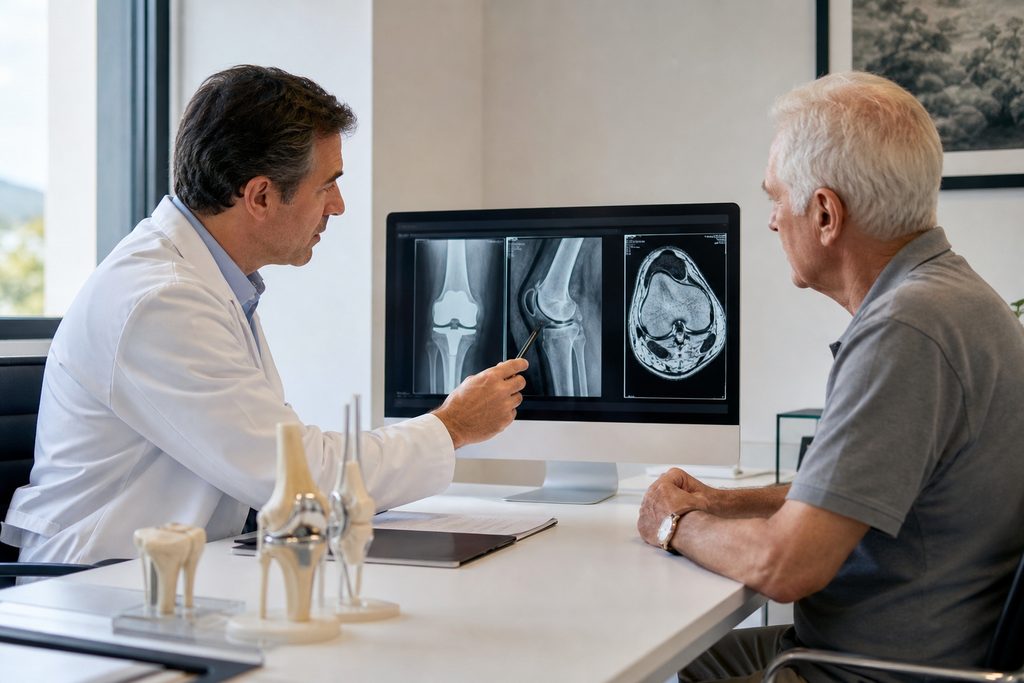
What Is the Real Second Opinion Knee Surgery Cost China Patients Should Expect?
Have you been told you need a knee replacement, but something about the recommendation does not sit right with you? You are not alone. A 2017 study by the Oak Hill Group found that 43% of second-opinion consultations for orthopedic procedures resulted in a different treatment recommendation. The second opinion knee surgery cost China patients pay is often a fraction of what they would spend at home — and the process is faster than most people assume.
This guide explains what a second opinion actually involves, what it costs, how to get one from abroad, and which Chinese orthopedic centers are worth contacting. We are China Medical Services, and our team coordinates these reviews every week for patients from the US, UK, Australia, and the Gulf states.
Key Takeaways
- A written second opinion from a top Chinese orthopedic specialist costs $300–500 — roughly one-tenth of what a US hospital charges for the same review.
- China’s leading joint replacement centers perform 2,000–4,000 knee arthroplasties annually, compared to 300–500 at a typical Western hospital.
- You cannot schedule surgery before an in-person consultation at a Chinese public hospital — remote second opinions are for guidance, not booking.
- Patients should send complete imaging (MRI, X-ray, operative notes) and a clear list of questions to get a useful written review.
The Problem: Knee Surgery Recommendations Are Often Rushed or Incomplete
Chinese hospitals have invested heavily in international patient services over the past decade. Most top-tier orthopedic departments now have an international office that handles remote consultations. The workflow is straightforward:
- You submit your existing imaging (MRI, weight-bearing X-rays, CT if available) and clinical history
- The international office translates your records into Chinese for the specialist
- A senior orthopedic surgeon reviews the case and writes a structured opinion
- The report is translated back into English and delivered with a video call option
This infrastructure did not exist at scale 10 years ago. It does now, and it is the reason how to get a second opinion for knee surgery abroad has become a practical question rather than a logistical nightmare.
Cost Structure That Does Not Punish You for Asking
The second opinion knee surgery cost China clinics charge is deliberately accessible. A written second opinion from a specialist at a top-ranked public hospital’s international department typically runs $300–500. A video consultation with the same specialist costs $100–300 at a standard international department, or $500–800 if you want a named top expert. A multidisciplinary review with both an orthopedic surgeon and a rehabilitation specialist runs $1,500–2,000.
Compare that to the US, where a single specialist video consultation often starts at $250–500 and a written review from a major academic center can exceed $1,000. The gap is structural: Chinese hospital pricing for international services is set to cover costs and support medical tourism, not to maximize per-consultation revenue.
How a Remote Knee Surgery Second Opinion Works Step by Step
Here is the exact process our team walks patients through when they ask about knee surgery second opinion price Shanghai or Beijing options.
Step 1: Gather Your Records
You need current imaging, not just reports. The reviewing surgeon wants to see the actual MRI sequences and weight-bearing X-rays, ideally in DICOM format. Also include: your operative notes if you have had prior knee surgery, a medication list, your BMI, activity level, and a short paragraph describing your pain pattern — when it hurts, what makes it worse, what you have tried.
Incomplete records are the number one reason a second opinion comes back vague. A written opinion is only as good as the data behind it.
Step 2: Choose the Right Hospital and Specialist
Not every Chinese hospital has a strong joint replacement program. The Fudan University hospital rankings — the most authoritative in China — publish a specialty reputation list for orthopedics. Hospitals that consistently appear in the top tier for orthopedics include Peking University Third Hospital, Shanghai Sixth People’s Hospital, West China Hospital in Chengdu, and Chinese PLA General Hospital in Beijing. You can browse our orthopedics department rankings to see which centers are strongest in joint surgery specifically.
For international patients, we generally recommend the international department of a public top-tier hospital over a private clinic for a second opinion. The public hospital gives you access to the highest-volume surgeons. The private clinic gives you better English support but often less clinical depth for complex cases.
Step 3: Submit and Wait
Written second opinions typically take 5–10 business days. Video consultations can be scheduled within 1–2 weeks, sometimes faster if you are flexible on timing. The report you receive should include: a summary of the findings, an assessment of whether surgery is indicated at this stage, alternative treatment options if applicable, and — if surgery is recommended — what approach the surgeon would take (total vs. partial replacement, robotic-assisted vs. conventional).
Step 4: Decide What to Do With the Opinion
A second opinion is not a prescription. It is a structured professional judgment. Some patients use it to push back on a local surgeon. Others use it to confirm a plan and proceed with confidence. A meaningful minority discover that surgery can be postponed or avoided entirely.
Is Knee Replacement Surgery Safe in China? What the Data Shows
This is the question behind the question. Patients ask about second opinion costs because they are weighing a bigger decision: is knee replacement surgery safe in China if the opinion confirms they need the operation?
The honest answer is that safety depends on hospital selection. China has 35,000+ hospitals, and the quality spread is enormous. But the top 5% — roughly 340 hospitals ranked by Fudan University or accredited by JCI — report outcomes comparable to Western benchmarks. A 2020 study in the Chinese Medical Journal tracking over 10,000 primary total knee replacements at top-tier centers found a 90-day complication rate of 2.1%, consistent with rates reported in US and European registries.
Infection rates at high-volume Chinese joint centers run 0.5–1.0%, in line with international standards. The key variable is not the country. It is the specific hospital and surgeon. That is why the second opinion step matters so much — it lets you evaluate a specific team before committing to travel.
| Service | China (International Dept.) | United States (Typical) | United Kingdom (Private) |
|---|---|---|---|
| Written second opinion | $300–500 | $700–2,000 | £350–800 |
| Specialist video consultation | $100–300 | $250–500 | £200–450 |
| MDT review (ortho + rehab) | $1,500–2,000 | $3,000–6,000 | £2,500–5,000 |
| Total knee replacement (surgery only) | $12,000–20,000 | $35,000–70,000 | £14,000–18,000 |
Prices vary by hospital and case complexity. The surgical figures above are for the international or VIP channel at public hospitals, not the standard domestic channel, which is not accessible to most foreign patients without Chinese language ability and local insurance.
How to Choose the Right Hospital for a Knee Surgery Second Opinion
Do not pick a hospital because it is famous. Pick it because its orthopedic department has demonstrable depth in knee arthroplasty. Here is what we look at when we help patients shortlist options.
Fudan Specialty Ranking, Not Just Overall Ranking
The Fudan overall top 100 list tells you a hospital is strong across many departments. The specialty reputation list tells you whether orthopedics specifically is elite. Several hospitals with excellent overall reputations have average orthopedic programs, and vice versa. Check the Fudan-ranked hospital database and drill into the orthopedics specialty list before you commit.
Annual Joint Replacement Volume
Ask the international office directly: “How many primary total knee replacements does your department perform annually?” A strong answer is 1,000+. An elite answer is 3,000+. If the number is under 500, consider another center for a surgical second opinion.
Robotic and Navigation Capability
Most top Chinese joint centers now use robotic-assisted systems (Mako, CORI, or domestic equivalents like TiRobot) for at least a portion of their knee replacements. This is not a gimmick — multiple meta-analyses show robotic assistance improves component alignment consistency, though long-term functional outcomes are similar to conventional surgery in experienced hands. The point is that a hospital investing in this technology is keeping pace with international standards.
English-Language Support
You can get a written second opinion without speaking a word of Chinese — the international office handles translation. But if you are considering surgery in China after the opinion, you need a hospital with real English-speaking staff on the ward, not just in the international office. Ask about this before you book a consultation with our coordination team.
Practical Considerations: Records, Visas, and Payment for Remote Reviews
Getting a second opinion from China is administratively lighter than traveling for surgery, but there are still logistics to handle.
Medical Records and Imaging
Send DICOM files, not just JPEG screenshots. Most hospitals can export your MRI and X-ray studies to a CD or USB drive, or upload them to a secure portal. Include the radiologist’s report in English if available. If your records are in another language, the Chinese hospital’s international office can usually translate them, but this adds 2–3 days to the timeline.
Visa Requirements
For a remote second opinion, no visa is needed. You never enter China. If the opinion leads to a decision to pursue surgery in China, you will need an S2 visa, which covers short-term private affairs including medical treatment. Your accompanying family members also apply for S2 visas. Processing typically takes 1–4 weeks depending on your home country’s Chinese embassy or consulate. The hospital’s international office provides an invitation letter and treatment confirmation to support your application.
Payment Methods
International departments accept wire transfers and major credit cards. Some accept Alipay or WeChat Pay if you have those set up. Payment is required before the review begins. Most hospitals do not accept insurance directly for remote consultations — you pay out of pocket and seek reimbursement from your insurer if your policy covers second opinions. Check your policy language: some US and European plans cover second opinions only within their network, while others reimburse any licensed physician worldwide.
Language and Interpretation
Written opinions are delivered in English. Video consultations include an interpreter arranged by the hospital, though the quality varies. If you want a guaranteed fluent English-speaking specialist, that narrows your hospital choices — some centers have more English-capable surgeons than others. Our team can advise on which hospitals currently have strong English-speaking orthopedic staff.
Frequently Asked Questions
Will a Chinese second opinion be accepted by my local surgeon or insurer?
It depends on your surgeon and your policy. Many Western surgeons respect opinions from high-volume Chinese centers, especially those that publish in international journals. Insurers are less predictable — some reimburse any licensed physician worldwide, others restrict to their network. Ask your insurer before you pay. We provide itemized invoices with hospital letterhead to support reimbursement claims.
What if the second opinion disagrees with my local surgeon?
That is the point of getting one. If the opinions conflict, you have three options: seek a third opinion, ask both parties to clarify their reasoning, or schedule a video consultation where the Chinese specialist can explain their position directly. Disagreement is not a problem to resolve immediately — it is information to weigh.
Can I book surgery in China based on the second opinion alone?
No. Chinese public hospitals require an in-person consultation before any surgery can be scheduled. The remote second opinion tells you whether traveling for that consultation is worthwhile. If the written review says surgery is indicated and the hospital accepts your case, you would then plan a trip for the face-to-face evaluation, after which the surgical date can be set.
How long does the whole second opinion process take from start to finish?
For a written second opinion: 1–2 weeks from the day you submit complete records. For a video consultation: 1–3 weeks depending on the specialist’s schedule. The bottleneck is usually record gathering on the patient’s side, not hospital processing time.
Is a second opinion worth it if I already trust my surgeon?
That is a personal call. But consider this: knee replacement is a one-way procedure. You cannot put the original joint back. The cost of a second opinion — even at Western prices — is less than 2% of the cost of the surgery itself. The downside of a second opinion is a few hundred dollars and a week of waiting. The downside of skipping it can be a surgery you did not need or a surgery that was not the right type.
Your Next Step
A knee surgery second opinion is one of the highest-value medical decisions you can make before committing to an irreversible procedure. The second opinion knee surgery cost China hospitals charge makes it accessible to almost anyone, and the clinical volume behind the review is genuinely world-class. If you are weighing surgery and want a structured, independent assessment from a top Chinese orthopedic team, our role is to help you gather records, choose the right hospital, and coordinate the review. We are not a hospital and we do not provide diagnoses — we connect you with specialists who do. Start with a free consultation and we will help you map out the next step, whether that is a written opinion, a video call, or simply a clearer understanding of your options.
For more medical information and treatment options in China, visit chinamedservices.com (China Medical Services).
