Sri Lanka to China Medical Tourism: Colombo Patient’s Complete Treatment Journey
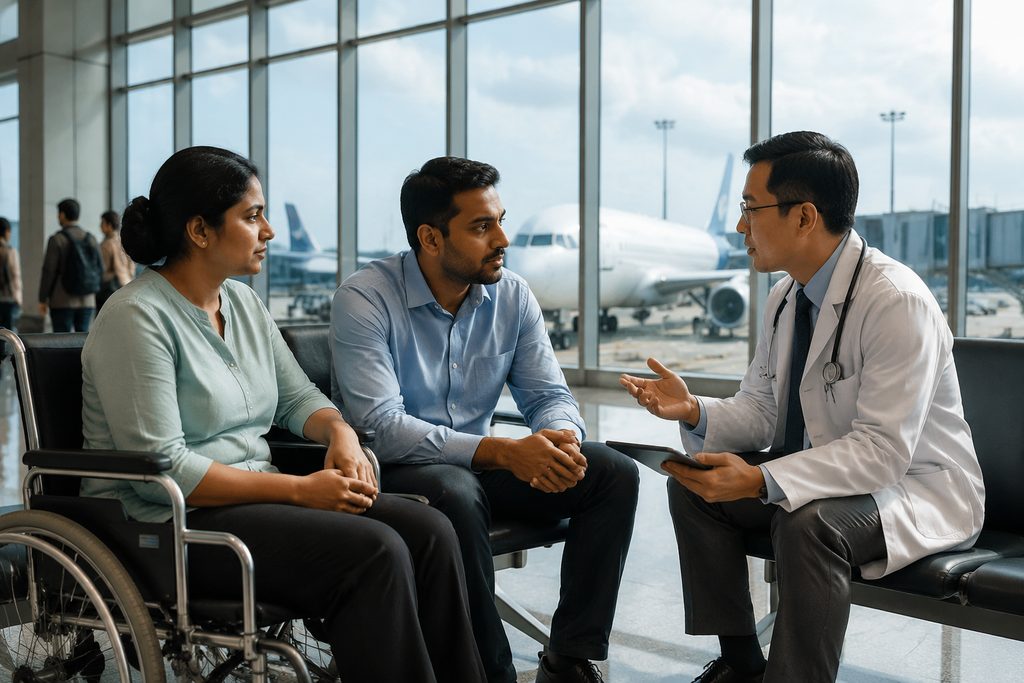
When 54-year-old Anura from Colombo was told he needed a complex cardiac ablation, two things hit him at once. The procedure was available in Sri Lanka. But the wait time at the national hospital stretched past eleven months. Private care in India was an option, though the quotes he received hovered around $18,000 — a sum that would drain his family’s savings. He felt trapped between a clock he could not control and a bill he could not afford. Then a friend mentioned something that sounded almost too good to be true: getting the same procedure at a top-ranked Chinese heart hospital for under $9,000, with a coordinated journey from start to finish.
That path is not a secret. It is a growing reality for patients across South Asia. Sri Lanka to China medical tourism packages have quietly matured into an organized, evidence-backed option for people who need high-acuity care without the crushing wait times or financial ruin that often accompany it. Our team at China Medical Services has guided dozens of Sri Lankan patients through this exact journey. We are not a hospital. We do not treat patients. We are the logistical bridge — the people who make sure you land in the right city, see the right specialist, and never stand alone in a crowded hospital corridor wondering where to go next.
Key Takeaways
- Top Chinese hospitals perform over 14,000 cardiac surgeries annually at a single center, with outcomes matching or exceeding Western benchmarks — and costs typically 60-80% lower than comparable private care in South Asia.
- China’s medical tourism infrastructure now includes dedicated international departments with English-speaking staff, direct insurance billing, and visa pathways specifically designed for patients traveling from Colombo and other South Asian cities.
- Navigating a Chinese public hospital independently is extremely difficult without Mandarin fluency — language barriers, digital payment systems, and complex registration workflows can derail a treatment plan before it begins.
- Coordinated medical tourism packages handle visa documentation, hospital matching, appointment scheduling, and bilingual accompaniment — transforming a potentially overwhelming solo mission into a structured, predictable treatment journey.
The Problem: When Waiting Is Not an Option
Sri Lanka’s public healthcare system delivers commendable service under severe constraints. But for specialized procedures — complex oncology surgeries, advanced cardiac interventions, organ transplants — the gap between need and capacity is real. A 2023 Ministry of Health report noted that certain tertiary-care procedures carry waiting periods exceeding twelve months at Colombo’s major teaching hospitals. For a patient with a growing tumor or worsening heart failure, that timeline is not just inconvenient. It is dangerous.
Private alternatives within Sri Lanka or nearby countries like India and Singapore offer faster access. But the price tags are steep. A coronary artery bypass graft in a reputable Indian private hospital runs between $12,000 and $18,000. In Singapore, the same surgery can exceed $35,000. For many Sri Lankan families, these numbers mean selling property, borrowing from relatives, or simply forgoing treatment. China’s emergence as a medical destination changes that calculus. The same bypass surgery at a Fudan-ranked top-tier Chinese hospital costs between $9,000 and $15,000 — and the clinical volume at centers like Fuwai Hospital in Beijing dwarfs almost anything available regionally.
Who We Are
China Medical Services operates as a medical concierge and case management organization. We maintain a curated database of 340+ top-ranked hospitals across 37 Chinese cities — institutions that represent the top 5% of China’s 35,000+ hospitals, ranked by the authoritative Fudan University hospital rankings and JCI accreditation standards. Our team handles the entire non-clinical patient journey: hospital matching based on your specific diagnosis, appointment coordination through official international departments, bilingual medical companion services, visa guidance, and logistical support from the moment you leave Colombo until you return home. We do not offer medical advice. We do not promise miracle cures. What we provide is clarity, access, and a steady hand through a complex system that was not designed for foreign patients navigating it alone.
Why China Delivers Results for Sri Lankan Patients
Clinical Volume That Drives Surgical Precision
There is a well-documented relationship in medicine between procedure volume and patient outcomes. Surgeons and centers that perform a specific operation hundreds or thousands of times per year simply achieve better results. Fuwai Hospital in Beijing performs more than 14,000 cardiac surgeries annually — the highest volume of any cardiovascular center globally. To put that in perspective, the busiest cardiac surgery program in the United States handles roughly 3,000 cases per year. A top Chinese orthopedic surgeon completes 200–500 joint replacements annually. The average US orthopedic surgeon completes around 65. This volume advantage translates directly into lower complication rates and shorter recovery times. When a Sri Lankan patient asks us how to go from Colombo to China for treatment, the clinical volume story is often what convinces them this is not a compromise — it is an upgrade.
A System Built for Scale and Speed
Chinese public hospitals operate at a scale that is hard to visualize until you see it. A single outpatient department at West China Hospital in Chengdu handles over 20,000 patient visits per day. The diagnostic infrastructure matches this throughput — MRI and CT scanners running extended hours, in-house labs returning complex panels within hours, not days. For international patients accessing these hospitals through their dedicated international departments, the experience is different from the crowded public corridors most people imagine. These are separate, staffed wings with English-speaking coordinators, priority scheduling, and private recovery rooms. The wait time from initial consultation to surgery can be as short as one to two weeks, compared to months or years in a resource-constrained public system. This is not about jumping a queue. It is about accessing a parallel care pathway built specifically for patients traveling from abroad.
Cost Structures That Defy Expectations
The most common question we hear from Colombo patients is some version of: “If it is so good, why is it so much cheaper?” The answer lies in structural economics, not quality shortcuts. Chinese hospital pricing reflects lower labor costs across the entire healthcare workforce, from surgeons to nursing staff to administrative personnel. Hospital construction and equipment costs are amortized differently. Pharmaceutical pricing within China’s domestic market is substantially lower than international reference pricing. The result is that a complex cancer resection that costs $45,000 in a private Indian hospital or $120,000 in the United States can be performed at a Fudan-ranked Chinese oncology center for $15,000 to $25,000. When patients search for China surgery cost for foreign patients 2025, they often assume the numbers are outdated or incomplete. They are not. These are real prices at real hospitals, verified through our case management experience.
| Procedure | China (Top Public Hospital) | India (Private Hospital) | Singapore (Private Hospital) |
|---|---|---|---|
| Coronary Artery Bypass Graft | $9,000 – $15,000 | $12,000 – $18,000 | $30,000 – $45,000 |
| Knee Replacement (Unilateral) | $8,000 – $14,000 | $7,500 – $12,000 | $22,000 – $35,000 |
| Liver Cancer Resection | $15,000 – $25,000 | $16,000 – $28,000 | $40,000 – $70,000 |
| Cardiac Ablation (Atrial Fibrillation) | $7,000 – $12,000 | $8,500 – $15,000 | $25,000 – $38,000 |
All figures are approximate ranges in USD. Actual costs vary by hospital, case complexity, and length of stay. These estimates reflect international department pricing, not standard public ward rates.
What You Need to Know Before Going Alone
The clinical value proposition is real. But so are the barriers. We tell every prospective patient the same thing: China’s top hospitals offer world-class care, and the system was absolutely not built for independent foreign patients. Here is what you face if you attempt this journey without coordination.
- Visa Requirements Are Specific and Unforgiving: Medical treatment in China requires an S2 visa with a treatment-purpose annotation. This is not the same as a tourist visa, and it is not an M business visa. The application demands an invitation letter from the receiving hospital, confirmed appointment documentation, and proof of financial means. Getting that invitation letter from a top-tier hospital without a local intermediary is extremely difficult — most international departments work through established coordination channels, not direct patient outreach. Family members accompanying the patient must also apply for S2 visas, not tourist visas. Errors in documentation mean delays, and delays can mean a treatment window closes.
- Payment Systems Are Not Designed for Foreigners: Chinese hospitals operate on a prepayment model. You deposit funds before admission, and the hospital draws down against that deposit throughout your stay. The payment systems — WeChat Pay, Alipay, UnionPay bank cards — are deeply integrated into hospital workflows. International credit cards are not universally accepted even in major cities. Setting up a local payment method from abroad is nearly impossible. Without someone on the ground to handle deposits, top-ups, and discharge settlements, a patient can find themselves unable to complete registration or even pick up prescribed medications.
- Language Barriers Are Absolute: Even in hospitals with international departments, the moment you step outside that wing — to a pharmacy, a billing counter, a diagnostic imaging center — English disappears. Signage is in Mandarin. Registration kiosks require Chinese-language input. A patient who cannot communicate their symptoms, understand discharge instructions, or clarify medication dosing is a patient at risk. This is not an inconvenience. It is a safety issue. When patients ask us is China safe for Sri Lankan medical tourists, our honest answer is yes — but only with proper language support. The medical care itself is excellent. The communication gap without a bilingual companion is the real hazard.
How We Help You Navigate This
Our process starts with a single conversation. A patient or family member in Colombo contacts us through our consultation page. We ask about the diagnosis, the recommended procedure, any existing medical reports, and the patient’s timeline. There is no cost for this initial discussion. It is how we determine whether we can help and which hospitals match the clinical need.
Once we understand the case, we provide a shortlist of hospitals — typically two or three — drawn from our database of 340+ institutions. These recommendations are based on the Fudan University specialty rankings, which evaluate 45 clinical departments and identify the top 10 hospitals in each. If a patient needs cancer treatment, we look at oncology rankings. If it is a cardiac issue, we consult the cardiac surgery and cardiology rankings. We also factor in practical considerations: which cities have direct flight connections from Colombo, which hospitals have experience with South Asian patients, and which international departments have the shortest coordination timelines. For patients specifically looking to book cancer treatment in Shanghai from Sri Lanka, we often recommend institutions like Fudan University Shanghai Cancer Center or Ruijin Hospital — both consistently ranked among China’s top oncology programs.
After the patient selects a hospital, we handle the coordination. We submit translated medical records, arrange a remote consultation if the hospital requires pre-assessment, and secure the official invitation letter needed for the S2 visa application. We guide the patient through the visa documentation process at the Chinese Embassy in Colombo. We arrange airport pickup, accommodation near the hospital, and a bilingual medical companion who meets the patient on day one and stays through discharge. That companion handles registration, payment deposits, queue management, translation during consultations, and all the small but critical interactions — picking up imaging results, clarifying medication schedules, coordinating follow-up appointments — that determine whether a treatment journey feels manageable or overwhelming.
The companion service starts from $200 per day. Hospital appointment coordination starts from $300. For patients who want comprehensive support, our VIP end-to-end coordination ranges from $5,000 to $8,000, covering everything from pre-travel planning through post-discharge follow-up. These are service fees — they do not include hospital treatment costs, which are paid directly to the hospital. And here is something worth knowing: any consultation fee paid for remote video assessments or written second opinions is credited in full toward on-the-ground coordination if the patient proceeds with treatment in China within 90 days. It is a one-time credit applied to our coordination fee, never to hospital charges.
We want to be clear about what we do not promise. We do not guarantee that any specific surgeon will perform your procedure. We do not promise a specific surgery date before the in-person consultation occurs. Chinese public hospital rules require that a surgeon evaluate the patient in person before scheduling surgery — this is not negotiable, and any service claiming otherwise is not being honest. What we promise is that we will use every established channel to match you with the right department, coordinate the earliest available consultation, and ensure you are never alone in a system where being alone is the biggest risk.
Finding the Best Hospital in China for Sri Lankan Patients
There is no single best hospital in China for Sri Lankan patients — the right institution depends entirely on the diagnosis. A hospital that excels in liver surgery may not be the right choice for a spinal fusion. Our matching process draws on the Fudan University hospital rankings, which evaluate institutions across 45 specialties. The top-ranked comprehensive hospitals — Peking Union Medical College Hospital in Beijing, West China Hospital in Chengdu, Zhongshan Hospital in Shanghai — appear repeatedly across multiple specialty lists. But for specific conditions, a focused specialty center often delivers better outcomes than a general flagship hospital.
For cardiac care, Fuwai Hospital’s volume and outcomes are difficult to match anywhere in the world. For oncology, the Fudan University Shanghai Cancer Center and Peking University Cancer Hospital consistently rank at the top of China’s specialty lists. For orthopedics, Beijing Jishuitan Hospital handles a caseload that gives its surgeons deep experience with complex trauma and joint reconstruction. These institutions all operate international departments equipped to receive foreign patients. The challenge is not finding a qualified hospital — it is identifying which one is best for your specific case and then successfully navigating the intake process. That is where our specialty-specific hospital matching becomes essential.
Some patients prefer a private international hospital environment. Facilities like United Family Healthcare, Jiahui International Hospital, and ParkwayHealth offer JCI-accredited care with fully English-speaking staff, direct insurance billing, and a care model closer to what Western and affluent Asian patients expect. These hospitals are more expensive than public hospital international departments — sometimes by 30-50% — but they eliminate virtually all the friction points that make public hospital navigation difficult. For patients with comprehensive international insurance or the budget for premium care, we often recommend exploring private international hospital options alongside public hospital international departments.
Frequently Asked Questions
Typical timelines range from three to six weeks. The variables are: how quickly the patient provides complete medical records, how fast the selected hospital processes the international patient intake, and visa processing times at the Chinese Embassy in Colombo. Once the patient arrives in China, the in-person consultation usually happens within days, and surgery can be scheduled one to two weeks after that — sometimes sooner for urgent cases. The longest delays almost always occur during the pre-travel documentation phase, which is why we focus heavily on getting that right the first time.
Chinese hospitals carry medical liability insurance, and their international departments follow protocols for adverse event management that meet international standards. Our role is not clinical — we do not intervene in medical decisions — but our bilingual companion remains with the patient throughout hospitalization and can escalate concerns to the international department administration if communication breaks down or care expectations are not being met. We also maintain relationships with the Sri Lankan Embassy in Beijing and the consular section in Shanghai, and we can facilitate consular assistance if a patient’s situation requires it. This is rare. But it is part of our contingency planning for every case.
Yes. Family members apply for S2 visas alongside the patient, with the same documentation requirements. Accommodation near major hospitals in Beijing, Shanghai, and Guangzhou typically ranges from $40 to $120 per night depending on comfort level — we can arrange everything from basic serviced apartments to international chain hotels. The companion service fee covers the patient; family members benefit indirectly from the translation and navigation support but are not charged separately unless they require dedicated coordination.
China’s major medical cities — Beijing, Shanghai, Guangzhou, Chengdu — have low violent crime rates and well-developed public infrastructure. The safety concern for foreign patients is not personal security. It is medical navigation. A patient who cannot read a prescription label, find the correct department in a 20-building hospital complex, or communicate a change in symptoms faces real risk. That risk is entirely manageable with proper bilingual support. For patients who travel through a coordinated pathway with accompaniment, the experience is safe, structured, and predictable.
Your Next Step
Anura from Colombo got his cardiac
For more medical information and treatment options in China, visit chinamedservices.com (China Medical Services).
