A Medical Visa for Cancer Treatment: China’s Real Costs and Path
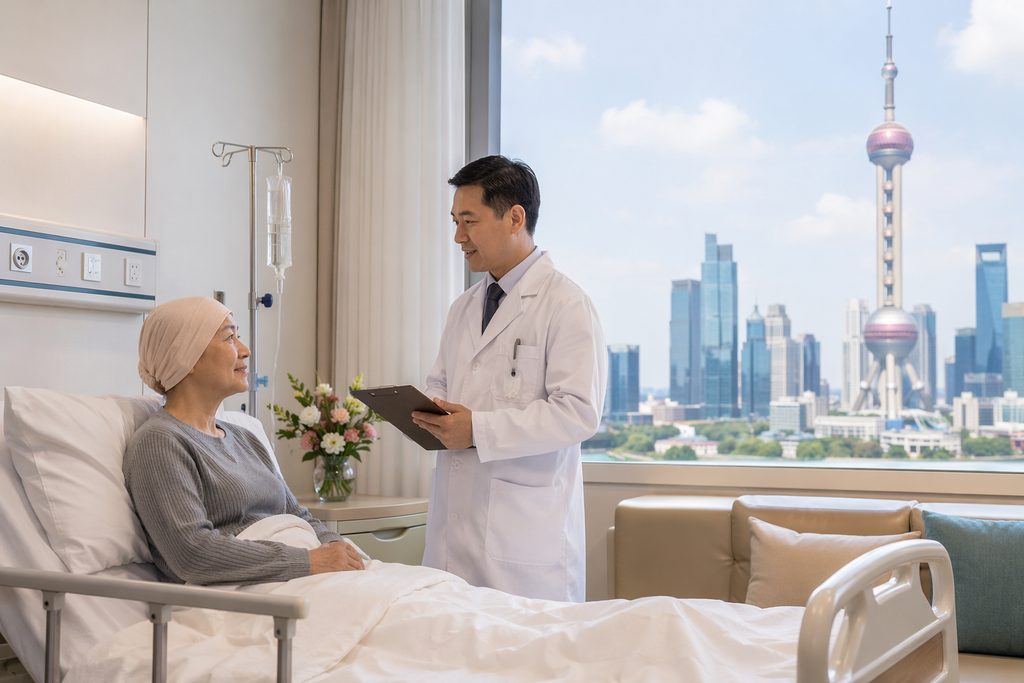
You’ve probably heard that traveling abroad for cancer care means choosing between quality and affordability. The reality is exactly the opposite. China’s top oncology centers now deliver five-year survival rates for several common cancers that match or exceed Western benchmarks, while the cancer treatment cost China patients pay typically runs 70–80% lower than comparable care in the United States. That gap is not a compromise. It’s a structural difference in how healthcare is priced, staffed, and delivered.
But getting here requires more than booking a flight. The visa process, hospital selection, and logistics are where most international patients stall. We’ll walk through exactly what a medical visa for cancer treatment in China actually involves, what it costs, and how to avoid the mistakes that derail the process.
A Medical Visa for Cancer Treatment: The Short Answer
China does not issue a visa called a “medical visa.” For cancer treatment, foreign nationals typically apply for an S2 visa, which covers short-term private affairs including medical treatment. The S2 allows stays of up to 180 days. If your treatment plan requires longer, an S1 visa covers extended stays. You’ll need an invitation letter from the treating hospital, proof of financial means, and a valid passport. Processing usually takes 4–10 business days at most Chinese embassies or consulates.
The catch: you cannot simply apply for an S2 visa and show up expecting treatment. Chinese public hospitals require an in-person consultation before scheduling surgery or admission. That means your first trip often serves dual purposes — confirming the treatment plan with the specialist and establishing the hospital relationship that makes subsequent visits smoother.
Who This Is Right For — and Who It Isn’t
International cancer patients who benefit most from treatment in China share a few characteristics. They have a confirmed diagnosis and recent imaging or pathology reports. They’re seeking a second opinion or a specific treatment approach — often a surgical procedure, a targeted therapy protocol, or a clinical trial not available or affordable at home. They can travel, meaning their condition is stable enough for international flights and they have a caregiver who can accompany them.
Good candidates typically include:
- Patients with early-to-mid-stage solid tumors (lung, liver, gastric, colorectal, breast) where surgery is the primary intervention
- Patients who have exhausted standard options at home and want access to China’s high-volume surgical centers or clinical trial landscape
- Patients facing out-of-pocket costs in the US, UK, or Australia that exceed $100,000 for a procedure available in China for a fraction of that
- Patients from regions with limited oncology infrastructure who can fund treatment privately
Who should not pursue this path? Patients in unstable condition requiring ICU-level care during transport. Patients whose cancer has progressed to the point where travel itself poses unacceptable risk. Patients who cannot arrange a caregiver — China’s top hospitals are enormous, busy places, and navigating them without bilingual support is genuinely difficult. Also, patients expecting a guaranteed cure: no reputable institution anywhere offers that, and any service that promises one should be avoided.
The Options, Compared
When you’re weighing how to get medical visa for cancer treatment in China, you’re really weighing three parallel decisions: which hospital tier, which city, and which service model. The table below compares what actually differs between them.
| Factor | Top Public Hospital (International Dept.) | Private International Hospital | Standard Public Hospital (Self-Navigated) |
|---|---|---|---|
| English-speaking staff | Yes, in international department | Yes, throughout | Rarely |
| Advance appointment from overseas | Yes, via international dept. or coordinator | Yes | No — same-day queue only |
| Cost multiplier vs. standard public | 1.5–2x | 2–4x | 1x (baseline) |
| Insurance direct billing | Sometimes | Usually (JCI-accredited) | No — prepay, then claim |
| Oncology expertise depth | Highest — Fudan-ranked departments | Good, often Western-trained | High but variable by hospital |
| Typical daily outpatient volume | Controlled | Low | 10,000+ patients/day |
Most international patients land in the first column: a top public hospital’s international department. You get the clinical depth of a Fudan-ranked oncology program with English coordination and advance scheduling. The premium over the standard public rate — roughly 1.5 to 2 times — buys you exactly what you need: a booked appointment, an interpreter, and a path through the system that doesn’t require Mandarin. Private international hospitals offer the smoothest experience but thinner oncology subspecialty depth for complex cases. Self-navigating a standard public hospital is the cheapest route by far, but without Chinese language ability and local know-how, it’s a genuinely exhausting experience.
Best Oncology Hospital Shanghai and Other Centers: What “Top” Actually Means
Patients searching for the best oncology hospital Shanghai usually find Fudan University Shanghai Cancer Center and Zhongshan Hospital near the top of any credible list. Both appear in Fudan’s specialty reputation rankings for oncology. Zhongshan Hospital, affiliated with Fudan University, is particularly known for liver cancer surgery — China’s incidence of hepatocellular carcinoma is among the world’s highest, which means its surgeons operate on cases most Western centers see only occasionally.
But Shanghai is not the only answer. Beijing hosts Peking Union Medical College Hospital and Cancer Hospital Chinese Academy of Medical Sciences. Guangzhou has Sun Yat-sen University Cancer Center, a major referral center for nasopharyngeal and colorectal cancers. Chengdu’s West China Hospital runs one of the largest oncology programs by patient volume anywhere. The point is not that one hospital is universally “best.” The point is that China’s oncology strength is distributed across specialty-ranked departments in multiple cities, and the right choice depends on your specific diagnosis, stage, and treatment goal.
We maintain a database of 340+ top-ranked hospitals across 37 cities, drawn from the Fudan rankings and JCI accreditation lists. That’s the top 5% of China’s 35,000+ hospitals. When we match a patient, we look at the oncology subspecialty first, then the city, then the practical logistics of getting there.
What It Costs: Cancer Treatment Cost China vs. the US and Europe
Here’s where the numbers get concrete. A radical gastrectomy for stomach cancer in a top Chinese public hospital’s international department typically runs $15,000–$25,000. In the US, the same procedure averages $80,000–$120,000 before insurance. A lobectomy for early-stage lung cancer: $12,000–$20,000 in China versus $60,000–$100,000 in the US. A course of standard chemotherapy: $5,000–$15,000 in China versus $30,000–$80,000 in the US, depending on regimen.
These are out-of-pocket figures for self-paying international patients. They vary by hospital tier, case complexity, length of stay, and whether you go through the international department or the standard public channel. The international department premium buys English coordination, faster scheduling, and a private or semi-private room. The standard public rate is lower, but you’ll need bilingual support to navigate it.
What’s not included: international airfare, accommodation for you and your caregiver, visa fees, meals outside the hospital, and any post-discharge rehabilitation or follow-up care in your home country. Also not included: the coordination fee if you use a service like ours. Our bilingual medical companion service starts from $300 per day and covers registration, queueing, payment, navigation, and interpretation. Hospital appointment coordination starts from $300, with a full refund if we cannot secure the appointment we confirmed with you.
One important note on remote evaluation. A written second opinion from a top hospital specialist costs $300–$500. A video consultation with a top specialist runs $500–$800. If you later proceed to in-person treatment coordination through us within 90 days, those consultation fees are credited in full toward the coordination service. That means you can test the waters remotely before committing to travel — and the money isn’t wasted if you move forward.
Is Cancer Treatment in China Safe? A Straight Answer
Patients ask us some version of this constantly: is cancer treatment in China safe? The honest answer is that safety depends on where you go and who coordinates your care. China’s top-tier oncology hospitals — the Fudan-ranked programs — operate to standards that are comparable to major Western centers. They publish peer-reviewed research, participate in international clinical trials, and treat patient volumes that produce genuine subspecialty expertise. A surgeon at Fuwai Hospital performs more cardiac procedures in a year than many Western surgeons do in a career. The same volume logic applies in oncology: a liver cancer surgeon at Zhongshan Hospital may see more complex resections in a month than a regional US center sees in a year.
But the system is uneven. The gap between a top-100 hospital and an average county-level hospital is vast. That’s why hospital selection matters more than anything else. It’s also why we only work with hospitals from the Fudan rankings, JCI-accredited institutions, or established private international hospitals with verifiable credentials. We do not match patients to facilities we have not vetted.
Safety also includes the practical layer: medication authenticity, infection control, and communication. In top-tier hospitals, these are managed well. In lower-tier facilities, they can be inconsistent. The international departments of major public hospitals exist precisely to provide a controlled, English-supported environment for foreign patients. They cost more, and they’re worth it.
Practical Considerations: Records, Visa Timing, Payment, and Follow-Up
Before you apply for an S2 visa, assemble your medical records. You’ll need pathology reports, imaging (CT, MRI, PET-CT), surgical history, current medication list, and a referring physician’s summary. Have these translated into Chinese — or use a service that handles translation. Chinese hospitals will not accept untranslated foreign records for clinical decision-making.
Visa timing: apply at your nearest Chinese embassy or consulate after you have a hospital invitation letter. The S2 visa for medical treatment requires that letter, proof of funds, and sometimes a medical certificate from your home physician confirming you’re fit to travel. Processing is typically 4–10 business days, but apply at least three weeks before your intended travel date. Family members accompanying you apply for their own S2 visas with the same supporting documents.
Payment: Chinese public hospitals require prepayment. You’ll deposit funds at admission and settle the balance at discharge. Bring a credit card that works internationally, or arrange a wire transfer in advance. Private international hospitals often accept direct insurance billing if your policy covers overseas treatment. Most public hospitals do not — you pay, then claim reimbursement from your insurer.
Follow-up after returning home: this is the part patients underestimate. Your Chinese oncologist will provide a discharge summary and follow-up protocol. You’ll need a local physician willing to manage ongoing care, imaging, and lab work. Some Chinese hospitals offer remote follow-up consultations, but continuity of care across borders requires planning. Ask about this before you leave, not after.
Frequently Asked Questions
You can book cancer treatment package China through a hospital’s international department or a coordination service, but understand what a “package” means. It typically covers appointment scheduling, admission arrangement, the procedure itself, and a defined hospital stay. It does not guarantee a specific surgical date or a specific outcome. Any service promising either should be treated with skepticism. Public hospitals require an in-person consultation before finalizing surgery plans — that’s a universal rule, not a negotiable one.
The S2 visa fee itself is modest — typically $30–$90 depending on your nationality and the embassy’s fee schedule. The real cost is in the supporting documentation: hospital invitation letters, notarized translations, and courier fees. Budget $200–$500 total for the visa process, excluding any service fees if you use an agency. The visa is the cheap part. The treatment is where the money goes.
This is the question that separates serious patients from wishful thinkers. China’s top hospitals have complication rates comparable to Western centers, but complications happen everywhere. If something goes wrong during treatment in China, you’ll be managed at the treating hospital. If you return home and develop complications, your local physician manages them — which is why the discharge summary and follow-up protocol matter so much. Medical malpractice claims across borders are extremely difficult to pursue. Travel insurance with medical evacuation coverage is not optional; it’s the minimum responsible step.
No, but you need someone who does. In an international department, English-speaking staff handle most interactions. In a standard public hospital, you’ll be lost without bilingual support — and that’s not an exaggeration. The busiest public hospitals see 10,000+ outpatient visits daily. Signage is often Chinese-only. Queueing systems are app-based and Chinese-language. A bilingual medical companion or a hospital-provided interpreter is not a luxury; it’s the difference between getting treated and getting lost.
Your Next Step
The decision to pursue cancer treatment in China is significant, and it should be made with clear information, not marketing pressure. We’re China Medical Services, a coordination team that helps international patients navigate China’s top-tier oncology hospitals. We are not a hospital, we do not diagnose or treat, and we do not promise outcomes. What we do is handle the logistics — hospital matching, appointment coordination, visa guidance, bilingual accompaniment — so that you can focus on the medical decisions that matter.
If you’re considering this path, start with a conversation. Tell us your diagnosis, your current treatment status, and your goals. We’ll help you understand whether China is a realistic option, which hospitals fit your case, and what the process would actually look like. No obligation, no pressure. Just a clear-eyed assessment from people who do this every day.
For more medical information and treatment options in China, visit chinamedservices.com (China Medical Services).
