Medical Travel Package for Family China: Transport, Visas, and Hospital Logistics
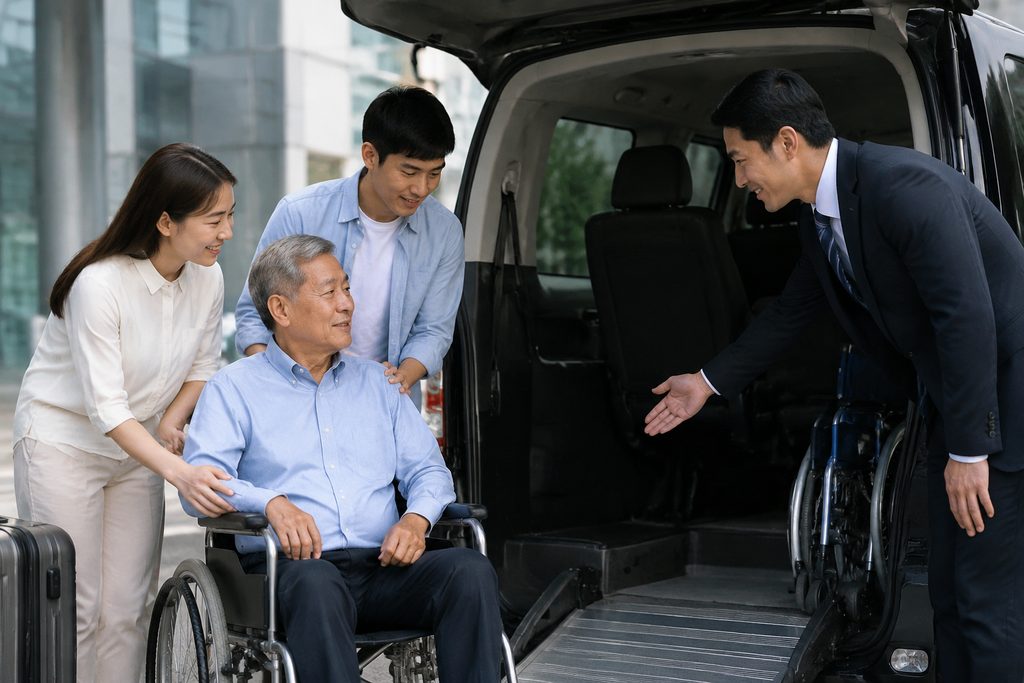
Medical Travel Package for Family China: The Short Answer
Arranging transport for a sick relative to a Chinese hospital typically requires an S2 visa, a hospital admission confirmation or appointment letter, and a ground logistics plan covering airport pickup, hospital navigation, and possibly a bilingual medical companion. A medical travel package for family China usually bundles these elements — visa document preparation, airport transfer, hospital registration support, and interpretation — with coordination fees starting from $300 and full VIP packages ranging from $5,000 to $8,000. The real complexity is not the flight. It is what happens after landing.
Most families discover that Chinese public hospitals do not offer remote pre-booking for ordinary outpatient clinics. You cannot simply email a hospital and reserve a bed. Surgery requires an in-person consultation first. That rule shapes everything about how you plan transport and arrival.
Who This Is Right For — and Who It Isn’t
Transporting a family member across borders for medical care is a serious decision. Some situations genuinely benefit from it. Others do not.
Good candidates typically include:
- Patients whose condition is stable enough for a commercial flight but who need treatment not available or affordable at home
- Families seeking a second opinion from a top-ranked Chinese specialty department before committing to surgery
- Patients with chronic conditions like orthopedic degeneration or cardiac issues where China’s high surgical volume is a real advantage
- Families who can dedicate one able-bodied adult to accompany the patient throughout the trip
Who should not pursue this:
- Patients in unstable condition requiring medical evacuation rather than commercial transport
- Anyone expecting to skip the standard consultation process and go straight to surgery
- Families without at least one person who can manage logistics, payments, and communication — even with a companion, someone must make decisions
- Patients whose condition requires continuity with an existing specialist team that cannot be replicated remotely
Being honest about who should stay home is part of responsible planning.
The Options, Compared
There is no single “transport arranged” service. What you actually need depends on the patient’s mobility, the hospital’s location, and how much support the family can provide independently.
| Option | What It Includes | Typical Cost | Best For |
|---|---|---|---|
| Self-managed arrival | Family handles visa, flights, taxi, hospital registration | $0 coordination fee; hospital costs only | Mandarin-speaking families with prior China experience |
| Airport transfer only | Round-trip airport pickup and drop-off | $200 round-trip | Stable patients with family already in China |
| Bilingual medical companion | Daily escort: registration, queueing, payment, translation, wayfinding | from $300/day | Non-Chinese-speaking patients navigating public hospitals |
| Hospital appointment coordination | Registration, medical card creation, proxy visit using patient records | from $300; refunded if appointment not secured | Families who want the consultation locked before flying |
| VIP end-to-end coordination | Visa document prep, transport, companion, hospital green-channel logistics, accommodation advice | $5,000–8,000 | High-acuity cases, families from the Middle East or Europe wanting full delegation |
The middle column — bilingual companion plus appointment coordination — covers most international families. The VIP tier makes sense when the patient cannot walk long distances, needs multiple departments, or when the family simply cannot be on the ground for the entire stay.
How to Arrange Transport for a Sick Relative to a China Hospital
Transport means three separate things: getting the visa, getting the patient physically from the airport to the hospital, and getting through the hospital’s intake process. Families often fixate on the flight and forget the other two.
The visa question comes first. Can a family member accompany a patient to China for surgery? Yes. The patient and accompanying relatives all apply for an S2 visa, which covers short-term private affairs including medical treatment. Stays exceeding 180 days fall under S1. The hospital’s international department or the coordination service provides an invitation letter and treatment confirmation, which the family submits with the visa application. M visas are for commercial trade — they have no relevance to medical travel.
Ground transport from Pudong International Airport to a hospital in central Shanghai takes roughly 45 to 60 minutes by car. From Beijing Capital Airport to the Haidian district hospitals, allow 60 to 90 minutes depending on traffic. An ambulance transfer for a non-ambulatory patient must be arranged through the hospital or a licensed private provider — not a regular taxi.
The intake process is where most families stall. A top-tier public hospital can see over 10,000 outpatient visits in a single day. Registration windows open early. Queues form before dawn. Without Chinese language ability, even finding the right building is hard. That is precisely what a bilingual medical companion handles — not medical care, but the physical navigation that makes care possible.
For the best hospital in Shanghai for international family treatment, families typically look at Zhongshan Hospital Fudan University for cardiac and general surgery, Ruijin Hospital for endocrinology and hematology, or the private international hospitals like Jiahui and United Family for English-speaking staff and direct insurance billing. Public hospital international departments sit in between — senior specialists with English support at roughly 1.5 to 2 times standard outpatient pricing.
What a Medical Travel Package for Family China Costs
Let’s put numbers on the table. These are coordination and logistics costs — hospital treatment charges are separate and vary widely by procedure and hospital tier.
- Airport transfer: $200 round-trip
- Bilingual medical companion: from $300 per day (4-hour or 8-hour shifts)
- Hospital appointment coordination: from $300, fully refunded if the appointment is not secured
- Written second opinion from a top specialist: $300–500
- Video consultation with a top specialist: $500–800
- Multidisciplinary team video consultation: $1,500–2,000
- In-person top-specialist consultation coordination: $800–1,200
- VIP end-to-end coordination: $5,000–8,000
One mechanism worth knowing: any consultation fee paid for a video or written opinion is credited in full toward on-the-ground coordination if the patient proceeds to travel within 90 days. That credit applies to coordination fees only — never to hospital treatment charges.
Hospital costs themselves remain the reason many families make the trip. A cardiac bypass at a top Chinese public hospital runs $12,000 to $20,000. The same procedure in the United States exceeds $120,000. Even with flights, accommodation, and coordination fees, the arithmetic often favors China.
Practical Considerations: Documentation, Payment, and Follow-Up
Before booking anything, gather the patient’s complete medical records: imaging files, lab reports, discharge summaries, current medication list. Chinese specialists will not proceed without them. Records should be translated into Chinese or English — the hospital’s international department can advise on format.
Payment at public hospitals is prepaid. Patients deposit funds at admission and settle the balance at discharge. International credit cards are not universally accepted at public hospital cashiers. Families should plan for UnionPay, Alipay, WeChat Pay, or a local bank transfer. Private international hospitals are more flexible and often bill insurers directly.
Insurance is another honest conversation. Chinese public hospitals do not typically bill foreign insurers directly. The family pays, then claims reimbursement from their insurer at home. Check the policy’s coverage for overseas treatment before departure.
Medical escort service China cost varies with the companion’s language pair, the hospital’s location, and the shift length. A companion does not provide medical advice — they translate, navigate, queue, and pay. For a family member who cannot speak Mandarin, that labor is not optional. It is the difference between a consultation that happens and one that does not.
Follow-up after returning home matters more than most families expect. The Chinese hospital will issue a discharge summary and medication plan. The patient’s home physician needs those documents translated and reviewed. Remote follow-up video consultations are available through most international departments, typically at $100–300 per session.
Frequently Asked Questions
Yes. The patient and accompanying relatives each apply for an S2 visa with the hospital’s supporting documents. There is no separate “medical escort visa” category. The S2 covers short-term private affairs including medical treatment and family accompaniment. Approval is never guaranteed and depends on the applicant’s nationality, documentation, and the consulate’s current requirements.
A bilingual medical companion starts at $300 per day for either a 4-hour or 8-hour shift. That covers registration, queueing, payment, translation, and wayfinding. It does not include hospital treatment charges, accommodation, or meals. Full VIP coordination with transport, visa document support, and hospital green-channel logistics runs $5,000 to $8,000.
Commercial airlines can refuse boarding to patients who are medically unstable or require continuous monitoring. In that case, a medical evacuation service with a flight nurse or physician is required. This is a separate industry from hospital coordination and costs substantially more. The hospital in China must also confirm it will accept the patient before evacuation is arranged.
No. Admission depends on the in-person consultation and the specialist’s clinical judgment. A coordination service can secure the consultation appointment and prepare the hospital’s medical card, but no legitimate service can promise admission or a specific surgery date. Anyone claiming otherwise is not being honest with you.
Visa assistance is typically included in coordination packages rather than sold separately. The cost is embedded in the appointment coordination fee (from $300) or the VIP package. The visa itself has a consular fee set by the Chinese embassy or consulate, which varies by nationality and processing speed. The real cost is time: document preparation, invitation letters, and consulate appointments take one to three weeks.
Your Next Step
Transporting a family member to China for medical care is manageable when the visa, the ground logistics, and the hospital intake process are handled in sequence rather than improvised on arrival. The families who struggle are the ones who book a flight first and ask questions later.
We are China Medical Services, a coordination team connecting international patients with over 340 top-ranked hospitals across 37 Chinese cities. We are not a hospital and we do not provide medical diagnoses. We handle the logistics — visa document preparation, appointment coordination, bilingual companions, and transport — so your family can focus on the medical conversation. When you are ready to explore options, request a free consultation through our patient services page. We will ask about the diagnosis, the records you have, and what support the family can provide on the ground. Then we will tell you honestly whether this trip makes sense.
For more medical information and treatment options in China, visit chinamedservices.com (China Medical Services).
