Health Checkup: A Full-Day Assessment in China’s Top Hospitals
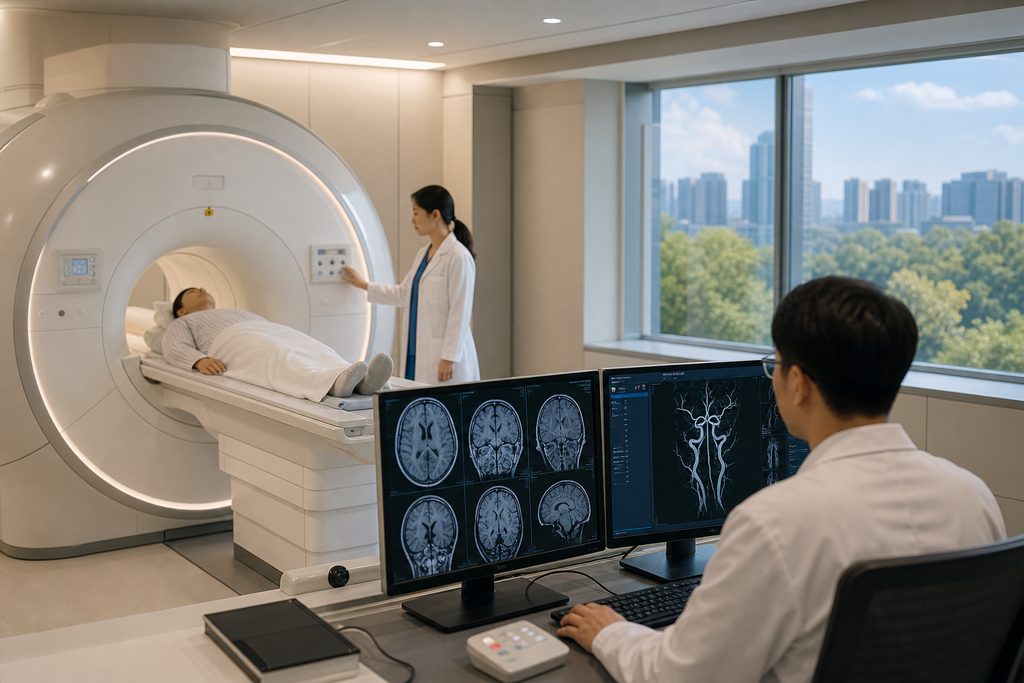
Health Checkup: A Full-Day Assessment in China’s Top Hospitals
In the United States, a comprehensive executive physical at a major academic medical center typically runs $3,000 to $8,000 and may require booking six months out. In China, an equivalent full-day assessment at a top-tier public hospital or JCI-accredited private facility costs between $300 and $1,200 — and can often be scheduled within one to two weeks. That gap explains why more international patients are asking about the full body checkup cost China offers and whether the quality holds up. The short answer: yes, if you know which hospitals to choose and how the system works.
Our team has helped patients from over 40 countries navigate this process. We know what gets lost in translation, which packages actually deliver value, and where the hidden friction points are. This article walks through exactly what a full-day health assessment in China includes, what it costs, and how to book one without getting burned.
How This Actually Works, Step by Step
The process is more structured than most Western patients expect. Here is the real sequence.
Step 1: You contact us with basic information. Age, gender, medical history, current symptoms or concerns, and any specific tests you want. No payment yet. We use this to match you with the right hospital — a public top-100 institution, a private international hospital, or a hybrid approach.
Step 2: We present 2-3 package options. Each includes a line-item breakdown of tests, the hospital name, the estimated cost, and the earliest available date. You choose. We then coordinate with the hospital’s international department or health management center to lock in your slot.
Step 3: You arrive for the assessment. A bilingual medical companion meets you at the hospital entrance. They handle registration, queue numbers, payment, and navigation between departments. You fast, they manage the logistics.
Step 4: Testing happens in a single day. Blood draw, imaging, cardiac screening, and specialist consultations are sequenced to minimize waiting. Most centers complete 40-60 individual checks within 4-7 hours.
Step 5: Results and interpretation. Many centers deliver preliminary bloodwork the same afternoon. A full written report — often in English at international departments — arrives within 3-7 days. We arrange a follow-up consultation to interpret findings and, if needed, connect you with a specialist.
That is the clean path. The messy version involves translation delays, misunderstood fasting requirements, and confusion about which building to enter. We handle those so you do not have to.
What a Full-Day Health Assessment in China Actually Includes
The phrase “full body checkup” means different things in different countries. In China, it is a standardized, protocol-driven process. A typical executive package at a top-tier hospital covers the following categories.
Laboratory analysis. Complete blood count, lipid panel, liver and kidney function, fasting glucose, HbA1c, thyroid panel, tumor markers (CEA, AFP, CA19-9, PSA for men, CA125 for women), urinalysis, and stool occult blood. Some packages add vitamin D, homocysteine, and inflammatory markers like hs-CRP.
Imaging. Chest X-ray or low-dose CT, abdominal ultrasound, thyroid ultrasound, and — for patients over 40 or with risk factors — coronary calcium scoring via CT. Women receive breast ultrasound or mammography; men receive testicular or prostate ultrasound. MRI is available as an add-on at most centers.
Cardiac assessment. Resting ECG, echocardiogram, and sometimes a treadmill stress test. At hospitals like Fuwai Hospital in Beijing — which performs over 14,000 cardiac surgeries annually — the cardiology screening is exceptionally thorough.
Specialist consultations. Internal medicine, ophthalmology, ENT, dental, and gynecology or urology. Each specialist reviews your results in real time and flags anything requiring follow-up.
Gastrointestinal screening. This is the big differentiator. In China, painless gastroscopy and colonoscopy under sedation are routinely included in premium packages. In the US, that combination alone often costs $3,000-5,000. In China, it adds roughly $300-500 to the package price.
What you will not get: a concierge lounge with espresso and robes. Chinese public hospitals prioritize clinical density over comfort. Private international hospitals like United Family or Jiahui offer a more Western feel — at roughly double the public hospital price. Both are legitimate choices depending on your priorities.
A Realistic Timeline
People assume the hard part is the medical testing. It is not. The hard part is the administrative lead time before you ever set foot in a hospital. Here is what a realistic schedule looks like.
| Stage | What Happens | Typical Duration |
|---|---|---|
| Day 1-3 | Initial consultation, package selection, hospital matching | 1-3 days |
| Day 4-14 | Hospital appointment confirmation; visa application if needed (S2 for medical purposes); flight booking | 1-2 weeks |
| Day 15-16 | Arrival in China, pre-assessment instructions review, fasting begins | 1 day |
| Day 17 | Full-day assessment at hospital | 4-7 hours |
| Day 18-24 | Complete written report delivered; follow-up video consultation to interpret results | 3-7 days |
| Day 25+ | Any recommended follow-up testing or specialist referral | Varies |
The forgotten step is visa processing. If you need an S2 visa for medical treatment, budget at least one to two weeks from application to approval. Some nationalities can enter visa-free for short stays, but do not assume. Check with the Chinese embassy or consulate in your country before booking flights.
Also forgotten: document translation. If you have prior imaging or biopsy reports, those need to be translated into Chinese before the assessment. We handle this as part of our coordination service, but it adds two to three days to the front end.
What Can Go Wrong — and What Happens Then
We would rather you hear this from us than discover it on your own.
The hospital cancels or reschedules. It happens. Public hospitals in China handle enormous patient volumes, and equipment maintenance or emergency cases can shift schedules. If your assessment gets moved, we rebook for the next available slot — usually within 48-72 hours — and adjust your travel logistics. You are not charged for the rescheduling.
Results reveal something serious. This is the scenario everyone fears and the reason you came. If the assessment finds a suspicious lesion, elevated tumor markers, or cardiac abnormalities, we immediately connect you with the relevant specialist at the same hospital. You are already in the system, which means follow-up imaging or biopsy can often be scheduled within days — not the weeks or months you might wait at home.
Language breakdown. Even at hospitals with English-speaking staff, the laboratory technicians, ultrasound operators, and nursing staff often speak only Mandarin. Without a bilingual companion, you will miss critical instructions — like when to drink the contrast agent or which floor to visit next. Our companions stay with you the entire day. That is not a luxury; it is the difference between a smooth assessment and a confusing, exhausting one.
You feel rushed. Chinese hospitals are efficient to the point of feeling mechanical. The ultrasound takes five minutes. The doctor reviews your ECG in thirty seconds. This is not negligence — it is a system designed for volume. If you want more time with each specialist, choose a private international hospital or request extended consultation slots in advance. We can arrange that.
Insurance refuses to pay. Most Western insurers do not cover preventive screening abroad unless it is bundled into a treatment plan. You will likely pay out of pocket. The good news: the full body checkup cost China charges is low enough that many patients self-pay without hesitation. Get pre-authorization in writing if you plan to claim.
Is a Full Body Checkup in China Worth It? A Decision Framework
The honest answer depends on why you are considering it.
It is worth it if: you are over 40, you have a family history of cancer or heart disease, you want a baseline health snapshot before starting a new treatment, or you live in a country with long wait times for preventive screening. The combination of low cost, comprehensive scope, and fast scheduling is genuinely difficult to match elsewhere.
It is less worth it if: you are under 30 with no symptoms and no family history, you already had a comprehensive checkup within the past year, or you are looking for a spa-like wellness retreat rather than a clinical assessment. Chinese health checkups are thorough but not luxurious. If you want the full-body MRI plus genetic testing plus concierge experience, that exists — but it costs $2,000-5,000 at private international hospitals, not $500.
One common mistake: patients book the cheapest package and then complain it did not include a colonoscopy. Read the line-item list carefully. If you want gastrointestinal screening, cardiac stress testing, or tumor markers, confirm those are included before you pay. We review every package with you in advance precisely because of this.
Another mistake: assuming all hospitals are equal. They are not. A checkup at a second-tier provincial hospital is not the same as one at a Fudan-ranked top-100 institution. The equipment is different, the radiologists’ experience is different, and the follow-up pathways are different. We only work with hospitals in the top 5% of China’s 35,000+ hospitals — the ones ranked by Fudan University or accredited by JCI.
Practical Considerations: Visas, Payment, and Follow-Up
Let us get specific about the logistics that actually matter.
Visa category. For a short-stay health assessment, you apply for an S2 visa with the purpose noted as medical treatment. The hospital provides an invitation letter and appointment confirmation, which you submit with your application. Family members accompanying you also apply for S2. Processing typically takes 5-10 business days, but embassy workloads vary by country. Apply early.
Payment method. Public hospitals require prepayment — usually via cash, Chinese debit card, or WeChat Pay/Alipay. International credit cards are not always accepted at public hospital counters. Private international hospitals accept major credit cards and often bill insurance directly. We advise patients on payment logistics before arrival so you are not stranded at the cashier window.
Insurance. As noted, preventive screening abroad is rarely covered. But if the assessment leads to a diagnosis and subsequent treatment, that treatment may be reimbursable depending on your policy. Keep every receipt and medical record. We provide itemized billing documentation to support claims.
Language and records. Request the final report in English. Top-tier hospitals with international departments provide this as standard. If your report is in Chinese, we arrange certified translation. You will also receive the raw imaging files — bring a USB drive or request digital delivery.
Follow-up at home. Your local physician should review the results. Chinese reference ranges for some biomarkers differ slightly from Western ranges, so a direct number-to-number comparison can mislead. We provide context on these differences and can arrange a video consultation with the Chinese specialist who reviewed your results if your home doctor has questions.
Frequently Asked Questions
A standard full-day package includes comprehensive bloodwork (30-40 markers), urinalysis, stool analysis, chest imaging, abdominal and thyroid ultrasound, ECG, echocardiogram, and consultations with internal medicine, ophthalmology, ENT, and dental specialists. Premium packages add painless gastroscopy and colonoscopy under sedation, coronary calcium scoring, and extended tumor marker panels. The exact list varies by hospital — always review the line-item breakdown before booking.
At public top-tier hospitals in Shanghai, executive screening packages range from $400 to $900 depending on scope. At private international hospitals like Jiahui or Parkway, the same comprehensive assessment runs $1,200 to $2,500. The price difference reflects service environment, English-speaking staff throughout, and direct insurance billing — not necessarily better diagnostic quality.
Yes. Chinese health checkup centers operate independently of the referral system common in Western countries. You do not need a doctor’s referral to book a package. You do need an appointment — walk-ins are not accepted at top-tier centers. We coordinate the booking, which typically secures a slot within one to two weeks.
The diagnostic equipment at top-100 Chinese hospitals is comparable to what you would find at major Western academic centers — often newer, since many Chinese hospitals have undergone recent infrastructure upgrades. The key variable is interpretation. Radiologists at high-volume Chinese centers read far more scans per day than their Western counterparts, which can be an advantage for pattern recognition. We recommend having your home physician review all findings as a second layer of verification.
You are already inside the hospital system. We immediately connect you with the relevant specialist — oncology, cardiology, gastroenterology — and coordinate follow-up testing. Because you are physically present in China, biopsy, advanced imaging, or specialist consultation can often be arranged within days. If you prefer to return home for treatment, we prepare a complete medical dossier for your local team.
Your Next Step
A full-day health assessment in China is one of the most cost-effective ways to get a comprehensive picture of your health — if you choose the right hospital and have the right support on the ground. Our team at China Medical Services has spent years building relationships with the country’s top-ranked institutions so international patients do not have to navigate the system alone. We do not practice medicine and we do not make clinical decisions. We handle the coordination, translation, and logistics so you can focus on the results.
If you are considering a full body checkup in China, start with a conversation. Tell us your age, medical history, and what you want screened. We will recommend specific hospitals and packages, give you honest pricing, and help you decide whether it makes sense for your situation. No pressure, no obligation. Just a clear picture of what is possible.
Your health deserves a thorough look. We are here to help you get it.
For more medical information and treatment options in China, visit chinamedservices.com (China Medical Services).
