Aftercare in China: Real Medication and Wound Care Costs Explained
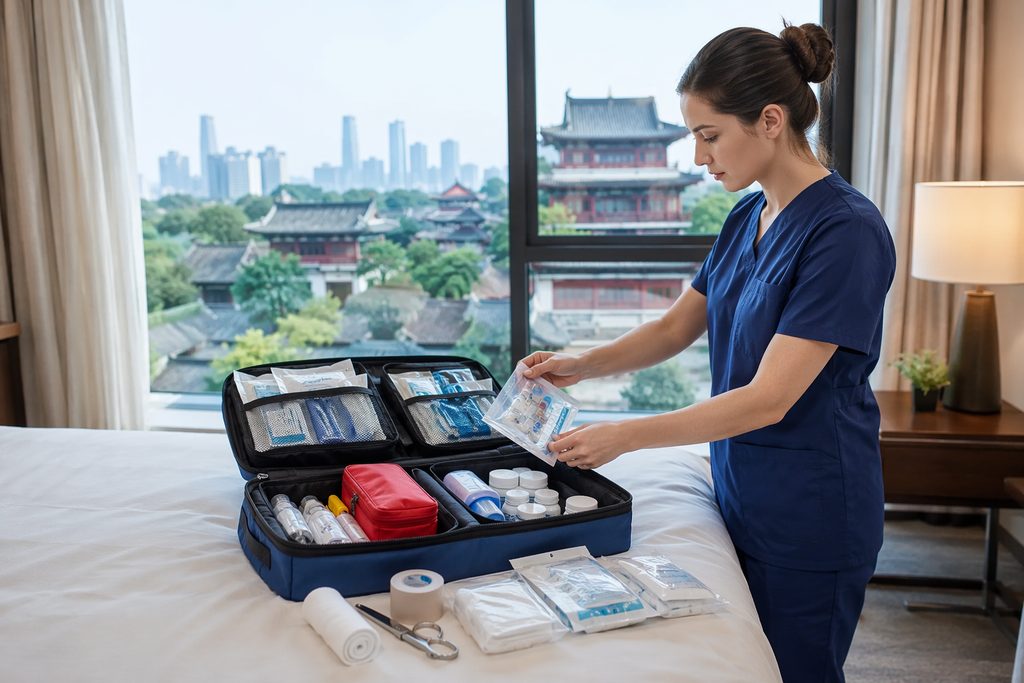
Aftercare: The Short Answer
You’ve probably heard that flying to China for surgery means you’re on your own once the incision is closed. The reality is more structured than that, though it depends heavily on where you have the procedure done. The wound care after surgery in China price typically ranges from $150 to $800 for uncomplicated postoperative management over two weeks, with medications adding another $50 to $300 depending on the prescription. That’s the headline number. But the real answer is messier than a single figure.
What you actually pay turns on three things: whether you’re treated through a public hospital’s international department, a private international hospital, or a standard public ward; how long you stay in China after surgery; and whether your wound heals without complications. A straightforward laparoscopic procedure with absorbable sutures and a single follow-up dressing change costs far less than open surgery requiring daily wound packing and observation.
Who This Is Right For — and Who It Isn’t
Planning aftercare in China makes sense for a specific kind of patient. You’re a good candidate if your procedure requires a recovery window of one to three weeks before you’re cleared to fly, if your surgeon wants to personally inspect the wound before discharge, or if the cost of equivalent aftercare at home would exceed the cost of staying in China. Patients from the US, for instance, often find that even with hotel costs added, a two-week postoperative stay in Shanghai costs less than a single wound-care clinic visit back home.
But this path isn’t for everyone.
- Good candidates: Patients having procedures with a defined healing timeline (orthopedic, cardiac, general surgery); patients who want the operating surgeon to manage early complications; patients traveling with a family member who can assist with daily wound care between clinic visits.
- Poor candidates: Patients with poorly controlled diabetes or immunosuppression who face elevated infection risk and may need prolonged monitoring; patients who cannot extend their stay beyond 10–14 days; patients whose home country requires specific documentation or wound-care protocols that Chinese providers may not be familiar with; anyone expecting 24/7 nursing care without explicitly booking and paying for it.
Being honest about that second list matters. If your wound needs six weeks of specialist attention, staying in China for all of it rarely makes financial sense. The smart play is often hybrid: two weeks in China, then transfer of care to a provider at home with a detailed discharge summary.
The Options, Compared
Aftercare isn’t one product. It’s a spectrum of settings, and the price differences are stark. Here’s how the main options stack up for a typical two-week postoperative wound care period in Shanghai.
| Setting | Typical 2-Week Aftercare Cost | What’s Included | Language Support | Best For |
|---|---|---|---|---|
| Public hospital, standard ward | $80–$200 | Dressing changes, basic wound inspection, generic medications | Minimal; bring a companion | Budget-conscious patients with uncomplicated healing |
| Public hospital, international department | $300–$800 | Dressing changes, surgeon follow-up, branded medications, English-speaking coordination | Good | Patients wanting the operating surgeon’s direct oversight |
| Private international hospital | $500–$1,500 | All of the above plus direct insurance billing, Western-style nursing, longer appointment slots | Excellent | Patients with insurance that covers international care, or those prioritizing comfort |
| Home nursing service (private) | $200–$600 | Nurse visits to your hotel or apartment for dressing changes and wound checks | Variable | Patients who can’t easily travel to a clinic daily |
The international department of a top public hospital is the sweet spot for most surgical patients. You get the operating surgeon’s team managing your wound, but at a fraction of private hospital pricing. A patient recovering from cardiac surgery at Fuwai Hospital’s international ward, for example, would pay roughly $500 for two weeks of follow-up wound care and medication adjustments — a figure that would be $3,000 or more at a private facility in the same city.
What Medications Are Actually Prescribed After Surgery in China
This is where patients get surprised, sometimes pleasantly. The postoperative medication cost Shanghai hospital patients report is consistently low compared to Western benchmarks. A standard post-surgical prescription in China typically includes:
- Analgesics: Paracetamol or, for more significant pain, tramadol. Opioid prescribing is far more conservative than in the US.
- Antibiotics: Usually a short course (3–5 days) of a first- or second-line agent like cefazolin or amoxicillin-clavulanate. Prophylactic antibiotics are stopped within 24–48 hours in most clean surgeries.
- Gastric protectants: Often prescribed alongside NSAIDs or antibiotics to prevent stomach irritation.
- Anticoagulants: For orthopedic or major abdominal surgery, low-molecular-weight heparin injections or oral rivaroxaban may be prescribed for 10–30 days.
- Wound care supplies: Saline solution, sterile gauze, adhesive dressings, and sometimes silver-based or hydrocolloid dressings for complex wounds.
A full two-week supply of these medications at a Chinese hospital pharmacy typically runs $30–$150. The same basket at a US retail pharmacy would be $200–$600 before insurance. One caveat: if you need a medication that’s only available as a branded import in China, costs rise. Generic domestic versions are cheap and widely used, but some patients specifically request imported brands, which can triple the price.
How to Care for a Surgical Wound After Medical Tourism in China
Here’s the part that actually determines whether your recovery goes smoothly. The mechanics of wound care are universal, but the logistics of doing it as a foreign patient in China have specific wrinkles. Let’s walk through what the first two weeks look like.
Days 1–3: In-hospital. Your wound is managed by nursing staff. You’ll likely have a drain or dressing that gets checked daily. This is when complications like hematoma or early infection show up. The hospital handles everything. Your job is to report pain, redness, or fever promptly.
Days 4–7: First outpatient follow-up. Most surgeons want to see the wound once during this window. If you’re in an international department, this appointment is usually scheduled before discharge. Expect a 15–30 minute visit: dressing removal, wound inspection, maybe suture removal if they’re non-absorbable and the site is healing well.
Days 8–14: Self-care plus monitoring. By now you’re likely managing the wound yourself with supplies from the hospital pharmacy. Keep the area dry, change dressings as instructed, and watch for the warning signs: increasing redness, purulent discharge, fever above 38°C, or wound edges pulling apart. If any of these appear, you go back to the hospital — do not try to manage a wound infection alone in a hotel room.
The single biggest mistake international patients make is leaving China too early. A wound that looks fine on day five can develop a seroma or superficial infection on day nine. If you’re already home, you’re now managing a complication without the operating surgeon’s input. Staying an extra 5–7 days costs money, but it’s cheap insurance against a much more expensive problem.
Is Aftercare Included in Medical Tourism Packages China?
Rarely, and you should be suspicious of any package that claims it is. Most surgical quotes from Chinese hospitals cover the procedure, the inpatient stay, and standard in-hospital wound care. Outpatient follow-up visits, medications after discharge, and any home nursing are billed separately. Some private international hospitals bundle a single follow-up visit into the surgical package, but that’s the exception, not the rule.
That means when you’re comparing quotes, you need to ask a specific question: “What exactly happens after I’m discharged, and what does it cost?” A quote of $12,000 for a procedure with no aftercare included may end up costing $13,500 once you add two follow-up visits, medications, and dressing supplies. A quote of $13,000 that includes a two-week aftercare plan is actually cheaper in real terms.
If you’re working with a coordinator to book surgery with aftercare package China, get the aftercare details in writing before you pay anything. Specifically: how many follow-up visits are included, who performs them (the surgeon or a junior doctor), what medications are covered, and what happens if your wound needs attention beyond the standard protocol. Verbal promises mean nothing when you’re sitting in a hotel room with a draining wound at 9pm.
What Aftercare Costs and What Drives the Variance
Let’s put concrete numbers on the table. For a typical surgical patient staying in Shanghai for two weeks post-discharge:
- Dressing changes and wound checks: $150–$500 total, depending on frequency and whether you’re seen in a public or private setting.
- Medications: $30–$150 for a standard two-week course.
- One follow-up with the operating surgeon: $50–$200 in an international department, $200–$500 at a private hospital.
- Hotel near the hospital: $60–$150 per night, so $840–$2,100 for two weeks.
- Transportation to and from appointments: $50–$150 total if using taxis or ride-hailing.
All in, a two-week aftercare period in Shanghai runs roughly $1,100–$3,100 including accommodation. The variance comes from your choice of hospital tier, how quickly your wound heals, and whether you need daily professional dressing changes or can manage every-other-day self-care. A complex wound requiring daily packing by a nurse will push you toward the top of that range. A clean laparoscopic incision with absorbable sutures might need only two clinic visits total.
Compare that to the US, where a single wound-care clinic visit without insurance runs $200–$400, and a two-week course of post-surgical medications can hit $500. The arithmetic is not subtle.
Practical Considerations: Records, Payment, and Follow-Up at Home
Before you leave China, there are documents you must have. A discharge summary in English. A wound-care protocol in English. A list of every medication prescribed, with generic names, dosages, and duration. Pathology or lab results if relevant. Your local doctor at home needs all of this to take over your care safely. Chinese hospitals will provide these on request, but you may need to push — and if you’re working with a bilingual coordinator, this is exactly the kind of thing they handle.
Payment is another wrinkle. Chinese public hospitals, including their international departments, generally require upfront payment for outpatient follow-up visits and pharmacy purchases. Cash, UnionPay cards, and sometimes international credit cards are accepted. Private international hospitals often bill insurance directly, but you should confirm this with your insurer before assuming it. If your home insurance doesn’t cover care in China, you’re paying out of pocket and claiming reimbursement later — which means keeping every receipt.
And one more thing: your S2 visa. Most surgical patients enter China on an S2 visa with a note indicating medical treatment. If your aftercare requires a stay longer than 180 days, you’d need an S1. For the vast majority of surgical recoveries, S2 is the correct category, and the hospital’s international department can provide supporting documentation if you need to extend your stay.
For patients considering specific destinations, our guides to top hospitals in Shanghai and medical treatment in Beijing break down what each city offers for surgical aftercare. And if you’re still evaluating where to have your procedure, the ranked hospital database is the place to start.
Frequently Asked Questions
For minor procedures, sometimes. For anything involving general anesthesia, a significant incision, or a drain, most surgeons want you to stay at least 7–14 days. Flying too early increases the risk of deep vein thrombosis and wound complications at altitude. Your surgeon should clear you for flight in writing before you book a ticket.
You’ll be treated by your local healthcare system, not by the Chinese hospital. That’s why the discharge documentation matters so much. Your home doctor needs to know exactly what was done, what sutures or implants were used, and what medications you’ve already had. A superficial wound infection is usually manageable anywhere. A deep infection involving hardware or a body cavity is a different story, and you may need to return to China or find a local specialist.
The basics are the same: sterile gauze, saline, adhesive dressings, antiseptic solutions. Chinese hospitals stock both domestic and imported brands. If you have a specific product you trust, bring it with you or ask the hospital pharmacy to source an equivalent. Don’t assume a brand name from home will be available.
In most Chinese hospitals, the operating surgeon leads the team that manages your aftercare, but the day-to-day wound checks may be done by a resident or nurse. In international departments, you can usually request that the attending surgeon sees you at least once during the follow-up period. In private hospitals, direct access to your surgeon is more common.
Your Next Step
Aftercare is where medical tourism succeeds or fails. The surgery itself is a discrete event with a clear price tag. The weeks after it are open-ended, and that’s where patients who didn’t plan get burned. Our team at China Medical Services helps international patients coordinate surgical aftercare in China — from booking follow-up appointments to arranging bilingual companions who can translate wound-care instructions and handle pharmacy runs. We’re not a hospital, and we don’t give medical advice. We’re the logistics layer that makes recovery in a foreign country manageable. If you’re weighing surgery in China and want a clear picture of what aftercare will actually cost and look like, start with a free consultation. We’ll walk you through it, no pressure, no obligation.
For more medical information and treatment options in China, visit chinamedservices.com (China Medical Services).
