Athlete Checkups: What to Test and Where to Get Them
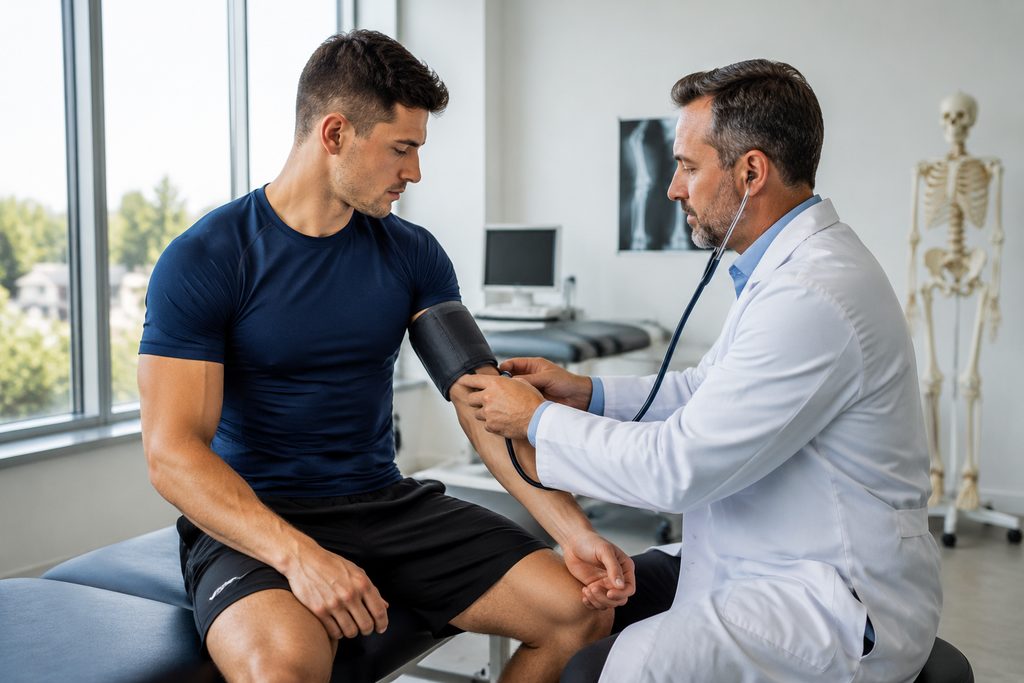
When 34-year-old triathlete Daniel collapsed during a training ride last spring, his wife assumed dehydration. The emergency room found something else: an arrhythmia that had never shown up on a standard physical. Daniel had been getting annual checkups for years. The problem was what those checkups didn’t test. For athletes, the standard panel simply isn’t enough. So what should actually be on the list? And where can you get it done without waiting months or spending a fortune? The athlete health screening cost China offers one compelling answer — comprehensive panels at a fraction of Western prices.
We coordinate these screenings every week for runners, cyclists, swimmers, and team-sport athletes from Europe, North America, and the Gulf. The questions are always the same: what to test, how much it costs, and whether the results will be accepted back home. Here’s the full picture.
How This Actually Works, Step by Step
The process starts with your medical records and training history. You send us any previous test results, a list of current medications, and a summary of your training load and competitive level. A sports medicine physician at one of our partner hospitals reviews this material. They determine which tier of testing you need — recreational athlete, competitive amateur, or elite/professional. Each tier has a different protocol.
Next comes scheduling. Most athletes book their screening 2 to 4 weeks in advance. The hospital confirms the date, and we handle the deposit payment. You fly in, usually to Shanghai or Beijing. The testing itself takes 1 to 2 full days depending on the tier. Results are delivered within 3 to 5 working days, with a written summary in English and a video consultation to walk through findings.
What happens after results? If everything is clear, you get a full report to take home to your regular physician. If something shows up — an elevated cardiac marker, a suspicious ECG pattern, low ferritin — the same hospital can schedule follow-up imaging or specialist consultation, often within the same week. That’s the advantage of doing this at a hospital rather than a standalone lab.
Athlete Health Screening Cost China: What the Numbers Actually Look Like
Let’s talk money, because that’s usually the first question. A comprehensive athletic screening at a top-tier Chinese hospital typically runs between $400 and $1,200 USD depending on depth. That includes cardiology workup, blood panel, pulmonary function, and musculoskeletal assessment. The same package in the United States at a sports medicine center commonly costs $2,500 to $5,000. In the UK, private clinics charge £1,800 to £3,500 for comparable depth.
| Screening Component | China (USD) | USA (USD) | UK (GBP) |
|---|---|---|---|
| Resting ECG + stress ECG | $80–150 | $400–800 | £300–600 |
| Echocardiogram | $100–200 | $800–1,500 | £500–900 |
| Full blood panel (30+ markers) | $60–120 | $300–600 | £250–450 |
| VO2 max / metabolic testing | $150–300 | $500–1,000 | £400–700 |
| Musculoskeletal ultrasound | $50–100 | $250–500 | £200–400 |
Prices vary by hospital and case complexity. A public hospital’s international department costs less than a private facility like United Family or Jiahui. But even the high end stays well below Western equivalents. That price gap is why we see a growing number of athletes combining a screening with a short trip.
What Tests Do Athletes Need for an Annual Checkup?
This is the question that matters more than cost. Because a standard “executive physical” misses the things that actually threaten athletic performance and longevity. Here’s what a proper athletic annual checkup includes.
Cardiac screening. The single most important piece. Sudden cardiac death in athletes is rare — roughly 1 in 50,000 per year — but it’s the leading medical cause of death during sport. A resting 12-lead ECG catches most inherited conditions. Adding a stress ECG and echocardiogram catches more. If you’re over 35, or you have a family history of early heart disease, or you train more than 10 hours per week, this tier is non-negotiable.
Blood work. Not the basic CBC. Athletes need ferritin (iron stores), vitamin D, vitamin B12, thyroid panel, testosterone or estrogen levels, cortisol, and inflammatory markers like CRP. Overtraining syndrome shows up in blood work long before it shows up in performance. A low ferritin in a female endurance athlete, for example, explains fatigue that no amount of rest fixes.
Pulmonary function. Exercise-induced bronchoconstriction affects up to 20% of athletes and often goes undiagnosed. Spirometry with a bronchial provocation test identifies it. If you wheeze after hard sessions or struggle in cold air, this is essential.
Musculoskeletal assessment. A sports medicine physician checks joint stability, muscle imbalances, and old injury sites. Ultrasound can spot tendinopathy before it becomes a tear. For runners, a gait analysis with force plates adds useful data.
Metabolic and body composition testing. VO2 max, lactate threshold, and DEXA scan for body composition. These establish baselines. Without them, you can’t measure whether training changes are actually working.
Is Cardiac Screening for Athletes Available in Beijing?
Yes — and Beijing is one of the strongest locations for it. Fuwai Hospital is the highest-volume cardiac center in the world, performing over 14,000 cardiac surgeries annually. Its sports cardiology and preventive cardiology departments run comprehensive athlete screening protocols. The hospital’s international department handles foreign patients with English-speaking coordination.
Peking Union Medical College Hospital (PUMCH) is another top option in Beijing. Its cardiology department is consistently ranked among China’s top 10 for the specialty, and the international medical services division is accustomed to Western patients. Both hospitals offer same-week ECG, stress testing, echocardiography, and 24-hour Holter monitoring.
For athletes who prefer a private setting, Beijing United Family Hospital provides cardiac screening with direct insurance billing and fully English-speaking staff. The trade-off is cost — roughly 1.5 to 2 times the public hospital international department rate. But for some patients, the convenience is worth it.
Our team handles Beijing hospital coordination for cardiac screening regularly. The process is straightforward once you know which department to contact and what documents to bring.
A Realistic Timeline
Here’s what the actual schedule looks like, including the steps people forget.
| Stage | What Happens | Duration |
|---|---|---|
| Week 1 | Records submitted, physician review, testing tier determined | 3–5 working days |
| Week 2 | Hospital confirmation, payment deposit, travel booking | 2–7 days |
| Week 3 | Visa processing (S2 visa for medical purposes) | 5–10 working days |
| Arrival | Day 1: blood draw, ECG, echocardiogram, pulmonary testing | 1 day |
| Arrival | Day 2: stress test, VO2 max, musculoskeletal assessment | 1 day |
| Post-testing | Results compiled, English report written | 3–5 working days |
| Follow-up | Video consultation to review findings | 30–45 minutes |
Total time from first contact to final report: 4 to 6 weeks. The visa step catches people off guard. China does not have a dedicated “medical visa” for short stays. The S2 visa covers medical treatment and private affairs, and your hospital appointment letter supports the application. We provide guidance on this, but approval is always at the embassy’s discretion.
What Can Go Wrong — and What Happens Then
Let’s be honest about the failure modes. They exist, and you should know them before you book.
Abnormal findings. A screening sometimes finds something. An ECG shows a repolarization abnormality. Blood work reveals anemia. A stress test produces chest pain. This isn’t a failure of the screening — it’s the screening doing its job. What happens next? The same hospital schedules follow-up. A cardiac MRI, a specialist consultation, a repeat test. Because you’re already in the system, this happens in days, not months. If the finding is serious, the sports cardiologist tells you plainly whether you can keep training.
Language friction. Even at international departments, some technicians speak limited English. This is where a bilingual medical companion earns their fee. We provide this service starting from $300 per day — someone who handles registration, payment, translation, and navigation. For a 2-day screening, that’s a modest addition that removes most of the stress.
Results not accepted at home. Occasionally, a Western physician questions a Chinese lab result. The fix is simple: our partner hospitals use internationally calibrated equipment and can provide methodology documentation. Major hospitals like Fuwai and PUMCH have international accreditation. If your home physician needs clarification, the hospital can provide it in writing.
Travel disruption. Flights get delayed. Visas get delayed. We’ve seen both. The screening can usually be rescheduled within the same week if you’re flexible. If you need to cancel entirely, the hospital’s refund policy applies — typically a partial refund depending on notice given.
Sports Physical Exam Shanghai Price: What You Get at Each Tier
A proper athletic checkup includes resting and stress ECG, echocardiogram, comprehensive blood panel (ferritin, vitamin D, B12, thyroid, inflammatory markers), pulmonary function testing, musculoskeletal assessment, and optionally VO2 max and body composition analysis. Standard executive physicals omit most of these.
In most cases, yes. Major Chinese hospitals use internationally calibrated equipment and provide methodology documentation on request. Top-ranked institutions like Fuwai and PUMCH have international accreditation. If your home physician has questions, the hospital can clarify in writing.
You need an S2 visa, which covers medical treatment and private affairs for short stays. Your hospital appointment letter supports the application. Processing takes 5 to 10 working days. There is no dedicated “medical visa” category for short-term testing.
Follow-up testing happens at the same hospital, usually within days. If the finding affects your ability to train, the sports cardiologist or physician tells you directly. You leave with a clear plan — not just a concerning number on a lab report.
Your Next Step
An athletic checkup is only as good as the protocol behind it and the people reading the results. That’s the whole game. Our team at China Medical Services coordinates screenings at 340+ top-ranked hospitals across 37 cities — we handle hospital matching, appointment booking, bilingual accompaniment, and visa guidance. We don’t provide medical advice or promise outcomes. What we do is make the logistics disappear. If you’re considering a screening, tell us about your training and your goals — we’ll map out what to test and where.
Testing is the easy part. Knowing what to test is where most athletes go wrong. Now you know.
Frequently Asked Questions
Yes. The hospitals used for international patients are JCI-accredited and follow the same international safety standards as top hospitals in the US and Europe. Surgical teams perform high volumes of procedures — often more than their Western counterparts — which studies show leads to better outcomes.
Costs vary by procedure and hospital, but international patients typically save 40-80% compared to US prices — even when factoring in travel and accommodation. A consultation with our team will give you an exact, all-inclusive quote with no hidden fees.
Send us your existing medical reports to get started. We handle everything from hospital selection and appointment scheduling to visa assistance and post-operative recovery planning. Your medical records are reviewed by the specialist before you even book a flight.
For more medical information and treatment options in China, visit chinamedservices.com (China Medical Services).
