Inpatient Companion: Monitoring Your Comfort and Safety in China
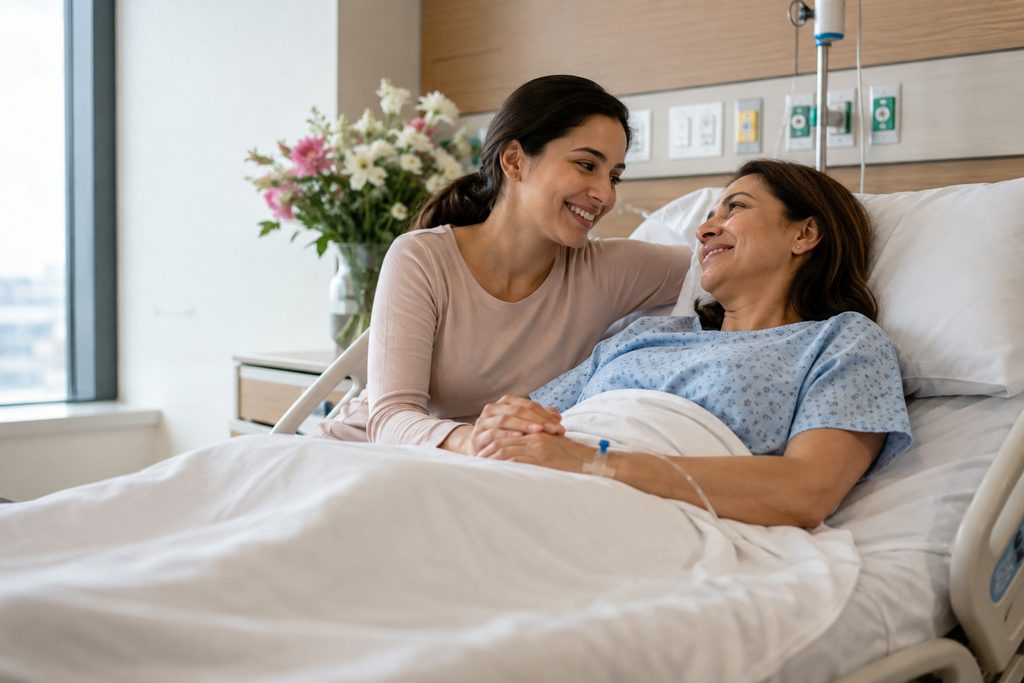
According to a 2024 report from China’s National Health Commission, over 800,000 international patients received inpatient care in Chinese hospitals. Many arrived without family support. That gap created a quiet but essential service: the inpatient companion. Understanding the real inpatient companion service cost China requires looking beyond a daily rate. It means examining what a companion monitors, how hospitals view them, and why some patients need one while others don’t.
What an Inpatient Companion Actually Does in China
The phrase “monitoring your comfort” sounds soft. The work is not. A hospital companion in China sits beside a patient for 8, 12, or 24 hours. They watch IV drips for air bubbles or flow changes. They record fluid intake and output when nurses ask. They adjust bed positions, help with bedpans, and communicate with the nursing station when pain spikes or a monitor beeps.
But the job goes deeper than that.
Chinese public hospitals operate at enormous scale. A single ward nurse may cover 15 to 20 patients on a night shift. That is not a criticism. It is simply the staffing reality in a system handling over 2.4 billion outpatient visits annually. What does an inpatient companion do in China that a nurse cannot? They provide continuous one-to-one presence. They translate. They fetch warm water, hold a phone for a video call with family overseas, and notice when a patient’s breathing changes before a machine does.
Is It Safe to Hire a Hospital Companion in Beijing?
Safety is the first question families ask. Is it safe to hire a hospital companion in Beijing? The honest answer is yes, if you hire through a structured channel and not through a stranger approaching you in the lobby.
Here is what changes the risk profile. Reputable agencies conduct background checks, verify identity documents, and maintain contact with the companion throughout the shift. They also carry basic liability coverage for incidents like falls or equipment mishandling. Independent contractors found through social media or hallway solicitation offer no such protections.
Beijing’s top-tier hospitals — including Peking Union Medical College Hospital and Beijing Friendship Hospital — have international departments accustomed to foreign patients. Their nursing staff understand that companions will be present. That reduces friction. But it does not eliminate the need to clarify roles early.
Inpatient Companion Service Cost China: Real Numbers
Now the figure readers actually search for. Inpatient companion service cost China typically ranges from $300 to $500 per 24-hour day for a bilingual companion in a first-tier city. Half-day shifts of 8 hours start around $150 to $250. Night-only shifts of 12 hours often run $200 to $350.
Those numbers shift by city. A private nurse for hospital stay Shanghai price tends toward the higher end of those ranges. Shanghai’s cost of living and the density of international patients push rates up. Beijing sits slightly lower. Guangzhou and Chengdu often come in 15% to 25% cheaper for comparable service.
What drives the variance? Three factors. First, language ability — English-speaking companions command a premium over Mandarin-only workers. Second, clinical familiarity — a companion with experience in oncology wards or post-cardiac-surgery recovery costs more than a general sitter. Third, agency overhead — structured providers with insurance and backup staffing charge more than informal arrangements.
| Service Level | Duration | Typical Cost (USD) | Best For |
|---|---|---|---|
| General companion, Mandarin-speaking | 12-hour day | $150–250 | Basic monitoring, errands |
| Bilingual companion, English/Chinese | 12-hour day | $200–350 | International patients, translation |
| Bilingual companion, English/Chinese | 24-hour | $300–500 | Post-surgical recovery, ICU step-down |
| Specialized companion (oncology, cardiac) | 24-hour | $400–600 | Complex cases needing clinical literacy |
These figures reflect 2025–2026 market rates in Beijing, Shanghai, and Guangzhou. They vary by hospital and case complexity. Always confirm what a quote includes before committing.
Book 24 Hour Hospital Sitter China Medical Tourism: What Packages Include
Many international patients search for ways to book 24 hour hospital sitter China medical tourism packages before they arrive. The phrase suggests a product you can order online like a hotel room. The reality is more layered.
Reputable coordinators structure this as a service package with defined components. A typical 24-hour package includes the companion’s shift coverage (often split between two workers to prevent fatigue), daily written updates to family overseas, coordination with the ward nursing station, and emergency escalation protocols. Some packages add airport pickup, pharmacy runs, and meal sourcing for the patient.
What packages do not include matters just as much. They do not include medical decisions. Companions cannot adjust IV rates, administer medication, or override a physician’s orders. They do not guarantee a specific hospital bed or faster admission. And they do not replace the need for a designated medical decision-maker who can sign consent forms.
Inpatient Care Companion Packages for Foreigners China: What to Verify
Inpatient care companion packages for foreigners China vary widely in quality. Before paying anything, verify five things.
First, confirm the companion’s legal work status. Foreign patients sometimes assume any Chinese national can work as a companion. Not true. Structured agencies employ companions formally, with contracts and tax registration. Informal workers may disappear mid-shift without recourse.
Second, ask about hospital access rules. Some public hospital wards restrict non-family visitors during certain hours. A companion needs to know these rules before day one. Third, clarify the cancellation policy. Surgery dates shift. A companion booked for Tuesday may be needed Thursday instead. Flexible rescheduling within 48 hours should be standard.
Fourth, understand the language match. “English-speaking” covers a spectrum from basic survival phrases to near-fluency. Ask for a recorded introduction or a brief video call. Fifth, confirm backup coverage. If your companion gets sick on day five, who replaces them? An agency with a roster of 20 workers answers differently than a solo operator.
Private Nurse for Hospital Stay Shanghai Price: What You’re Really Paying For
A private nurse for hospital stay Shanghai price often surprises patients. They expect a number close to a hotel concierge. They get a quote closer to a specialist service. Here is why.
Shanghai’s international hospital wards — at facilities like Jiahui International Hospital or Shanghai United Family Hospital — already provide higher nurse-to-patient ratios. A private companion there supplements, not replaces, that care. In public hospital international departments, the companion fills a larger gap. The price reflects the intensity of the need.
You are paying for continuous presence. Eight hours of a companion’s attention. Their ability to catch early signs of discomfort, communicate them in Chinese to the ward staff, and relay accurate information back to you in English. That is not unskilled labor. That is a trained observer who happens to also fetch blankets.
Who This Is Right For — and Who It Isn’t
A companion makes sense in specific situations. Elderly patients traveling alone. Post-operative patients whose family cannot stay for the full recovery period. Patients with limited Mandarin who need a bridge to the nursing team. Parents whose child is hospitalized and who need rest themselves.
But a companion is not right for everyone.
If you are fully mobile, speak conversational Mandarin, and have a family member present, you may not need one. If your hospital is a private international facility with English-speaking nursing staff and low patient ratios, the marginal value drops. And if your budget is tight, spending on a companion instead of a better hospital ward is the wrong trade.
Practical Considerations: Paperwork, Payment, and Hospital Rules
Hiring a companion in China involves more logistics than most patients expect. Start with payment. Most agencies accept WeChat Pay, Alipay, or bank transfer. International credit cards are less common for this service. Bring a local payment method or arrange payment through your medical coordinator.
Hospital rules matter too. Public hospital wards often limit non-family overnight stays. Some require written permission from the attending physician. Others restrict companions to specific visiting hours. Clarify this before booking. A companion denied ward access at 10pm is useless to you.
Visa status is another layer. Patients traveling on an S2 visa for medical treatment can bring a family member on the same category. But a hired companion is a Chinese national or legal resident — they do not need a visa. That simplifies things. Your coordinator should still verify the companion’s right to work in the city where your hospital is located.
Documentation helps. Provide your companion with a one-page summary: your diagnosis, allergies, current medications, emergency contact, and any cultural or religious needs. This is not a medical record. It is a communication tool. It prevents confusion at 3am when you cannot explain yourself.
Frequently Asked Questions
Expect $150 to $250 for a 12-hour day shift with a general companion, and $300 to $500 for 24-hour bilingual coverage in Beijing or Shanghai. Specialized companions with oncology or cardiac experience run $400 to $600 per 24 hours. Prices vary by city, language requirement, and agency structure.
No. Companions are not medical professionals and cannot sign consent forms, adjust treatment, or communicate clinical instructions to staff. You or a designated family member must handle all medical decisions. A companion can translate and facilitate, but the decision authority stays with you.
This is the strongest argument for using a structured agency rather than an independent worker. Reputable agencies maintain backup rosters and will replace a no-show within hours. Independent contractors offer no such guarantee. Ask about replacement policy before you pay.
It depends on the hospital and ward. Many public hospital wards restrict overnight stays to one family member. Some international departments permit hired companions with prior approval. Always confirm with the ward nursing station before booking a 24-hour shift.
No. A private nurse holds a nursing license and can perform clinical tasks like medication administration and wound care. A companion provides non-clinical support — monitoring, translation, comfort care, and communication. In China, the term “private nurse” is sometimes used loosely, so clarify credentials when comparing services.
Your Next Step
Hiring an inpatient companion in China is a practical way to protect comfort and safety when family cannot be present. The key is matching the right level of service to your actual needs — not overpaying for clinical skills you don’t require, but not under-hiring when language barriers and post-surgical vulnerability are real.
China Medical Services coordinates bilingual companion arrangements for international patients at top-ranked hospitals across Beijing and Shanghai. We are not a hospital and we do not provide medical advice. We help you understand your options, verify companion credentials, and arrange support that fits your hospital’s rules and your budget. If you are weighing whether a companion makes sense for your upcoming treatment, request a free consultation at our companion services page. We’ll walk through your specific situation and give you an honest recommendation.
The right companion does not replace good medical care. They make it easier to receive. That is the whole point.
For more medical information and treatment options in China, visit chinamedservices.com (China Medical Services).
