Hospital Matching: Finding the Best Hospital in China for Foreigners
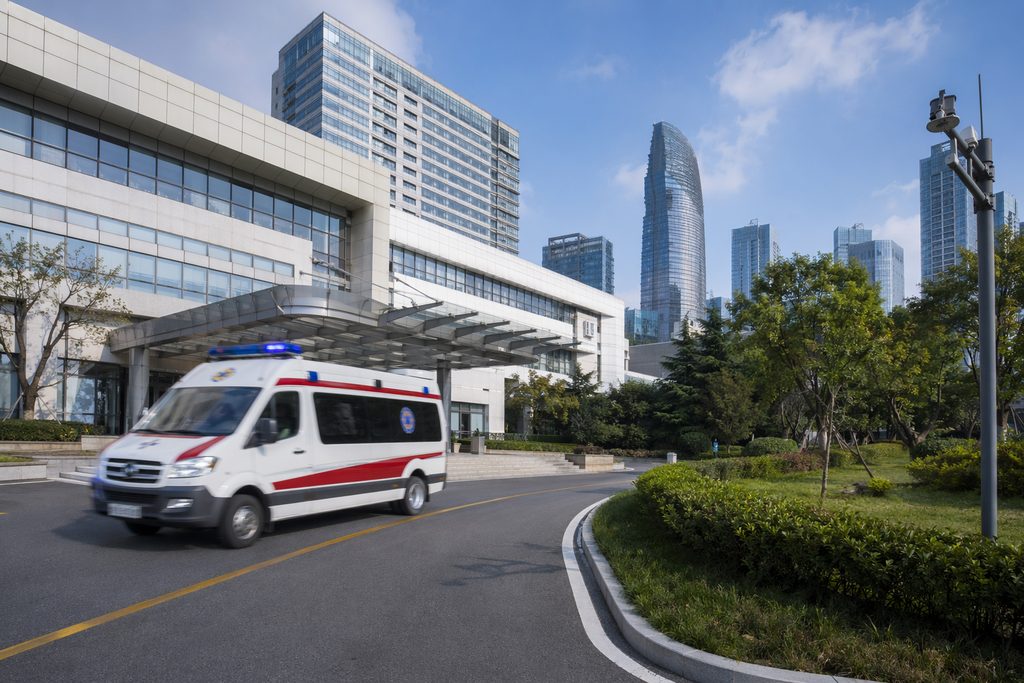
Have you ever stared at a list of 3,400 hospitals and felt completely paralyzed? That is the reality for most international patients considering China for medical care. The search for the best hospital in China for foreigners usually starts with confusion. You are not looking for a hotel. You are looking for a facility that can handle complex surgery, communicate in English, and navigate the visa process without breaking down. Our team at China Medical Services spends every day matching patients with the right institutions across 37 cities. The good news: China has 340+ top-ranked hospitals that actively welcome foreign patients. The challenge: knowing which one fits your specific diagnosis.
How This Actually Works, Step by Step
The process is not a single click. It is a sequence. Here is the real order of operations when you want to access a hospital that welcomes foreigners.
First, you send us your existing medical records. MRI scans, biopsy reports, blood work, discharge summaries. We translate these into Chinese. Without translation, no top-tier surgeon will review your case. This step takes 2 to 3 days.
Second, we match your condition to the right department. Not the right hospital brand. The right department. A hospital famous for cardiac surgery may be mediocre for spinal deformity. We use the Fudan University hospital rankings—the most authoritative list in China—to identify which departments rank in the top 10 nationally for your specific condition. You can browse these rankings yourself on our specialty-specific hospital lists.
Third, you choose your engagement level. A written second opinion costs $300 to $500. A top-specialist video consultation runs $500 to $800. Or you can fly to China for an in-person consultation, which we coordinate for $800 to $1,200. The consultation fee is credited in full toward on-the-ground coordination if you proceed with treatment within 90 days.
Fourth, we handle the logistics. Hospital registration, appointment scheduling, bilingual medical companion, airport pickup, accommodation. You arrive. You meet the doctor. You proceed with treatment.
What “Welcomes Foreigners” Actually Means in China
Every hospital in China technically accepts foreign patients. But “accepting” and “welcoming” are different things. A hospital that welcomes foreigners has three features: an international department, English-speaking coordinators, and experience with overseas insurance paperwork.
Public hospitals dominate the top of the Fudan rankings. Hospitals like Peking Union Medical College Hospital in Beijing and Zhongshan Hospital in Shanghai run dedicated international medical centers. These centers charge 1.5 to 2 times the standard rate but provide English-speaking nurses, priority scheduling, and private rooms. The trade-off is cost. The standard public pathway is cheap but chaotic—single-day outpatient volumes at top hospitals can exceed 10,000 patients. Without Chinese language skills, you will not survive the standard pathway.
Private international hospitals offer a different experience. United Family, Jiahui, Parkway, and Raffles operate JCI-accredited facilities with Western-style care. Direct insurance billing. English-speaking staff. No crowds. The catch: private hospitals in China are excellent for routine care, obstetrics, and outpatient procedures. For complex oncology or cardiac surgery, the public top-tier hospitals still hold the clinical advantage. The best hospital in China for foreigners often depends on whether you prioritize comfort or clinical depth.
A Realistic Timeline
People underestimate how long the pre-arrival phase takes. Here is what we tell patients.
| Stage | Duration | What Happens |
|---|---|---|
| Document collection & translation | 3–7 days | You gather records; we translate into Chinese. |
| Department matching & specialist review | 5–10 days | We identify the right department; the specialist reviews your translated file. |
| Written second opinion or video consultation | 7–14 days | You receive written analysis or speak directly with the Chinese medical team. |
| Visa application (S2) | 2–4 weeks | You apply with the hospital invitation letter. Processing varies by embassy. |
| In-person consultation | Day 1 of arrival | You meet the specialist face-to-face. Surgery is scheduled only after this. |
| Surgery or treatment | 1–4 weeks after consultation | Depends on hospital bed availability and pre-operative testing. |
Notice the gap between video consultation and surgery. That gap exists because Chinese public hospitals require an in-person consultation before any surgical booking. No legitimate hospital will schedule a major operation based solely on remote review. Anyone promising otherwise is not being honest with you.
What Can Go Wrong — and What Happens Then
Let us be direct about failure modes. Because they happen.
The specialist you wanted is unavailable. This is common. Top surgeons in China have packed schedules. What happens then? We offer alternatives within the same department—often a senior associate of the specialist you requested. If no acceptable alternative exists, we refund the appointment coordination fee in full. That is our policy: if we cannot book the appointment you approved, you do not pay for the coordination.
The hospital rejects your case. This happens with advanced-stage cancers or high-risk surgical candidates. Chinese hospitals are selective. They do not want mortality statistics damaged by hopeless cases. What happens then? We present your file to a second hospital. Or a third. If all decline, you receive an honest explanation of why. No sugarcoating.
Your insurance refuses to cover treatment in China. Most Western insurers require pre-authorization. Some refuse out-of-network care entirely. What happens then? You pay out of pocket. This is why cost transparency matters. A cardiac bypass in China costs $12,000 to $20,000 at a top public hospital. In the United States, the same procedure exceeds $120,000. Even without insurance, the math often works.
Public vs. Private: How to Choose Without Wasting Money
Here is the decision framework we use internally.
If your condition is complex—cancer, cardiac surgery, neurosurgery, organ-level intervention—choose a top public hospital. The clinical volume is unmatched. Fuwai Hospital in Beijing performs over 14,000 cardiac surgeries annually, the highest volume in the world. That repetition produces expertise no private hospital can replicate.
If your condition is routine—knee arthroscopy, hernia repair, diagnostic imaging, health screening—a private international hospital may serve you better. Faster scheduling. English-speaking environment. Direct insurance billing. You can find the full list of JCI-accredited private facilities on our site.
And if your goal is chronic disease management or rehabilitation, consider a TCM hospital. Acupuncture, tuina massage, and herbal medicine have real evidence for pain management and post-operative recovery. Explore our traditional Chinese medicine hospital directory to understand what is available.
Can foreigners get surgery in China? Yes, absolutely. Thousands do every year. The pathway exists. The paperwork is manageable. The clinical quality at top centers is world-class. But you need a coordinator who knows the system. Walking into a Chinese hospital alone with a translated referral letter is a recipe for frustration.
Practical Considerations: Records, Visas, Payment, Language
Four things trip up international patients more than anything else.
Medical records. Chinese specialists want raw data, not summaries. Bring the actual DICOM files from your MRI. The actual pathology slides if available. The actual lab values, not the doctor’s interpretation. Incomplete records are the number one reason for consultation delays.
Visa category. For medical treatment, you apply for an S2 visa. Not an M visa. M is for commercial trade activities. The S2 covers short-term private affairs including medical treatment. Stays over 180 days require an S1. Your accompanying family member also applies for an S2. You will need an invitation letter from the hospital—we help obtain this.
Payment. Public hospitals require pre-payment. You deposit funds upfront, treatment is deducted, and any remainder is refunded at discharge. Private international hospitals often bill insurance directly. Bring a credit card with a high limit. Wire transfers are possible but slow.
Language. Even at top hospitals, most nurses and technicians speak minimal English. The specialist may speak some English. The administrative staff almost certainly does not. A bilingual medical companion—from $300 per day—handles registration, queue management, payment, and translation. This is not a luxury. It is the difference between a smooth visit and a nightmare.
Frequently Asked Questions
Shanghai has the second-highest concentration of top-ranked hospitals in China—18 of the Fudan Top 100. The international departments at Zhongshan Hospital, Ruijin Hospital, and Huashan Hospital all offer English-speaking coordinators. Private options like Jiahui and Parkway are fully English-speaking environments. The right choice depends on your medical condition and budget.
For major surgery, expect to pay 1/5 to 1/10 of U.S. prices. A hip replacement runs $8,000 to $15,000. Cardiac bypass: $12,000 to $20,000. Complex cancer surgery: $15,000 to $30,000. Add coordination fees, travel, accommodation, and a bilingual companion. Total out-of-pocket for a major procedure typically lands between $25,000 and $50,000 all-in. That is still a fraction of Western costs.
Chinese hospitals carry medical liability insurance, but malpractice litigation as a foreigner is complex and slow. Your realistic recourse is clinical, not legal. Top hospitals have strong internal review processes. Choose a hospital with high surgical volume and a strong international department. That reduces—but does not eliminate—risk. No surgery anywhere is risk-free.
For a short consultation trip, an S2 visa is the standard category. The hospital provides an invitation letter that you submit with your application. Processing takes 2 to 4 weeks depending on your home country’s Chinese embassy. We guide you through the exact documentation requirements.
Your Next Step
Finding the best hospital in China for foreigners is not about picking a famous name. It is about matching your specific condition to the right department, in the right city, at the right price point. Our team at China Medical Services does this matching every day. We do not perform medical procedures. We do not promise outcomes. We handle the coordination—translation, scheduling, visa support, and on-the-ground accompaniment—so you can focus on your health. If you are considering treatment in China, start with a conversation. Tell us your diagnosis and your goals. We will tell you honestly whether China makes sense for your case.
You do not need to decide today. But you do need accurate information. Request a free consultation and get a clear picture of your options before you spend a dollar on travel.
For more medical information and treatment options in China, visit chinamedservices.com (China Medical Services).
