Dental Treatment: Your Dental Hospital in China, Costs & Safety
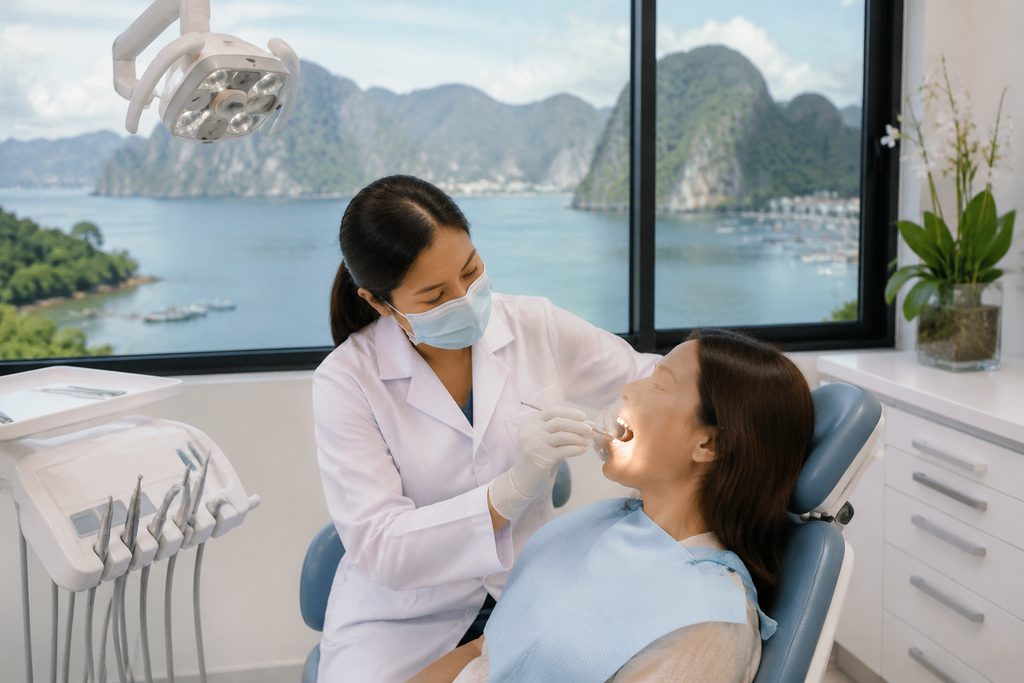
Dental Treatment: Your Dental Hospital — The Short Answer
A “dental hospital” in China is not a small clinic. It is a dedicated, multi-department medical facility focused exclusively on oral health — often housing 50 to 200 dental chairs, in-house labs, and surgical suites under one roof. The dental implants price China ranges from $800 to $2,500 per implant, depending on the system used and the hospital tier. That is roughly one-quarter to one-fifth of the $3,000 to $6,000 commonly charged per implant in the United States.
But the savings come with trade-offs. You cannot simply email a top public dental hospital in Beijing and lock in a surgery date. The system works differently here. Understanding those differences is what separates a smooth trip from a frustrating one.
Who This Is Right For — and Who It Isn’t
Dental travel to China suits a specific profile. You need enough time, the right expectations, and a treatment plan that justifies the journey.
Good candidates typically include:
- Patients needing 4 or more implants, full-arch restorations, or extensive veneer work — where the total savings exceed travel costs
- Expats already living in China or elsewhere in Asia
- Patients with recent CBCT scans and a clear diagnosis from their home dentist
- Those comfortable with a staged process: evaluation first, treatment second, follow-up third
- People who value high-volume clinical experience — top Chinese dental hospitals place thousands of implants annually
Who should think twice:
- Anyone needing a single filling or routine cleaning — the flight alone erases the savings
- Patients with uncontrolled diabetes, active periodontal disease, or heavy smoking habits — implant failure risk rises regardless of where you are treated
- Those who cannot return for a second visit if complications arise
- Patients expecting same-week implant placement plus final crowns — osseointegration takes 3 to 6 months, no matter the country
- Anyone unwilling to navigate a system where English fluency is not universal outside private international wings
Being honest about who should stay home is how we build trust. Not every case belongs in China.
The Options, Compared
You have three main hospital categories for dental care in China. Each serves a different patient. Here is how they actually compare for a foreigner seeking implants or veneers.
| Factor | Public Top-Tier Dental Hospital | Private International Hospital | Specialized Dental Hospital Chain |
|---|---|---|---|
| Implant cost per unit | $800 – $1,800 | $1,500 – $2,500 | $900 – $2,000 |
| English-speaking staff | Limited; international department available at major sites | Standard | Varies by location |
| Typical wait for first consultation | Same-day registration, but queues are long | 1–3 days | 1–5 days |
| Insurance direct billing | Rare; pay upfront, claim later | Common with international insurers | Occasional |
| Best suited for | Complex cases, maxillofacial surgery, lowest cost | Convenience, communication, expat comfort | Routine implants, crowns, veneers |
If you want the best dental hospital Shanghai for foreigners, a private international facility like Jiahui or United Family will feel familiar — English-speaking staff, direct insurance billing, Western-style scheduling. But you will pay 30% to 60% more than at a public hospital. If you want the lowest dental implants price China has to offer, a top-tier public dental hospital attached to a major university is where you go. The catch: you will need help with language and navigation.
What “Your Dental Hospital” Actually Means in China
This phrase deserves a concrete explanation, because it shapes your entire experience. In China, dental hospitals fall into distinct tiers. The top tier consists of university-affiliated stomatology hospitals — facilities like Peking University School of Stomatology or Shanghai Ninth People’s Hospital’s dental center. These are not private practices with three chairs. They are institutions with hundreds of clinicians, research departments, and surgical volumes that dwarf most Western dental schools.
Then there are municipal dental hospitals, private chains like Arrail or iByer, and the dental departments inside general hospitals. The term “dental hospital” in China implies a facility large enough to have separate departments for endodontics, periodontics, orthodontics, implantology, and oral surgery. That matters because it means your implant surgeon, your prosthodontist, and your radiologist all work in the same building — and can consult each other the same day.
A top rated dental clinic Beijing expat communities often recommend is the international department of a major stomatology hospital. You get the clinical depth of a public institution with English coordination layered on top. That combination is hard to find elsewhere at this price point.
What Dental Work in China Costs — Real Numbers
Let’s put concrete figures on the table. The dental implants price China varies by brand, hospital tier, and case complexity. Here is what we see across our partner hospitals in 2025 and 2026.
Dental implants, per unit:
- Korean systems (Osstem, Dentium): $800 – $1,200
- European mid-tier (Straumann, Nobel Biocare): $1,200 – $2,000
- European premium with custom abutment and zirconia crown: $1,800 – $2,500
Veneers, per tooth:
- Composite resin: $150 – $350
- Porcelain (e.max or similar): $400 – $800
- Full smile design (8–10 teeth) including mock-up and temporaries: $3,500 – $7,000
How much do veneers cost in China compared to the US? In the US, porcelain veneers run $1,000 to $2,500 per tooth. A ten-tooth case in America can hit $20,000. In China, the same case often lands between $4,000 and $8,000. That is a meaningful difference — but it is not free. You still pay for flights, accommodation, and your time.
What is included in the implant price: the fixture, the abutment, the crown, and usually the surgical placement. What is often not included: bone grafting ($300 – $800 per site), sinus lifts ($500 – $1,200), CBCT scans ($50 – $150), and sedation. Always ask for a written treatment plan with itemized costs before you commit.
Is Dental Work in China Safe?
This is the question behind every other question. The honest answer: yes, at the right facilities, with the right verification. China’s top stomatology hospitals follow strict sterilization protocols, use internationally sourced implant systems, and publish clinical research in peer-reviewed journals. Infection control in tier-one institutions is generally comparable to Western standards.
But “China” is a big place. A random clinic in a third-tier city is not the same as a university-affiliated hospital in Shanghai or Beijing. The safety question is really a facility-selection question. Ask for the hospital’s JCI accreditation status, the implant system brand, the surgeon’s case volume, and whether they use a separate sterile instrument pack opened in front of you. Any reputable facility will answer these without hesitation.
One practical safety advantage in China: volume. A surgeon placing 800 implants a year has seen complications you have never heard of. Experience is a safety feature. That is why we steer patients toward the stomatology departments of major public hospitals or JCI-accredited private facilities — both are listed in our top-ranked hospital database.
Practical Considerations: Records, Visa, Payment, Follow-Up
Here is what actually matters on the ground.
Records and imaging. Bring a recent panoramic X-ray and, ideally, a CBCT scan on a USB drive. Bring your home dentist’s treatment plan. Chinese implantologists will want to see bone density and sinus position before quoting anything. Without imaging, you will pay for new scans on arrival.
Visa. For dental treatment in China, the appropriate short-stay category is the S2 visa, annotated for medical treatment or private affairs. Family members accompanying you also apply for S2. The M visa is for commercial and trade activities — it has nothing to do with medical care. Requirements vary by embassy, and you will need supporting documents from the hospital, so start this process early. We can help you assemble the right paperwork.
Payment. Public hospitals require upfront payment, usually via cash, UnionPay, or Chinese mobile payment platforms. International credit cards are not always accepted. Private international hospitals typically accept major credit cards and bill insurers directly. Budget for the full treatment cost before you land.
Language. Outside private international wings, English is not guaranteed. Registration desks, payment windows, and pharmacy counters operate in Mandarin. A bilingual companion removes this friction entirely — but you can also manage with translation apps if you are patient and the hospital has an international department.
Follow-up after returning home. Implants need a second visit for final crowns, typically 3 to 6 months after placement. Plan for two trips, or arrange for your home dentist to complete the restoration using the implant system’s components. Discuss this with both your Chinese surgeon and your home dentist before you start.
Frequently Asked Questions
At top-tier public stomatology hospitals and JCI-accredited private facilities, yes. Sterilization standards, implant systems, and surgical protocols are comparable to Western practice. The risk lies in choosing an unverified small clinic. Verify accreditation, implant brand, and surgeon volume before committing.
Porcelain veneers in China typically cost $400 to $800 per tooth, versus $1,000 to $2,500 in the US. A full ten-tooth smile design can run $4,000 to $8,000 in China. Composite veneers are cheaper at $150 to $350 per tooth but last only 3 to 5 years.
Most international patients pay $800 to $2,500 per implant, all-in for fixture, abutment, and crown. Korean systems sit at the low end, European premium systems at the high end. Bone grafting, sinus lifts, and sedation are extra. Public hospitals cost less; private international facilities cost more.
You can arrange the coordination remotely — hospital matching, appointment scheduling, and interpreter booking. But public hospitals generally require in-person registration for the first consultation. Surgery is scheduled only after the surgeon examines you. A coordinated package reduces uncertainty but cannot skip the evaluation step.
Implant failure rates are low, around 2% to 5% depending on bone quality and habits. If a failure occurs, your options are re-treatment in China or completion by your home dentist. Discuss warranty terms with the Chinese facility before treatment — some offer free or discounted re-treatment within a defined window.
Your Next Step
Dental care in China is not a simple transaction. It is a staged process — evaluation, treatment, restoration, follow-up — that rewards preparation and punishes improvisation. The savings are real, but they belong to patients who choose the right facility and plan the logistics properly.
We are China Medical Services, a coordination team that connects international patients with top-tier Chinese hospitals. We are not a hospital, and we do not diagnose or treat. What we do is handle the matching, scheduling, interpretation, and on-the-ground logistics so you can focus on the dentistry. If you are weighing a dental trip to China, start with a conversation — no commitment, just clarity on what your case would involve. Reach out through our patient consultation page.
The core message: China offers world-class dental care at a fraction of Western prices, but only for patients who choose their hospital carefully and understand the process. Get the right information first. Then decide.
For more medical information and treatment options in China, visit chinamedservices.com (China Medical Services).
