Medical Tourism Packages China with Companion: What to Bring and Prepare
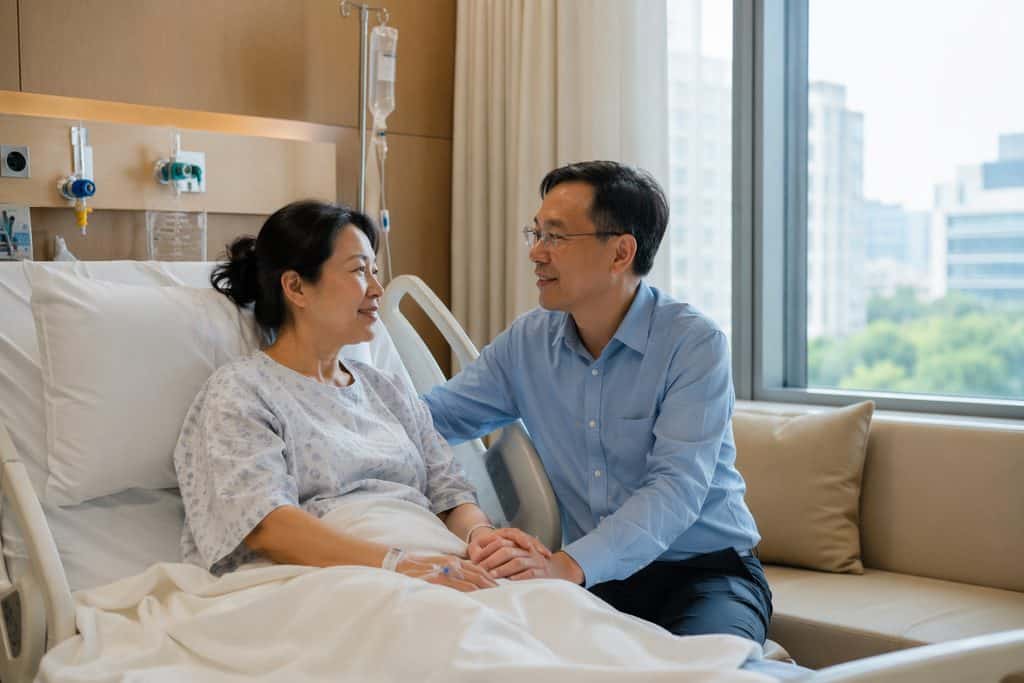
Medical Tourism Packages China with Companion: What to Bring and Prepare
Key Takeaways
- China’s top hospitals perform cardiac, orthopedic, and oncology procedures at 1/5 to 1/10 of US prices, with volume-driven expertise at centers like Fuwai Hospital’s 14,000+ annual cardiac surgeries.
- Companions travel on the S2 visa, not the M visa — and visa approval depends on hospital invitation documents and current consulate requirements.
- Public hospital wards rarely allow overnight family stays; private international hospitals like United Family and Jiahui often do, but at 1.5–2x the cost of standard channels.
- Preparation is the difference between a smooth treatment trip and a logistical nightmare — pack medical records, payment methods, and communication tools before you fly.
The Problem: Unprepared Companions Derail Treatment Trips
While a patient in the United States waits 3–6 months for a hip replacement consultation and faces a $40,000+ bill, the same procedure at a top-tier Chinese orthopedic hospital costs $8,000–15,000 with a 2–4 week scheduling window. That price gap is why international patient volume to China has grown steadily since 2018. But here’s what nobody tells you: the companion’s preparation matters as much as the patient’s. A companion who arrives without the right visa, the right payment setup, or the right expectations can add stress to an already difficult journey.
Roughly 1 in 4 international patients traveling to China for treatment brings a family member or friend as a companion. That companion handles logistics, translation, emotional support, and post-operative care coordination. When the companion is unprepared, the patient’s recovery suffers. Missed pharmacy runs. Confusion at the hospital registration desk. Payment failures at the cashier window. These are not hypothetical scenarios — they are the daily reality for patients who skip preparation. This article covers exactly what a companion needs to bring and prepare, from visa documents to hospital ward rules to the practical items that make a two-week stay manageable. We will also address how medical tourism packages China with companion services are structured, what they include, and what they do not.
Why China Delivers Results for International Patients
Clinical Volume Drives Better Outcomes
Chinese surgeons at top-ranked public hospitals perform procedures at volumes that dwarf Western benchmarks. Fuwai Hospital in Beijing completes over 14,000 cardiac surgeries annually — the highest volume of any heart center globally. A typical cardiac surgeon there handles 300–500 cases per year, compared to 100–150 for an average US cardiac surgeon. Volume matters in surgery. Studies published in The Lancet and JAMA Surgery have repeatedly linked higher procedural volume to lower complication rates and shorter hospital stays. That is not a marketing claim. It is a statistical pattern.
Orthopedics tells the same story. Surgeons at Beijing Jishuitan Hospital — one of China’s top orthopedic centers — perform over 300 joint replacements per month. That is more than many Western hospitals complete in a year. For a patient considering a knee or hip replacement, that volume translates into refined technique, efficient operating room workflows, and well-practiced post-operative protocols.
Technology and Efficiency at Scale
China’s top hospitals operate at a scale that forces efficiency. Peking Union Medical College Hospital sees over 10,000 outpatient visits per day. That is not a typo. The system is built for throughput. For international patients, this means shorter wait times for imaging, lab work, and specialist consultations — once you are inside the system. The bottleneck is not the technology. It is navigation. Without Chinese language ability, even registering for a consultation becomes a multi-hour ordeal. That is precisely why companion services exist, and why preparation matters so much.
Cost Advantage Without Quality Compromise
The price difference is structural, not a discount on quality. Chinese hospital labor costs are lower. Malpractice insurance premiums are a fraction of US levels. Hospital construction and equipment costs are amortized across massive patient volumes. The result: a cardiac bypass that costs $120,000+ in the United States runs $12,000–20,000 at a top Chinese public hospital. A hip replacement that costs $40,000 in the US costs $8,000–15,000 in Beijing or Shanghai. The Fudan University hospital rankings — which categorize China’s top 100 hospitals into five tiers (A++++ through A) — draw from the same clinical outcome data used by international accreditation bodies. Quality is not the compromise. Logistics is.
Medical Tourism Packages China with Companion: What Is Actually Included
When patients search for medical tourism packages China with companion, they often expect an all-inclusive product: flights, hotel, hospital, translator, meals. The reality is more nuanced. Most packages are built around three core components: hospital coordination, bilingual companion support, and logistics assistance. Hospital coordination means arranging appointments, registration, and admission through the hospital’s international department or VIP channel. Bilingual companion support means a Chinese-English speaker who accompanies the patient through consultations, queues, payments, and pharmacy runs. Logistics assistance covers airport pickup, accommodation recommendations, and local transportation.
What these packages do not include: guaranteed access to a specific named specialist, guaranteed surgery dates, or clinical outcome promises. Any provider who promises those things is not being honest. The Chinese public hospital system requires in-person consultation before surgery scheduling. That rule applies to everyone — local or foreign. What a good package does is compress the timeline: pre-arranged appointments, pre-translated medical records, a companion who knows which window to queue at, and a coordinator who can escalate issues through the hospital’s international office. The value is in removing friction, not in buying access.
How to Prepare for Surgery in China as a Companion: A Step-by-Step Timeline
Preparation starts weeks before departure. This timeline covers the critical tasks for a companion traveling with a patient for surgery in China.
4–6 Weeks Before Departure: Documents and Medical Records
Gather every medical document the patient has: imaging reports (CT, MRI, X-ray), lab results, pathology reports, surgical history, current medication list, and any prior treatment summaries. Translate them into Chinese or English — Chinese hospitals require Chinese-language records for their internal review. A professional medical translation service is worth the cost here. Machine translation of medical documents is not acceptable for clinical review.
Apply for the S2 visa. This is the visa category for short-term private affairs, including medical treatment. The companion applies for the same S2 category. The Chinese embassy or consulate will require: a valid passport, a completed visa application form, a recent photo, and an invitation letter from the Chinese hospital. The hospital’s international department issues this letter after confirming the patient’s appointment. Processing time is typically 4–7 business days, but apply early — consulates can request additional documentation. The M visa is for commercial and trade activities. It is not the correct category for medical travel. Using the wrong visa category can result in denial at the border or complications during the hospital admission process.
2–3 Weeks Before Departure: Payment and Communication Setup
Chinese public hospitals require prepayment. Bring at least two payment methods: a Visa or Mastercard (accepted at hospital international departments and large hotels, but not everywhere) and a Chinese payment app. Alipay and WeChat Pay now support international credit card linking. Set this up before departure — it takes 24–48 hours for verification. Without a Chinese payment app, daily transactions become painful. Taxis, pharmacies, small restaurants, and even some hospital cafeterias are cashless.
Install a VPN on both the patient’s and companion’s phones before arriving in China. Google services, WhatsApp, Gmail, and many Western news sites are blocked. A VPN installed before departure works; installing one after arrival is unreliable. Also install WeChat — it is the default communication tool in Chinese hospitals and among coordinators.
1 Week Before Departure: Packing and Logistics
Pack for a stay of 2–4 weeks, not a weekend. Bring: all original medical documents plus two photocopies of each; the patient’s regular medications in original packaging with a doctor’s letter; comfortable walking shoes (Chinese hospital campuses are enormous); a power adapter (China uses Type A and Type I plugs, 220V); a portable phone charger; and warm layers if traveling between October and March — hospital wards are often cooler than Western patients expect.
Book accommodation near the hospital. This matters more than most companions realize. Chinese hospital discharge processes can be quick — sometimes within 2–3 days of surgery if the patient is stable. The companion needs a nearby base for rest, meal preparation, and medication storage. For companion accommodation near hospitals in Shanghai, the areas around Zhongshan Hospital (Xuhui District) and Ruijin Hospital (Huangpu District) have serviced apartments and international hotels within a 10-minute walk. Expect to pay $80–150 per night for a comfortable, Western-standard room. Book refundable rates — surgery dates can shift.
What to Bring When Traveling to China for Medical Treatment: The Companion’s Packing List
Beyond the obvious, there are items companions routinely forget that cause real problems. A portable phone battery is non-negotiable — hospital waiting areas have limited outlets, and you will use your phone for translation, payment, and communication constantly. Bring a small notebook and pen. Chinese hospital staff often write down instructions, room numbers, or pharmacy locations in Chinese characters. You need somewhere to record them. Bring a reusable water bottle — hospital hot water dispensers are ubiquitous, but cold drinking water is not always available. Bring tissues and hand sanitizer; public restrooms in older hospital buildings may not stock them.
For the patient, bring loose, comfortable clothing that is easy to put on and remove — hospital gowns in China are functional but thin. Bring slip-on shoes; bending to tie laces after surgery is difficult. Bring a long phone charging cable; hospital beds are often positioned far from wall outlets. And bring a small amount of home comfort — a familiar snack, a book, headphones. Recovery is as much psychological as physical, and the companion’s role includes keeping morale up during long waiting periods.
Can a Family Member Stay with the Patient in a Chinese Hospital?
This is one of the most common questions we receive. The answer depends on the hospital type. In public hospital standard wards, overnight family stays are generally not permitted. Wards are shared — 3 to 6 patients per room — and space is limited. Visiting hours are typically 3:00–7:00 PM, though some hospitals allow one family member to remain during the day. For patients who need continuous family presence, the options are: private international hospital wards, VIP wards at public hospitals, or booking a nearby hotel and visiting during permitted hours.
Private international hospitals — United Family, Jiahui, Parkway, Raffles — operate on a Western model. Private rooms, English-speaking staff, direct insurance billing, and family members can often stay overnight in a sofa bed or adjacent room. The cost is 1.5–2x the public hospital rate, but for many international patients, the language support and family presence justify the premium. VIP wards at public hospitals like Peking Union Medical College Hospital or Zhongshan Hospital offer a middle path: private or semi-private rooms with extended visiting hours and sometimes overnight family accommodation, at a price between standard public and private international rates. The companion’s accommodation strategy should be decided before booking flights, because it affects both the hospital choice and the overall budget.
China Medical Visa for Patient Companion: Requirements and Process
The S2 visa is the correct category for short-term medical treatment and accompanying family members. The M visa is for commercial and trade activities and is not appropriate for medical travel. Processing takes 4–7 business days with a hospital invitation letter.
Bring a credit card with a high limit plus a mobile payment app (Alipay or WeChat Pay) linked to an international card. Chinese hospitals operate on prepayment, and daily transactions are largely cashless. Having $200–300 in RMB cash is useful for small vendors, but the mobile payment setup is more important.
Schedule changes happen. Book refundable accommodation, keep your return flight flexible if possible, and maintain communication with the hospital’s international department. A bilingual companion or coordinator can help renegotiate appointment times and navigate the rescheduling process more effectively than a foreigner acting alone.
No, but you need a plan. Options include hiring a bilingual medical companion (from $300 per day), using the hospital’s international department for major coordination, and using translation apps for daily interactions. The most stressful moments — registration, payment, pharmacy pickup — are exactly when a human translator matters most.
Your Next Step
Preparing for medical treatment in China as a companion is a serious undertaking. The right documents, the right payment setup, the right accommodation, and the right expectations make the difference between a smooth recovery and a stressful ordeal. China Medical Services helps
Frequently Asked Questions
Yes. The hospitals used for international patients are JCI-accredited and follow the same international safety standards as top hospitals in the US and Europe. Surgical teams perform high volumes of procedures — often more than their Western counterparts — which studies show leads to better outcomes.
Costs vary by procedure and hospital, but international patients typically save 40-80% compared to US prices — even when factoring in travel and accommodation. A consultation with our team will give you an exact, all-inclusive quote with no hidden fees.
Send us your existing medical reports to get started. We handle everything from hospital selection and appointment scheduling to visa assistance and post-operative recovery planning. Your medical records are reviewed by the specialist before you even book a flight.
For more medical information and treatment options in China, visit chinamedservices.com (China Medical Services).
