How to Spot a Fake Visa Invitation for Medical Travel to China
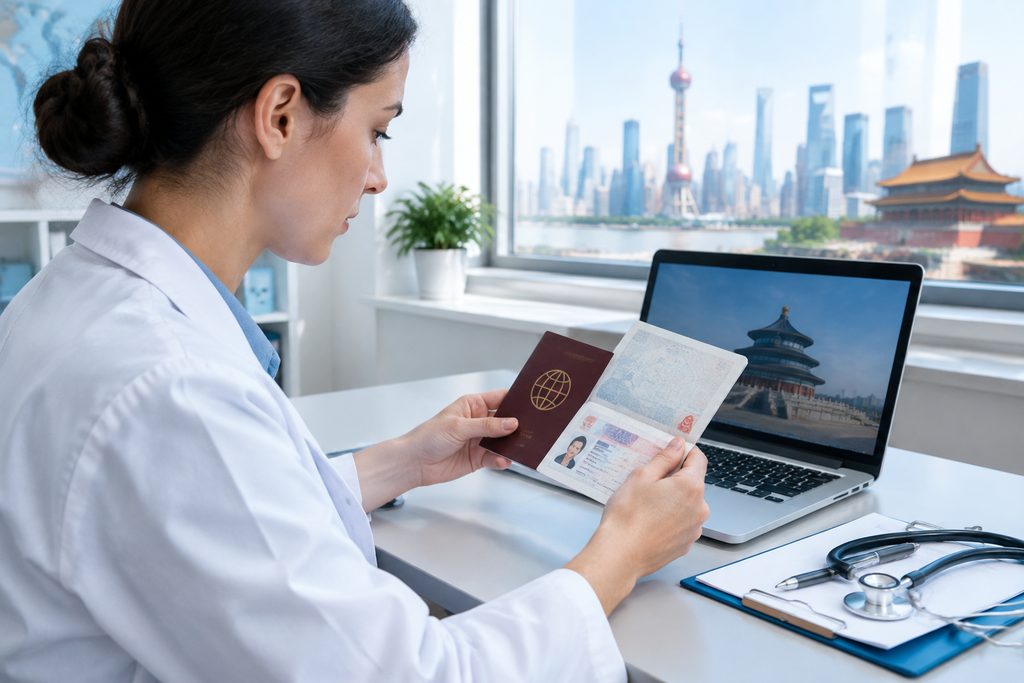
According to China’s National Immigration Administration, over 35 million foreigners entered China in 2024, many for business, study, and a growing number for medical treatment. Yet alongside legitimate travel, a shadow industry has emerged: fake visa invitation letters. These documents promise expedited approvals or guaranteed entry — and they are almost always fraudulent. A fake visa invitation can cost you thousands of dollars, a permanent visa ban, or worse, complete loss of access to the hospital care you desperately need.
At China Medical Services, we have guided international patients through Chinese hospital selection and medical travel logistics for years. We have seen the damage fake invitations cause. This guide explains exactly how to spot a fake visa invitation, what a legitimate invitation looks like, and how to protect yourself before you spend a single dollar.
Key Takeaways
- No legitimate Chinese hospital issues a “guaranteed visa approval” letter — invitations support your application, but the Chinese embassy or consulate makes the final decision.
- Medical travelers to China use the S2 visa category, not the M visa, which is reserved for commercial and trade activities.
- A genuine hospital invitation always originates from an official hospital domain email and includes verifiable department contact details.
- If someone demands payment for an invitation letter alone, without any medical evaluation or hospital coordination, that is a major red flag.
The Problem: Fake Visa Invitations Are a Growing Scam Targeting Medical Travelers
The numbers are sobering. The Chinese Ministry of Public Security reported cracking down on over 1,200 cases of document fraud involving visa materials in 2023 alone. Fake invitation letters are not a minor nuisance — they are an industry. And medical travelers are prime targets.
Why? Because patients are often desperate. Someone facing a serious diagnosis, a long surgery wait in their home country, or a prohibitively expensive treatment plan is exactly the kind of person a scammer wants. The fraudster knows you need to move quickly. They know you may not understand Chinese visa categories. They know you are comparing costs and timelines. So they offer what seems like a shortcut: “Pay $500, get your invitation letter in 48 hours, guaranteed visa approval.”
That is not how the system works. Not even close.
A legitimate visa invitation from a Chinese hospital is a supporting document. It confirms that a specific hospital department has reviewed your medical records and is willing to receive you as a patient. It does not guarantee a visa. It does not bypass embassy review. And it is never sold as a standalone product.
Why Understanding Real Chinese Visa Invitations Protects You
To spot a fake, you first need to know what a real one looks like. This is where most international patients get confused — and where scammers exploit the gap.
The S2 Visa: The Correct Category for Medical Treatment
Foreign nationals traveling to China for medical treatment apply for an S2 visa, which is the short-stay category used for private affairs, including medical treatment. The accompanying family member applies for an S2 visa as well. For stays exceeding 180 days, the S1 visa applies. There is no such thing as a “medical visa” in the Chinese system — a phrase scammers love to use because it sounds official.
The M visa, by contrast, is for commercial and trade activities. If someone tells you to apply for an M visa for medical treatment, they do not understand Chinese immigration rules. Walk away.
What a Legitimate Hospital Invitation Actually Contains
A genuine invitation letter from a Chinese hospital typically includes the hospital’s official letterhead, the inviting department’s full name, the patient’s name as it appears on their passport, the purpose of the visit, and the proposed treatment dates. It is signed by a department administrator or international office representative. Crucially, it comes from an official hospital email address — not a Gmail, Yahoo, or Outlook account.
The invitation is issued only after the hospital reviews your medical records. You cannot simply buy one. The process requires actual clinical evaluation. That is the structural safeguard scammers try to bypass.
Seven Warning Signs of a Fake Visa Invitation
If you are evaluating an invitation letter — or an agent offering to get you one — here are the specific red flags we tell every patient to check.
1. The email domain is wrong. Real Chinese hospitals use institutional email addresses. A legitimate invitation from Peking Union Medical College Hospital comes from an address ending in @pumch.cn, not @pumch-hospital.com or @gmail.com. Check the domain carefully. Scammers create lookalike domains with one letter changed.
2. Someone is selling the invitation as a standalone product. No legitimate hospital sells invitation letters. The letter is a byproduct of a medical evaluation process. If an agent offers an “invitation letter package” for a fixed price, with no medical records review, it is fake. Period.
3. The letter promises guaranteed visa approval. No hospital has the authority to guarantee a visa. The Chinese embassy or consulate in your home country makes that decision. Any document claiming otherwise is fraudulent.
4. The hospital does not exist — or exists but denies any knowledge. This sounds obvious, but scammers invent hospital names that sound plausible. “Beijing International Medical Center” sounds real. It is not. Cross-check any hospital name against the official Fudan University hospital rankings or the National Health Commission’s registered hospital database. For international patients, our directory of China’s top-ranked hospitals lists only verified institutions across 37 cities.
5. The letter is written in English only. Real hospital invitation letters are typically issued in Chinese, often with an English translation attached. A letter written only in English, with no Chinese version, is unusual. Some private international hospitals issue English-first letters, but they are the exception — and they are JCI-accredited institutions you can verify independently.
6. The contact information does not match. Call the hospital’s international department directly. Look up the number on the hospital’s official website — not the number printed on the letter. Ask to verify the invitation. If the department has no record of you, you have your answer.
7. Payment is requested via Western Union, cryptocurrency, or a personal bank account. Legitimate hospital deposits go to the hospital’s official bank account, not an individual’s account. Scammers prefer untraceable payment methods for a reason.
How the Verification Process Actually Works, Step by Step
Here is what a legitimate medical invitation process looks like, from start to finish. Compare any offer you receive against this sequence.
Step 1: Medical records review. You send your existing examination reports, imaging, and medical history to a specific hospital department or a coordination service that works with the hospital. A physician reviews them. This takes days to weeks, not hours.
Step 2: Clinical assessment. The hospital determines whether it can treat your condition and whether it is willing to accept you as a patient. Not every patient is accepted. Hospitals decline cases they cannot help.
Step 3: Invitation letter issued. Only after the department confirms it will receive you does the international office issue the invitation letter. The letter names the department, the proposed treatment window, and the patient.
Step 4: Visa application. You submit the invitation letter along with your passport, application form, and other required documents to the Chinese embassy or consulate in your country. The embassy reviews everything and makes the decision.
No step in this process is skippable. No payment accelerates it. Anyone who tells you otherwise is lying.
What a Legitimate Invitation Letter Costs — and What It Does Not
Here is where patients get tripped up. A legitimate invitation letter itself does not have a price tag. It is issued as part of the hospital’s patient intake process. What you pay for — if you use a coordination service like ours — is the case management work: translating your medical records, submitting them to the right department, communicating with the hospital, and arranging the logistics.
At China Medical Services, our patient coordination service starts with a free consultation. We charge for the work of managing your case — from $300 for hospital appointment coordination, with written second opinions from top specialists ranging from $300 to $500. These fees cover our labor, not the invitation letter itself. And any consultation fee is credited in full toward on-the-ground coordination if you proceed to treatment within 90 days.
If an agent quotes you a price “for the invitation letter,” that is a scam. The letter is not the product. The medical evaluation is.
Critical warning: Never pay an agent who claims to have “special relationships” with Chinese embassy officials. Embassy staff do not sell visa approvals. This is a classic bribery narrative designed to make you complicit in a scheme — and it will get your visa application permanently flagged.
Practical Considerations: Verifying Your Invitation Before You Fly
You have received an invitation letter. It looks official. Before you book a flight, do these five things.
Verify the hospital exists and is legitimate. Check the hospital’s name against the official Fudan University hospital rankings or the National Health Commission registry. For internationally accredited institutions, check the Joint Commission International (JCI) directory. Our Top 100 hospital database covers the institutions most international patients consider, with Fudan ranking tiers and JCI status where applicable.
Call the hospital’s international department. Find the number on the hospital’s official website. Ask to verify that a patient with your name and passport number has an active invitation. Do not use the phone number printed on the letter.
Check the email headers. If the letter arrived by email, examine the full headers. Look at the “Received” and “Return-Path” fields. A spoofed email often shows a different originating server than the displayed address. If you are not technical, ask someone who is.
Confirm the visa category. The invitation should support an S2 visa application for medical treatment. If the agent tells you to apply for an M visa, that is a red flag. If they tell you the invitation “covers everything” and you do not need to apply for a visa at all, that is not how it works.
Understand the payment structure. Legitimate hospital deposits — if required before arrival — are paid to the hospital’s official bank account. You receive a receipt from the hospital’s finance department. No legitimate entity asks for payment via Western Union or crypto.
Practical tip: Ask the agent or hospital for the invitation letter in Chinese. If they cannot produce a Chinese-language version, ask why. Most public hospital international offices issue invitations in Chinese first. A missing Chinese original is worth questioning.
Frequently Asked Questions
No. A hospital can issue an invitation letter confirming they will receive you as a patient, but the Chinese embassy or consulate in your country makes the final visa decision. Any hospital, agent, or document claiming to guarantee visa approval is fraudulent. The invitation letter is one supporting document among several required for an S2 visa application.
Nothing, by itself. A legitimate invitation letter is issued as part of the hospital’s patient intake process after a medical records review. What you may pay for is coordination work — translating records, submitting them to the right department, and managing communication. If someone quotes you a price specifically “for the invitation letter,” treat it as a scam.
Your visa application will be rejected. In many cases, you will be flagged in the immigration system, which can lead to a multi-year or permanent ban from entering China. Submitting fraudulent documents to a Chinese embassy is a serious offense. It is not worth the risk, no matter how urgent your medical situation feels.
In some cases, yes. The S2 visa category covers private affairs, including visiting family members in China. If you have a family member who is a Chinese citizen or permanent resident, they can issue you an invitation. For medical treatment specifically, a hospital invitation letter strengthens your application significantly, but the final requirements depend on the embassy or consulate in your country. Always check the latest requirements for your jurisdiction.
Your Next Step
Fake visa invitations exploit urgency, confusion, and hope. The best defense is verification — and a process that puts medical evaluation before any document changes hands. At China Medical Services, we connect international patients with 340+ top-ranked hospitals across 37 Chinese cities. We are not a hospital and we do not issue visas or invitation letters ourselves. What we do is manage your case from first consultation to hospital arrival: translating records, coordinating with hospital international departments, and ensuring every document you receive is genuine and verifiable. If you are considering medical treatment in China, start with a free consultation. We will help you understand the real process — no shortcuts, no false promises, just the path that actually works.
For more medical information and treatment options in China, visit chinamedservices.com (China Medical Services).
