How to Confirm a Receipt Matches Your Payment: A Practical Guide
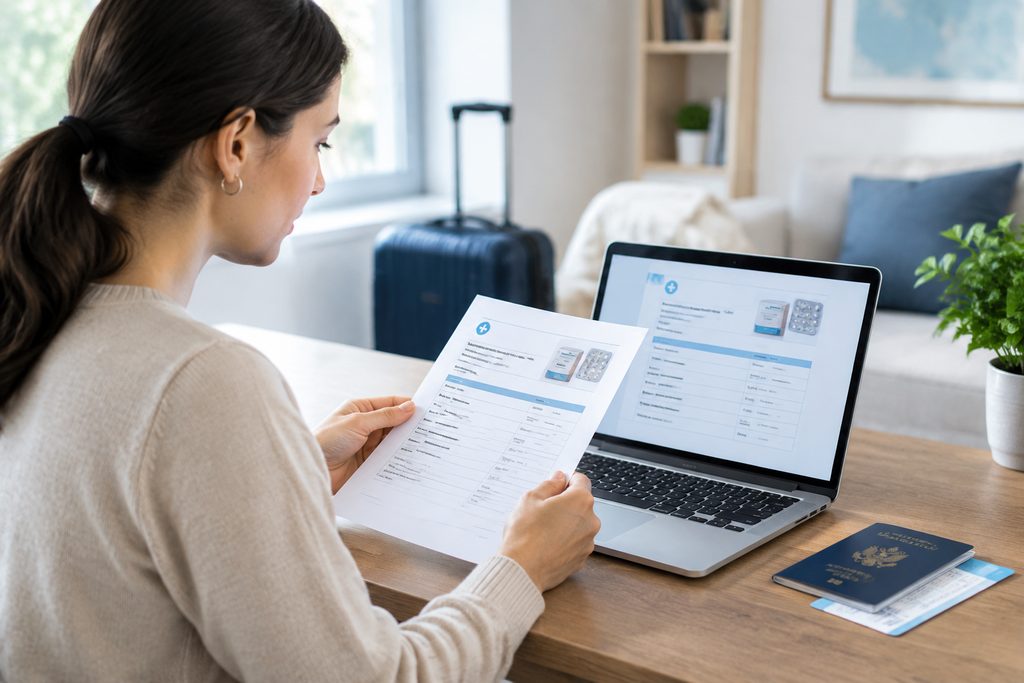
Have you ever stared at a receipt and a bank statement, trying to figure out if the numbers actually line up? It is a common moment of confusion. This guide explains how to confirm a receipt matches your payment, step by step. We see this issue constantly when international patients pay deposits to hospitals in China. A small mismatch in currency conversion or bank fees can cause real anxiety. You are not alone in this.
How This Actually Works, Step by Step
The process of confirming a receipt matches your payment is methodical. It does not require accounting skills. It requires patience and attention to detail. Here is the sequence we walk our clients through when they pay a hospital deposit in Shanghai or Beijing.
First, you gather your documents. That means the receipt from the provider and the transaction record from your bank or payment app. Put them side by side. Digital copies work fine. Screenshots are acceptable.
Second, you check the date. A receipt issued on Tuesday cannot match a payment made on Friday. Time zone differences can shift dates by one day. International wires from the US to China often show a one-day gap. That is normal. The date of initiation and the date of settlement differ.
Third, you compare the amount. This is where most confusion lives. The amount on the receipt is in Chinese Yuan (CNY). The amount on your bank statement is in your home currency, like US Dollars or Euros. They will not be identical. You need the exchange rate applied on the transaction date. Your bank statement usually shows the rate. If not, you can look up the mid-market rate for that exact day. But remember, your bank adds a margin. A 1% to 3% spread is standard. So the number on your statement will be slightly higher than the pure conversion.
Fourth, you verify the payer and payee names. The receipt should show the hospital’s official English name. Your bank statement shows the name of the receiving entity. These names often differ in small ways. A hospital might use a shortened legal name or a subsidiary for international payments. If the names look completely unrelated, that is a red flag. If they look similar but not exact, it is usually fine.
Finally, you confirm the payment reference. Hospitals in China always issue a unique payment reference number or invoice number. Your bank transfer should have a reference field. You or your bank should have included that number when sending the wire. If the reference matches, you are almost certainly clear. If it is blank or wrong, you need to contact the hospital’s international billing department to reconcile manually.
Why Confirming a Receipt Matters for Medical Payments
When you pay for medical treatment abroad, the stakes are high. A mistake is not just a minor inconvenience. It can delay your surgery date or your visa application. Chinese hospitals require proof of payment before they confirm a bed or a procedure slot. If your receipt does not match your payment, the hospital’s finance team may not credit your account. That means your booking is not secure.
We have seen cases where a patient’s bank sent the payment but the hospital’s receipt showed a different amount. The cause was an intermediary bank fee. International wires often pass through one or two correspondent banks. Each one can deduct a fee. The hospital receives less than what you sent. The receipt shows the received amount, not the sent amount. This is not fraud. It is standard banking practice. But it confuses patients.
So, the first rule is: do not panic if the numbers do not match exactly. A small difference of $20 to $50 is usually a bank fee. A large difference, like hundreds of dollars, suggests a currency conversion issue or an error. You can resolve both. But you need to know which one you are dealing with.
If you are planning treatment in China, you might be comparing costs across different top-ranked Chinese hospitals. Payment processes vary slightly between institutions. But the core principle of matching receipts to payments stays the same.
A Realistic Timeline
Confirming a receipt is not instant. Here is a realistic schedule for a typical international medical payment to China.
| Stage | What Happens | Typical Duration |
|---|---|---|
| Day 1 | You initiate the wire transfer from your home bank | 1 day |
| Day 2–4 | Correspondent banks process the transfer; fees may be deducted | 2–3 days |
| Day 4–6 | Hospital receives funds and issues an official receipt | 1–2 days |
| Day 6–10 | You receive the receipt by email and compare it to your bank statement | 1–3 days |
| Week 2–3 | If there is a mismatch, you contact the hospital billing team and your bank for clarification | 3–10 days |
The timeline above assumes a standard international wire. Faster options exist. Some hospitals accept payment via third-party platforms that process in 24 hours. But those platforms have their own fees and limits. We advise patients to start the payment process at least three weeks before any scheduled procedure. That leaves room for reconciliation without stress.
One step people forget is the document translation. If your bank statement is not in English, the hospital may ask for a translated copy. That adds a day or two. Also, some banks require a physical branch visit to approve large international wires. Do not assume you can do everything online.
What Can Go Wrong — and What Happens Then
Let us be honest about the failure modes. Several things can go wrong when you try to confirm a receipt matches your payment. Here are the most common ones and the actual recourse for each.
Mismatch due to intermediary bank fees. You sent $10,000. The receipt shows $9,950. This is the most common issue. The fix is simple: ask the hospital to confirm that the received amount matches their records for your patient ID. They will. The difference is a fee, not a mistake. You do not need to send more money unless the hospital’s policy requires the full amount to be received. Some do. If so, you send a small top-up payment. Ask for a receipt for the top-up as well.
Wrong payment reference. You forgot to include the reference number. The money arrives, but the hospital cannot match it to your file. The fix: you send a copy of your bank confirmation showing the sender name, amount, and date. The hospital’s finance team searches their unallocated funds ledger. This can take a few days. It is a manual process. But it works.
Name mismatch. The receipt shows a different payee name than what you expected. Maybe the hospital uses a subsidiary for international billing. The fix: contact the hospital’s international department and ask for a payment confirmation letter. This letter states that the payment was received for your treatment. It is the authoritative document. Use that letter, not the receipt, for your visa application or insurance claim.
Receipt lost or never issued. Hospitals are busy. Sometimes the receipt is not emailed automatically. The fix: send a polite follow-up email with your payment proof attached. Reference your patient ID and payment date. Most hospitals respond within 2–5 business days. If you used a medical concierge service, they handle this for you. That is one of the reasons patients choose to work with a coordinator.
None of these failures are catastrophic. But they all cost time. That is why we recommend starting early and keeping every document organized.
How to Evaluate a Provider’s Billing Transparency
Before you ever send money, you can learn a lot about a hospital or clinic by how they handle billing. A transparent provider will give you a detailed cost breakdown before asking for payment. That breakdown should list the procedure, the surgeon’s fee, the hospital fee, the anesthesia fee, and any estimated consumables. If a provider gives you a single number with no explanation, that is a warning sign. You will have a harder time confirming a receipt matches your payment when you do not know what the payment was supposed to cover.
Ask these questions before you pay:
- Will the receipt show the itemized breakdown or just a total?
- What currency will the receipt be in?
- Who is the legal payee on the receipt?
- What is the process for disputing a mismatch?
- How long does it take to receive the official receipt after payment clears?
A good provider answers these clearly. A disorganized one hesitates. The quality of the billing department often reflects the quality of the overall patient experience. We have found that the hospitals listed on our top-ranked hospitals database generally have professional international billing teams. They deal with foreign patients daily. They know the common issues. That makes reconciliation easier.
Also, consider how you pay. Credit card payments give you chargeback rights. Wire transfers do not. For large medical payments, a wire transfer is standard and often cheaper. But it requires more trust. That is why we always recommend verifying the hospital’s official bank account details through multiple channels. Call the hospital’s international department directly. Do not rely only on an email. Email can be spoofed. A phone call takes five minutes and prevents catastrophic fraud.
Practical Considerations: Records, Currency, and Follow-Up
Do not panic. First, confirm the payment left your account. Then, request a payment trace from your bank. This trace shows the exact path of the money, including any intermediary banks. Send the trace to the hospital’s finance department. In most cases, the money is sitting in an unallocated account because the reference number was missing. The trace helps them find it.
Yes. Human error happens. A hospital staff member might type the wrong amount or the wrong patient name. If you spot an error on the receipt, contact the billing department immediately. Provide your payment proof and ask for a corrected receipt. Do not accept a wrong receipt as final. It can cause problems with your visa or insurance later.
Your Next Step
Confirming a receipt matches your payment is a skill. It requires patience, organization, and a willingness to ask questions. You now know the steps, the timeline, and the common failure modes. That knowledge protects you from unnecessary stress.
At China Medical Services, we help international patients navigate the financial and logistical side of treatment in China. We do not provide medical advice. But we do help you verify payments, communicate with hospital billing departments, and keep your paperwork in order. If you are considering treatment in China and want a partner to handle these details, request a free consultation. We will walk you through the process and answer your questions. No pressure. Just clarity.
Start by visiting our patient services page to see how we can help. Or explore our homepage to learn more about our hospital database and coordination services. Your peace of mind is worth the effort.
Frequently Asked Questions
Yes. The hospitals used for international patients are JCI-accredited and follow the same international safety standards as top hospitals in the US and Europe. Surgical teams perform high volumes of procedures — often more than their Western counterparts — which studies show leads to better outcomes.
Costs vary by procedure and hospital, but international patients typically save 40-80% compared to US prices — even when factoring in travel and accommodation. A consultation with our team will give you an exact, all-inclusive quote with no hidden fees.
Send us your existing medical reports to get started. We handle everything from hospital selection and appointment scheduling to visa assistance and post-operative recovery planning. Your medical records are reviewed by the specialist before you even book a flight.
For more medical information and treatment options in China, visit chinamedservices.com (China Medical Services).
