How to Verify a Remote Imaging Review: Accuracy, Cost, and China Options
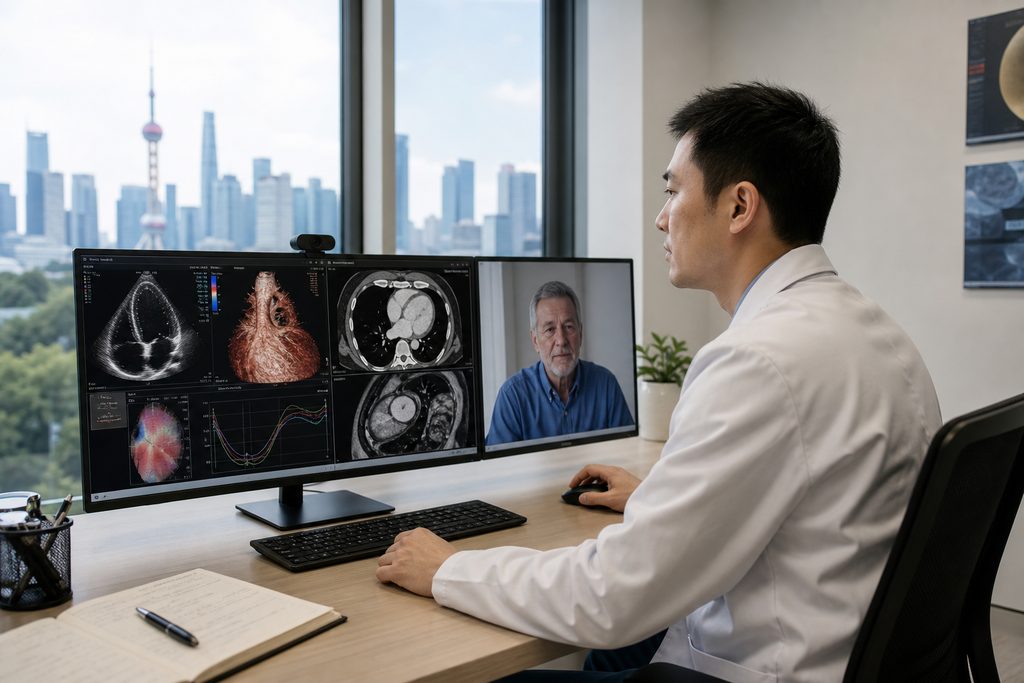
How to Verify a Remote Imaging Review: A Practical Guide to Second Opinions from Chinese Radiologists
Key Takeaways
- A remote imaging review second opinion cost China typically ranges from $300 to $500 for a written report from a top-tier hospital specialist.
- Chinese radiologists at Fudan-ranked hospitals read thousands of cases annually — often 3 to 5 times the volume of their Western counterparts.
- Verification requires more than reading a report: you need the original DICOM files, a clear clinical question, and a radiologist who subspecializes in the relevant organ system.
- No remote review replaces a tissue diagnosis or in-person examination. It clarifies, confirms, or challenges — but it does not treat.
While a patient in London might wait 6 to 8 weeks for a specialist radiology review through the NHS, a written second opinion from a top Chinese hospital can be delivered in 5 to 7 business days — for a fraction of the cost. That gap is real. The remote imaging review second opinion cost China averages between $300 and $500, compared with $1,500 to $3,000 for comparable private reviews in the United States. But cost means nothing if you cannot trust the report. So the real question is not whether you can get a remote review. It is how you verify that the review is legitimate, thorough, and actionable.
This guide walks through exactly that process. We cover what makes a remote imaging review credible, how to evaluate the radiologist and the hospital behind the report, what documentation you need, and where China fits into the global teleradiology landscape. You will also find specific guidance on booking a remote imaging consultation with a Chinese hospital, what the report should include, and the red flags that should make you walk away.
The Problem: Imaging Reports Are Often Incomplete, Contradictory, or Simply Missed
Radiology errors are more common than most patients realize. A landmark study published in Radiology found that clinically significant discrepancies between initial and second-opinion radiology interpretations occur in approximately 26% to 30% of cases. For oncologic imaging — CT scans of the chest, abdomen, and pelvis — the discrepancy rate can climb higher. A 2017 study from Johns Hopkins reported a 7.7% rate of clinically significant discrepancies on abdominal imaging second opinions. That is roughly 1 in 13 scans where the second read changed patient management.
Why does this happen? Several structural reasons. Radiologists face mounting volume pressure. A typical community radiologist in the US may read 60 to 80 cross-sectional studies per day. Fatigue affects diagnostic accuracy. Subspecialization matters enormously — a general radiologist reading a complex cardiac MRI or a multiparametric prostate MRI may lack the case volume to catch subtle findings. And then there is the communication gap: a technically correct report written in dense jargon can still leave the referring physician and patient unsure what the next step should be.
For international patients, the problem compounds. You may have imaging done in one country, a report written in a second language, and treatment planned in a third. Each handoff introduces risk. A remote imaging review from a qualified subspecialist can close that gap. But only if you know how to verify the review itself.
How to Verify a Remote MRI Scan Report from China: What “Verification” Actually Means
Verification is not a single step. It is a chain of evidence. When you receive a remote imaging review — from China or anywhere else — you should be able to answer five questions with confidence:
Who read the scan? What were their credentials? What images did they actually review? What clinical information did they have? And what does the report recommend?
A legitimate remote review names the radiologist, states their subspecialty, and lists the exact sequences or series reviewed. It references the DICOM metadata — the pixel data, slice thickness, contrast phase, and scanner parameters. A vague report that says “the lung nodule appears stable” without specifying which nodule, on which series, measured how, is not a review. It is a comment.
Check the Radiologist’s Subspecialty and Case Volume
Chinese hospitals operate on a scale that is difficult to overstate. A senior thoracic radiologist at a top-tier cancer center in Shanghai may read 8,000 to 12,000 chest CTs per year. That volume produces pattern recognition that no textbook can replicate. But volume alone is not enough. You want a radiologist who subspecializes in the organ system in question. A neuroradiologist should read your brain MRI. A musculoskeletal radiologist should read your knee or shoulder. General radiologists exist in China as everywhere else — and they are not who you want for a second opinion on a complex case.
Ask directly: “Which radiologist will read my scan, and what is their subspecialty?” A credible service will answer. A broker who dodges the question should lose your business.
Verify the Hospital’s Reputation Independently
Do not rely on the service’s own website. Cross-check the hospital name against the Fudan University Hospital Rankings — the most authoritative hospital ranking system in China. The Fudan rankings divide the top 100 comprehensive hospitals into tiers (A++++ to A) and publish specialty reputation rankings across 45 departments. If a hospital claims to be “top-ranked” but does not appear in the Fudan specialty list for the relevant department, treat that claim with skepticism. Our database of Fudan-ranked hospitals across 23 cities is a useful starting point for independent verification.
Is Online CT Scan Review by Chinese Doctors Reliable? The Evidence Base
Acceptance varies. Most physicians will read a well-structured report from a named subspecialist at a recognized institution with interest. But your local doctor retains responsibility for your care and may want to review the original images themselves. Bring the DICOM files and the remote report to your next appointment. If your doctor disagrees with the remote review, that is a legitimate clinical discussion — not a failure of the process.
You take the report to your treating physician and discuss next steps. The remote review may recommend a specific follow-up — a biopsy, a repeat scan in 3 months, a referral to a specialist. The remote radiologist cannot order tests or prescribe treatment across borders. Their role is to provide an expert interpretation that informs your local care decisions.
In many cases, yes. If you know the name of a specific subspecialist at a Chinese hospital, you can request that person. The coordination service will confirm availability and provide a quote. If the named radiologist is unavailable, the service should tell you who will read your scan instead — before you pay.
If you pay for a remote imaging review and then decide to travel to China for in-person evaluation or treatment within 90 days, the cost of the remote review is credited in full toward the on-the-ground coordination service. This credit applies to the coordination fee only — never to hospital treatment charges. It is a one-time credit designed to make the remote review a low-risk first step.
Your Next Step
Verifying a remote imaging review comes down to evidence: a named subspecialist, a structured report, original DICOM files, and an independent hospital reputation you can check. China offers high-volume, high-expertise radiology at a price point that makes second opinions accessible to patients who would otherwise go without. We are China Medical Services — we help international patients connect with Fudan-ranked hospitals and coordinate remote reviews, video consultations, and in-person care. We are not a hospital, and we do not provide diagnoses. If you have imaging that deserves a second look, request a free consultation and we will help you figure out the right next step.
The scan is done. The question is what it means. A verified remote review can answer that question — clearly, quickly, and at a cost that makes sense.
Frequently Asked Questions
Yes. The hospitals used for international patients are JCI-accredited and follow the same international safety standards as top hospitals in the US and Europe. Surgical teams perform high volumes of procedures — often more than their Western counterparts — which studies show leads to better outcomes.
Costs vary by procedure and hospital, but international patients typically save 40-80% compared to US prices — even when factoring in travel and accommodation. A consultation with our team will give you an exact, all-inclusive quote with no hidden fees.
Send us your existing medical reports to get started. We handle everything from hospital selection and appointment scheduling to visa assistance and post-operative recovery planning. Your medical records are reviewed by the specialist before you even book a flight.
For more medical information and treatment options in China, visit chinamedservices.com (China Medical Services).
