Medical Device Clinical Trial Service China: Access to Next-Generation Implants
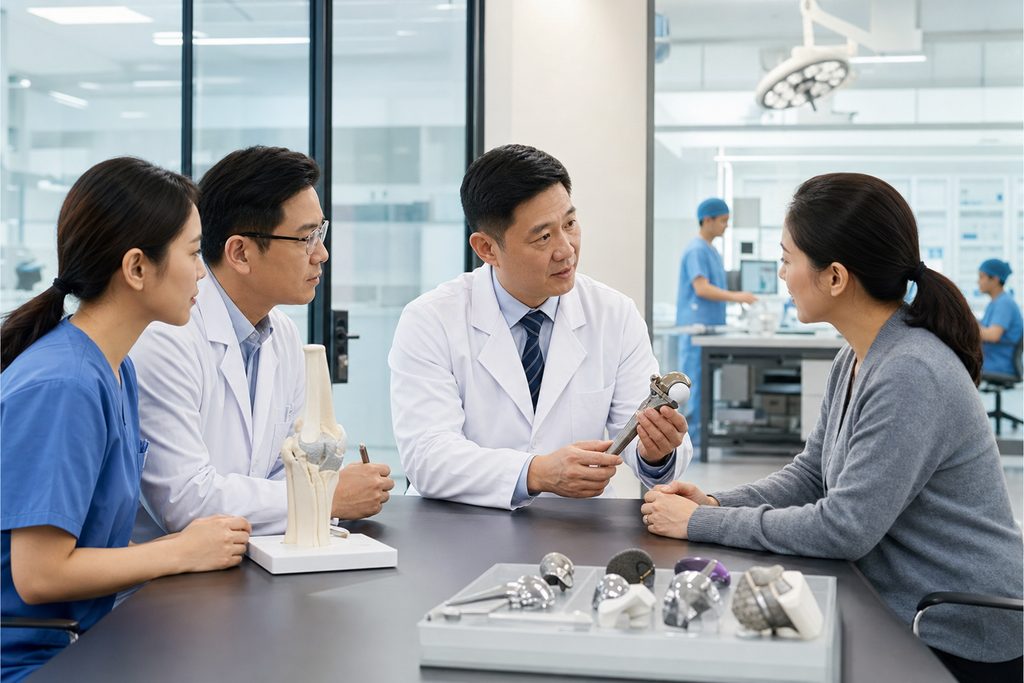
When 42-year-old Michael first heard the diagnosis, he had no idea where to start looking for treatment. His orthopedic surgeon in Manchester had been direct: the cartilage loss in his knee was severe, a standard replacement would work, but a new bioactive implant in trials could preserve more of his natural joint. The catch? The trial was in Shanghai. Not London. Not Boston. Michael had never been to Asia. He had no contacts, no Mandarin, and no clue if a foreigner could even participate. He typed into Google: “can I access experimental implants in China.”
That search is more common than most people realize. Every year, thousands of patients exhaust approved treatment options in their home countries. They face long wait times for devices that are already standard elsewhere or discover innovations that exist only in clinical trial registries. China has become a serious player in this space. Its next-generation implant clinical trial China cost structure, combined with high patient volume and regulatory pathways designed to accelerate innovation, is drawing global attention. But getting in is not as simple as filling out an online form. There is a process. There are rules. And there are pitfalls that can waste months if you do not know the landscape.
Key Takeaways
- China’s medical device clinical trial system processes over 1,200 innovative device applications annually, with orthopedic and cardiovascular implants representing the largest share.
- Participation costs for international patients in device trials are typically 40-60% lower than comparable US-based early-access programs, though exact next-generation implant clinical trial China cost varies by institution and device phase.
- Foreign patients cannot self-enroll in Chinese clinical trials — a local legal representative, hospital sponsor, and appropriate visa category (S2 for short-term medical stays) are mandatory prerequisites.
- Language barriers, payment systems that do not accept foreign cards, and the absence of centralized trial registries in English mean independent navigation carries real risk of delays and miscommunication.
The Problem: When Approved Devices Are Not Enough
Roughly 1 in 10 adults over 50 in Western countries lives with knee osteoarthritis severe enough to consider surgical intervention. For many, the conversation stops at a standard total knee arthroplasty. But a standard implant is not always the right answer. Younger patients — those in their 40s and early 50s — face a tough calculus. A conventional implant lasts 15 to 20 years. That means a revision surgery in their 60s or 70s, when surgical risks are higher and bone stock is poorer.
This is where next-generation devices change the equation. Bioactive scaffolds that encourage cartilage regeneration. 3D-printed titanium implants with trabecular structures that mimic real bone. Drug-eluting cardiac stents that dissolve after the artery heals. These exist. But in the US and Europe, the pathway from first-in-human trial to market approval often takes 7 to 10 years. Patients who need options now cannot wait that long. They look elsewhere.
Who We Are
We are not a hospital. We do not provide medical treatment, conduct clinical trials, or offer clinical diagnoses. We are your logistical architects — a team that bridges the gap between you and China’s top-tier medical expertise. Our database covers 340+ top-ranked hospitals across 37 cities, representing the top 5% of China’s 35,000+ hospitals as ranked by Fudan University’s hospital rating system and JCI accreditation standards. We handle hospital matching, appointment coordination, bilingual medical companion services, and visa guidance. We translate medical records, we coordinate with international patient departments, and we make sure you understand every step before you commit to anything. But the medical decisions? Those stay between you and your doctors.
Why China’s Clinical Trial Infrastructure Delivers Results
Volume Drives Speed and Data Quality
China’s top orthopedic centers operate at a scale that is hard to match. A senior joint replacement surgeon at a major Shanghai teaching hospital may perform 300 to 500 procedures annually. The average US orthopedic surgeon? About 65 per year, according to data from the American Academy of Orthopaedic Surgeons. This volume is not just a number. It means clinical teams have seen rare complications enough times to recognize them early. It means surgical workflows are refined to a level of efficiency that reduces operative time — and operative time correlates directly with infection risk. For a patient enrolling in a next-generation implant clinical trial, this matters. Higher volume means faster enrollment completion, more robust safety data, and a surgical team that has done a version of this procedure thousands of times.
Regulatory Pathways Built for Speed
China’s National Medical Products Administration (NMPA) introduced a special approval pathway for innovative medical devices in 2014, updated most recently in 2018. Devices classified as “innovative” — those with novel mechanisms, breakthrough materials, or significant clinical advantages — can qualify for priority review. The practical result: a device that might take 5 years to move from trial to market in the EU can complete that journey in 3 to 4 years in China. This does not mean safety is compromised. The clinical trial requirements for implantable devices remain rigorous. But the administrative bottlenecks that slow Western regulators are structurally different here. For international patients, this means access to devices that are still years away from approval in their home countries.
The Cost Equation
Let us address the obvious question directly. The next-generation implant clinical trial China cost is lower than comparable early-access programs in the US or Western Europe. Why? Not because quality is lower. The drivers are structural: lower labor costs across the hospital system, higher patient throughput that spreads fixed infrastructure costs, and a medical device manufacturing ecosystem that has matured rapidly over the past decade. A trial participation package — including the device, surgical fees, hospital stay, and follow-up monitoring — often runs 40% to 60% less than a US-based trial for a similar-phase device. Exact numbers vary by hospital and case complexity. But the economic reality is that many patients who could not afford an experimental implant program at home find the Chinese option within reach.
| Cost Component | China (USD) | US/EU (USD) |
|---|---|---|
| Trial implant & surgical fees | $18,000 – $35,000 | $50,000 – $90,000 |
| Hospital stay (5-7 days) | $3,000 – $6,000 | $15,000 – $30,000 |
| 12-month follow-up monitoring | $2,000 – $5,000 | $8,000 – $15,000 |
| Logistics & coordination services | from $300 | N/A (self-arranged) |
Ranges are estimates based on orthopedic and cardiac implant trials. Final costs vary by hospital, device phase, and case complexity.
What You Need to Know Before Going Alone
The path is real. But it is not frictionless. Here is what hits most international patients within the first few weeks of trying to navigate this independently.
- Visa Requirements Are Specific: Medical treatment in China requires an S2 visa with the purpose annotated as medical treatment. This is not the same as a tourist visa. The hospital must provide an official invitation letter and a confirmed treatment or trial enrollment schedule before the visa application can proceed. Family members accompanying you also need S2 visas. Processing takes 1 to 4 weeks depending on your home country’s Chinese consulate. Getting this wrong means a visa rejection at the counter.
- Payment Systems Do Not Play Nicely with Foreign Cards: Chinese public hospitals — even top-tier ones — operate on domestic payment rails. WeChat Pay and Alipay dominate. International credit cards are often not accepted at hospital cashier desks. You need a local bank account or a payment intermediary. Deposits for surgery are typically required upfront, often in the range of $10,000 to $20,000 depending on the procedure, and wiring money internationally without a local intermediary can take days and incur steep fees.
- No Centralized English-Language Trial Registry: The China Drug Trials Registry exists, but it is primarily in Mandarin. Trial inclusion criteria, contact information, and enrollment status are not reliably translated. Finding the best hospital in Shanghai for implant clinical trials — or the right site in Beijing or Guangzhou — requires someone who reads Chinese, understands the hospital ranking system, and can verify which trials are actively recruiting international patients. This is not a Google search problem. It is an information asymmetry problem.
How We Help You Navigate This
These barriers exist for structural reasons. They are not designed to exclude foreigners. They are simply the reality of a healthcare system built for a domestic population of 1.4 billion people. Our role is to make that system legible to you.
Before you travel, we translate and format your medical records to meet Chinese hospital intake standards. We match your case against our database of 340+ hospitals, identifying institutions with active trials relevant to your condition. We coordinate with the hospital’s international patient department to confirm trial availability, enrollment criteria, and scheduling. We provide the documentation you need for your S2 visa application. During your stay, a bilingual medical companion handles registration, queueing, payment processing, and real-time translation during consultations. After discharge, we coordinate follow-up monitoring — whether you stay in China or return home and need imaging and reports sent back to the trial site.
We do not promise you a spot in a trial. That decision belongs to the principal investigator and the hospital’s ethics committee. What we promise is that your application will be complete, professionally presented, and directed to institutions with genuine capacity to enroll international patients. If we cannot secure the appointment or trial slot we coordinate for, our coordination fee is refunded in full.
Frequently Asked Questions
Yes. Many Chinese hospitals with active clinical trials accept international participants, provided you meet the trial’s medical inclusion criteria. The process requires a hospital sponsor, a local point of contact, and the correct visa category. Independent enrollment without local coordination is extremely difficult due to language barriers and documentation requirements.
Total costs typically range from $18,000 to $35,000 for the surgical procedure, implant, and initial hospital stay. This compares to $50,000 to $90,000 for similar-phase trials in the United States. The exact figure depends on the hospital, the device manufacturer, the trial phase, and your specific medical needs. We provide a detailed cost breakdown after reviewing your case with the hospital.
The process starts with a case review. We need your medical records, imaging, and treatment history. We match your profile against hospitals with relevant active trials, confirm enrollment feasibility, and coordinate documentation. You then apply for an S2 visa with the hospital’s invitation letter. Travel, surgery, and follow-up are arranged on a timeline set by the trial protocol. The entire process from initial contact to surgery typically spans 4 to 8 weeks, depending on trial schedules and visa processing speed.
All clinical trials in China operate under protocols approved by the hospital’s ethics committee and the NMPA. Trial sponsors carry insurance for adverse events. The informed consent document you sign before enrollment will specify exactly what is covered. You have the right to withdraw from the trial at any time without penalty. We recommend reviewing the consent form with independent medical counsel before signing. We can facilitate this review but do not provide legal or medical advice ourselves.
Shanghai has several hospitals with strong orthopedic and cardiovascular device trial programs. The specific best match depends on your condition and the device category. We maintain a current database of active trials and can identify the institution with the most relevant program for your case. Our hospital matching process draws on the Fudan University hospital rankings and direct relationships with international patient departments. You can explore our specialty rankings for more detail on top institutions by medical field.
Your Next Step
Michael got his knee implant in Shanghai eight weeks after that first Google search. The trial device is performing well at his 6-month follow-up. His story is not unusual among the patients we work with — but it required the right hospital match, a properly prepared application, and someone on the ground who could navigate the system in Mandarin. The opportunity to access next-generation implants in China is real. The barriers are real too. Understanding both is the starting point.
If you want to explore whether a clinical trial in China fits your situation, start with a conversation. We review your case at no cost, explain your options, and give you an honest assessment of feasibility. No pressure. No hard sell. Just clarity on what is possible. Get a free consultation and let us help you understand the path forward.
Medical Disclaimer: This article is for informational purposes only and does not constitute medical advice. Clinical trial participation involves risks that must be discussed with qualified medical professionals. We do not guarantee trial enrollment, specific outcomes, or access to any particular device. Always consult your treating physician before making decisions about experimental treatments. Information about hospitals, trials, and costs is subject to change and should be verified through official channels.
For more medical information and treatment options in China, visit chinamedservices.com (China Medical Services).
