Medical Wellness Retreat Service China: Prevention Meets Cultural Immersion
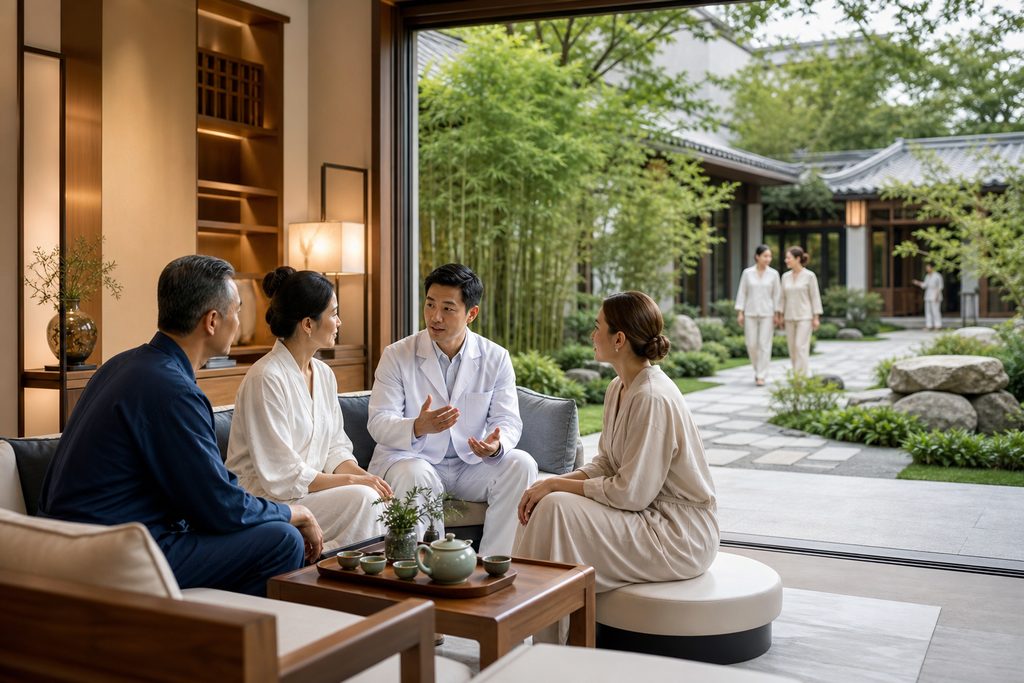
You have probably seen the ads. A serene pavilion in the mist. A practitioner placing thin needles with quiet precision. The promise of transformation wrapped in silk robes and mountain air. It looks like a luxury vacation with a side of acupuncture. The reality is far more structured, and frankly, more valuable. A legitimate medical wellness retreat service in China sits at the intersection of a comprehensive preventive health screening and a deep dive into a medical tradition that has been refined over two millennia. It is not a spa. It is a recalibration.
We have watched this space evolve rapidly. Five years ago, the options for international visitors were fragmented. You could find a decent TCM hospital, or you could book a nice hotel with a massage package. Connecting the two into a coherent, medically credible retreat required luck and fluent Mandarin. That gap has closed. Today, the infrastructure exists for a seamless experience that combines advanced diagnostics with authentic traditional Chinese medicine. Our team coordinates these journeys. We do not provide the treatments. We build the bridge between your health goals and the institutions that can deliver measurable results.
Key Takeaways
- A structured medical wellness retreat in China typically costs between $3,500 and $12,000 for a 7- to 14-day program, covering comprehensive health screenings, daily TCM therapies, and accommodation.
- The core differentiator is clinical legitimacy: top-tier retreats operate through hospital-affiliated TCM departments or JCI-accredited international clinics, not hotel spas.
- The biggest barrier is self-navigation. Without bilingual coordination, you risk booking a superficial “wellness-lite” experience that lacks clinical rigor and personalized follow-up.
- Understand that a genuine medical retreat is an active diagnostic process. You will spend hours in consultations and treatments. It is not a passive vacation.
The Problem: Your Annual Physical Misses the Warning Signs
Modern Western medicine is brilliant at crisis intervention. It is less effective at reading the subtle signals your body sends years before a crisis hits. A 2023 study published in The Lancet estimated that nearly 40% of global disease burden stems from preventable risk factors. Yet standard executive physicals often return a clean bill of health until bloodwork crosses a hard threshold. You are told you are fine. You do not feel fine. The fatigue, the poor sleep, the digestive issues that come and go — these are notes in the margin, not action items.
This is where the diagnostic philosophy diverges. Traditional Chinese Medicine assesses patterns. A practitioner looks at your tongue, takes your pulse at multiple depths, and asks questions that can feel oddly unrelated to your chief complaint. They are mapping systemic imbalance, not just chasing a single biomarker. When you layer this pattern-based assessment on top of advanced Western lab panels — the kind available at China’s top-tier hospital international departments — you get a resolution that neither system can achieve alone.
Who We Are
A high-quality medical wellness retreat in Shanghai or Hangzhou will likely start with a full health screening. We are talking about a low-dose chest CT, abdominal ultrasound, comprehensive metabolic panel, tumor markers, and cardiac assessment. This is not optional add-on. It is the foundation. The TCM therapies that follow — acupuncture, moxibustion, tuina massage, herbal decoctions — are then calibrated against your objective lab results.
Some centers now use thermal imaging and heart rate variability analysis to quantify what TCM has described qualitatively for centuries. The data gives you a baseline. After two weeks of daily therapy, you can see measurable shifts. Sleep latency drops from 45 minutes to 15. Resting heart rate trends downward. This is the “retreat” as a structured clinical intervention, not a passive escape.
What Is a Medical Wellness Retreat in China Like, Day by Day?
Expect structure. A typical morning begins at 7:30 AM with a light breakfast, followed by a 30-minute consultation with your attending TCM physician. They review your overnight pulse changes, adjust your herbal formula. At 9:00 AM, you might have acupuncture — 30 to 45 minutes with needles placed along meridian points specific to your pattern. Then an hour of rest. Midday includes a therapeutic meal designed by the hospital’s nutrition department, often using food-as-medicine principles from TCM dietary therapy.
Afternoons vary. One day might include tuina medical massage — deep tissue work that addresses specific musculoskeletal issues. Another afternoon could involve a visit to a specialist for your particular concern, whether that is dermatology, endocrinology, or pain management. Evenings are quiet. No alcohol, no late-night entertainment. This is a clinical program. Patients who approach it with discipline see the most significant shifts. Those who treat it as a hotel stay with optional treatments tend to be disappointed.
How to Combine TCM and Wellness Retreat Shanghai: The Institutional Advantage
Shanghai has the densest concentration of hospital-affiliated TCM retreat programs in China. The city’s flagship institutions — Shuguang Hospital, Longhua Hospital, and Yueyang Hospital — all operate international departments with dedicated inpatient wellness units. These are not standalone resorts. They are floors within major teaching hospitals. That proximity matters. If your health screening reveals a nodule that requires a specialist consult, you walk down the hall, not across town.
Our team often recommends Shanghai for first-time visitors because the infrastructure is mature. English-speaking coordinators are available. The herbal pharmacies are fully digitized, so your customized formula is precisely weighed and packaged. You can book wellness retreat with health screening China through these hospital channels, but the process requires navigating Chinese-language scheduling systems and understanding which department handles which condition. We handle that coordination. We translate your intake forms, brief the medical team on your history, and ensure your two-week schedule is clinically coherent — not a random assortment of spa treatments.
Medical Wellness Retreat Cost China: A Transparent Breakdown
Let us address the question directly. A legitimate, hospital-affiliated medical wellness retreat in China costs between $3,500 and $12,000 for a 7- to 14-day program. The variance depends on three factors: the tier of the institution, the comprehensiveness of the health screening package, and the level of accommodation. This is a fraction of what an equivalent program costs in Switzerland or the United States, where a week-long executive health retreat with TCM components can easily exceed $25,000.
| Retreat Component | China (Hospital-Affiliated) | Switzerland / Germany | United States |
|---|---|---|---|
| Comprehensive health screening (imaging, labs, cardiac) | $800 – $2,500 | $4,000 – $8,000 | $5,000 – $12,000 |
| Daily TCM therapies (acupuncture, tuina, moxibustion, herbs) — 7 days | $1,200 – $2,800 | $3,500 – $7,000 | $4,000 – $9,000 |
| Accommodation & therapeutic meals (7 nights) | $1,000 – $3,500 | $5,000 – $12,000 | $6,000 – $15,000 |
| Bilingual coordination & translation services | $500 – $1,500 | Often included (built into higher base price) | Variable — $100–$200/hr |
| Total estimated range (7 days) | $3,500 – $10,300 | $12,500 – $27,000 | $15,100 – $36,200 |
These figures are estimates. Final costs vary by hospital and case complexity. The structural reason for the cost difference is straightforward. Labor costs for skilled TCM practitioners and nursing staff in China are lower than in Western Europe or North America. Hospital operational overhead is also lower. The clinical quality — measured by practitioner experience and diagnostic thoroughness — is not lower. In some respects, it is higher simply because of patient volume.
Traditional Chinese Medicine Wellness Packages Abroad: Why Origin Matters
You can find TCM wellness packages in London, Vancouver, and Sydney. Many are excellent. The practitioners are well-trained and the herb quality is carefully controlled. What you cannot replicate abroad is the institutional ecosystem. In China, a TCM wellness package is embedded within a hospital that houses radiology, pathology, and every medical specialty under one roof. The herbal pharmacy stocks hundreds of raw herbs, dispensed by pharmacists who have trained specifically in TCM formulations for years.
There is also the question of authenticity. A retreat in Hangzhou, set among the tea plantations and ancient temples where TCM theory was developed, carries a contextual weight that a clinic in a Toronto strip mall cannot. The cultural immersion is not a decorative add-on. It reinforces the therapeutic framework. Morning qigong practice in a garden designed by a Ming dynasty scholar feels different from doing the same movements in a rented yoga studio. The environment is part of the medicine.
Best Wellness Retreats in China for Prevention: What to Look For
The best wellness retreats in China for prevention share a few structural markers. First, they are affiliated with a hospital that appears on the Fudan University hospital rankings — the most authoritative classification system in China. Only the top 5% of China’s 35,000+ hospitals make this list. Second, they have a dedicated international department with English-speaking staff. Third, they offer a structured program with clear clinical documentation, not a vague menu of “wellness experiences.”
Several institutions stand out. The international TCM department at Shuguang Hospital in Shanghai runs a highly regarded preventive health program that integrates Western diagnostics with TCM pattern differentiation. In Beijing, the China-Japan Friendship Hospital offers a similar model with a particular strength in respiratory and allergic conditions. In Hangzhou, the Zhejiang Provincial Hospital of TCM combines its retreat program with access to the city’s UNESCO World Heritage cultural sites, making the cultural immersion component genuinely seamless. You can explore our full hospital database organized by city and specialty on our top hospitals page.
What You Need to Know Before Going Alone
We have seen patients attempt to self-organize a medical retreat. Some succeed. Most encounter friction that wastes time and money. The barriers are structural, not personal.
- Visa Requirements: Medical treatment in China requires an S2 visa with a specific annotation for medical purposes. This is not a tourist visa. The application requires an invitation letter from the treating hospital, a detailed treatment plan, and proof of financial means. Applying with incomplete documentation leads to rejection. We guide patients through this process and coordinate with the hospital’s international department to produce the correct paperwork. Family members accompanying the patient also need S2 visas.
- Institutional Navigation: Chinese public hospitals are vast. A single campus can see 10,000 outpatient visits daily. Signage in English is limited. Registration desks, payment counters, pharmacy windows, and treatment rooms are often on different floors in different buildings. Without a bilingual medical companion, you will spend hours lost and frustrated. Our companions handle queuing, payment, translation, and wayfinding — turning a chaotic experience into a focused clinical day.
- Program Integrity: A Google search for “wellness retreat China” returns a mix of legitimate hospital programs and commercial operations with no clinical oversight. The latter often employ practitioners with uncertain credentials and use imported herbs of questionable quality. Distinguishing between the two from abroad is difficult. We only work with institutions that meet verifiable standards: Fudan ranking, JCI accreditation, or direct hospital affiliation.
How We Help You Navigate This
Our process begins with a consultation. You describe your health concerns, your goals for the retreat, and any specific conditions you want addressed. We translate this into a clinical brief and match you with an appropriate institution. We do not push a single partner hospital. The right fit depends on your specific health profile.
Once the hospital is selected, we coordinate the entire pre-arrival workflow. We collect your medical records, arrange certified translation into Chinese, and submit them to the treating team for review. We schedule your initial consultation, your health screening, and your therapy sessions in a coherent sequence. We handle the invitation letter for your S2 visa application. When you land, our bilingual medical companion meets you at the airport and stays with you through every clinical encounter. After you return home, we facilitate follow-up consultations and herbal formula adjustments as needed. The goal is continuity, not a one-off experience.
Frequently Asked Questions
Is a medical wellness retreat in China safe? What about quality control?
The institutions we work with are subject to the same regulatory oversight as any major Chinese hospital. Herbal pharmacies are inspected regularly. Acupuncture needles are single-use and sterile. JCI-accredited international departments follow protocols that meet or exceed Western safety standards. The question is not whether safe retreats exist — they do. The question is whether you can reliably identify them from abroad. That is where we add value.
How much does a medical wellness retreat cost China compared to staying home and doing treatments separately?
A two-week retreat with comprehensive screening and daily therapy costs between $3,500 and $12,000, as detailed above. If you were to replicate the same diagnostic workup and therapy sessions in the US, you would spend $15,000 to $30,000. The savings are real, but they come with the cost of travel and the commitment of time. This is not a decision to make purely on price. The clinical integration — having your diagnostics and TCM therapies managed by a single team in real time — is the harder thing to replicate at home.
What if the health screening finds something serious — a tumor, a cardiac issue?
This happens. It is actually one of the strongest arguments for doing a retreat in a hospital-affiliated setting rather than a standalone wellness center. If a screening CT reveals a suspicious nodule, you are already inside a top-tier hospital. A specialist consult can be arranged within hours, not weeks. If treatment is indicated, we can pivot your itinerary from a wellness retreat to a treatment-focused stay. Our coordination team handles the transition. This is the structural advantage of an institutional retreat over a resort-based one.
Can I book this entirely online without going through a service like yours?
Some hospital international departments accept direct inquiries. The challenge is that their English-language responsiveness varies widely. You may wait two weeks for a reply to a simple question. The scheduling systems are in Chinese. The program descriptions on their websites are often vague, making it hard to understand what you are actually booking. Our service exists because this friction is real. We charge a coordination fee, but we also save you from booking the wrong program at the wrong institution.
What happens after the retreat ends? Can I continue the herbal treatments at home?
Yes. Most hospitals can dispense a 30- to 90-day supply of your customized herbal formula in granule or capsule form for you to take home. Some can arrange international shipping for refills, though this depends on the specific herbs and your country’s import regulations. We also facilitate follow-up video consultations so your TCM physician can adjust your formula based on your progress. The retreat is the beginning of a therapeutic relationship, not a closed episode.
Your Next Step
A medical wellness retreat in China is a serious investment of time, money, and attention. It works best for people who are ready to engage actively with their own health — to show up for every consultation, follow the dietary guidance, and integrate what they learn into their daily lives after returning home. The cultural immersion is real, but it
For more medical information and treatment options in China, visit chinamedservices.com (China Medical Services).
