Forest Bathing in China: Shinrin-Yoku Retreats for Immune Health
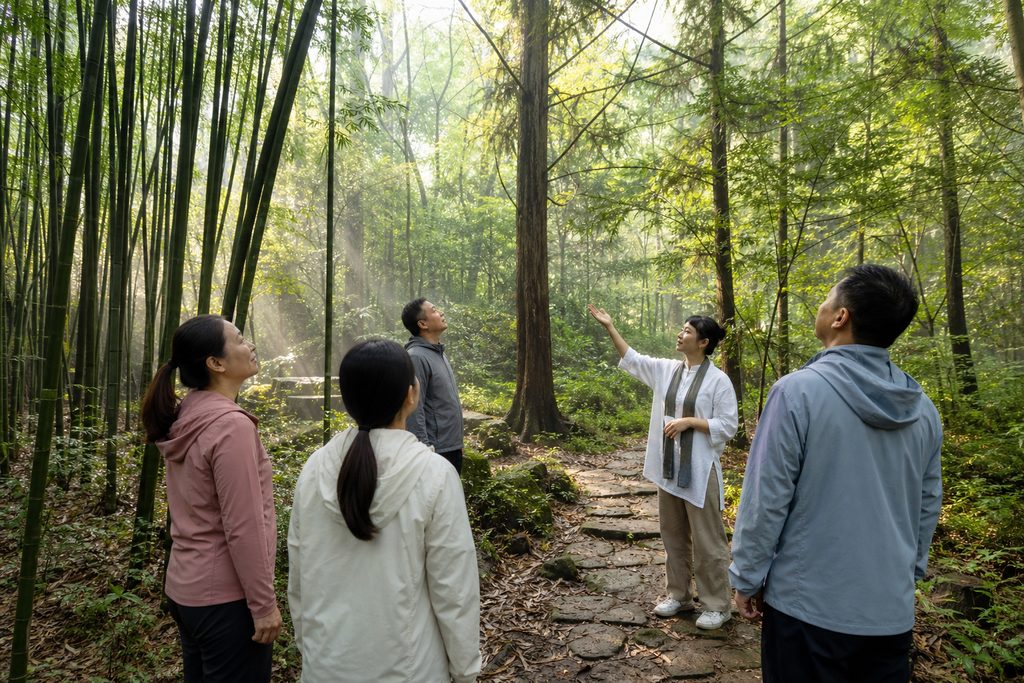
You have probably seen the claims. Walking in a forest lowers your blood pressure. It kills cancer cells. It resets your immune system. The skepticism is healthy—until you look at the data. Japan began studying *shinrin-yoku*, or forest bathing, in the 1980s. What they found changed public health policy. Natural killer (NK) cells, the frontline soldiers of your immune system, increased by over 50% after a three-day forest trip. The effect lasted for a month. This is not folk wisdom. It is measured biology. And China, with its vast bamboo seas, ancient pine reserves, and mist-covered mountain ranges, has quietly become a global hub for translating this science into structured nature therapy programs.
The question we hear most often from international clients is not whether it works. It is: what is the shinrin yoku forest bathing China price, and how does a retreat here compare to one in Kyoto or the Black Forest? The answer involves understanding a unique intersection of traditional Chinese medicine infrastructure, modern wellness tourism, and a healthcare system that is rapidly integrating preventive environmental medicine. Our team does not run these retreats. We are not clinicians. We are the logistical bridge—we connect you with the right programs, handle the language barriers, and make sure you do not get lost in a bamboo grove with a useless map and a dead phone battery.
Key Takeaways
- Structured forest bathing retreats in China range from $80 to $450 per day, significantly less than comparable programs in Japan or Europe.
- Peer-reviewed studies show a 50% increase in natural killer cell activity after a 3-day forest immersion, with effects lasting up to 30 days.
- China’s unique advantage lies in combining ancient Taoist forest hermitages with modern environmental medicine protocols.
- Independent booking is extremely difficult—language barriers, remote locations, and the absence of English-language platforms make a local guide essential.
- Forest therapy is a powerful adjunct for immune modulation, but it is not a standalone cure for autoimmune disease or cancer.
The Problem: Your Immune System is Under Siege
Chronic stress is not just a feeling. It is a biochemical assault. Cortisol floods your bloodstream. NK cells go dormant. Inflammation markers rise. The World Health Organization has flagged stress as the health epidemic of the 21st century, linking it to cardiovascular disease, metabolic syndrome, and a measurable decline in immune surveillance. You can eat clean and sleep well. But if your nervous system never shifts out of fight-or-flight mode, your immune system pays the price.
Urban environments make it worse. A 2021 study published in *Frontiers in Immunology* found that city dwellers have significantly lower NK cell activity compared to rural populations, even when controlling for diet and exercise. The mechanism? Constant low-level stress from noise, artificial light, and the sheer cognitive load of navigating crowded spaces. Your body was built for green horizons and bird song. It gets concrete and car horns. The result is a slow, silent erosion of your body’s ability to fight off pathogens and surveil for abnormal cells.
Who We Are
We are China Medical Services. We do not provide medical treatment. We do not diagnose conditions or prescribe therapies. What we do is solve the single biggest problem facing international patients who want to access China’s healthcare and wellness resources: the logistics. China has over 35,000 hospitals, but only the top 5%—a carefully vetted network of 340+ top-ranked institutions across 37 cities—meet the standards we require for our clients. When it comes to nature therapy, we apply the same rigor. We have mapped the retreat centers that operate with genuine scientific protocols, not just marketing brochures. We handle the booking, the bilingual escort, the visa guidance, and the local transportation. You focus on healing.
What is Forest Bathing for Immune System Function?
Let us strip away the mysticism. Forest bathing is not hiking. It is not exercise. It is the deliberate, slow immersion of your senses in a forest atmosphere. You breathe the volatile organic compounds trees release, called phytoncides. You listen to water. You touch moss. The mechanism is chemical. Phytoncides—alpha-pinene, limonene, beta-caryophyllene—enter your bloodstream through inhalation. They bind to receptors on your NK cells and upregulate their activity. This is not a metaphor. It is pharmacology delivered by the forest itself.
A landmark 2010 study by Dr. Qing Li at Nippon Medical School measured this precisely. After a 3-day forest bathing trip, participants showed a 56% increase in NK cell activity. Intracellular levels of perforin, granzyme A, and granulysin—the proteins NK cells use to destroy infected or cancerous cells—all rose sharply. The effects peaked around day 7 and remained elevated for a full 30 days. A control group that took a city trip showed no such changes. The forest literally armed the immune system.
Is Forest Therapy Effective for Autoimmune Disease?
This is where the science gets nuanced. Autoimmune conditions—rheumatoid arthritis, lupus, Hashimoto’s thyroiditis, multiple sclerosis—involve an overactive immune system attacking the body’s own tissues. Boosting NK cells sounds like the exact wrong thing to do. But the reality is more complex. NK cells do not just kill; they regulate. They secrete cytokines that can either amplify or dampen immune responses depending on the context. Emerging research suggests that forest therapy does not simply ramp up all immune activity indiscriminately. It normalizes it.
A 2018 review in *Environmental Health and Preventive Medicine* examined the effects of forest bathing on patients with chronic inflammatory conditions. The consistent finding was a reduction in pro-inflammatory cytokines like IL-6 and TNF-alpha, alongside the increase in NK cell activity. Stress reduction—measured by lower cortisol and higher parasympathetic nerve activity—appeared to be the bridge. Lower stress means less systemic inflammation. Less inflammation means a calmer, more balanced immune system. For autoimmune patients, this is profoundly relevant. The forest does not cure the disease. But it may shift the terrain in which the disease operates.
Why China Delivers Unique Results for Nature Therapy
Japan invented the term. But China has something Japan cannot replicate: scale and diversity of forest ecosystems, combined with a deep cultural infrastructure of mountain retreats. The country holds the world’s largest area of bamboo forest. It has ancient *shanshui* (mountain-water) traditions that predate shinrin-yoku by two thousand years. Taoist hermits and Buddhist monks have been practicing forest meditation in these mountains since the Tang Dynasty. When modern science arrived, it found a landscape already prepared for healing.
Phytoncide Density in Ancient Forests
Not all forests are equal. A young pine plantation does not produce the same phytoncide profile as a 500-year-old cypress grove. China’s protected forest reserves—particularly in the Wuyi Mountains, the bamboo seas of Anji, and the primeval forests of Shennongjia—contain tree specimens that are centuries old. The concentration of alpha-pinene and D-limonene in these environments, measured during summer months, can be three to five times higher than in managed timber forests. More phytoncides mean a stronger biological signal. The best forest therapy retreats in China are sited precisely in these high-density phytoncide zones, a deliberate choice backed by environmental monitoring data.
Integration with Traditional Chinese Medicine
This is the differentiator no other country can offer. A best forest therapy retreat China immune health program often layers TCM diagnostics onto the forest bathing protocol. You might begin your morning with a tongue and pulse reading from a licensed TCM practitioner. Based on your pattern—Liver qi stagnation, Spleen qi deficiency, whatever the diagnosis reveals—the practitioner recommends specific forest areas. A pine forest for Lung support. A bamboo grove for calming the Heart shen. Acupressure points to focus on while sitting against a tree trunk. This is not superstition. It is a system of pattern recognition refined over millennia, now being studied through the lens of psychoneuroimmunology. Our TCM hospital network includes several institutions that run integrated forest therapy programs with published outcome data.
Cost Without Compromise
Let us address the obvious question. Why is the nature therapy packages China cost so much lower than in Japan or Europe? A week-long guided shinrin-yoku retreat in Nagano can run $3,000 to $5,000 per person. In the Black Forest, similar programs start around €2,500. In China, a structured 5-day program with accommodation, meals, daily guided sessions, and TCM consultations typically ranges from $800 to $2,200. The structural reasons are straightforward. Labor costs for guides and practitioners are lower. Land costs for retreat centers in remote mountain areas are a fraction of what they are in Japan or Germany. And the sheer volume of domestic wellness tourism—millions of Chinese urbanites seeking nature escapes—creates economies of scale that international guests benefit from. Lower cost does not mean lower quality. It means a different economic base.
| Country | 5-Day Retreat Cost (USD) | Phytoncide Environment | TCM Integration |
|---|---|---|---|
| China (Anji/Wuyi) | $800 – $2,200 | Ancient bamboo & pine reserves | Yes, standard at top retreats |
| Japan (Nagano/Kyoto) | $3,000 – $5,000 | Cedar & cypress forests | Rare, limited to a few centers |
| Germany (Black Forest) | $2,500 – $4,000 | Mixed conifer & deciduous | No |
| South Korea (Jeju/Jirisan) | $1,500 – $3,000 | Temperate broadleaf & pine | Limited Korean medicine options |
What You Need to Know Before Going Alone
The idea of booking a forest retreat independently sounds romantic. The reality is a logistical puzzle that most Western travelers cannot solve. We have seen clients arrive at the wrong mountain, at the wrong season, with no one who speaks English and no way to reach the retreat center. The forest does not care about your booking confirmation. Here are the barriers you will face if you try to go it alone.
- Language and Platform Barriers: The best retreats do not list on Western booking platforms. Their websites are in Mandarin. Their booking systems accept WeChat Pay or Alipay. If you do not have a Chinese bank account and cannot read a Chinese terms-and-conditions page, you are locked out.
- Remote Location Access: A retreat in the Anji bamboo forest is not a taxi ride from Shanghai. It is a high-speed train to a regional station, then a private car up winding mountain roads. The driver will not speak English. The road signs are in Chinese characters. Mobile signal can drop. Getting stranded is a real risk.
- Seasonal Timing and Protocol Matching: Phytoncide concentrations peak in summer and early autumn. Winter retreats in deciduous forests offer a different, less chemically active experience. A good retreat will match your health goals to the right season and forest type. Making that judgment call yourself, without local expertise, is guesswork.
How We Help You Navigate This
These barriers exist for structural reasons, not because anyone is trying to exclude foreign guests. China’s domestic wellness market is simply large enough that most retreats do not need to internationalize. We bridge that gap. When you contact us about a book forest bathing retreat China inquiry, we start with a consultation. What are your health goals? Immune modulation? Stress recovery? Adjunct support for an autoimmune condition? We match you to the retreat with the right forest ecosystem, the right TCM integration, and the right season.
Our bilingual medical companion meets you at the airport. They handle the train tickets, the mountain transfer, the check-in, and every interaction with retreat staff. They translate your TCM consultation in real time. They ensure you understand the daily protocol—where to walk, how long to sit, which acupressure points to stimulate. They are not a tour guide. They are a healthcare logistics professional who ensures nothing gets lost in translation. After the retreat, we can coordinate follow-up immune panels at a top-ranked hospital in Shanghai or Beijing if you want objective data on how your biomarkers shifted. The initial consultation is free. You tell us what you need, and we map the path.
Frequently Asked Questions
A structured 5- to 7-day program at a reputable retreat center ranges from $800 to $2,200 per person. This includes accommodation, all meals, daily guided forest therapy sessions, and usually one or two TCM consultations. Transportation to the retreat and our bilingual companion service are separate. The final price varies by season, retreat location, and the level of medical integration you require.
Current evidence suggests forest therapy modulates the immune system rather than simply boosting it. Studies show reductions in pro-inflammatory cytokines alongside increases in NK cell activity. This dual effect—calming inflammation while enhancing immune surveillance—may be beneficial for some autoimmune patients. But this is not a substitute for medication. You must consult your treating physician before altering any treatment protocol. Forest therapy is an adjunct, not a replacement.
Technically yes. Practically, it is extremely difficult. The best retreats operate entirely in Mandarin on Chinese digital platforms. Payment requires WeChat Pay or Alipay. Reaching the remote locations without a Chinese-speaking driver is risky. We have seen clients lose deposits, arrive at closed facilities, or end up at the wrong mountain entirely. Using a local coordinator is not a luxury—it is the difference between a healing experience and a frustrating, potentially unsafe ordeal.
Ask about their phytoncide monitoring. Credible retreats measure the volatile organic compound concentrations in their forest areas at different times of year. Ask about their guides’ training. Are they certified forest therapy guides with a recognized program, or are they just locals who know the trails? Ask about outcome tracking. Do they measure biomarkers—cortisol, NK cell activity, heart rate variability—before and after the program? We only partner with retreats that can answer these questions with data, not just beautiful photographs.
Summer and early autumn, roughly June through October, offer the highest phytoncide concentrations. The heat and humidity increase the volatilization of essential oils from trees. Spring is beautiful but the chemical signal is weaker. Winter in evergreen bamboo and pine forests still offers benefits—the phytoncides do not disappear—but the intensity is lower. We help you match the season to your goals. If you are coming for immune modulation specifically, we will guide you toward a summer retreat.
Your Next Step
The science is clear. Time spent breathing forest air changes your blood chemistry in measurable, clinically significant ways. China offers some of the most potent forest environments on earth, combined with a tradition of healing that understands the connection between landscape and body. The challenge is access. The solution is having someone who knows the terrain—literally and logistically.
If you want to understand what a tailored forest therapy program would look like for your specific health situation, reach out for a free consultation. No pressure. No sales script. Just an honest conversation about what is possible, what it costs, and whether this makes sense for you. China Medical Services is here to build the bridge. You walk the forest path.
For more medical information and treatment options in China, visit chinamedservices.com (China Medical Services).
